Best Bread Knives: Budget, Midrange, and Premium Picks
Disclosure: We may earn a commission when you buy through links on this page, at no extra cost to you. As an Amazon Associate I earn from qualifying purchases. Learn more

The best bread knives by budget: Mercer, imarku and SHAN ZU picks plus serration, steel and length tips.
A good bread knife glides through a crusty sourdough loaf without crushing the soft crumb inside, slices tomatoes cleanly and evens out cake layers with ease. A dull or poorly designed one tears bread, crumbles crust and forces you to saw back and forth. Bread knives range from around $14 for basic serrated blades to $150 for forged German knives. This guide to the best bread knives sorts them by budget, so you can see what each price tier delivers and which features are worth paying for.
We cover three picks, what to expect at each price level, the features that matter, long term costs and common questions. Every knife in the table above is sold new on Amazon US. Handle serrated knives with care, cut on a stable board and keep fingers clear of the blade.


Top 3 Picks by Budget
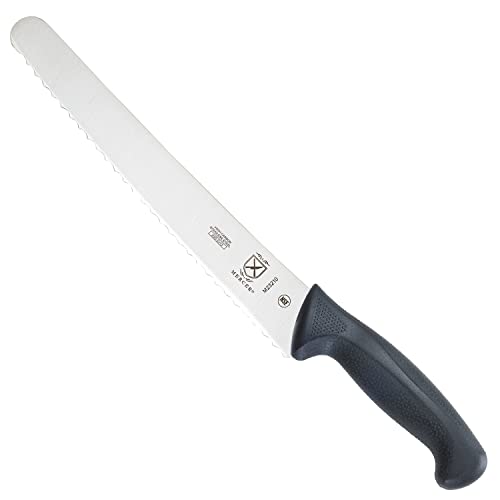
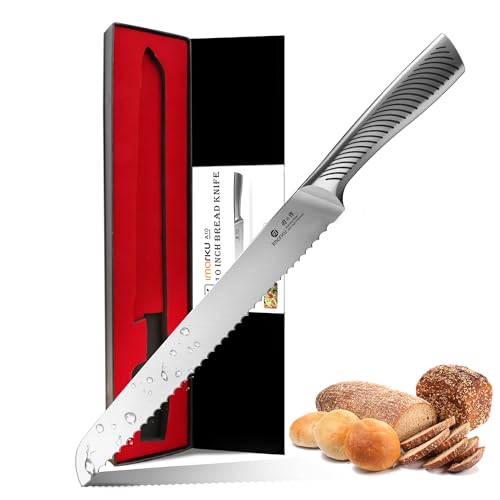
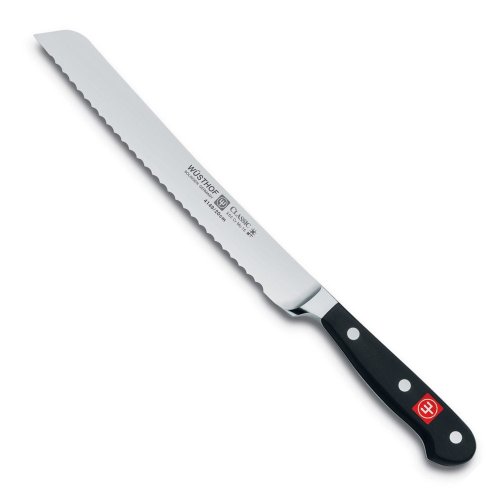
Our picks are the Mercer Culinary Millennia 10 inch bread knife for tight budgets, the imarku 10 inch bread knife for most home cooks and the SHAN ZU 8 inch Japanese bread knife as a premium gift worthy pick.
We compared blade length, serration style, steel, handle comfort, balance and care requirements, along with the overall pattern in owner feedback. We did not slice with these knives ourselves; the notes reflect maker specifications.
Best Budget Pick: Mercer Culinary Millennia 10 Inch Bread Knife
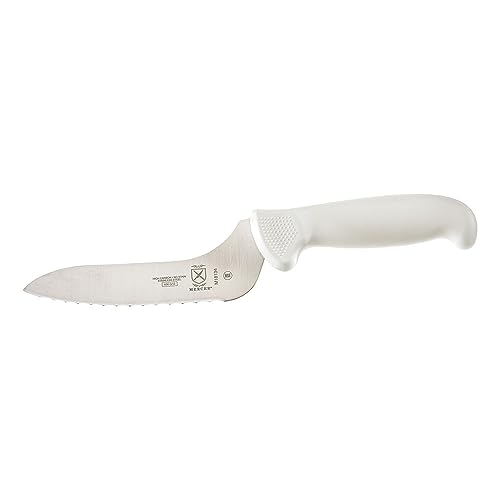
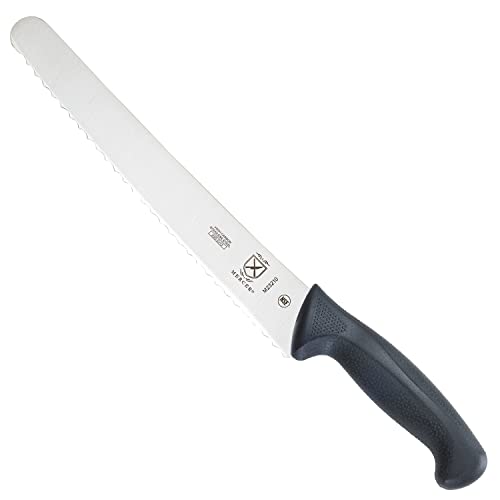
The Mercer Millennia suits home cooks who want a dependable, professional style bread knife for little money, at around $17. It uses a one piece high carbon Japanese steel blade with a wide wavy edge, and Mercer says the teeth slice through crust or skin without tearing the soft inside, making it useful for bread, angel food cake, meatloaf, fruit and tomatoes.
Two strengths stand out: a long 10 inch blade that handles large loaves, and an ergonomic handle with textured finger points for a non slip grip. It is part of Mercer's Millennia series used by many culinary professionals. The limitation is looks, since the plastic handle is practical rather than elegant. Skip it if you want a showpiece knife for gifting.
Best Midrange Pick: imarku 10 Inch Bread Knife
The imarku bread knife is for cooks who want a sturdy, all metal feel at a fair price, at around $25. It uses high carbon stainless steel heat treated to HRC 53 plus or minus 1, a serrated edge with a single bevel design and a 430 stainless steel handle with an anti slip texture, weighing about 210 grams, according to imarku.
Its strengths are corrosion resistance and a laser etched finish that reduces food sticking, plus rounded corners for safer handling. It works for bread, cakes, steaks and fruit. The trade off is a metal handle, which some people find colder and slicker than wood or plastic. Skip it if you prefer a lightweight plastic handle.

Best Premium Pick: SHAN ZU 8 Inch Japanese Bread Knife
The SHAN ZU bread knife suits bakers who want a premium, beautiful knife, at around $66. It has a 9 layer forged construction with a Japanese 10Cr15MoV steel core hardened to 62 HRC and a precisely honed 12 degree edge, plus a traditional octagonal handle made from natural red sandalwood, according to SHAN ZU.
The appeal is long lasting sharpness, a matte blade finish that reduces fingerprints and food residue and a premium gift box. The limitation is length, since an 8 inch blade can be short for very wide loaves, and harder steel needs careful handling to avoid chips. Skip it if you regularly slice extra large loaves.

What Your Money Gets You at Each Price Tier
Bread knives fall into three broad price bands. Sales are common, so compare current prices.
Budget Tier: What to Expect
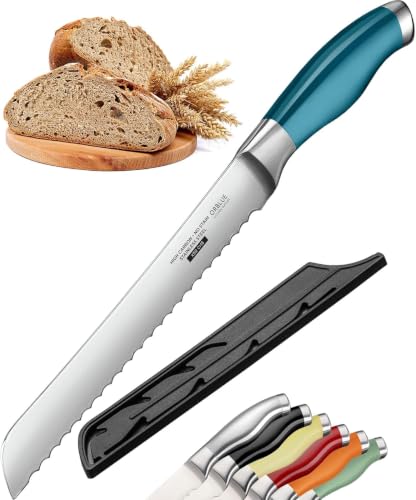
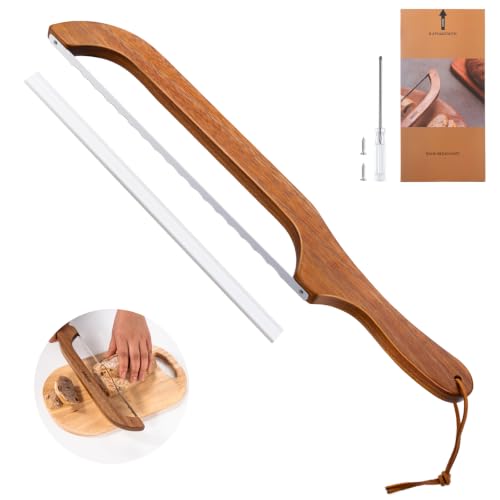
Under around $20, knives like the Mercer Millennia, Orblue serrated bread knife and RAPSAKEMOH sourdough knife offer sharp serrations, plastic or simple handles and stamped blades. They cut bread well and are easy to replace.
Budget knives suit most home kitchens. The trade offs are less refined balance and handles, and serrations that may dull sooner with heavy use.
Budget knives also make good second knives for picnics, cabins or RVs where you do not want to bring your best blade.
Midrange Tier: The Sweet Spot for Most Buyers
Between around $20 and $75, knives like the imarku, Victorinox Fibrox 10.25 inch and Victorinox wood handled bread knives add better steel, more comfortable handles and longer lasting edges. Victorinox Fibrox handles are known for a secure grip in professional kitchens.
This tier offers the best value for frequent bakers and anyone who wants a knife that lasts for years.
Many midrange knives also come with blade guards for safe storage.
Premium Tier: When Spending More Pays Off
Above around $75, forged knives like the Wüsthof Classic bread knives and Japanese style knives like SHAN ZU offer full tang construction, premium steels, refined balance and beautiful finishes.
Spending more pays off for serious bakers, knife enthusiasts and gifts. For occasional slicing, a midrange knife performs nearly as well.
Premium knives often come with better warranties and sharpening services from the maker.
Features Worth Paying For in the Best Bread Knives (and Ones to Skip)
Blade length, serration style, comfortable handles and good steel are worth paying for. Decorative extras are optional. Here is how to weigh each feature.
Blade Length
Longer blades, around 10 inches, like the Mercer and imarku, slice wide loaves in fewer strokes. Shorter 8 inch blades, like SHAN ZU and Wüsthof's 8 inch Classic, feel nimble for smaller loaves, bagels and sandwiches. Offset bread knives, like Mercer's 6 inch offset, keep knuckles clear of the board.
Choose a blade at least a couple of inches longer than the loaves you usually slice.
A longer blade also helps with large cakes, letting you level layers in one smooth pass.
Measure your cutting board too; a long blade needs a board wide enough for full strokes.
Serration Style
Wavy or scalloped edges, like Mercer's wide wavy edge, slice cleanly with less crumbling. Pointed serrations grip hard crusts aggressively. Double serrated edges, used on some Wüsthof knives, combine both for smoother cuts.
Wavy edges suit most home bakers, while pointed serrations help with very crusty artisan loaves.
Let the serrations do the work: use long, gentle sawing strokes rather than pressing down, which crushes soft bread.
Fine serrations suit soft sandwich breads and tomatoes, while larger scallops handle hard crusts with less effort.
Uneven slices usually mean too much downward pressure.
Steel and Hardness
High carbon stainless steels balance sharpness and corrosion resistance. Harder steels, like SHAN ZU's 62 HRC core, hold edges longer but can chip if misused. Softer steels, like imarku's HRC 53, are tougher and easier to maintain.
For serrated knives, edge retention matters because serrations are harder to sharpen.
Rinse and dry knives promptly after cutting acidic foods like tomatoes and citrus, which can stain or corrode some steels.
Forged vs Stamped Blades
Forged knives, like Wüsthof Classic, are shaped from a single heated piece of steel, giving a heavier feel, a bolster and full tang. Stamped knives, like Mercer Millennia, are cut from sheet steel, which makes them lighter and less expensive. For bread knives, the difference is mostly about feel and longevity, since serrations do most of the work.
Handle Comfort and Balance
Comfortable handles reduce fatigue and improve control. Textured plastic, like Mercer's, grips well when wet. Wood, like SHAN ZU's sandalwood, feels warm and looks elegant. Metal handles, like imarku's, are durable and easy to clean.
Balance between blade and handle makes long sawing motions smoother.
Try the knife grip if possible; a handle that feels secure with wet or floury hands reduces slips.
Left handed cooks should note that some single bevel serrated knives cut slightly better for right handers.
Electric Knives
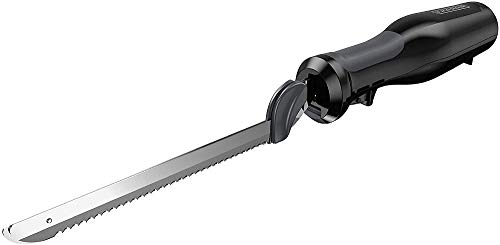
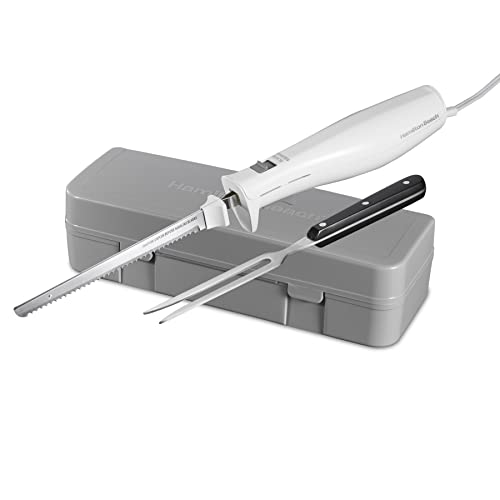
Electric knives, like the BLACK+DECKER Comfort Grip and Hamilton Beach electric knife set, use reciprocating blades that slice bread, roasts and turkey with little effort. They suit people with limited hand strength or those who carve often, but they are bulkier and noisier.
For daily bread slicing, a manual bread knife is simpler and quieter.
Storage Block, Magnetic Strip, or Roll
Long bread knives may not fit standard knife block slots, so check the slot length or use a magnetic strip, which holds knives of any length. Knife rolls suit bakers who carry knives to classes or markets, and blade guards protect edges in drawers.
Long Term Costs to Factor In
Serrated knives stay sharp longer than straight edges because the points do most of the cutting, but they eventually dull. Professional sharpening for serrated blades costs a small fee, and some sharpeners have serrated settings. Hand washing and drying immediately protects blades and handles. Budget knives can be replaced cheaply, while premium knives can last decades with care.
A good cutting board matters too. Wood and soft plastic boards are gentler on blades than glass, stone or ceramic, which can dull serrations quickly.
FAQs
Are Japanese knives better than German knives?
Neither is simply better. Japanese style knives, like SHAN ZU, often use harder steel with thinner, sharper edges, while German knives, like Wüsthof, use slightly softer steel that resists chipping. For bread knives, both work well; choose by feel and budget.
Handle style also differs: Japanese knives often use wood handles in octagonal or round shapes, while German knives use bolstered handles.
Can I sharpen a bread knife?
Yes, but serrated knives need a tapered sharpening rod or a sharpener with a serrated slot, or professional sharpening. Because serrations stay sharp a long time, most home cooks only sharpen bread knives occasionally.
Many home cooks have their bread knife professionally sharpened every few years and keep straight edged knives honed more often.
Is a bread knife dishwasher safe?
Most makers recommend hand washing. Mercer advises washing by hand with warm water and mild soap and drying completely, and not placing knives in the dishwasher. Dishwashers can dull edges and damage handles.
Wooden handles in particular can crack or loosen if soaked or run through the dishwasher.
What length bread knife is best?
A 9 to 10 inch blade suits most home kitchens and handles large loaves. An 8 inch blade works for smaller breads and bagels. Choose a blade longer than the width of your usual loaves.
Very large artisan loaves and sandwich breads may call for a 10 inch or longer blade.
Can I use a bread knife for other foods?
Yes, bread knives slice tomatoes, citrus, cakes, meatloaf and even roasts cleanly. Mercer lists bread, angel food cake, meatloaf, fruits and tomatoes as ideal uses. Avoid frozen foods and bones, which can damage serrations.
A bread knife is also handy for slicing large melons and pineapples, where its long blade makes clean cuts.
How do I store a bread knife safely?
Store bread knives in a knife block, on a magnetic strip or in a blade guard to protect the edge and your fingers. Avoid loose storage in drawers, where blades dull and cause cuts.
Keep the knife out of reach of children and store it with the edge facing away from your hand.
Final Thoughts
The best bread knives slice crusty loaves cleanly and feel comfortable in your hand. The Mercer Millennia is a dependable budget pick, the imarku 10 inch knife offers sturdy midrange value and the SHAN ZU Japanese bread knife delivers premium sharpness and style. Choose a blade long enough for your loaves, hand wash it and store it safely.
For more kitchen guides, see the best food thermometer, the best dishwasher detergents, the best food vacuum sealers and the best quality food processors. Then compare current prices in the product table above.
If you bake often, a midrange knife like the imarku offers the best balance; occasional bread eaters will be well served by the budget Mercer.