
The Best Boss Speakers for 2026: Buying Guide and What to Check First
Disclosure: We may earn a commission when you buy through links on this page, at no extra cost to you. As an Amazon Associate I earn from qualifying purchases. Learn more

Compare the best boss speakers by size, power handling, and vehicle fit with this buying guide on sound, weather resistance, and clean installation.
Boss Audio speakers show up in cars, boats, golf carts, and off road vehicles, and the right choice depends far more on fit and power matching than on headline wattage. A speaker that is perfect for a front door can be wrong for a marine tower or a motorcycle fairing. This guide to the best boss speakers helps you sort size, power handling, and weather resistance before you spend anything.
Measure your mounting location and check what your head unit or amplifier can actually deliver first. Then use the product table below to confirm sizes and ratings against that shortlist.




Price Tiers and What Each One Delivers
Mid Range Tier
The overall sweet spot for most drivers sits around $60 to $150 per pair. Speakers in this range usually offer a separate tweeter or a well designed coaxial layout, power handling that matches common amplifiers, and cones that resist heat and moisture better than entry models. This tier suits a daily driver where you want clear vocals and stronger bass than factory speakers gave you. Spend here if you plan to add a small amplifier later, because these speakers reward extra power.
Value Tier
Value pairs, often under $60, are about restoring sound in an older vehicle without a big project. Expect simple coaxial designs, modest magnets, and ratings that pair well with a factory or basic aftermarket head unit. They will not handle a powerful amplifier or produce deep bass on their own. For a work truck, a first car, or a boat cabin that needs basic music, this tier makes sense, especially when the old speakers are cracked or silent.
Premium Tier
Premium Boss options, often about $150 to $300 per pair or set, add component layouts with separate tweeters and crossovers, stronger baskets, and better weather sealing for marine and powersports use. This tier suits enthusiasts who will mount tweeters properly, run an amplifier, and tune the system. The extra money buys placement flexibility and cleaner high volume sound, not just louder output. If you will not install the separate parts with care, a good coaxial set is the wiser buy.
How to Choose the Best Boss Speakers: Buying Guide
Sound Quality and Tuning
Sound quality in a vehicle starts with an honest frequency response and a tweeter that stays smooth at volume. Larger drivers move more air for midbass, while silk or soft dome tweeters tend to sound less harsh than hard metallic ones on long drives. Boss lists peak power prominently, but the RMS rating tells you what the speaker can handle all day, so compare RMS figures between models. A speaker rated around 50 to 100 watts RMS per pair mates well with most small amplifiers.
Fit and Mounting
Fit is the comfort issue for installed speakers. Measure the factory opening, the mounting depth behind it, and the clearance to the window mechanism in a door before ordering. Shallow mount models exist for tight doors and compact enclosures. Weight matters on motorcycle and tower mounts, where a heavy speaker stresses clamps and housings. Bring the factory speaker measurements with you when you shop, because a half inch of depth can decide whether the panel goes back on.
Connectivity, Bluetooth Version, Codecs, and Wired Options
Installed speakers connect by wire, and that is a strength, because wired links carry full power with no delay or compression. Bluetooth 5.3 and codecs such as AAC or aptX belong to the head unit or receiver feeding the speakers, not to the speakers themselves. When you shop the source unit, multipoint Bluetooth helps two drivers share a vehicle, and a wired USB input gives the most stable phone connection. Keep speaker wire runs away from power cables to avoid alternator whine.
Readers building a portable setup alongside a vehicle system may want our guide to the best bt speakers for Bluetooth basics, while anyone chasing pure sound quality across categories should see the best sounding speakers guide.
Types of Boss Speakers
Component and Coaxial Speakers
Coaxial speakers put the tweeter in front of the woofer, so one unit replaces a factory speaker with simple wiring. They suit most daily drivers and older vehicles. Component sets separate the woofer, tweeter and crossover, which allows the tweeter to be mounted higher for better imaging, but installation takes more time and care.
Full Range and 6x9 Speakers
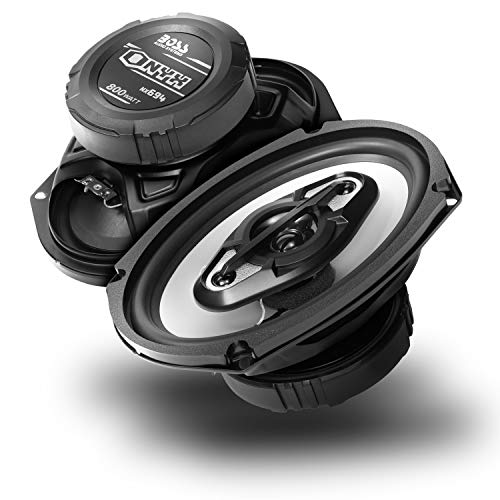
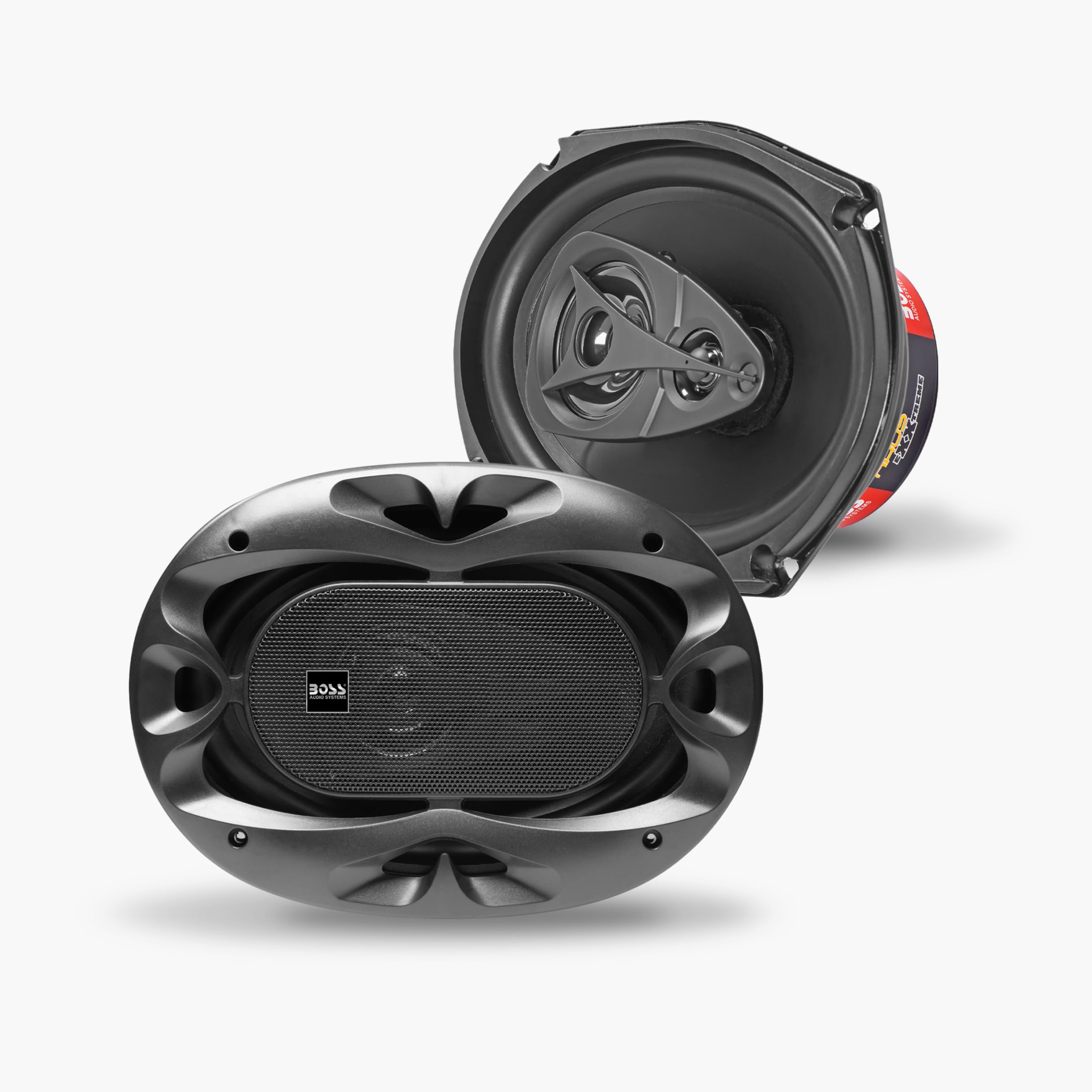
Many Boss speakers are sold as 6.5 inch round or 6x9 oval units, so check your vehicle fit guide before ordering. Oval 6x9 speakers move more air and give fuller bass in rear decks, while round 6.5 inch units fit most front doors. Confirm the mounting depth too, since a door with a window mechanism close behind the speaker can block a deeper model.
Outdoor and Rugged Models
Marine and powersports models add sealed cones, coated baskets, and water resistance rated for spray and washdowns, with some lines reaching IP67 style protection on enclosed units. They suit boats, side by sides, golf carts, and motorcycles. The tradeoff is that rugged surrounds and protective grilles can soften fine detail slightly. Rinse salt spray off marine speakers with fresh water and check seals each season.
Wireless and Bluetooth Models
Boss also sells powered Bluetooth speakers and soundbars for vehicles and portable use, which skip the separate amplifier entirely. These suit riders and drivers who want a simple install with a phone as the source. Output and stereo separation are limited compared with a wired component system, but setup takes minutes. Riders comparing grab and go options can also check our guide to the best mobile speakers.
Setup and Care Tips
- Match amplifier output to the RMS rating, and set gains with care so distortion never masquerades as power.
- Use foam rings or baffles behind door speakers to improve midbass and keep water off the cone.
- Keep firmware updated on powered Bluetooth models, and store portable units charged to about half for long off seasons.
- Avoid maximum volume for long sessions, because heat builds in voice coils and shortens speaker life.
- Check mounting screws and clamps after the first month, since vibration loosens hardware in vehicles and boats.
- Clean grilles with a soft brush and mild soap, and never spray water directly into a tweeter.
A useful tip is polarity. Wire every speaker with the same polarity, because one reversed speaker cancels bass and smears the stereo image in a way no EQ can fix. A free polarity checker app or a simple battery test confirms it in minutes.
Frequently Asked Questions
What IP rating do I need for outdoor Boss speakers?
For a covered patio or golf cart, splash resistance is usually enough, while open boats and washdown areas call for marine grade sealing. Look for explicit marine ratings and stainless or coated hardware, because corroded terminals fail before cones do. An IP67 rating on enclosed portable units covers brief submersion. Rinse salt off after use and let speakers dry before covering them.
Wired or wireless: which sounds better for Boss speakers?
Wired sounds better for a permanent install, with full power, no delay, and no compression. Wireless powered models win on convenience for motorcycles, carts, and quick setups where wiring is impractical. Many owners use both, with wired speakers in the vehicle and a portable unit for stops. Choose by how fixed the listening spot is, not by fashion.
Wrapping Up
Confirm the fit, match RMS power to your source, and pick weather protection that matches where the speakers will live. Then compare your finalists in the product table with those three checks in hand. Done right, the best boss speakers give your car, boat, or cart clear and confident sound for years, without a second round of buying to fix a sizing or power mistake.


