Best Boots for Skinny Legs in 2026: Everything to Know Before Your First Purchase
Disclosure: We may earn a commission when you buy through links on this page, at no extra cost to you. As an Amazon Associate I earn from qualifying purchases. Learn more

New to buying boots for slim calves? This first purchase guide explains openings, closures, and shaft fit so boots for skinny legs sit close with no gaps.
Buying your first pair of boots is exciting until the boots arrive and the tops float loosely around your calves. Slim legs change the shopping rules, because a boot can fit your foot perfectly and still gap, slouch, and rub at the shaft. This guide walks you through best boots for skinny legs from the ground up, starting with the basic terms and ending with a confident first purchase.
You will learn how boot openings are measured, which closures pull a shaft closer to the leg, and how shaft height changes the way a slim leg looks. The comparison table below gathers the main styles side by side, so you can match each type to your wardrobe and your weather before reading the details.




Boots 101: The Basics
A boot has three parts that matter for fit: the foot, the shaft that rises up your leg, and the opening at the top edge of that shaft. Makers measure the opening around its inner edge, and that single number decides whether a boot hugs a slim calf or stands away from it. A slim calf wants a narrow opening, and a visible gap at the top edge is the tell that a shaft is too wide for your leg.
Some styles close with laces, zips, buckles, or elastic panels, while others simply pull on with no adjustment at all. Pull on western styles skip closures entirely, which is why guides to best cowboy boots for skinny legs and best cowgirl boots for skinny legs focus on opening width before anything else. For a first purchase, an adjustable closure is the safer bet, because it forgives small measuring errors.
Key Specs Explained in Plain English
Features That Matter for Skinny Legs
Adjustment is the feature that does the real work on a slim leg. A lace front, a buckle strap, or an elastic panel governs how close the shaft can sit, because each one lets you take up slack that a fixed opening cannot. Narrow openings run about 12 to 13 inches around, while standard openings run about 14 to 15 inches, so start your search at the narrow end of that scale.
Shaft height shapes proportion just as much as width does. A shorter shaft ends lower on the calf, where the leg is slimmer, and keeps the opening closer to the skin, while a tall shaft ends near the widest part of the calf and can exaggerate any gap. Ski boots solve the same puzzle with ratcheting buckles, and our guide to best ski boots for skinny legs shows how that closure logic works in practice.
Fit, Sizing, and Toe Box
Measure both calves at the widest point in the afternoon, when legs are at their fullest, and write the numbers down before you shop. Foot size and calf size do not grow together, so a slim legged buyer often needs a standard foot with a narrow shaft rather than a smaller shoe size. Leave about a thumb width of space in the toe box, because toes swell during a long day on your feet.
Pay attention to heel slip as you walk around the shop or your hallway. A small amount of lift is normal in a stiff new boot, but a heel that floats freely usually means the whole boot is too roomy, and no sock can fix that for long.
Weight and Flexibility
Lighter boots tire slim legs less over a full day, and a flexible ankle area lets the shaft move with you instead of fighting each step. Heavy, rigid boots earn their keep on rough ground and in deep cold, but they can overwhelm a narrow frame and make the leg look lost inside the boot. For everyday wear, a midweight boot with a shaft that bends slightly at the ankle is the balanced first choice.
Flexibility matters at the top edge too. A soft top edge rolls gently against the calf, while a stiff one can dig in when you sit, climb stairs, or drive.
Upper Materials and Breathability
Leather is the classic upper because it softens and molds toward the shape of your leg with wear, which slowly improves a close fit. Suede feels softer from day one but shows water marks easily, while fabric and knit uppers are light and breathable yet offer the least structure around a slim calf. Whichever material you pick, a lining with some grip helps the shaft stay where you put it.
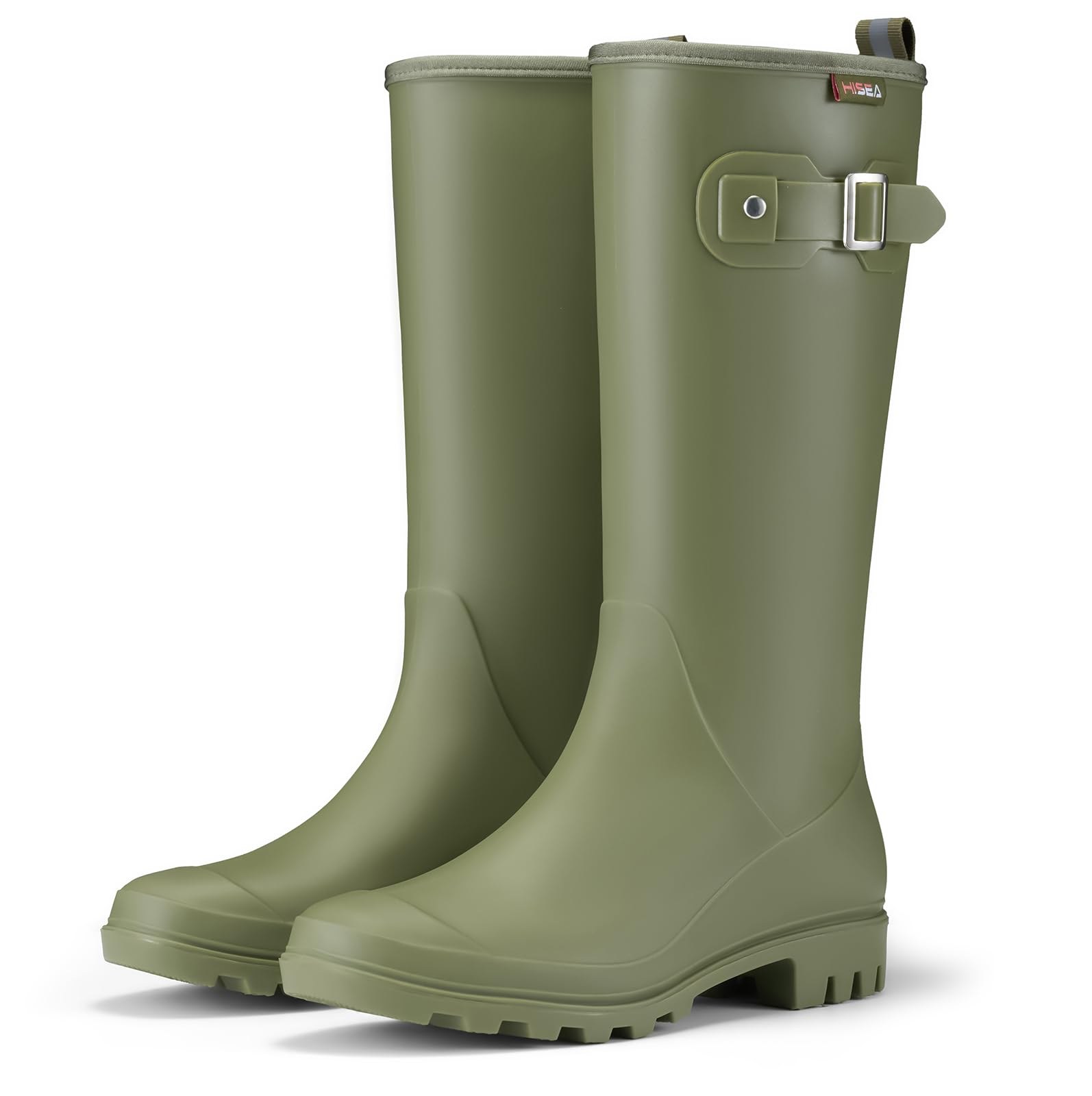
Rubber rain boots are the one class that cannot be tightened or molded at all, so the opening check matters most with them, as our guide to best rain boots for skinny legs explains in detail. Breathable linings matter in warm weather, because a close fitting shaft traps more heat than a loose one.
Outsole Traction and Terrain
The outsole is the patterned rubber layer that meets the ground, and the depth of its lugs decides how it grips. Shallow lugs of about 2 to 3 mm suit dry pavement, while deeper lugs of about 4 to 5 mm bite into mud, gravel, and wet grass. A slim leg has less leverage to recover from a slide, so honest traction matters more, not less, for slender buyers.
For fields, stable yards, and muddy paths, readers often compare best hunter boots for skinny legs, where tall waterproof shafts meet aggressive tread. Match the tread to the ground you actually walk on, because deep lugs on smooth office floors wear down fast and grip poorly.
Durability and Expected Lifespan
A well made leather boot worn in rotation can serve for years, and a resoleable design can outlast several cheaper pairs. Stitching around the sole, a leather or reinforced heel counter, and hardware that feels solid in the hand are the signs to look for. Cemented soles that are glued on cost less but cannot be resoled, so treat them as a shorter term purchase.
Expect the lining and insole to tire before the upper does. Replacing an insole after a year of steady wear restores much of the original comfort for a small cost.
Rookie Mistakes to Avoid
- Buying by foot size alone, which leaves a standard width shaft gaping around a slim calf.
- Skipping the calf measurement, because brand sizing for openings varies by an inch or more.
- Choosing the tallest shaft for a dressy look, even though tall openings sit at the widest part of the leg.
- Ignoring heel slip in the shop, since a floating heel turns into blisters on the first long walk.
- Ordering a pull on style as a first pair, because there is no way to adjust it if the fit is off.
Getting Started: Setup and First Use
Start with the socks you plan to wear most, then put the boots on in the afternoon and walk on carpet for twenty minutes. Check the top edge in a mirror from the front and the side, since a gap is easier to see than to feel. Keep the tags on and stay indoors until you are sure, because most sellers only accept returns on unworn soles.
Wear new boots for short outings first, an hour or two at a time, and let the shaft settle before a full day out. If the opening feels wide with thin socks, try a thicker pair before deciding the boot is wrong for you.
FAQs
What features matter most in boots for skinny legs?
An adjustable closure and a narrow opening matter most, because they decide whether the shaft can sit close to your calf. Check the fit both standing and seated, since your calf changes shape when the muscle flexes and relaxes. A boot that looks close while you stand may still gap when you sit at a desk. That quick seated check takes ten seconds and prevents the most common disappointment with a first pair.
Are expensive boots worth it for a first pair?
Expensive boots are worth it when you will wear them several days a week, because better leather molds closer to a slim leg and resoleable soles spread the cost over years. For occasional wear, a mid priced pair at about $80 to $150 covers the same fit features without the premium. Spend first on fit, meaning closures and opening width, and let decoration come second.
How long is the break in period for new boots?
Most leather boots feel settled after about one to two weeks of short, regular wears. Stiff full grain leather takes the longest, while suede and fabric uppers often feel comfortable within a few days. Break in time also depends on the shaft, because the top edge must learn the curve of your calf. If a spot still rubs hot after two weeks of gradual wear, the size is likely wrong rather than the boot being stubborn.
How should boots fit on slim calves?
Boots should fit snugly at the heel and midfoot, with the shaft resting lightly against the calf all the way around. A small gap of about half an inch at the top edge is fine with winter socks, but a gap you can slide two fingers into will let the boot slouch and rub. The toes need room to spread, and your heel should lift only slightly as you walk.
Can I wear boots all day on skinny legs?
Yes, you can wear well fitted boots all day, and slim legs often find all day wear easier once the shaft stops sliding. A cushioned insole and a sock with a padded calf band fill tiny amounts of space and stop the slow creep downward that causes soreness. If your legs ache by evening, the issue is usually movement inside the boot, not the boot itself.
Wrapping Up
Three checks carry a first purchase: measure your calf and match it to a narrow opening, choose a closure you can adjust, and pick a shaft height that flatters a slim leg. The product table above pulls the main styles together, so compare your measurements against it before you order. Choose carefully once, and best boots for skinny legs will feel like they were made for you from the first week.