
Best Boots for Labradors in 2026: What Actually Matters Before You Buy
Disclosure: We may earn a commission when you buy through links on this page, at no extra cost to you. As an Amazon Associate I earn from qualifying purchases. Learn more

Secure straps, sole grip and a true paw fit: the best boots for labradors, by terrain and season.
Labradors are large, strong, and eager dogs, and a boot that slips off a smaller breed rarely lasts one block on a Lab. The best boots for labradors stay on during hard pulling, protect pads on rough ground, and let your dog walk with a natural stride. This guide uses a simple checklist to judge fit, grip, and durability, so you can read the comparison table below with clear priorities.
Start with where your Lab actually walks. A dog on salted city sidewalks needs different protection from a dog on rocky trails or wet grass. Match each outing to paw size, closures, sole type, and boot height as you read.

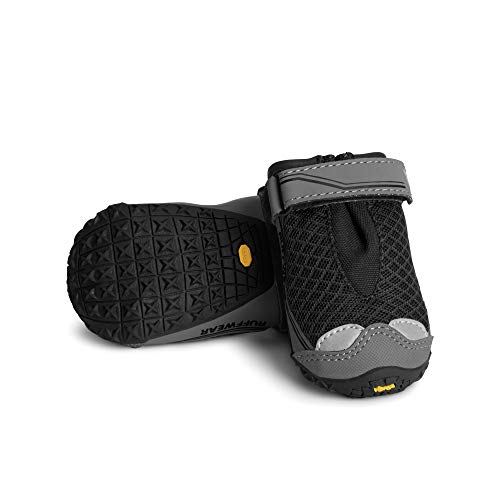

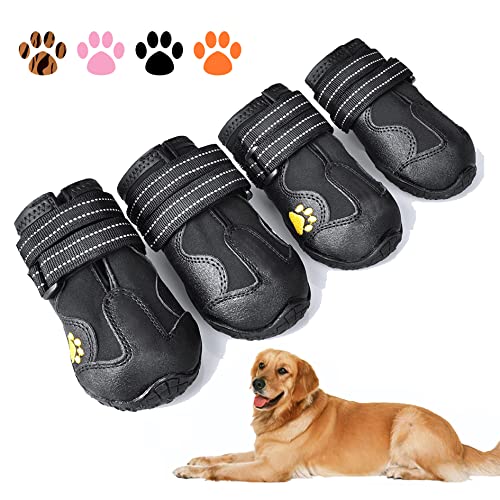

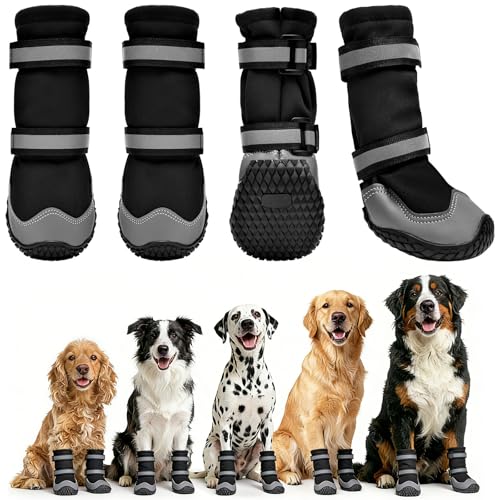
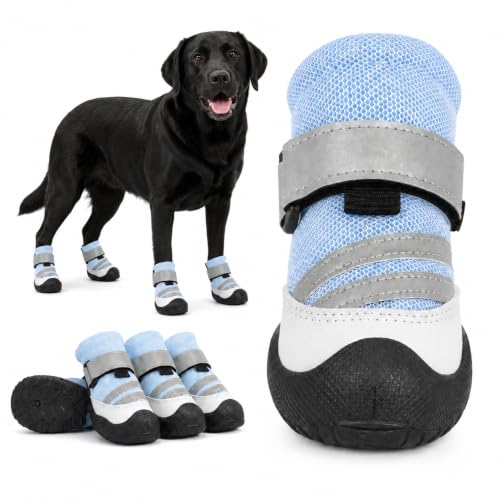
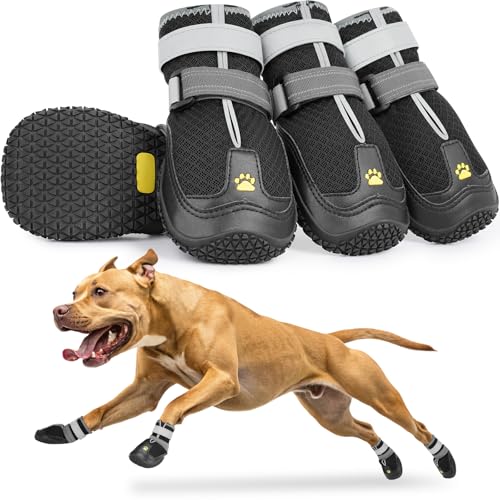


Who Should Buy Which Boots for a Labrador?
Choose by the job the boots must do most often. A Lab that swims and pulls hard puts far more force through straps and soles than a dog on short calm walks.
Active Labradors on Trails and in Water
You need a rugged boot with a firm sole, two secure straps, and fabric that drains instead of holding water. Labs love to enter ponds mid walk, and a waterlogged boot grows heavy and slides around the paw. A taller cuff keeps small stones out, and short practice walks help at first.
City Labradors on Hot Pavement and Winter Salt
You need a lighter boot with a sole thick enough to block heat from summer pavement and a cuff that keeps road salt off the skin between the toes. Salt and ice melt products can dry and crack pads, and dogs often lick those chemicals off after a walk. All four paws need cover.
Young, Senior, or Paw Sensitive Labradors
You need a soft boot that opens wide for easy entry and closes without pressing on tender joints or healing skin. Young Labs may chew straps in training, while senior dogs may need grip help on smooth floors. Watch for limping, swelling, bleeding, broken skin, or constant paw licking, and stop boot use and talk with your veterinarian about those signs.
Key Features to Compare
When you compare best boots for labradors options side by side, judge fit before fabric and closures before color. A Lab puts about 55 to 80 pounds and a lot of forward drive through each set, so small fit errors turn into lost boots.
Paw Sizing and Shape for Large Labrador Paws
Measure each paw while your dog stands with full weight on it, because a resting paw measures narrower than a loaded one. Trace the outline on paper, then record the widest width and the length from heel pad to the longest nail. Front paws on most Labs are slightly larger than rear paws, so check both. Choose the size that covers the width with a small margin.
Closures That Stay On a Strong Pulling Dog
Look for two adjustable straps rather than one, with one low near the paw and one higher on the leg. Two points of contact share the force when a Lab lunges toward a scent, and they let you snug each zone to a different leg shape. Hook and loop straps are quick to fit, but check that the ends stay long enough to grip.
Sole Grip and Paw Protection
The sole is the barrier between pads and hot pavement, sharp gravel, ice, and thorns. A patterned rubber sole grips wet rock and smooth floors better than a flat fabric bottom, and a thicker sole blocks more heat and sharp pressure. Trail walkers should favor firm soles with deep tread, while a senior dog at home needs a thinner sole that bends with the paw. Press the sole with your thumb to judge puncture protection.
Water Use, Drying, and Breathability
Most Labs will find water on any route, so decide whether the boot should shed water or drain it. Coated fabrics suit rain and snow, yet they hold water inside once a dog steps deep into a stream. Mesh panels dry faster after swimming but let cold water in during winter walks. Breathable uppers limit heat buildup in summer.
Boot Height, Flex, and Dewclaw Comfort
Taller boots guard the lower leg against brush, deep snow, and stones kicked up at speed, while shorter boots feel less strange to a dog new to footwear. Check where the top edge and straps land against the front dewclaw, because pressure there can rub during long walks. Bend the boot by hand and check for flex at the toe area.
Types of Labrador Boots Compared
No single style wins for every Lab. For similar styles, see our guide to the best dog boots for labradors.
Flexible Everyday Boots for Sidewalks and Floors
These light boots use a soft sole and a short cuff, and they suit daily sidewalk walks, vet visits, and grip help on smooth floors at home. They go on fast and most dogs accept them sooner than stiff styles. Thin soles wear faster on gravel and give less protection on hot ground.
Rugged Trail Boots for Rock, Mud, and Brush
These boots pair a firm treaded sole with a taller, tougher upper for rough ground. They suit hiking and hunting training where thorns and sharp stone are common. They cost more, often about $50 to $90 for a set of four, and they need a longer training period.
Tall Winter Boots for Snow and Road Salt
These boots rise higher on the leg and use water resistant fabric to keep snow from packing between the toes, where it can freeze into painful balls. A secure upper strap matters most here, since deep snow pulls at every step. Take them off soon after you return, because they can feel warm indoors.
Quick Buyer Checklist for Labrador Boots
Run through these questions before you order, for your main route rather than a rare trip.
- Did you measure front and rear paws at full standing weight?
- Does the size chart use paw width and length, not weight alone?
- Do two straps close the boot, with length to spare?
- Does the sole tread match your ground, from sidewalk to ice?
- Will the fabric drain after swimming or shed snow, as your season demands?
- Does the top edge clear the dewclaw without pressing on it?
- Can you exchange one size without paying for a second set?
- Do you have a plan of short indoor sessions first?
Common Mistakes to Avoid
Most lost boots and sore paws trace back to one of these errors.
- Sizing from dog weight alone gives a poor match, so the boot twists or slips off at the first pull.
- Fastening straps as tight as possible cuts comfort and can rub the leg raw.
- Starting with a full length walk overwhelms a new wearer, so the dog learns to fight the boots.
- Leaving wet boots on after a swim keeps grit against the skin and softens pads.
- Ignoring long nails lets each nail press into the boot front, which changes fit and speeds wear.
- Buying only two boots leaves rear pads exposed to the same salt and heat.
Care and Maintenance for Labrador Dog Boots
Rinse boots after salty or muddy walks with plain water, shake out grit near the toes, and let them air dry away from direct heat, because heat can stiffen coated fabrics and warp thin soles. Check straps and stitching weekly, and store dry boots in an open bin, since trapped moisture grows odor fast.
Inspect soles for cuts and worn tread each week, and check nails and paw fur too, because long nails and matted fur between the toes change how a boot fits.
FAQ
What features matter most in boots for a Labrador Retriever?
Fit, secure closures, and sole grip matter most in boots for a Labrador Retriever. One point many owners miss is strap placement near the wrist joint of the front legs, because a strap on that joint works loose as the leg bends. Choose a design where the upper strap rests just above or below that bend.
How long can a Labrador wear dog boots at one time?
A Labrador can wear dog boots for the length of a normal walk once training is complete, and you should still check paws at rest stops. On warm days, add a shade break and feel inside one boot, because heat builds faster inside coated fabrics than owners expect. Remove the boots once you are back indoors.
Can a Labrador swim while wearing dog boots?
Yes, a Labrador can swim while wearing dog boots, and boots can protect pads on rocky entry points at lakes and rivers. Choose a style that drains freely, and empty each boot right after the swim, because grit washes in during swimming and settles near the toes. Avoid tall insulated styles for summer swimming.
How long does a Labrador need to get used to dog boots?
Most Labradors need about one to two weeks of short daily practice to walk normally in dog boots. Start with two boots on the front paws for a few minutes of indoor play and treats, then add the rear pair once the odd gait fades. A dog that still freezes after two weeks may need a softer, lighter style.
How often should Labrador dog boots be replaced?
Labrador dog boots should be replaced when tread wears smooth, straps lose grip, or the sole shows cuts that reach the inner lining. Heavy daily walkers may wear through a set in one season, while weekend trail dogs can use one set far longer. Keep the worn set as a spare, provided no sharp damage reaches the paw.
Wrapping Up
Judge every set by paw fit, closures that hold under a hard pull, and a sole matched to your ground, and let your main season decide the fabric. Train in short calm sessions and keep boots clean and dry. Use the product table above to compare sizes, prices, and styles.
When you choose best boots for labradors with those points in mind, your dog gets real protection without a daily battle at the door. Start with one well fitted set and walk your usual route.


