
Best Boots for Golden Retrievers in 2026: Which Type Is Right for You?
Disclosure: We may earn a commission when you buy through links on this page, at no extra cost to you. As an Amazon Associate I earn from qualifying purchases. Learn more

Compare dog boot types for golden retrievers by fit, traction, weather use and care, with sizing steps and training tips for calm daily walks.
Golden retrievers walk far and step into puddles without hesitation. Their large paws meet hot pavement, road salt, and sharp gravel across the year. The best boots for golden retrievers shield those paws while letting your dog walk with a natural stride. This guide compares types, fit, and closures so you can read the comparison table below with a clear plan.
Start with the ground your dog covers most often, not with color or price. A city dog needs heat and salt protection, a trail dog needs grip, and a senior dog needs steady footing.


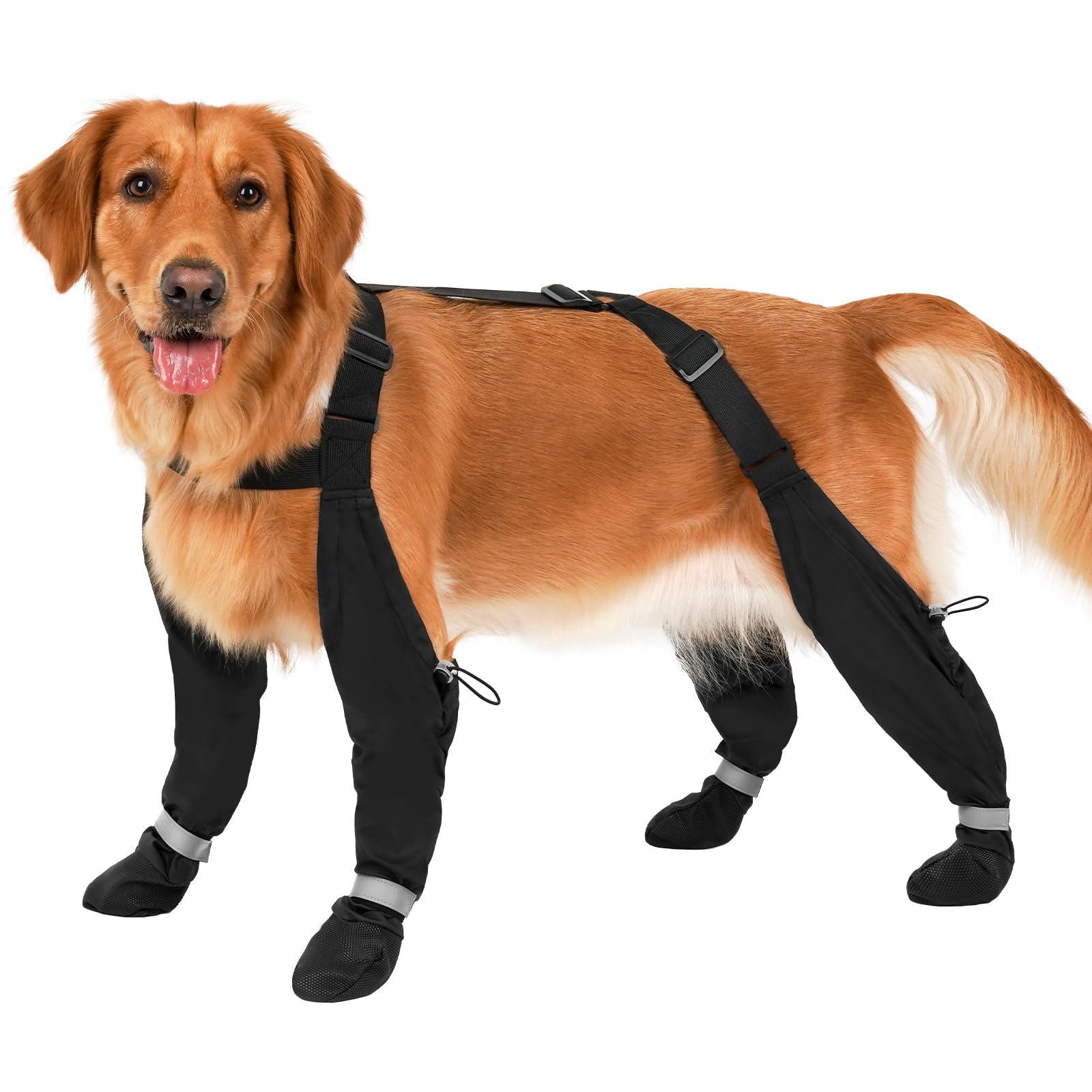
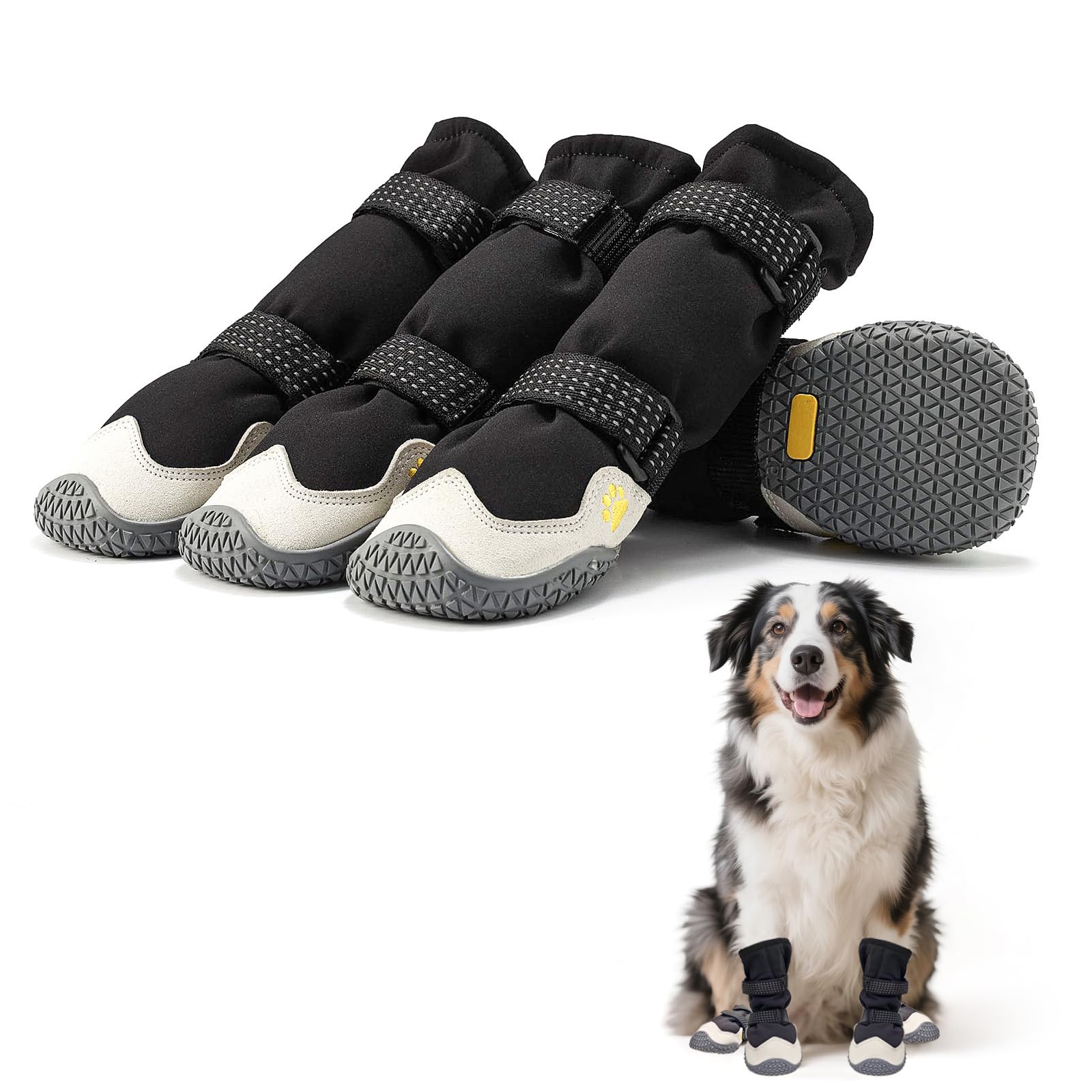
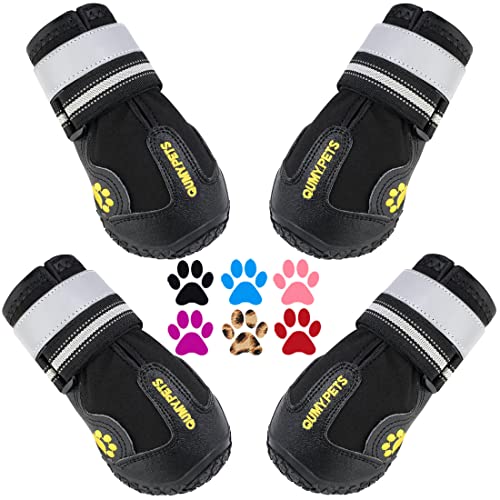
Who Should Buy Boots for a Golden Retriever?
Most goldens do not need boots for a short stroll on clean grass. Boots earn their place when the surface, weather, or paw condition makes bare feet a poor choice.
City Goldens Walking on Hot Pavement and Salted Roads
Your dog walks on sidewalks daily, often at midday or after crews treat icy roads. Choose a rubber sole thick enough to slow heat transfer and a closed upper that keeps salt and grit off the pads. A secure strap matters because city walks involve curbs, stairs, and sudden lunges.
Trail and Beach Goldens Who Run on Rough Ground
Your dog hikes, camps, and swims, then runs back across gravel, shells, and rocky shores. Choose a flexible sole with real tread, a taller cuff that sheds debris, and fabric that drains and dries fast. Goldens carry 55 to 75 pounds at speed, so a thin fashion boot wears through quickly for this group.
Senior Goldens and Dogs With Tender Paws
Your older dog slips on smooth floors or heals from a cracked pad. Choose soft boots with a grippy sole, gentle padding, and a wide opening so dressing takes seconds. Watch for limping that grows worse, swelling, bleeding, a wound that will not close, or a paw that feels hot, and see a veterinarian promptly for those signs. Talk with your veterinarian about personal needs before using boots over any injury.
Key Features to Compare
When you compare the best boots for golden retrievers, judge fit first, then closure, sole, upper, and coverage. A boot that matches paw shape and stays on protects better than a thicker boot that twists off.
Paw Size and Shape in a Large Breed
Golden paws are wide and fairly round, and the front pair is often slightly larger than the back pair. Most adult goldens need sizes built for a paw width of about 2.5 to 3.25 inches, but brands grade sizes differently, so a chart number means little without a tracing. A correct boot lets the toes spread when your dog stands, with no pad hanging past the sole edge.
Closure Straps That Stay On an Active Dog
Two adjustable straps hold far better than one, because the first secures the paw while the second locks the ankle area above it. Hook and loop straps are quick to use, but they lose grip when packed with golden hair, sand, or snow, so clear them before every walk. Two fingers should fit flat between strap and fur. A boot that rotates needs a different size, not a tighter strap.
Sole Grip and Flex for Pavement, Snow, and Trails
A good sole bends where your dog paw bends, near the toes, while shielding the pad from heat, ice, and sharp stone. Deep tread helps on snow and mud but can feel clumsy on tile, where a flatter rubber pattern grips better. For daily city use, choose moderate tread and real flex over maximum thickness.
Upper Material for Heat, Rain, and Snow
Mesh uppers breathe on warm days and dry quickly after a swim, but they let in fine grit and offer little warmth. Soft synthetic fabric with a water resistant finish suits rain and wet grass, while insulated waterproof uppers suit deep snow. Match the upper to your coldest regular walk.
Coverage Height and the Dewclaw Area
Short boots sit below the ankle and suit pavement, floors, and light rain. Taller boots keep snow, burrs, and trail grit out and help straps stay in place on a furry leg. Goldens carry dewclaws on the front legs, and a strap or boot edge that rubs that spot can cause sore skin within one long walk. Check that the cuff lies flat above or below the dewclaw.
Types of Dog Boots for Golden Retrievers Compared
Everyday rubber sole boots are the all purpose choice for pavement, floors, and light trail use. For one set that covers daily walks in mixed weather, see our guide to the best dog boots for golden retriever shoppers. A set usually costs about $25 to $50.
Soft fabric boots with thin soles feel more like socks and help mainly with indoor traction and mild cold. They fold small, wash easily, and suit senior dogs who need grip more than armor. Their weakness is wear, since fabric soles can thin within weeks on concrete. Reserve them for floors and short yard trips.
Insulated winter boots add a warm lining, a taller cuff, and a rugged sole for ice and packed snow. For deep cold, see our guide to the best winter boots for golden retrievers to compare insulation and cuff height. A durable set costs about $40 to $70.
Light snow boots sit between fabric boots and full winter boots, with a water resistant upper and a moderate sole. They suit dogs who play in yards rather than trek through drifts. If your winters bring slush more than deep powder, see our guide to the best snow boots for golden retrievers for that middle ground. Buy a full set of four.
How to Measure and Train a Golden Retriever to Wear Boots
Measure while your dog stands on paper, because a lifted paw is narrower than a loaded one. Trace around the widest part of each front paw, measure the tracing width, and compare it with the brand chart. Repeat for a back paw, since many goldens need one size in front and a smaller size behind. If a measurement falls between sizes, choose the larger size and add a thin dog sock.
Training decides whether good boots ever get used. Start indoors with one boot for a few minutes, reward calm steps with a treat, and remove the boot before your dog paws at it. Add one boot per session over several days, then take a short walk on familiar ground.
Common Mistakes to Avoid
Small errors cause most lost boots and most refusals.
- Measuring a lifted paw gives a size too small, and tight boots rub pads raw on a long walk.
- Buying one size for all four paws leaves loose back boots that twist and fall off in mud.
- Skipping training and starting with a long walk teaches your dog to fear boots and chew straps.
- Leaving wet boots on after a walk traps moisture and salt against the skin and causes irritation.
- Ignoring a strap packed with fur weakens the closure, and the boot slips off blocks from home.
- Using tall winter boots on a hot day overheats your dog, since dogs release heat mainly through panting and paws.
Care and Maintenance for Dog Boots
Rinse boots after walks on salted roads, muddy trails, or beaches, using plain water and a soft brush for grit in the tread. Open every strap and cuff so air reaches the lining, and dry boots at room temperature away from radiators and direct heat, which can crack rubber.
Before each walk, check soles for cuts, worn tread, and stones wedged in the grooves. Inspect straps for frayed edges and weak grip, and press the lining flat so folds do not rub the paw. Store clean, dry boots in an open bag, not sealed plastic, because trapped damp grows odor and mildew.
Frequently Asked Questions
How long can a golden retriever wear dog boots at one time?
A golden retriever can wear dog boots for a full walk of one to two hours once training is complete. Check the paws at every long stop, because a folded lining or grit inside can rub skin without any change in gait. On warm days, remove boots during rest breaks in shade so paws can cool.
Why does one dog boot keep falling off a golden retriever?
One boot usually falls off because that paw is a different size or the strap sits over thick fur instead of the narrower ankle area. Back paws are often smaller, so a set bought only by front paw size fits loosely behind. Try the next size down for the back pair and clear loose hair from the strap. A boot that twists first points to a shape problem.
Can a golden retriever swim while wearing dog boots?
A golden retriever can wade and swim briefly in boots made with drainage and rubber soles, but boots are usually better removed before a real swim. Water fills tall cuffs, adds drag, and loosens straps as fur gets slick.
How often should dog boots for a golden retriever be replaced?
Dog boots for a golden retriever should be replaced when the tread wears smooth, the sole cracks, or the straps no longer hold through a normal walk. Heavy daily walkers on concrete may wear a set out in one season, while occasional trail users keep a set much longer. Check the front pair first, since front paws carry more weight and braking force.
Are dog boots safe for a golden retriever puppy still growing?
Dog boots are safe for a golden retriever puppy for short, supervised walks on hot, cold, or salted ground. Puppy paws grow quickly, so check fit every few weeks and expect to size up more than once in the first year. Keep early sessions brief and playful.
Wrapping Up
Fit, closure, and sole decide whether boots protect your golden or end up lost on the trail. Measure standing paws, choose the type that matches your ground and season, and train in short, rewarded steps. Use the product table above to compare sizes, cuff heights, and prices.
Chosen with care, the best boots for golden retrievers turn harsh pavement, salted sidewalks, and rough trails into ordinary walks. Start with one good set and adjust size or style before you buy a second pair.


