Best Boots for Foot Pain of 2026: Complete Buying Guide
Disclosure: We may earn a commission when you buy through links on this page, at no extra cost to you. As an Amazon Associate I earn from qualifying purchases. Learn more
Choose the best boots for foot pain with a complete guide to fit, cushioning, arch support, break in time, and what each price band buys for sore feet.
Sore feet change how a whole day feels, and the wrong boots can turn a short walk into a long one. This complete guide to the best boots for foot pain starts with an honest limit, then walks through fit, cushioning, and support in the order that matters most. The comparison table below puts the main boot types side by side.
No boot fixes a medical problem, and this guide does not pretend otherwise. What the right pair can do is reduce avoidable pressure, spread load across the sole, and keep your feet steadier, which for many people is the difference between dreading a shift and getting through it.

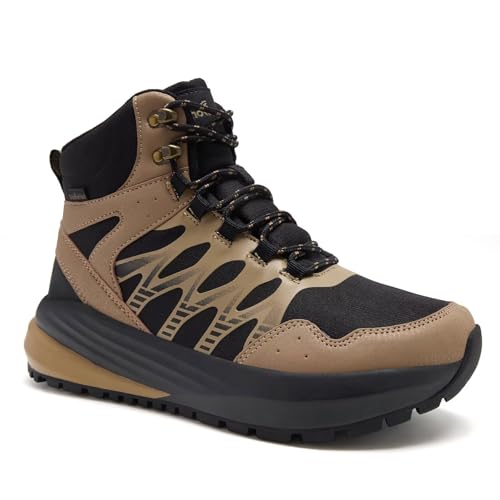


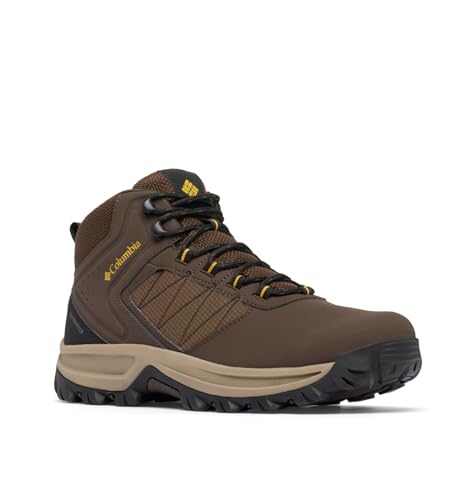

How to Choose: A Complete Buying Guide
Work through this section in order. The first two checks are about honesty and health, and they come before any talk of price, because choosing the best boots for foot pain starts with knowing what footwear can and cannot do.
What a Boot Can and Cannot Do
Be clear about the job of a boot. A well fitted boot supports comfort only: it cushions impact, spreads pressure across the sole, and holds the heel steady so your foot does less correcting work with every step. It treats no foot condition, corrects no diagnosis, and replaces no care for an injury. If a listing promises to cure pain or fix a named condition, that claim alone is a reason to walk away from it.
When to See a Clinician First
Some signs mean the next step is a clinician, not a checkout. Book an appointment before buying if pain persists for more than a couple of weeks, keeps getting worse, or arrives with numbness, tingling, swelling that does not settle, or soreness that follows a fall or a twist. Diabetes and circulation problems raise the stakes further, because small rubs can turn serious. A clinician can rule out causes that no boot should be asked to handle.
Fit, Sizing, and Toe Box
Fit governs comfort more than any feature list. Measure both feet in the afternoon, when they are at their largest, and fit the larger foot. Your toes should lie flat with room to spread slightly, with about a thumb width in front of the longest toe, and the heel should stay put without squeezing. A removable insole matters too, because swapping the flat factory insole for a shaped one is often the cheapest comfort upgrade, and fit plus insole together decide how the boot feels by evening.
Cushioning and Arch Support
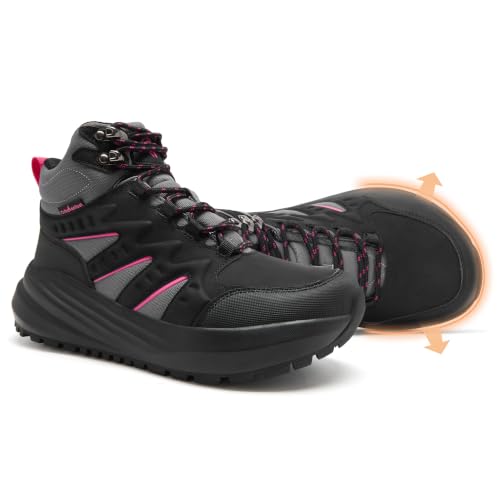
Cushioning absorbs impact, while arch support spreads load along the foot. A midsole that feels soft in the hand but bottoms out under your weight will ache by midday, so look for foam with some firmness under the heel. Match the support to your arch: a flatter foot usually does better with a firmer shaped insole, while a higher arch often prefers more cushion. A stable heel counter ties the two together by keeping the rear foot from rolling as you walk.
Break In Period and Comfort Out of the Box
Leather boots soften over the first one to two weeks, so judge fit by the absence of hot spots rather than by instant softness. Wear new boots around the house and on short walks before a full day, and add wearing time gradually. Sharp rubbing, pinching, or numb toes on day one rarely break in away, because those are fit problems, and a different size or shape will serve you better than patience.
Outsole Traction and Terrain
Traction is a comfort feature, because a foot that trusts the ground stays relaxed. Lug depth of about 3 to 5 mm handles wet pavement and light trails, while a flatter and wider sole grips smooth indoor floors. A slight rocker shape can ease the roll from heel to toe on long walks. Match the outsole to where you actually walk rather than to the most rugged option on the shelf.
Types of Boots to Consider
Most boots for sore feet fall into one of three patterns. The right pattern depends on whether your days are spent standing, walking, or a mix of both.
Cushioned Boots for Hard Floors
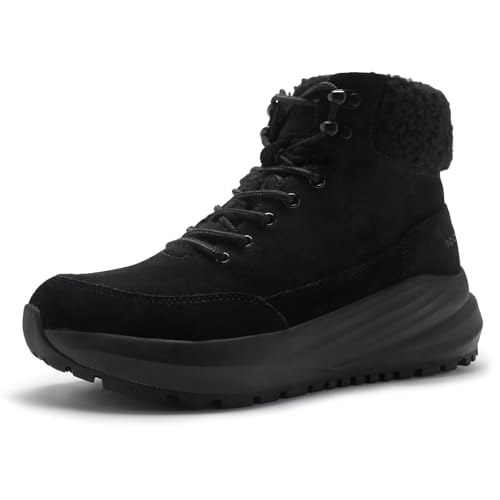
Thicker midsoles and softer foams suit people who stand on concrete or tile for long stretches. The trade is a slightly less stable feel when you move fast. Shoppers who work on their feet can compare the best work boots for foot pain built on this cushioned pattern.
Firm Support Boots
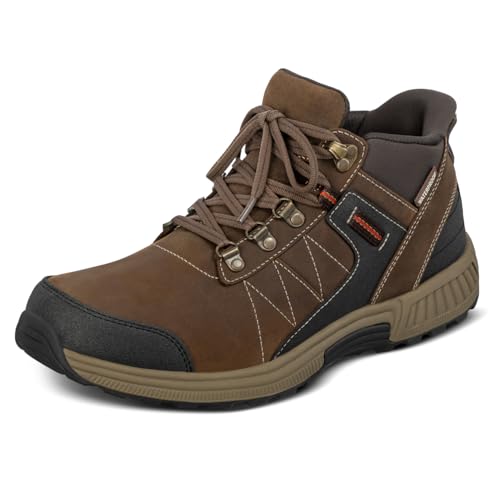
A stiffer sole and a structured insole suit walkers who want the boot to guide the foot rather than let it flex freely. Fit comes first here too, because a stiff sole leaves little room to hide a poor match.
Lightweight Hiking Boots
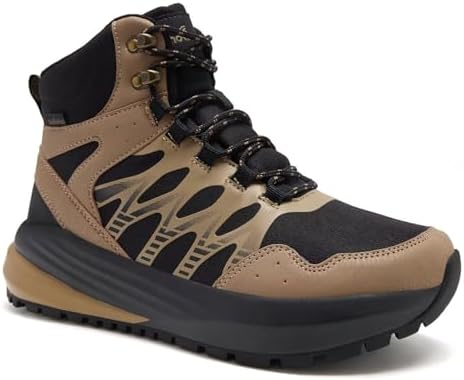
A lighter boot tires legs less over distance, and a waterproof membrane version helps in wet climates at the cost of extra warmth. Walkers who split time between pavement and trails can compare the best hiking boots for foot pain for this middle ground pattern.
Price Bands: What Each Tier Buys
With the health checks done, price sorts into three simple bands. Higher bands mostly buy better foams, better leather, and construction that holds its shape longer.
Entry Band, About $60 to $110
Expect a basic cushioned midsole, a flat stock insole, and synthetic or split leather uppers. Fit varies a lot at this level, so shop where returns are easy. These boots can work well if the shape matches your foot and you upgrade the insole.
Mid Band, About $110 to $180
This band buys denser foams that resist packing flat, shaped insoles, and full grain leather on many pairs. Break in is usually kinder, and the heel counter holds its shape longer. For most buyers with daily soreness, this is where comfort per dollar peaks.
Upper Band, About $180 to $280
Premium pairs add resoleable construction, higher grade leather, and more refined shapes for narrow or wide feet. The extra money buys lifespan and fit range more than extra cushion. It pays off mainly for people who wear boots every day and have a hard shape to fit.
Tips to Get the Most From Your Boots
- Lace snugly over the midfoot and use the top eyelets, because a locked heel stops the sliding that causes hot spots.
- Rotate two pairs across the week, because a rest day lets the cushioning recover its shape.
- Air dry boots away from direct heat after wet walks, because heat stiffens leather and hardens foam.
- Replace the insole when the factory one packs flat, because a fresh shaped insole restores support for a fraction of the price of new boots.
- Rest your feet at home in supportive house footwear such as the best slippers for foot pain rather than in thin flat soles.
- In warm weather, give boot tired feet a break with the best sandals for foot pain that have a shaped footbed instead of a flat one.
Frequently Asked Questions
What features matter most in boots for foot pain?
Fit matters most, then cushioning with some firmness, then a stable heel counter. One factor buyers rarely check is the weight of the boot itself: a heavy pair asks tired legs and feet to lift extra load thousands of times a day, which can undo the good of a fine midsole. If two pairs fit equally well, the lighter one usually feels kinder by evening.
Can I wear boots for foot pain all day?
Yes, once they are broken in, a well fitted pair is made for all day wear. Build up to it across the first week, starting with a few hours and adding time as your feet adjust. Short sitting breaks help more than any feature, because unloading the sole for a few minutes lets pressure points recover. If all day wear still leaves you limping, the fit is wrong or the warning signs above apply.
How long is the break in period for new boots?
Leather boots usually need about one to two weeks of short wears, while synthetic pairs often feel right within a day or two. Watch for one detail during that window: a hot spot that returns in the exact same place every wear is not breaking in, it is a shape mismatch. A cobbler can stretch a single tight spot, but a boot that pinches in three places should go back.
Are expensive boots for foot pain worth the money?
Only when the extra money buys fit and construction rather than styling. Cost per wear is the fair test: a pair at about $200 worn on 200 days costs about a dollar a day, while a poor fitting pair at any price costs you every step. Spend first on the size and shape range that fits your foot, then on foam quality, and let price come last.
How often should I replace boots for foot pain?
Plan on about 300 to 500 miles of walking, or roughly 6 to 12 months of daily wear, before the midsole loses its spring. Two signs say the end is near even if the upper looks fine: the heel wears down unevenly on one side, and the foam shows deep creases that stay after a rest day. Replacing on time matters, because a dead midsole quietly removes the support you bought the boots for.
Final Thoughts
Fit first, cushioning second, price last. A boot that fits your larger foot, holds your heel, and spreads load will do more for daily comfort than any single feature claim, and the warning signs covered earlier deserve a clinician rather than a new pair. Compare your shortlist in the product table above, then pick the best boots for foot pain that you will actually wear every day.