Best Boots for Center Backs 2026: Guide for Defenders
Disclosure: We may earn a commission when you buy through links on this page, at no extra cost to you. As an Amazon Associate I earn from qualifying purchases. Learn more

Choose the best boots for center backs with guidance on stud patterns, fit, leather uppers, lockdown, protection and care for firm and artificial ground.
A center back faces forward, then turns, backpedals, jumps, tackles and clears under pressure. The best boots for center backs support all of that, with firm traction, a secure heel and protection for blocked shots. Use the comparison table below to match each design to your ground.
Your position asks for a different balance than a winger needs. Speed matters on recovery runs, but planted feet matter more when you strike a long clearance or hold off a striker. The sections below sort defenders by playing style, then explain the studs, fit and materials that matter most.



Who Should Buy Boots Built for Center Backs?
Start with the jobs you repeat every match. A defender who wins headers needs a stable plant foot, while one who carries the ball out needs close control at full stride. Your ground should narrow the choice before price does.
Aerial Defenders Who Contest Crosses and Set Pieces
You jump from a standing start, land among other players and often clear while off balance. Choose a firm heel counter, a locked midfoot and conical or mixed studs that release cleanly when you twist to land. Real stability comes from the heel cup and lacing, not collar height alone.
Physical Defenders Who Tackle and Block Shots
You put your foot where strikers are about to shoot, so thin speed uppers leave your toes and instep exposed. Look for a thicker upper, a reinforced toe area and padding over the front of the foot. Leather and sturdy synthetics spread the force of a blocked shot better than knitted uppers. Accept a little extra weight for that protection.
Ball Playing Defenders Who Start Attacks
You step out with the ball, switch play with long diagonal passes and take free kicks from deep. You still need traction and protection, but ball feel moves up your list. A leather forefoot or a textured synthetic upper helps you judge the weight of a pass, and a clean striking surface along the instep keeps long balls predictable.
Key Features to Compare
When you compare the best boots for center backs, work through traction first and comfort last. Soft cushioning cannot fix studs that slide on wet grass or a heel that lifts on every turn.
Stud Pattern and Traction for Turning and Backpedaling
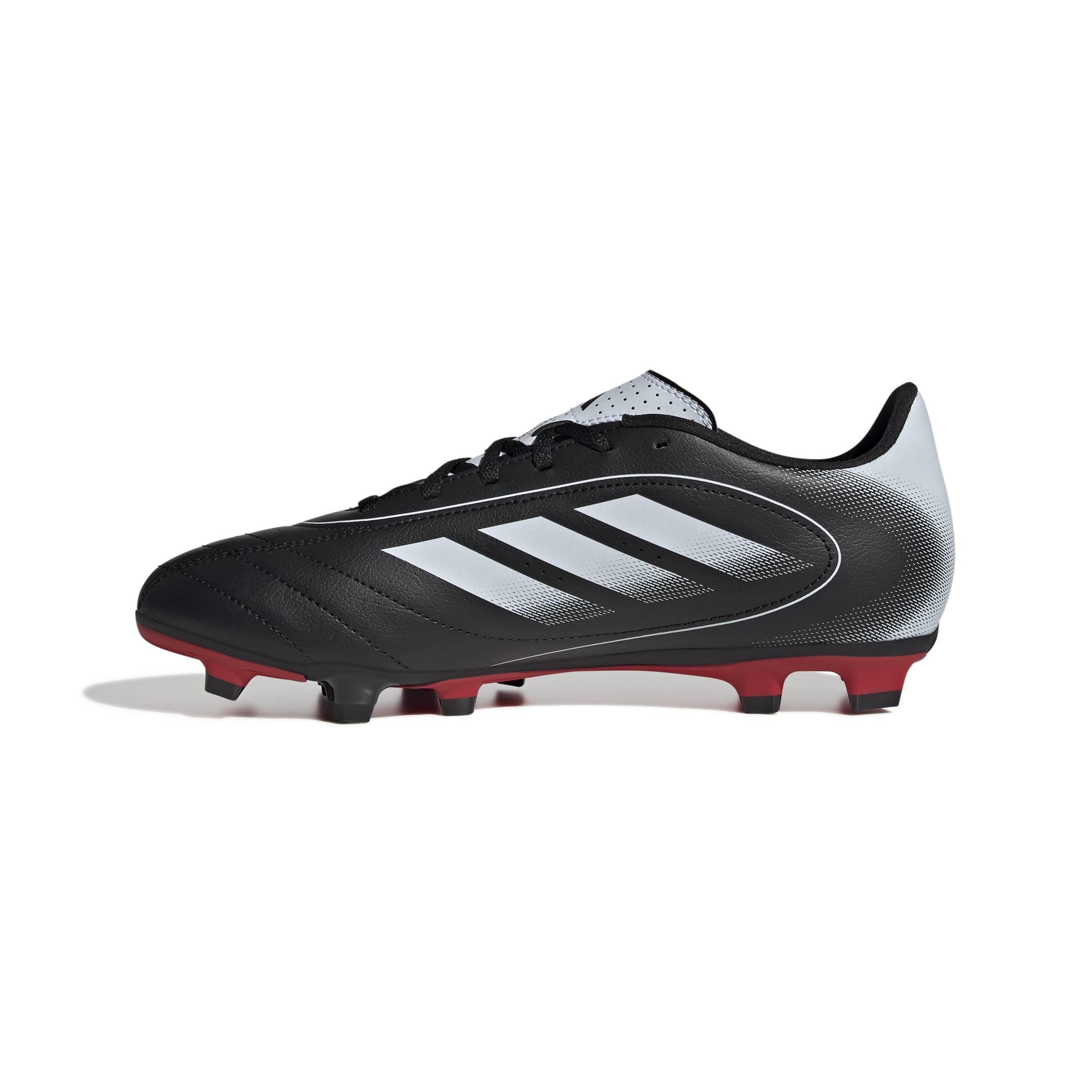
The outsole decides how safely you plant, turn and stop. Conical studs pivot well, which suits defenders who swivel to track a runner, while bladed studs bite harder in a straight line and can feel sticky when you twist. Mixed patterns combine both shapes and suit most center backs. On firm natural grass, about 10 to 13 studs of moderate length give grip without pressure points.
Lockdown and Stability for Lateral Duels
Lockdown means your foot stays centered over the soleplate when a striker cuts inside or bumps you as you shield the ball. Look for laces that run far down the foot, a shaped heel cup and a midfoot that does not stretch sideways. Try boots on with match socks and push off each side. Your heel should stay seated on every push.
Upper Material and Protection for Tackles and Clearances
Leather uppers mold to your foot, cushion contact with the ball and offer solid protection for tackles, which is why many defenders still choose them. Quality leather needs care and gains weight when soaked. Synthetic uppers stay lighter in rain and often carry grip texture for wet clearances, but thin versions transmit more sting from a blocked shot. A reinforced heel counter guards the back of your foot.
Fit, Toe Box and Sizing for Powerful Striking
Measure both feet late in the day, when match swelling is closest to real size, and size for the longer foot. Leave about a thumbnail of room, roughly 8 to 10 mm, in front of your longest toe so your toes can spread when you plant to clear. Wide footed defenders should seek wide lasts rather than sizing up, because extra length lets the foot slide and blister.
Cushioning, Insoles and Comfort for a Full Match
Soccer boots carry far less cushioning than running shoes, since a thin sole keeps you close to the ground for balance. Comfort comes from an even stud layout, a smooth insole and an upper without hard seams over the toes. Removable insoles let you add arch support if your feet ache on hard summer ground. Break in new boots across two or three training sessions, before a hot spot becomes a blister.
Weight, Flexibility and Matching the Boot to the Ground
Most defender friendly boots weigh about 250 to 320 grams per boot, a range that balances protection with recovery pace. Very light boots flex more and protect less, while heavy boots can feel slow late in games. Match the soleplate to the surface above all. Firm ground plates suit dry grass, longer metal tipped studs suit wet winter pitches, and artificial ground plates use shorter, more numerous studs on synthetic turf.
Types of Soccer Boots for Center Backs Compared
Three broad families cover most defenders. Read each type against your main surface and your role before you decide.
Classic Leather Boots for Touch and Protection
Leather models give you a padded first touch, a forgiving fit that stretches a little with use and the most protection in this group. They suit defenders who clear first time and value comfort across a long season. Their limits are slower drying and regular conditioning. Expect about $90 to $220.
Modern Synthetic Boots for Wet Conditions and Recovery Pace
Synthetic models shed rain, keep a consistent shape and often add grip elements that help with wet weather clearances. Lighter builds suit a defender who steps into midfield or chases runners into wide channels. The trade off is a firmer feel, plus less padding against a hard shot. Many options sit at about $70 to $180.
Artificial Ground and Turf Boots for Synthetic Pitches
If most of your football is on artificial turf, a dedicated artificial ground plate protects your knees and ankles better than a firm ground plate used out of place. Shorter hollow studs grip without digging in, so your foot can rotate as you turn. Turf shoes with many small nubs suit very hard surfaces, though they offer less bite for full power clearances.
Common Mistakes to Avoid
Most poor purchases come from copying another position or another surface.
- Buying the lightest speed boot leaves your toes unprotected when you block shots.
- Wearing firm ground studs on artificial turf makes the boot grip too hard and strains your knees.
- Sizing up to gain width lets your foot slide and causes blisters and blackened toenails.
- Judging fit in thin everyday socks makes the boot feel roomier than it will on match day.
- Playing a full match in brand new boots invites hot spots that can sideline you next game.
- Choosing bladed studs for constant twisting lets a planted foot stick while your body rotates.
How to Make Your Boots for Center Backs Last Longer
Loosen the laces fully after each game and pull the tongue forward so air reaches the insole. Stuff wet boots loosely with newspaper for the first hours, then dry them at room temperature away from radiators and direct heat, which crack leather and weaken glue. Brush off dried mud rather than knocking studs together, since impact can loosen stud threads.
Clean leather with a damp cloth, let it dry, then apply a thin layer of conditioner to keep it supple. Check stud tightness before training and replace worn studs in full sets so traction stays even. Store boots in a breathable bag.
FAQ
What stud pattern suits center backs who play on firm grass?
A mixed or conical pattern suits most center backs on firm grass. Conical studs let your planted foot rotate a little as you turn with a striker, which lowers twisting force at your knee. Choose a plate with a stud under the big toe joint, because that is where you push off to jump for a header.
How tight should soccer boots fit a center back?
Soccer boots should fit close through the heel and midfoot, with your toes close to the end but never curled. Test the fit by sprinting a few strides indoors if the shop allows, then stopping hard. If your toes hit the front on the stop, the boot is too short for clearances and landings.
Can center backs wear firm ground boots on artificial turf?
Center backs can wear firm ground boots on artificial turf for an occasional game, but it should not be the weekly plan. Turf builds heat through friction, and that heat can soften glue and shorten the life of a leather upper. A dedicated plate also lasts longer, because its studs wear more slowly on that surface.
How often should center backs replace their soccer boots?
Replace soccer boots when the upper splits, the soleplate cracks or the studs wear unevenly and start to slip. A useful home check is to set the boot on a table and press each corner. Rocking at one corner means the plate has twisted or a stud has worn short, which can change how your foot lands.
Do center backs need a high collar on soccer boots?
No, center backs do not need a high collar, because collars add feel rather than real ankle support. A knitted collar mainly keeps turf pellets and loose grass out of the boot, a genuine comfort gain on artificial pitches. If debris is not a problem, a low cut boot with a strong heel counter gives the same stability for less money.
The Bottom Line
For most defenders, the order is simple. Match the plate to your ground, lock your heel, protect your forefoot and leave honest room for your toes. Then pick leather or synthetic, using the product table above to compare weight, plate type and price.
Chosen that way, the best boots for center backs disappear during the match. Your attention stays on the striker and the next clearance, not on your feet.