The Best Boat Toilets for 2026: A Practical Buying Guide
Disclosure: We may earn a commission when you buy through links on this page, at no extra cost to you. As an Amazon Associate I earn from qualifying purchases. Learn more

Compare boat toilets by flush type, tank size, footprint and power use, with clear guidance on hoses, venting, care and costs for your boat head.
A boat toilet has to work in a small wet room, on a moving hull, with limited water and a tank that someone must empty. The best boat toilets solve that puzzle without odor, clogs or repairs. This guide explains flush types, tank sizes and fit so you can read the comparison table below with clear priorities.
Start with how you actually use the boat. A toilet used twice on a Saturday faces a different job from one used daily on a long cruise. Your crew size, longest trip and head space shape every choice that follows, from flush type to hose routing.




Who Should Buy Which Boat Toilets?
Match the toilet to your longest typical trip, because tank size matters more as the days aboard add up.
Cruisers Spending Several Nights Aboard
You need a fixed toilet with a holding tank large enough for the whole crew between pump out stops. An electric flush suits you if your battery bank is large, because each flush draws power yet saves effort for guests who may not know a manual pump. Choose a full size bowl if the head allows it, since comfort matters more on day five than on day one.
Weekend Boaters With a Small Enclosed Head
You need a compact fixed toilet or a sturdy portable unit that fits a tight floor plan. A manual flush keeps the install simple and draws no power, which suits boats that sit on a mooring all week. Measure the door swing and your knee room before you buy, because a toilet that fits the floor may still crowd its user.
Day Boat Owners With Little or No Plumbing
You may do better with a portable toilet that carries its own small tank and needs no hoses, wiring or holes in the hull. If you want options first, see our guide to the best portable toilets for boats for sizes and tank styles made for this use.
Key Features to Compare
Compare these points in order. The best boat toilets for your hull are rarely the largest or the cheapest, but the ones whose tank and plumbing match your space and wiring.
Flush Type and How Waste Moves
A manual toilet uses a hand pump to pull in flush water and push waste to the tank, with no power at all. An electric toilet uses a motor and often a macerator that grinds waste so it moves through smaller hoses with fewer clogs. A vacuum system pulls waste with stored suction and uses very little water per flush, but it needs more parts and a higher budget. Choose manual for simple boats and electric for guest friendly use.
Holding Tank Size and Emptying Options
Tank size decides how often you stop to empty, and common tanks hold about 10 to 40 gallons. Size the tank for your longest trip, not your average one, because a crew of four can fill a small tank fast. Fixed tanks empty through a deck fitting at a pump out station or through a discharge pump where local rules allow it. Portable tanks lift out and pour into a shore toilet, simple but heavier work as the tank grows.
Footprint, Seat Height and Bowl Size
Measure the floor area, the height of any platform and the swing of the head door before you shop. Compact bowls suit small heads, while household size bowls give a taller, more comfortable seat. Leave room in front for knees and at the sides for cleaning and for the pump handle on manual models. Dry fit the base on cardboard first, because bolt holes and hose exits decide fit too.
Bowl Material and Life in Salt Air
Porcelain bowls feel solid, resist stains and clean with a smooth wipe, but they weigh more and can chip if a heavy tool drops on them. Plastic bowls weigh less and cost less, yet they can scratch and hold odor in those scratches over time. Metal parts should resist corrosion from salt air and salt water flushes, so look for coated or stainless hardware at hinges and mounts.
Power Draw and Water Use Per Flush
Electric and vacuum toilets draw from your 12 volt system, and a macerator motor can pull about 15 to 25 amps for a few seconds per flush. That load is small on a large bank but real on a single battery boat. Water use runs from about a pint for some vacuum models to about 1 to 2 gallons for older manual heads. Lower use stretches your fresh supply and tank space.
Hoses, Venting and Odor Control
Odor usually comes from permeable hoses, a blocked tank vent or waste sitting in a low loop of hose. Use sanitation hose rated for waste, keep runs short with smooth bends, and route the tank vent outside. A vented loop above the waterline stops sea water from siphoning back into the bowl on sailboats that heel. Plan these routes before you buy, because a toilet cannot fix plumbing that traps waste.
Types of Boat Toilets Compared
Each type below trades simplicity, comfort and install work in a different way, and prices rise as pumps and motors grow more complex.
Manual Pump Toilets
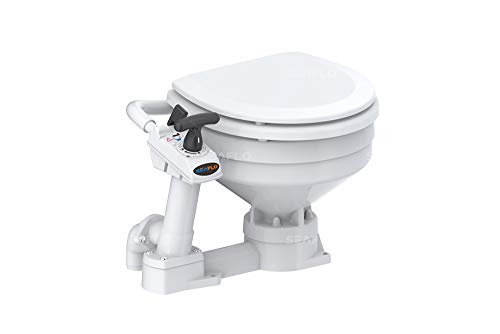
Manual toilets are the long running standard on sailboats and smaller cruisers. You pump water in and waste out by hand, so there is nothing electrical to fail offshore. They cost about $150 to $400 and need regular seal care.
Electric and Macerating Toilets
Electric toilets flush at a button press, and a macerator chops waste so hoses clog less often. They suit family boats where guests expect a home like feel. Expect about $400 to $1,200, plus wiring.
Portable and Cassette Toilets
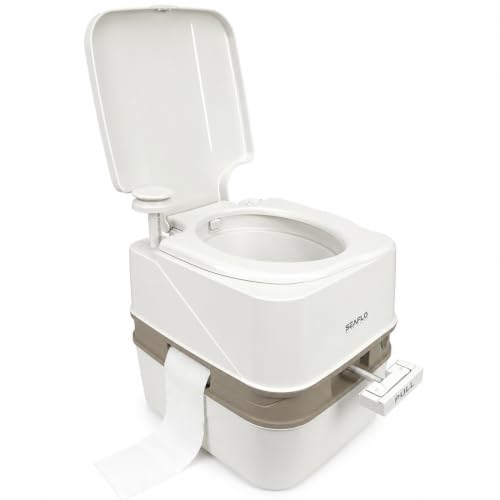
Portable toilets sit on the floor with a sealed tank below the bowl and need no install beyond a flat spot and a strap. Cassette versions slide the tank out through a hatch for emptying ashore. They cost about $80 to $250, but small tanks fill fast with a full crew.
Composting Toilets
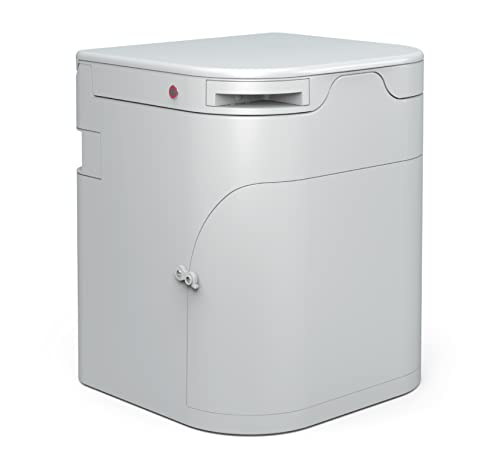
Composting toilets use no water and no holding tank, and they separate liquids from solids into a medium that dries waste. They suit long distance cruisers who dislike pump out stops. Expect about $900 to $1,500, plus a small vent fan on very low power.
Common Mistakes to Avoid
Most early problems trace back to one of these choices.
- Choosing a tank for an average day trip leaves a full crew hunting for a pump out station by the second night.
- Fitting the base without checking door swing can leave a head door that cannot close.
- Skipping the vented loop on a sailboat lets sea water siphon back and flood the bowl when the boat heels.
- Mounting the toilet before planning hose runs can leave sharp bends where waste settles and odor starts.
- Ignoring a stiff pump handle lets worn seals fail at sea, where repairs mean opening waste lines.
Care and Maintenance for Boat Toilets
Rinse the bowl and pump several strokes of clean water after each trip so waste does not sit in the hoses. Once a month, flush white vinegar, let it sit for an hour to soften scale, then pump it through. When you stock the cleaning locker, see our guide to the best for cleaning toilets for options that suit marine seals, and keep a small plunger aboard from our guide to the best toilet plungers for clogs.
Replace the joker valve and pump seals about once a year on a manual toilet in regular use, because soft rubber hardens and lets water slip back into the bowl. Check hose clamps twice a season and clear the tank vent if nests block it. Before winter storage, pump marine antifreeze through the system or drain it fully, following the maker steps for your model.
FAQ
How much water does a boat toilet use per flush?
A boat toilet uses from about a pint to about 2 gallons per flush, depending on the system. Vacuum models sit at the low end, while older manual heads sit at the high end. You can cut use by pumping just enough to clear the bowl and the hose run to the tank.
Can a boat toilet flush regular household toilet paper?
A boat toilet can struggle with regular household toilet paper, so choose paper that breaks apart fast in water. Test a sheet in a jar of water overnight; if it stays in one piece, keep it off the boat. Our guide to the best toilet paper covers options that dissolve quickly. Never flush wipes, because they wrap around pump parts and macerator blades.
Does a boat toilet need a holding tank?
Most fixed boat toilets need a holding tank in US waters, because direct discharge is banned within three miles of shore and in many lakes and rivers entirely. Portable and composting toilets store waste inside the unit until you empty it ashore. Check local rules before any trip, since some harbors ban discharge of any kind, even treated waste.
Why does a boat toilet smell even after cleaning?
A boat toilet often smells after cleaning because gases leave through the tank vent, not the bowl. If the vent exits near a hatch or the cockpit, every breeze carries that air back to the crew. A carbon vent filter helps, yet it clogs fast if waste reaches it during a heel. Rerouting the vent exit away from open hatches is the lasting fix.
What size boat toilet fits a small head compartment?
A compact boat toilet with a footprint of about 14 by 17 inches fits most small head compartments. Height matters too, because many small heads place the toilet on a raised platform. Test the fit by sitting on a sturdy box of the same seat height inside the closed head; if your knees press the door, the bowl is too deep.
Our Verdict
Start with space and plumbing, then choose the flush that fits your crew and power budget. Tank size and hose routing decide daily comfort more than bowl styling does. Use the product table above to compare footprint, tank size and price.
Once you judge best boat toilets by space, tank and plumbing instead of styling, the right pick stands out. Choose the simplest system that covers your longest trip, and it will serve you quietly for seasons.