Best Boat Sump Pumps for 2026: Every Type Explained Side by Side
Disclosure: We may earn a commission when you buy through links on this page, at no extra cost to you. As an Amazon Associate I earn from qualifying purchases. Learn more

Compare best boat sump pumps by type, flow rate, switch style, and backup power with a clear guide to choosing the right pump for your bilge.
Boat owners use the term sump pump for the pump that clears the bilge, and the range of types can feel confusing at first glance. Automatic, manual, compact, high capacity, and backup designs all solve the same problem in different ways. The best boat sump pumps for your boat depend on boat size, how often water enters, and whether anyone is aboard when it does. This guide compares each type plainly, so you can use the comparison table below with a clear plan.






Types of Boat Sump Pumps Compared
Most boat pumps fall into four practical groups. Automatic submersible pumps do the daily work on most boats, compact pumps fit tight bilges, battery backup pumps guard against power loss, and manual or portable pumps serve as simple backups. Many well prepared boats carry more than one type, with an automatic pump as the primary system and a manual pump as insurance.
High Capacity Submersible Pumps
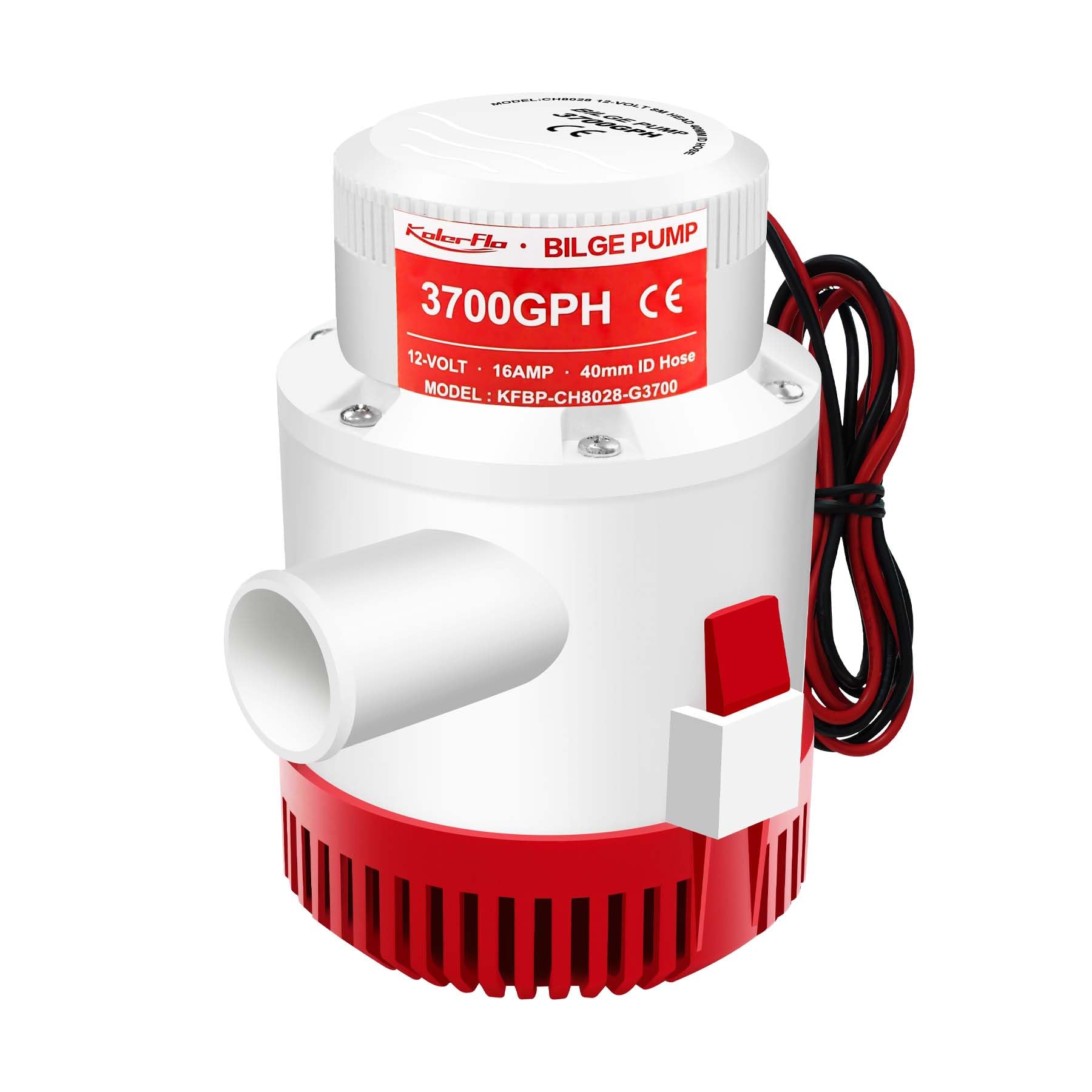
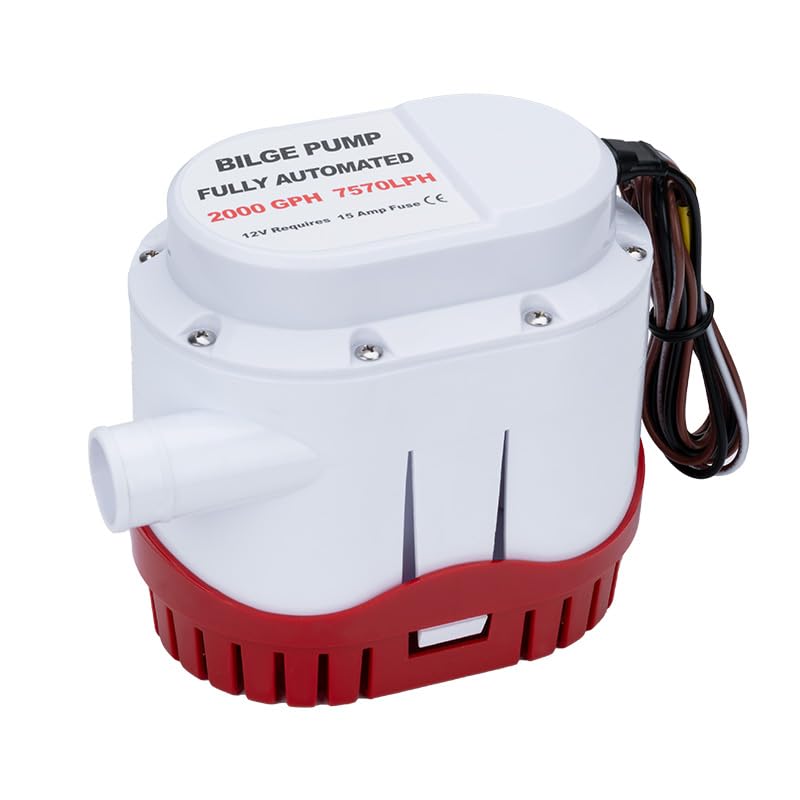
High capacity submersible pumps sit in the bilge and move large volumes, often rated around 1500 to 3700 gallons per hour at open flow. They suit larger boats, boats that take spray or rain aboard, and any boat kept in the water unattended. Paired with an automatic float switch, they start and stop without crew action. Their limits are higher power draw, larger hose needs, and more space required in the bilge. Real output drops as lift height and hose bends increase, so size with margin rather than buying the minimum rating.
Compact Pumps
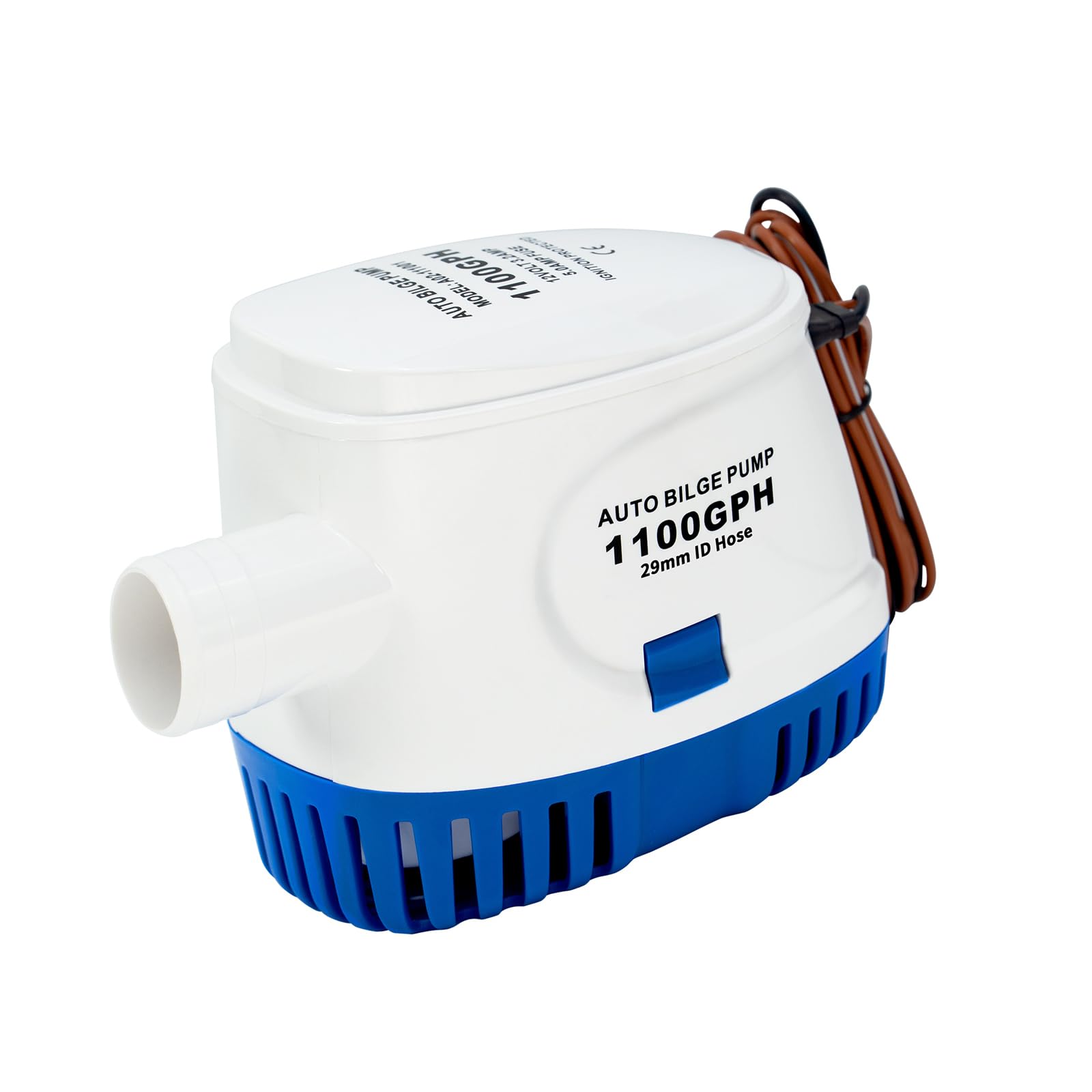
Compact pumps use smaller housings and lower flow ratings, often around 500 to 1100 gallons per hour, to fit narrow or shallow bilges on small boats. They are light, affordable, and easy to replace, which makes them popular on open fishing boats and day boats. Built in automatic switching appears on some compact designs, saving separate switch space. The trade off is less reserve capacity during a serious leak or heavy rain, so compact pumps work best when a crew member is usually aboard and can notice a problem early and help with a bucket or manual pump.
Battery Backup Pumps
Battery backup pumps protect the boat when shore power fails, a charger stops working, or the main battery runs low. Some systems are complete secondary pumps wired to a separate battery, while others are alerts and smaller auxiliary pumps. They suit boats stored in the water for long periods and owners who cannot check the boat after every storm. The key limit is runtime, because a backup pump can only run as long as its battery lasts. Test the backup battery on a schedule, since a backup that fails silently gives false confidence.
Manual and Portable Pumps
Manual pumps need a person to work a lever or handle, and portable electric pumps can be lowered into a space and powered from a battery. They never depend on a float switch and they work when the main system fails, which is why safety guidance favors carrying a manual backup. They suit small boats, dinghies, and emergency kits. Their limit is obvious, they move water only while someone operates them, and output is modest. Treat them as a second line of defense and a way to buy time while you find and slow a leak.
For the closest marine specific comparison, see our guide to the best bilge pumps for boats, which covers the same job under the name most boat listings use.
High Capacity Pumps vs Compact Pumps: Which Should You Choose?
Choose high capacity when the cost of falling behind is high, meaning a larger hull, an inboard engine space, overnight storage in the water, or a history of rain and spray collecting fast. Choose compact when the bilge physically limits size, the boat is small and trailer stored, and water entry is normally minor. Compare them on real flow at your lift height, power draw, hose diameter, and switch reliability rather than on headline flow alone. Many midsize boats use both, a compact automatic pump set low for routine water and a high capacity pump mounted slightly higher as a storm and leak backup. That layered setup is often the wisest spend.
How to Choose the Right Boat Sump Pump
Start with the space and the risk, then match the specs. Measure bilge depth and access before you shop, note your current hose diameter, and think honestly about how long the boat sits unchecked. When you compare the best boat sump pumps for your hull, flow at lift height, switch type, and ignition protection should outrank brand familiarity every time.
Power Source and Backup Planning
Most boat pumps run on the boat 12 volt or 24 volt DC system, so there is no corded versus cordless choice in the home tool sense. The real choice is how power is protected. Wire the automatic pump directly to the battery through a fuse, following the maker instructions, so it still works when the main battery switch is off. Keep connections above the likely water line where possible and use marine grade sealed connectors. Add a manual override at the helm panel so you can run the pump on demand during checks and emergencies.
Durability and Motor Design
Bilge pumps live in dirty water, fuel residue, and vibration, so housing strength and shaft sealing decide service life. Look for impact resistant housings, stainless shafts where offered, and designs that let you remove the motor cartridge without cutting hoses or wires, which speeds service in a tight bilge. In engine spaces and anywhere fuel vapor can collect, the pump must be ignition protected, a safety requirement that rules out most pumps built for home use. Never install a home pump in a gasoline engine compartment.
If you are comparing construction quality across pump types, our guide to the best quality sump pumps and our guide to the best submersible sump pumps explain build and sealing differences in more depth.
Warranty and Brand Support
A warranty of two to five years signals that the maker expects the pump to survive real bilge conditions, and parts support matters just as much. Check whether replacement float switches, cartridges, and mounting bases are sold separately in the United States, because replacing a switch is far cheaper than replacing a whole system. Keep your receipt and note the install date on the pump with a marker. Support that answers with clear wiring diagrams and switch testing steps is worth more than a slightly higher flow claim from a maker you cannot reach.
Capacity and Working Range
Capacity is stated in gallons per hour, but that number is measured with no lift and a short hose. Every foot of lift to the discharge fitting, every bend, and every extra foot of hose lowers real output, sometimes by a large share. Choose a pump whose rated flow comfortably exceeds your expected need, use the hose diameter the maker specifies, and keep the discharge run as short and smooth as you can. Also check the minimum water depth at which the pump and switch activate, because a pump that starts late leaves more water standing in the bilge.
For power loss planning, see our guide to the best backup sump pumps and apply the same battery and alarm thinking to your boat storage routine.
Tips to Get the Most From Your Boat Sump Pump
- Test the float switch monthly by lifting it or adding water, and confirm that the pump starts, clears water, and stops cleanly.
- Keep the bilge clean and the pump intake clear of rags, leaves, and loose gear, because debris is the most common cause of a failed cycle.
- Check the fuse, wiring, and discharge hose each season, and replace a hose that is kinked, cracked, or sagging into a low loop.
- Disconnect battery power before electrical work, ventilate engine spaces, and stop and seek qualified help if you smell strong fuel vapor.
- Keep a manual backup pump and a bucket aboard, and know where your through hull fittings are so you can act fast in a leak.
Frequently Asked Questions
What specs matter most for boat sump pumps?
The specs that matter most are real flow at your lift height, switch reliability, and ignition protection where fuel vapor may be present. Headline flow alone misleads, because lift and hose losses cut output in every real install. Hose size, activation depth, and power draw follow closely. A pump that starts reliably at a low water level and keeps working in dirty bilge water will protect your boat better than a larger pump with a sticky switch.
Is an automatic float switch worth it for a boat pump?
Yes, an automatic float switch is worth it for almost every boat kept in the water. Rain, spray, and slow leaks do not wait for a crew member to notice them, and an automatic system handles routine water day and night. Choose a switch rated for your pump current, mount it at the height the maker specifies, and test it monthly. Keep a manual override as well, so you can run the pump during inspections and if the switch ever sticks.
Can I run a boat sump pump on a separate backup battery?
Yes, you can run a boat sump pump on a separate backup battery, and many owners do exactly that for storage protection. Batteries are not tied to pump brands, but voltage must match, connections must be fused and marine grade, and the battery needs its own charging plan. A backup battery that is never charged is no backup at all. Add a high water alarm if you can, because an alert can save the boat when any pump system reaches its limit.
Automatic or manual boat pump: which is better?
Automatic is better as your primary system, and manual is better as a backup, so the right answer for most boats is both. An automatic pump protects the boat when nobody is aboard, while a manual pump works during power loss and lets you clear spaces the main pump cannot reach. Small open boats that are trailer stored can rely more on manual pumping, but any boat stored in the water should have automatic protection with a tested switch.
The Bottom Line
Size for real flow at your lift height, insist on a reliable automatic switch, and protect the power supply with a fuse and a backup plan. That combination matters more than any single headline number. Review the product table above against your bilge measurements and storage routine, and your best boat sump pumps choice will be ready for the day you actually need it.