
Best BNC Security Cameras in 2026: How to Pick a Wired System That Fits Your DVR
Disclosure: We may earn a commission when you buy through links on this page, at no extra cost to you. As an Amazon Associate I earn from qualifying purchases. Learn more

Compare the best BNC security cameras by DVR format, resolution, lens, night vision and cable runs, with setup and storage guidance for wired systems.
There is no single camera that suits every building, because each one works only as part of a wired system with a DVR, coax cable and power. The best bnc security cameras for you match your recorder format, cover your space well and keep recording when your internet does not. Use the product table below to check format, resolution and housing.
Start with what you already own. If your walls hold coax runs from an older system, new analog HD cameras can often reuse that cable and save a full rewiring job. If you are starting fresh, plan the camera count, cable routes and drive size together, because changing any one later means opening ceilings or swapping the DVR.


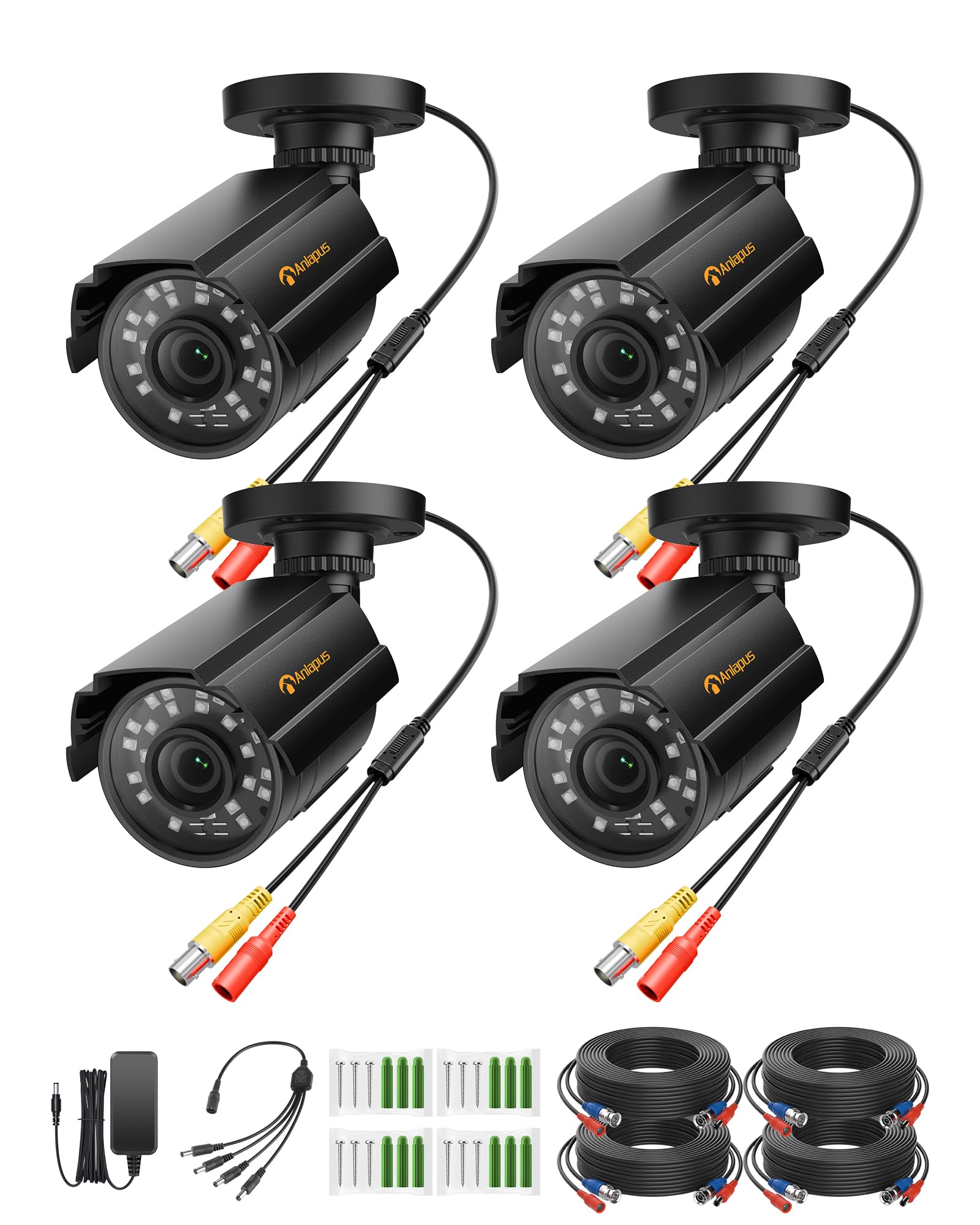
Who Should Buy Which BNC Security Cameras?
BNC cameras suit buyers who want fixed cameras, continuous recording and no batteries to charge. Your building, existing cable and channel count decide which type fits.
Homeowners Upgrading an Older Coax System
You already have a DVR and cable in place, and a camera has failed or looks too soft on a modern screen. Keep the cable, replace the weakest cameras first and confirm each new unit speaks the same video format as your recorder. Dome or turret housings suit porches and eaves, while a bullet suits a driveway. Our guide to the best security cameras for house coverage helps you map which doors need a camera.
Small Business Owners Covering Several Rooms
You need registers, stock rooms, entrances and a loading area recorded around the clock. Choose an eight or sixteen channel DVR even if you start with fewer cameras, because adding channels later means replacing the recorder. Turret cameras work well indoors since they resist casual redirection, and wide lenses cover aisles. Size the drive for your longest closed period, such as a holiday weekend.
Owners of Barns, Workshops and Large Lots
Your cameras sit far from the recorder, exposed to weather and long dark stretches at night. Prioritize a strong weather rating, a metal housing and a generous infrared range, and plan cable routes that keep power runs realistic. Bullet cameras on poles or gable ends give you aiming control over yards and gates. BNC can cover distances that would need several wireless relays.
Key Features to Compare
Compare these factors in order, because the first one can rule a camera out completely. In practice, the best bnc security cameras are rarely the ones with the longest feature list, but the ones whose format and lens fit the system you run.
DVR Format Compatibility Comes First
BNC is only the connector, not the video signal itself. Modern analog cameras send one of several HD formats over coax, most often TVI, AHD or CVI, and many can also fall back to the older CVBS signal. Your DVR must accept the format and resolution you choose, or the screen stays black. Many cameras let you switch format from the cable, which helps when you upgrade one camera at a time. Check your DVR manual before ordering.
Resolution Matched to Your DVR and Monitor
Analog HD cameras commonly offer 2 megapixels at 1080p, with 4 or 5 megapixel models giving roughly 2K resolution and 8 megapixel models reaching 4K over coax. Higher resolution helps you read a plate or recognize a face, but only if your DVR records at that full resolution and your monitor can show it. Some recorders accept a high resolution camera yet record it lower to save space. Match all three parts or the pixels are wasted.
Lens Size and Field of View
The lens decides how much of a room or yard one camera sees. A 2.8 mm lens gives a wide field of view, often around 100 degrees or more, which suits porches and small rooms. A 3.6 mm lens narrows the view to roughly 80 to 90 degrees and puts more pixels on a gate at distance. A varifocal lens suits a fixed target such as a register. Choose width for coverage and length for identification.
Night Vision and Infrared Range
After dark, BNC cameras rely on infrared LEDs around the lens, and makers quote ranges of about 60 to 100 feet. Treat that figure as a best case, because walls and rain bounce light back and shorten the useful view. A turret or bullet shape keeps the LEDs apart from the lens and reduces glare. Avoid aiming straight at a pale wall, since the reflection can wash out the frame.
Housing Shape and Weather Rating
Bullet cameras are easy to aim and easy to see, which deters casual trespass. Dome cameras look tidy and hide the lens direction, but the cover can collect grime outdoors. Turret cameras split the difference, with a ball style lens that aims freely and no cover to fog. For outdoor use, look for at least an IP65 rating, and pick metal over plastic where vandals could reach the unit. Our roundup of the best security cameras outside explains placement heights for exposed walls.
How to Plan Cable Runs, Power and DVR Storage
Draw your system on paper first. Mark each camera, its cable route and the total length back to the DVR. Premade siamese cables often run about 60 to 100 feet and suit most houses. For longer runs, bulk RG59 cable with twist on BNC ends lets you cut exact lengths, and solid copper core cable beats thin copper clad cable for HD signals.
Power, not video, usually limits distance, since 12 volt DC loses strength along thin wire. A distant camera may work by day and fail at night when its infrared LEDs draw more current. For the longest runs, use thicker power wire or a supply near the camera, and total the draw before reusing an old adapter. Test each camera at night before you fix the mount.
Storage lives in the DVR, so local storage means the hard drive inside your recorder. Continuous recording suits a business, while motion based recording stretches the same drive much further. Person detection, where offered, usually comes from DVR software rather than the camera itself. Audio is the weak point of this format: some cameras send sound from a built in microphone over the coax, but full two way audio is uncommon and depends on the DVR and its app. See our guide to the best security surveillance cameras for how recording modes differ.
Common Mistakes to Avoid
- Buying cameras in a format your DVR cannot read leaves you with a black screen and a return to arrange.
- Judging by headline resolution alone wastes money when your DVR records those cameras at a lower setting.
- Running thin premade cable over a long distance starves a distant camera of power, so it drops out at night.
- Mounting a wide lens camera to watch a far gate spreads its pixels too thin to identify anyone.
- Skipping a test recording before a trip means a full drive can erase the footage you needed.
- Leaving the DVR on its factory password exposes your remote viewing to strangers.
Care and Maintenance for BNC Cameras and Coax Runs
Wipe each lens and housing with a soft damp cloth every few months, and more often under eaves where spiders build webs across the infrared LEDs. Webs and dust glow brightly at night and can hide the area the camera watches. Check that mounts still point where you aimed them after storms.
Once or twice a year, reseat each BNC connector, look for green corrosion or frayed power ends, and confirm the DVR vents are free of dust so the drive stays cool. Check drive health warnings in the recorder menu and confirm the time is correct, because wrong timestamps weaken any clip you hand to police or an insurer. Replace a clicking drive promptly.
FAQ
Are BNC security cameras easy to hack?
BNC security cameras are hard to reach directly, because the analog signal travels on a closed cable and the camera has no internet connection. The real exposure sits at the DVR, which may connect online for remote viewing. Protect that point with a strong unique password and current DVR firmware. If you never view remotely, leave the DVR offline, which removes most network risk.
How much DVR storage do BNC security cameras need?
Most home BNC systems do well with a drive of about 1 to 2 terabytes. Four 1080p cameras recording only on motion in a quiet house can keep several weeks of clips, while the same cameras recording nonstop may keep closer to one week. After your first month, check the oldest date still stored to judge your real retention.
Can BNC security cameras work without WiFi?
Yes, BNC security cameras work fully without WiFi, because video travels by cable to the DVR and records to its hard drive. You can watch live views and play back clips on a monitor wired to the recorder. An internet connection only adds remote phone viewing and alerts. That steadiness suits metal buildings where wireless signals fade.
Are BNC security cameras more reliable than wireless cameras?
For fixed viewpoints, BNC security cameras are usually more reliable than wireless models, because cable removes weak signals, flat batteries and network congestion from the failure list. The trade off is installation effort, since every camera needs a cable route back to the DVR. Many owners mix both styles, using a wireless camera only where a cable truly cannot reach.
Do BNC security cameras need a subscription?
No, BNC security cameras do not need a subscription, because recording happens on your own DVR drive and live viewing on a local screen costs nothing. Some DVR brands offer optional paid cloud storage for short backup clips, but the core system keeps working if you decline, which saves real money over a large multi camera layout.
Final Thoughts
Match the format to your DVR first, then pick resolution and lens for the distance each camera must cover, and size the drive for how far back you need to search. Fix those three points and the housing, cable and power choices fall into place. Compare your shortlist against the product table.
Chosen that way, the best bnc security cameras give you steady, fee free recording that keeps working through router faults and flat battery seasons. Start with your most important viewpoint and prove it works at night.


