
Best Bladeless Ceiling Fans (2026): Types, Lumens and Buying Guide
Disclosure: We may earn a commission when you buy through links on this page, at no extra cost to you. As an Amazon Associate I earn from qualifying purchases. Learn more

Enclosed, safe and easy to dust: how to choose the best bladeless ceiling fan by room size, lumens, color temperature and mounting.
A bladed fan can look bulky, collect dust, and feel risky above a bunk bed or a low ceiling. A best bladeless ceiling fan hides the moving parts inside a smooth housing, so the fixture reads as a clean light first and a fan second. The trade off is that airflow, noise, and light output vary a lot between designs.
This guide walks through the three main bladeless designs, then covers the checks that separate a good pick from a weak one: brightness in lumens, color temperature, room size, mounting height, and how the unit installs. Use the comparison table below to see how the main types stack up.

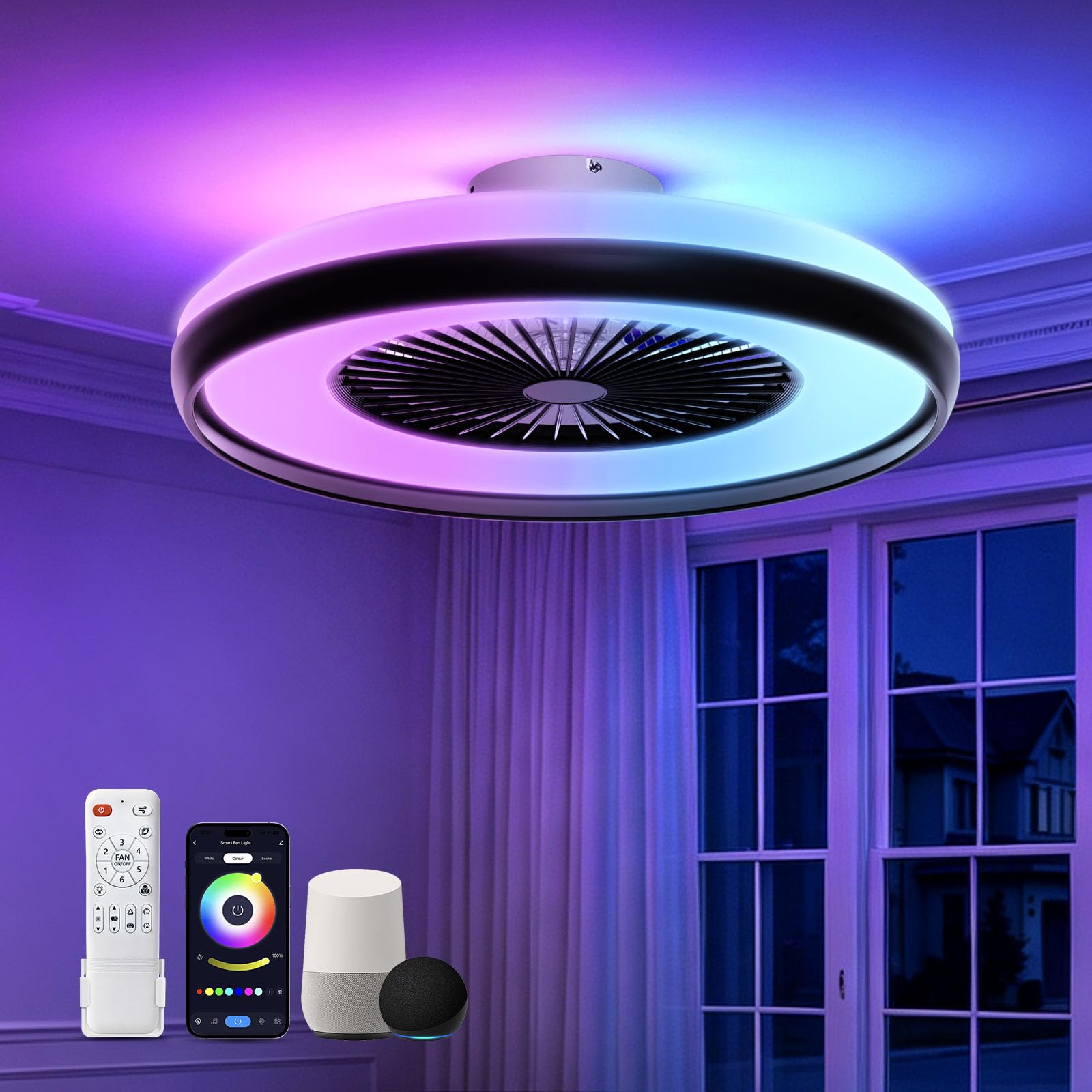
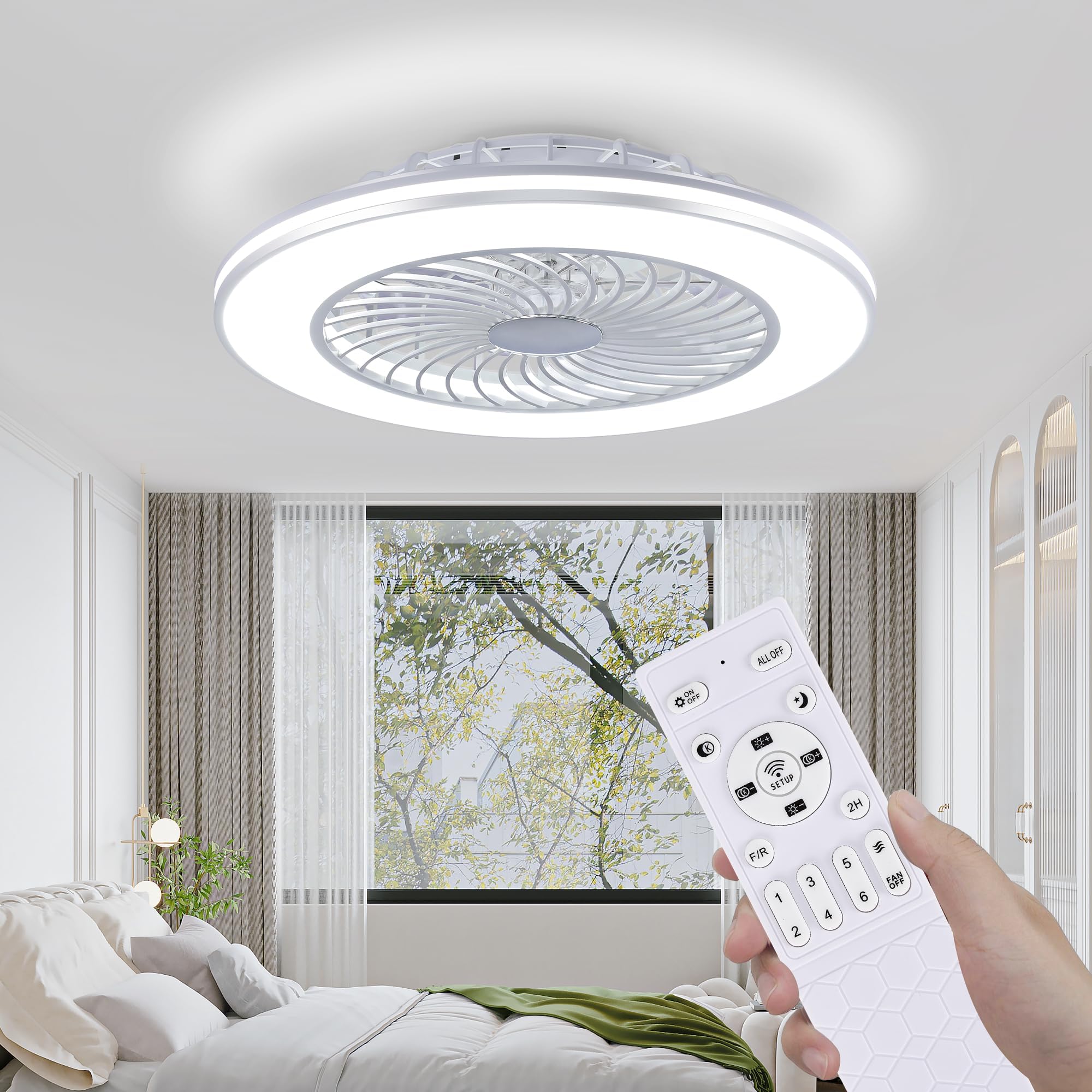


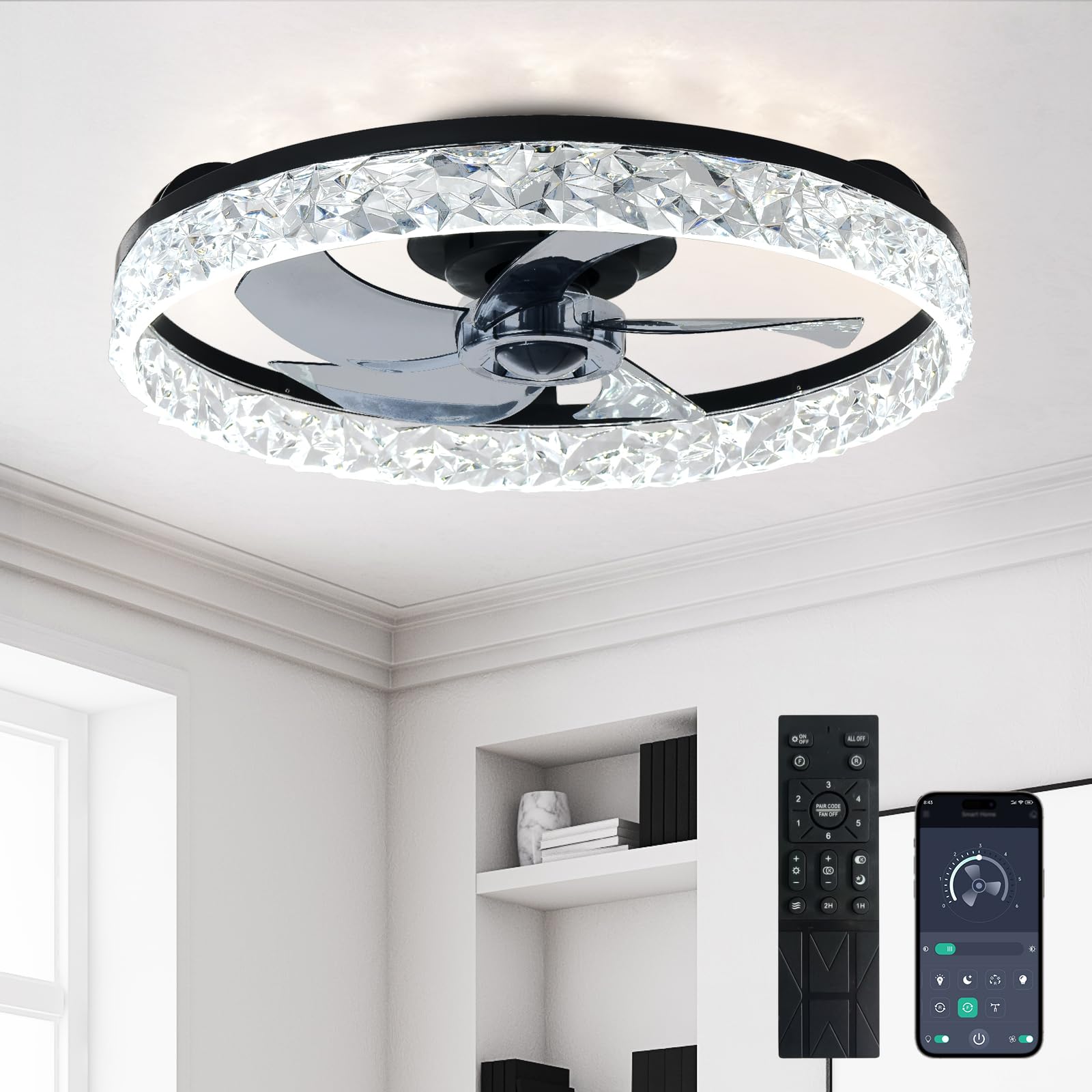

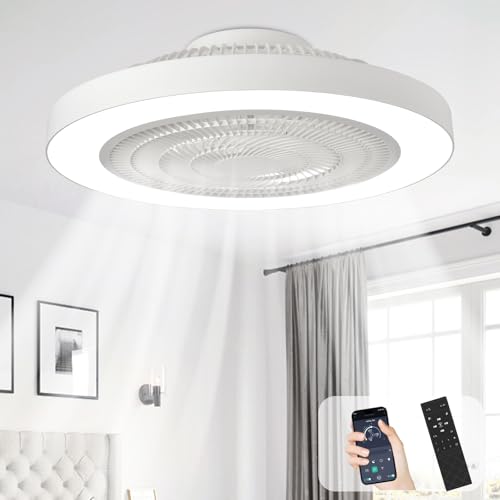

Bladeless Designs at a Glance
Bladeless ceiling fans are not truly free of blades. Most hide short blades inside a drum or disc shaped housing, and the air exits through slots or a ring. That idea splits into three design families, each suited to a different room.
Enclosed drum designs
An enclosed drum fan keeps its blades inside a round cage like body with a light at the center. Air pushes out through the openings around the drum, so the breeze spreads widely instead of aiming straight down. These models fit bedrooms and nurseries well, since nothing exposed spins overhead. Output is usually moderate, so this design suits small to mid size rooms better than large open spaces.
Slim disc designs with an integrated light
Slim disc models sit close to the ceiling and pair a flat fan housing with a wide LED panel. The look is minimal, almost like a large ceiling light, which suits modern rooms and low ceilings. Because the housing is shallow, the internal blades are small, and airflow tends to be gentle. Treat this design as comfort air movement plus lighting, not as the sole cooling source for a big room.
Ring and vortex designs
Ring style fans move air through a hollow frame and aim for even, room wide circulation rather than a strong column of air under the fan. They tend to cost the most and often include more speed settings and smarter controls. If you want steady background circulation and dislike the pulsing gusts a bladed fan can create, this family is worth a look, as long as the room size rating matches your space.
What We Compare on Bladeless Ceiling Fans
We compare bladeless models on brightness in lumens and color temperature, style and finish, installation effort, energy use, airflow rating, and value for the price. Figures come from manufacturer spec sheets, and we weigh buyer feedback patterns such as repeated comments about noise or remote reliability. Treat this as a structured comparison of published specs and reported ownership experience.
How to Choose the Right Bladeless Ceiling Fan
Size and form factor
Start with room area, because an undersized bladeless fan is the most common reason buyers feel let down. As a rough guide, rooms up to about 75 square feet suit compact models in the 13 to 22 inch housing range, bedrooms of 75 to 175 square feet suit mid range housings, and rooms above 175 square feet need the largest housings or a different fan type. Judge by the stated room rating and airflow figure, never by diameter alone. If your room is large and open, compare your shortlist against the best ceiling fan for living room options as well, since a wide bladed span still moves more air per dollar in big spaces.
Type and mounting style
Most bladeless fans mount flush to the ceiling, which keeps them safe and tidy where headroom is tight. A flush mount drops only a few inches, so it works on ceilings around 7 to 8 feet where a downrod fan would hang too low. A small number of models accept a short downrod for taller ceilings, which helps because a fan works best roughly 8 to 9 feet above the floor. Check the listed ceiling height range before you buy, and match the finish to your room: matte white disappears on a white ceiling, while black or wood tone finishes make the fixture a visible feature.
Features worth paying for
A remote control is close to essential, since the wall switch alone cannot manage fan speed, light dimming, and timers separately. A reverse function matters if you want gentle upward circulation in winter. A sleep timer helps in bedrooms, and memory for your last light setting saves daily fiddling. Voice control through Alexa or a WiFi app is pleasant but optional. Skip paying extra for decorative finishes you do not need, and put the money toward a better motor instead.
Lumens and color temperature
On a fan and light combo, the light often does as much daily work as the fan, so read the lumen figure rather than wattage. Around 1000 to 2000 lumens suits a bedroom, while a kitchen or living room primary light may need 2000 lumens or more. Color temperature shapes the mood: about 3000K looks warm and relaxed, 4000K reads neutral, and 5000K feels bright and crisp for task areas. Models with selectable color temperature let you change your mind after install. If the fan will be the only light in a bedroom, our guide to the best ceiling fan for bedroom explains more about pairing light output with restful sleep.
Fixture size and placement
Center the fixture in the room, or over the main seating or sleeping area if the ceiling box is off center and cannot move. Keep the housing clear of tall furniture, bunk beds, and ceiling beams, and make sure doors cannot swing into it. On a sloped ceiling, confirm the mount allows an angle, because many flush bladeless housings only fit flat ceilings. Also check the ceiling box: the fan needs a fan rated box secured to a joist or brace, since a standard light box may not carry the weight and vibration.
Dimmable and smart options
Most integrated LED panels dim through the remote or app rather than a wall dimmer, and pairing them with a standard wall dimmer can cause flicker. If you want wall control, look for models that state dimmer compatibility. Smart models connect over WiFi and let you set schedules, such as running the fan for the first hours of the night and then switching off. App only control with no remote is a risk, since a lost phone or a router outage then leaves you with just the wall switch.
Installation
Nearly all bladeless ceiling fans are hardwired, so plan on working at the ceiling box with the breaker off. The job follows the usual fan pattern: fit the bracket, hang the housing, connect the wires, then attach the cover and light. The wide housing can be awkward to hold overhead, so a second person helps. If you have never swapped a ceiling fixture, read our walkthrough on how to install a ceiling fan before you start, and hire an electrician if your wiring or box looks damaged or non standard.
How much should you spend?
Basic enclosed models start at about $80 to $150, and they cover a small bedroom with a remote and a fixed color light. The middle band, about $150 to $300, adds selectable color temperature and quieter motors, and it is where most buyers should shop. Above about $300 to $500, you pay for ring style designs, smart controls, and premium finishes rather than more airflow. Weigh the running cost too: a DC motor model costs more upfront but uses less power, a point covered in our dc vs ac ceiling fan comparison.
Bladeless vs Other Ceiling Fans: Pros and Cons
The case for bladeless is safety, looks, and cleaning. With no exposed blades, the fan suits low ceilings, bunk beds, and homes where a child could reach upward from furniture. Dust collects on a smooth housing instead of on blade tops, so a quick wipe replaces a messy chore. The enclosed path also softens the breeze, which many people prefer for sleeping.
The honest limits are airflow and price. A comparably priced bladed fan, such as the options in our best ceiling fan guide, usually posts a higher airflow rating and cools a large room more convincingly. Bladeless models also give you fewer size choices. For a small to mid size room where the fixture doubles as the main light, the trade usually favors bladeless. For a great room or a hot climate living space, blades still win on raw output.
How to Clean and Care for a Bladeless Ceiling Fan
Turn the power off at the wall switch and let the unit stop fully before you touch it. Wipe the housing and light cover with a soft, slightly damp cloth; dust builds up on the intake slots, and a vacuum brush attachment clears them without pushing grit inside. Check the mounting screws once or twice a year, since vibration can loosen them and a loose mount is the usual cause of new wobble or clicking. If the remote grows unresponsive, replace its batteries before assuming a fault. Avoid spraying cleaner into the slots, because liquid inside can reach the motor and electronics.
FAQs
What is the best bladeless ceiling fan for a small bedroom?
For a small bedroom, the strongest choice is usually an enclosed drum or slim disc model rated for rooms up to about 175 square feet, with a remote, a timer, and selectable color temperature. Prioritize a low noise rating over maximum airflow, since a gentle breeze at a quiet setting matters more overnight than peak output. A warm 3000K setting also helps the light feel restful.
Are bladeless ceiling fans worth it?
They are worth it when safety, appearance, or easy cleaning drives your decision, and the room is small to mid size. You pay a premium for the enclosed design and get less airflow per dollar than a bladed fan, so the value case weakens in large rooms. Think of it as buying a light fixture and a fan in one unit; if you would otherwise buy both separately, the combined price often looks reasonable.
Do bladeless ceiling fans move as much air as bladed fans?
Usually not at the same price. Short blades inside a housing move air through slots, and some energy is lost along that path, so published airflow figures tend to run lower than a wide span bladed fan. The air also spreads more evenly, which can feel more comfortable even at a lower rating. Check the stated CFM figure and room size rating rather than assuming similar priced fans perform alike.
Are bladeless ceiling fans safer for children and pets?
The enclosed housing removes the most obvious hazard, since no exposed blade edge spins within reach, which matters above bunk beds and play areas. The fan still contains moving parts inside, so treat the slots as off limits for fingers and keep the unit mounted out of reach as the maker directs. It is a real safety improvement over open blades, not a reason to relax normal supervision.
Can a bladeless ceiling fan work outdoors on a covered porch?
Only if the specific model carries a damp or wet location rating. Most bladeless fans are rated for indoor dry locations, and moisture can damage the enclosed motor and LED panel. An unrated indoor model on a porch risks early failure and may void the warranty. For porch use, shop the dedicated outdoor rated category instead.
Why does a bladeless ceiling fan feel weak on its highest setting?
The most common cause is a mismatch between the room and the fan rating, such as a compact model fitted in a room twice its stated size. A dirty intake is the second cause, because dust in the slots restricts the air path on enclosed designs. Also confirm the fan is spinning in its summer direction and that the remote is not set to a breeze mode, which deliberately varies the speed.
Final Thoughts
Choose the design family first: enclosed drum for bedrooms and nurseries, slim disc for low ceilings and a clean look, ring style for even circulation in a living space. Then check lumens, color temperature, room rating, and mount height against your room, and let those numbers settle the choice. Do that, and the best bladeless ceiling fan for your home becomes an easy call. Compare your finalists in the product table above before you order.


