Best Blade Coffee Grinders (2026): Types, Features and Buying Tips
Disclosure: We may earn a commission when you buy through links on this page, at no extra cost to you. As an Amazon Associate I earn from qualifying purchases. Learn more

Compact, simple and cheap: what to check when choosing the best blade coffee grinder for drip and French press.
Picture a weekday morning in a small kitchen. One person wants a quick pot of drip coffee, another wants a French press for a slow start, and counter space is already claimed by a kettle and a toaster. A blade grinder fits that scene well, since it is compact, simple, and quick to put away. This guide helps you choose the best blade coffee grinder for your space, your household size, and your budget.
This article compares the main types of blade grinder, the features that change daily use, and the trade offs you accept with this style of grinding. Use the comparison table below to match each type to the way your household actually brews.


Quick Answer: What a Blade Grinder Does Best in a Real Home
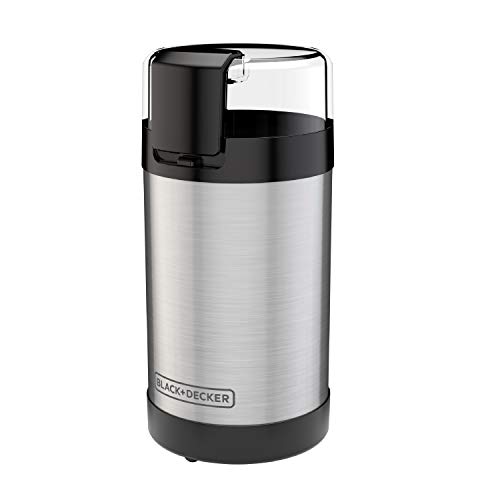
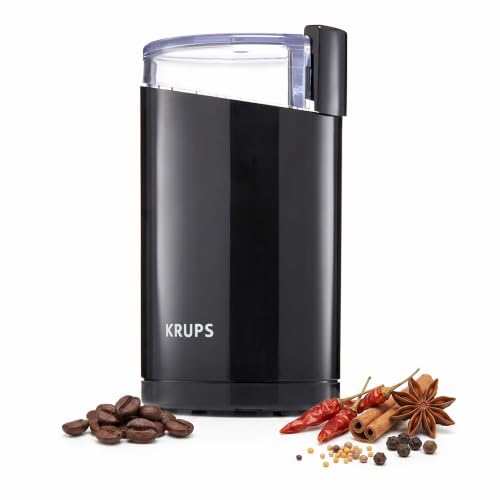
A blade grinder spins a small metal blade at high speed and chops beans into smaller pieces while you hold the button down. It suits drip coffee, French press, and cold brew, where a slightly uneven grind still brews a satisfying cup. It costs little, stores in a drawer, and cleans up in seconds. It cannot match the even particle size of a burr grinder, though, and it struggles with the fine, uniform grind that espresso needs.
Before You Buy: A Quick Checklist for Choosing a Coffee Grinder
A short checklist keeps you from paying for capacity or features your household will never use.
Which Type Fits Your Routine
Blade grinders are the simplest electric option, but they sit inside a wider family worth knowing about. Burr grinders crush beans between two abrasive surfaces for a more even grind, in either conical or flat form, and they cost more and take more counter room. If you are still weighing the whole category, start with our overview of the best coffee grinder styles first.
Brew Temperature and What Your Grinder Actually Controls
Your grinder does not heat water, so it cannot set brew temperature. That job belongs to your brewer, and most coffee guidance points to water at about 195 to 205 degrees Fahrenheit for balanced extraction. What your grinder controls is particle size, and particle size changes how fast water pulls flavor from the grounds. A blade grinder gives you rough control through grinding time, so short pulses and a gentle shake between them matter most.
Counter Footprint and Storage
Most blade grinders stand about as tall as a drinking glass and take up less room than a small kettle. That makes them a strong fit for apartments, dorm rooms, and kitchens where the counter is shared with cooking tools. Before you buy, look at whether the cord tucks into the base, since a loose cord eats up the space you saved.
Capacity and Household Size
Capacity decides how many grinding rounds a busy morning takes. Small cups often hold enough beans for about two to four cups of coffee, while larger cups can handle a full pot in one round. A household of four or more drinkers will save real time with a larger cup.
Realistic Budget Ranges
Blade grinders are the lowest cost way to grind fresh beans at home. Most models sell for under $50, and many sit closer to about $20 to $40. Paying a little more within that range usually buys a removable cup, a larger motor, or a sturdier lid, not a different grinding method. Prices above that range overlap with entry level burr grinders, so once a blade model costs about $50 or more, ask whether the money would serve you better in a different type of grinder.
Three Types Worth Your Money
Instead of specific models, compare these three types. Each one maps to a different mix of space, household size, and budget.
Best for Most Homes: A Mid Size Grinder With a Removable Cup
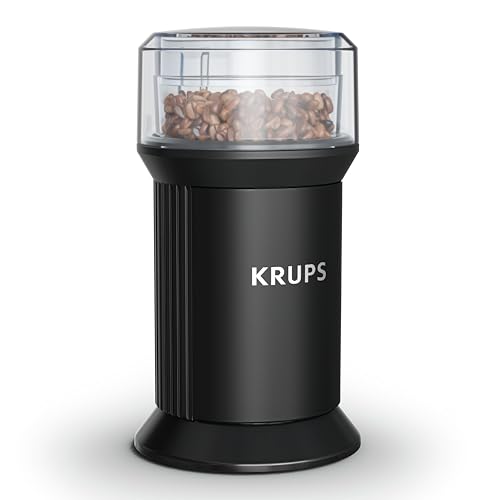
This is the type most households should look at first. The cup holds enough beans for a standard pot, and it lifts out, so you can pour grounds straight into your brewer without shaking the whole machine over the counter. A removable cup also rinses clean under the tap, which keeps stale oils from building up. Look for a clear lid, so you can watch the grind size change as you pulse, and a button that is easy to hold down with one hand.
Best Value: A Compact Grinder for Small Households
If you brew for one or two people, a compact model at about $20 to $35 does the job for the least money. The smaller cup is a feature, not a flaw, because a modest batch moves well around the blade and ends up more even. These grinders store in a drawer and double as a spice grinder for many owners. The trade off is batch size. Brewing for guests means two or three rounds, and the fixed cup needs a brush and a wipe instead of a rinse.
Best Long Term Investment: A Sturdier Grinder With a Metal Cup
Some blade grinders are built with a metal grinding cup, a heavier base, and a longer warranty, and they cost a bit more for those reasons. A metal cup resists the scratches and odors that plastic cups pick up over time, and a heavier base stays put while you grind. This type suits a household that grinds every day and wants one purchase to last for years. It still chops beans the same way, so you are paying for durability, not for a finer grind.
How Blade Grinders Are Judged
A fair way to judge any blade grinder rests on four criteria. Grind consistency comes first, judged by how similar the particles look after a timed grind. Ease of use covers the button, the lid, and how the grounds come out. Cleaning covers whether the cup removes and how easily old grounds brush out. Build quality covers the cup material, the base weight, and the warranty length.
What We Like and What We Do Not Like About Blade Grinders
Blade grinders win on price, size, and simplicity. There are no settings to learn, no burrs to align, and almost nothing to break. They grind fast, store anywhere, and handle spices that would clog a burr grinder. For drip coffee and French press at home, many drinkers find the cup quality perfectly good once they learn to pulse and shake.
The limits are just as clear. The blade chops unevenly, so every batch holds dust and chunks side by side, and those particles extract at different rates. Heat builds up during long grinds, which can dull delicate flavors, and fine grinding for espresso stays out of reach. The deeper comparison in our guide to burr vs blade coffee grinder results explains where that uneven grind shows up most.
Common Buying Mistakes to Avoid
- Buying for espresso: a blade grinder cannot produce the fine, even grind espresso needs, so espresso plans call for a different grinder type.
- Choosing the biggest cup by default: an oversized cup grinds small daily batches unevenly, since the beans barely move around the blade.
- Grinding in one long hold: holding the button down without pauses heats the grounds and makes particle size less uniform.
- Ignoring the lid design: a loose lid can let fine grounds escape, and a lid with no window forces you to guess the grind size.
- Skipping the warranty check: motors on low cost models work hard for their size, so a short warranty can mean replacing the grinder sooner than planned.
Cost of Ownership and Care
Owning a blade grinder costs very little beyond the purchase. There are no paper filters, no burrs to replace, and no descaling supplies, since the grinder never touches water during brewing. Electricity use is tiny, because the motor runs for seconds at a time. The real cost is care. Old coffee oils coat the cup and lid and turn stale, and that flavor passes into fresh beans. After each use, brush out the loose grounds and wipe the cup with a dry cloth. Once a week, wash a removable cup with warm soapy water and dry it fully. Our step by step guide on how to clean a coffee grinder covers the deeper routine. Store the grinder dry, with the lid loose.
Your Questions, Answered
What is the most reliable blade coffee grinder brand?
No single brand guarantees reliability in this category, because nearly all blade grinders use a similar simple motor and blade design. What separates a dependable unit is a warranty of at least one year, a motor rated for daily use, and replacement lids that the maker actually sells. Favor makers with clear support contact details.
How do you clean a blade coffee grinder that has a fixed cup?
Unplug the grinder first, then tip out the loose grounds over the trash. Brush the cup with a stiff pastry brush or a dry toothbrush, working around the blade with care. Wipe the cup and the lid with a barely damp cloth, then dry both with a second cloth. If odors linger, grind a piece of stale bread, empty the cup, and brush again. Never hold a fixed cup grinder under running water, since water can reach the motor through the base.
Is a blade coffee grinder worth it if you drink coffee every day?
Yes, for most daily drip and press drinkers, because fresh ground beans taste noticeably better than coffee ground weeks earlier at a store. The daily habit that makes it worthwhile is a short one. Pulse in bursts of a few seconds, shake the grinder gently between bursts, and stop when the grounds look close in size. That routine takes under a minute. Daily espresso drinkers are the exception, since their brew method asks more of a grinder than any blade model can give.
How long does a blade coffee grinder last?
A blade grinder used once a day often lasts about three to five years, though the range depends on batch size and how long each grind runs. Long, heavy grinds strain the motor far more than short pulses do. Watch for warning signs of wear. A burning smell, a blade that wobbles, or a motor that sounds slower under the same load all point to a unit near the end of its life. Letting the motor rest between batches can stretch that lifespan.
Are blade coffee grinders worth it compared with burr grinders?
They are worth it when budget and space come first and your brewing is forgiving. A burr grinder costs several times more and takes more room, but it produces even particles that suit pour over and espresso. If you mostly make drip coffee or French press, the taste gap narrows a lot, and the savings can go toward better beans instead. One honest test is to taste the same beans ground each way at a friend's kitchen.
What is the best blade coffee grinder for a beginner?
The best blade coffee grinder for a beginner is a mid size model with a removable cup and a clear lid, since those two features remove the main frustrations of the first month. A removable cup pours cleanly and rinses fast, and a clear lid lets a new user learn what coarse, medium, and fine grounds look like. Skip extra settings or timers at first. One button and your own eyes teach the pulse and shake routine faster than any preset can.
Final Thoughts
For most homes, the right choice is a mid size blade grinder with a removable cup, a clear lid, and a price under about $50. Small households can save money with a compact model, and daily users who value durability can pay a little more for a metal cup and a longer warranty. If your plans grow toward espresso or precise pour over, the guides to the best burr coffee grinder and the best manual coffee grinder show where to step up next, and our notes on the best coffee grinder for espresso explain why that method needs its own tool.
Whichever type you pick, compare it against the product table above before you order. A modest best blade coffee grinder used with a little care will serve a real home kitchen well for years.