
Best Black Socks for Military Boots: Everything to Know Before Your First Purchase for 2026
Disclosure: We may earn a commission when you buy through links on this page, at no extra cost to you. As an Amazon Associate I earn from qualifying purchases. Learn more

Shopping for the best black socks for military boots for the first time? Learn the terms, compare options, and avoid rookie mistakes with this easy guide.
Boots get most of the attention, but the sock inside the boot decides whether your feet stay dry, warm, and free of blisters. If this is your first time buying for training, duty, hiking, or long work shifts, the terms on the packet can look confusing. This guide explains the best black socks for military boots from the ground up, in plain language, so you can choose with confidence.
We will cover fibers, cushion levels, heights, and fit, then the simple habits that make any sock last longer. Black is the standard color for most uniforms, and it also hides dirt well between washes. Use the comparison table below to match sock types to your boot and your climate once you know the basics.



Black Socks 101: The Basics
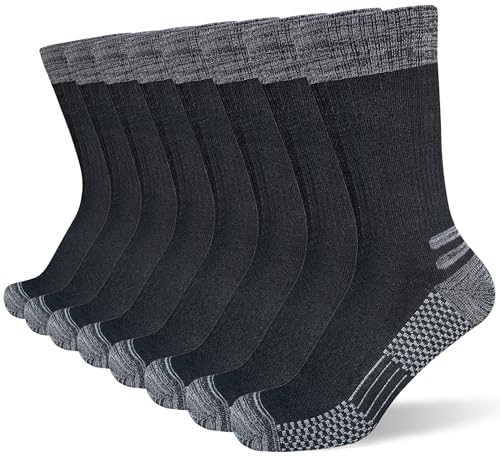
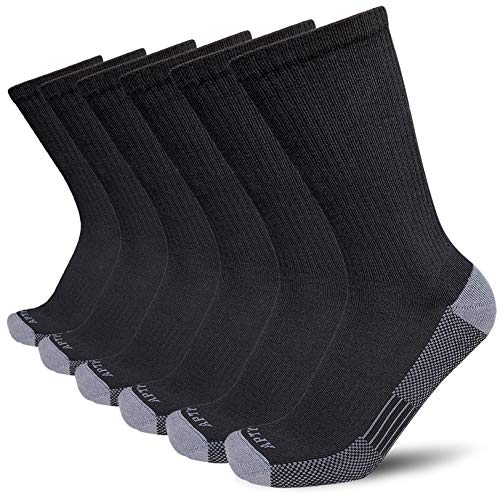
A boot sock is taller, thicker, and more structured than a casual sock. It rises well above the ankle, usually to the mid calf or just below the knee, so the boot shaft never rubs bare skin. Extra padding sits under the heel and the ball of the foot, where impact and friction are highest. Elastic zones hold the sock in place so it does not slide down and bunch inside the boot.
The fiber blend does most of the work. Wool pulls moisture away from skin and still insulates when damp. Synthetic fibers such as nylon and polyester dry fast and add strength. Cotton feels soft in the drawer but holds sweat against the skin, which leads to cold feet and blisters on long marches, so experienced wearers avoid pure cotton for boot use. A small share of elastic fiber gives stretch and helps the sock keep its shape wash after wash.
Height and thickness are the other basics. Taller socks protect the shin from boot laces and rough leather. Thicker socks fill more boot volume and add warmth, while thinner socks suit hot weather and snug boots. Your boot fit, your climate, and your daily mileage decide the right mix, and many people keep two weights in rotation.
Key Specs Explained in Plain English
Features That Matter for Military Boots
Military boots are stiff, tall, and worn for long hours on hard ground, so the sock must manage friction, sweat, and pressure at the same time. Look for targeted cushioning at the heel and forefoot, a smooth toe seam that will not rub, and ventilation panels over the top of the foot where heat builds. Reinforced heels and toes extend life where boots wear fabric fastest. For field use, choose a blend with a high wool or synthetic share, a secure calf band that is not tight enough to leave deep marks, and a height that clears your boot top by at least an inch.
Fit, Sizing, and Toe Box
Sock sizes follow shoe sizes, but brands draw the ranges differently, so check the size chart rather than guessing. Measure your foot in the afternoon, the same advice as for boots, since feet swell during the day. The sock heel pocket should sit exactly on your heel, and the toe area should lie flat with no loose fabric at the corners. Loose fabric folds and rubs, while a sock pulled too tight thins its own cushioning and can restrict circulation. If you fall between sizes, try both inside your boots and walk, because the boot toe box leaves less room than a trainer does.
Weight and Flexibility
Sock weight runs from light to heavy, and it trades warmth against bulk. Light socks dry fastest and suit summer training and hot climates, but they offer the least padding. Midweight socks balance cushion and breathability and serve most people for most of the year. Heavy socks add real warmth for cold weather duty, yet they can make a snug boot feel tight and cause overheating indoors. Flexibility matters too. A sock with stretch zones across the instep moves with your foot on hills and stairs, while a stiff, board like sock can crease at the ankle and create a pressure point.
Cushioning and Support
Cushioning in a sock is padding knitted into key zones, not a separate foam layer. Full cushion socks pad the whole foot and suit long standing and heavy packs. Targeted cushion socks pad only the heel, toe, and ball, keeping the top of the foot cooler. Compression style support bands around the arch hug the midfoot, reduce sock movement, and help tired feet on long days. Stability here means the sock stays put and the foot stays centered in the boot. Neutral, lighter designs feel less structured but work well for shorter, lighter days.
Arch Support and Foot Type
Flat feet roll inward and tire quickly, so an arch band that holds the midfoot snug can reduce sock slip and add a feeling of support inside the boot. High arches leave a gap under the middle of the foot, and a contoured sock with padding under the forefoot helps spread pressure. Neutral feet suit most standard boot socks. Remember that a sock supports the boot fit, it does not replace an insole or medical care. If you have ongoing foot pain, numbness, or circulation problems, talk with a clinician about your personal needs before long marches or duty shifts.
Break In Period and Comfort Out of the Box
Socks need almost no break in time, but the sock and boot pairing does. Wear a new sock style at home first, then on a short walk, then for a full day, checking for hot spots each time. Wash new socks before the first long wear to remove loose fibers and improve fit. A good pairing feels smooth from the first hour, with no seam pressure on the toes and no sliding at the heel. If one style rubs in the same place twice, change the style or the thickness rather than pushing through, since blisters form fast in stiff boots.
Rookie Mistakes to Avoid
- Wearing cotton socks. Cotton holds sweat, cools the foot, and raises blister risk on any long day.
- Buying one pair to test for a week. Socks need rotation and wash time, so plan on several pairs from the start.
- Choosing by color alone. Two black socks can differ completely in fiber, height, and padding.
- Ignoring boot volume. A thick sock in a tight boot cuts circulation, while a thin sock in a loose boot allows sliding.
- Wearing worn out socks. Thin heels and loose elastic mean the padding and fit you paid for are already gone.
If you are building your kit from scratch, our guide to the best socks for military boots covers all colors, and our guide to the best military boots explains the boot side of the pairing. Readers comparing general boot socks beyond uniform use can also see our guide to the best socks for boots for work and outdoor styles.
Getting Started: Setup and First Use
Start with clean, dry feet and trim toenails straight across, since long nails wear holes in sock toes and press during descents. Put the sock on smoothly, aligning the heel pocket and flattening the toe seam with your fingers before the boot goes on. Lace the boot firmly at the ankle so the foot and sock move as one unit. After your first long day, check for red areas and note where they appear, because the pattern tells you whether to change thickness, height, or lacing.
Care habits decide how long the socks serve you. Wash them turned inside out in cool or warm water and air dry them away from direct heat, since dryers slowly break down elastic and wool. Rotate pairs so each sock rests a day between wears. Replace pairs when the heel or ball area turns thin and shiny, the calf band no longer holds, or cushioning feels flat. Note that mileage advice about replacing running shoes every 300 to 500 miles does not apply to socks. Socks wear by washes and hours, and heavy duty pairs often last a season or more with rotation.
For the boot itself, our guide to the best black military boots covers uniform ready styles, and our guide to the best black boots covers black boots for wider uses beyond duty.
Frequently Asked Questions About Black Socks for Military Boots
What features matter most in black socks for military boots?
Fiber blend matters most, then fit and cushion placement. Choose wool or synthetic blends over cotton, a height that clears the boot top, and padding at the heel and forefoot. A flat toe seam and a snug arch band prevent the rubbing and sliding that cause most blisters. One extra point many beginners miss is color fastness, since a sock that fades to gray looks out of uniform long before it wears out.
How often should I replace my black socks?
Replace them when the padding feels thin, the elastic loosens, or holes start at the heel or toe. With daily use and rotation across five or more pairs, quality boot socks commonly last six months to a year. Inspect pairs monthly by holding them to the light, since thin spots show before holes open. Retire worn pairs to light duty rather than risking a blister on a long march.
How long is the break in period?
For socks, the break in period is really one or two short wears to confirm the pairing with your boots. Wash the socks first, wear them for a few hours, then a full day. True comfort should be there from the start. If rubbing appears, adjust lacing or thickness once, and if it returns, that style does not suit your foot and boot combination.
Do black socks for military boots need to be waterproof?
No, socks themselves are rarely waterproof, and that question belongs to the boot. Waterproof boots keep rain out, while the sock job is to move sweat away from the skin and cushion the foot. A fast drying synthetic or wool blend handles wet conditions better than a coated sock, which would trap sweat inside. If your boots are not waterproof, carry a spare dry pair in a sealed bag for long wet days.
Are expensive black socks worth it?
Often yes, because price usually reflects better fibers, denser knitting, and stronger reinforcement where boots cause wear. A costly pair that lasts a year of rotation can cost less per wear than cheap pairs replaced monthly. Still, fit decides comfort, so a mid priced sock that fits your foot and boot well beats a premium sock in the wrong size or thickness for your climate.
Wrapping Up
Choose the fiber blend first, match the thickness and height to your boot and climate, and confirm the fit with a gradual first wear. Follow those steps and you will land on the best black socks for military boots for your own duty, training, or trail days. Compare the options in the product table above, and stock enough pairs to rotate, since rotation is the simplest comfort upgrade of all.


