
Best Black Riding Boots: Budget, Midrange, and Premium Tiers for 2026
Disclosure: We may earn a commission when you buy through links on this page, at no extra cost to you. As an Amazon Associate I earn from qualifying purchases. Learn more

Compare the best black riding boots by budget, with guidance on calf fit, leather quality, zippers, spur rests, and care so you spend where it counts.
Black riding boots span a wide price range, from entry level synthetic pairs to bench made leather boots that cost several times more. The price gap can feel confusing, because two boots that look alike in photos can ride, fit, and age very differently. This guide shows where your money actually goes, so you can shop for the best black riding boots for your budget with clear priorities instead of guesswork.
Start with the comparison table below to see how styles and price tiers line up, then read on for the fit and material details that photos never show. Black is the standard color for the show ring and the easiest shade to polish back to a clean finish, but fit matters far more than shade.


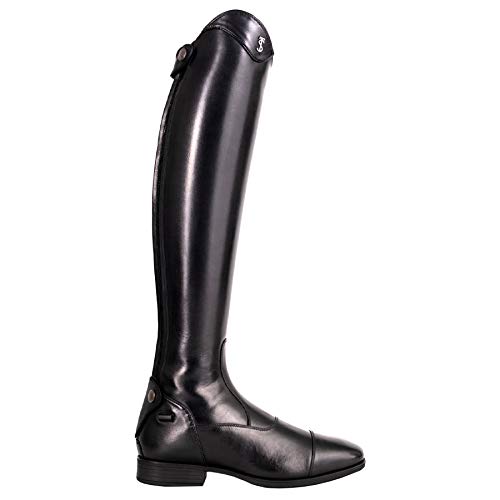
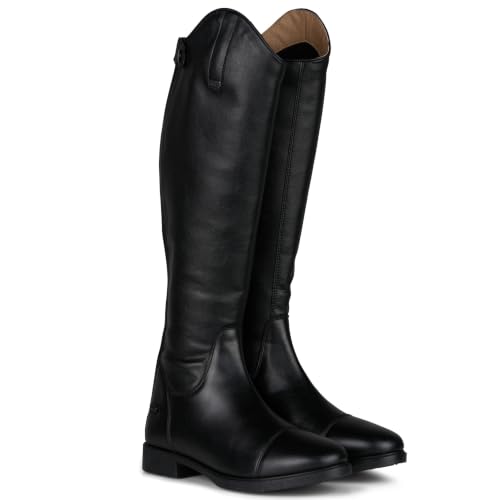
Who Should Buy Which Style of Black Riding Boots
Riding boots come in a few distinct styles, and the right one depends on how you ride and how formal your setting is. If you are still comparing the broader category, see our guide to the best riding boots for an overview of every style.
Tall Boots for Lessons and the Show Ring
Tall dress boots and field boots are the classic choice for English riders who lesson regularly or compete. Dress boots have a plain front and a formal look that suits dressage and equitation, while field boots add laces at the ankle that make them easier to flex and slightly more forgiving during the first weeks of wear. In black, tall boots meet the dress expectations of most shows, and the tall shaft supports your lower leg against the horse. Choose this style if you ride several times a week and want one polished pair for schooling and showing.
Paddock Boots for Daily Barn Work
Paddock boots end just above the ankle and pair with half chaps for schooling, groundwork, and long barn days. They cost less than tall boots, slip on and off quickly between chores, and the low heel to toe drop and short shaft make walking on gravel and concrete more comfortable. Many riders keep a paddock pair as their everyday workhorse and save tall boots for lessons and shows. If you spend as much time mucking stalls as you do in the saddle, this style gives you the best comfort per dollar.
Riders With Slim, Standard, or Wide Calves
Calf fit decides whether a tall boot works at all, so riders outside the average range should shop by calf options first and price second. Slim calf riders need shafts that stay close without gaping at the top, because a loose shaft slides down and bunches at the ankle. Wide calf riders need genuine wide sizes rather than a stretched standard shaft, since a forced zipper is the first thing to fail. Riders with athletic calves often land between sizes and do best with elastic back panels that give a little room without sagging.
What Your Money Gets You at Each Price Tier
Prices for the best black riding boots range from under $100 for basic synthetic paddock boots to about $600 or more for premium leather tall boots. The tiers below describe what typically changes as you spend more, so you can decide which level matches your riding schedule.
Budget Tier: What to Expect
Budget boots, usually around $60 to $150, use synthetic leather or lower grade leather with simpler linings and glued construction in some styles. They suit new riders, growing juniors, and anyone riding once a week. Expect a stiffer break in period, zippers and elastic that wear sooner, and fewer calf width options. The smart budget move is to protect fit first: a budget boot that truly fits your calf will serve you better than a costlier boot that pinches or slides.
Midrange Tier: Strong Value for Most Riders
Midrange boots, about $150 to $350, are where most regular riders get the best balance of fit, comfort, and durability. You typically gain real leather uppers that mold to your leg, softer ankle construction, better footbeds, and a wider choice of calf widths and heights. Zippers feel sturdier and the leather takes polish evenly, which keeps black boots looking sharp for shows. If you ride two to four times a week, this tier usually delivers the longest useful life for the money.
Premium Tier: When Spending More Pays Off
Premium boots, often about $350 to $700 and above, use finer full grain leather, shaped shafts, and details such as contoured ankle cuts, cushioned insoles, and reinforced zipper guards. The payoff is a closer, more custom style fit off the shelf, leather that breaks in faster and creases less, and construction a cobbler can often repair. This tier suits competitors, professionals, and daily riders who wear boots for hours. Casual riders will rarely feel enough difference to justify the jump.
Features Worth Paying For, and Ones to Skip
Arch Support and Foot Type
Arch support matters because riders spend hours standing on concrete and walking courses, not just sitting in the saddle. Flat feet benefit from a defined arch and a stable shank that keep the foot from rolling inward through long barn days. Riders with high arches need more cushioning under the heel and ball of the foot, since a stiff boot can feel harsh on hard ground. Many boots accept a replacement insole, so check footbed depth if you plan to add your own support.
Fit, Sizing, and Toe Box
Measure your feet and calves late in the day, when they are at their largest, over the breeches and socks you ride in. The toe box should let your foot sit flat without squeezing the sides, because cramped toes go numb on long rides. The boot top should reach the back of your knee and feel snug at first, since leather settles and drops slightly with wear. If you fall between sizes, size to the calf measurement and adjust foot length with an insole rather than forcing a zipper closed.
Upper Materials and Breathability
Leather remains the top choice for tall boots because it molds to your leg, polishes to a formal shine, and repairs well. If leather is your priority, see our guide to the best black leather riding boots for a deeper look at grades and finishes. Synthetic uppers cost less and shrug off water, but they rarely break in as closely and can look flat in the show ring. Breathable linings and moisture managing footbeds help in summer, although tall leather boots will always feel warm; perforated panels on some paddock boots offer a lighter, more breathable feel for hot climates.
Durability and Expected Lifespan
A midrange or premium leather boot worn three times a week can last several seasons with basic care, while budget synthetics often show cracks and zipper trouble within a year or two of heavy use. The outsole tells you a lot: a stitched or well bonded rubber outsole with a defined heel resists peeling and grips barn floors safely, while thin smooth soles wear slick. Spur rests and double stitching at stress points add real years. Treat the zipper as the lifespan limiter, since it is the part most likely to end a boot service life.
How to Measure for Tall Boots
Accurate measuring prevents most returns, so take five minutes before you order. Sit in a chair with your foot flat on the floor and your knee bent at a right angle, wearing your riding breeches and socks.
- Wrap a soft tape around the widest part of your calf and note the measurement in inches or centimeters.
- Measure from the floor up the back of your leg to the crease behind your knee for shaft height.
- Measure both legs, because calves often differ slightly, and size for the larger one.
- Compare your numbers with the brand size chart rather than your street shoe size, since charts vary by maker.
A new tall boot should feel very snug and sit slightly high behind the knee at first. Leather relaxes and the shaft drops a small amount as ankle creases form, which is why a boot that feels perfect on day one often ends up too short.
Long Term Costs to Factor In
The purchase price is only part of what a pair of boots costs you. Leather pairs need conditioner and black polish to stay supple, and most riders eventually pay for a zipper repair, which is far cheaper than new boots when the leather is still sound. Half chaps add cost if you choose paddock boots, and boot trees and a storage bag protect tall boots between rides. A midrange boot that lasts four seasons with one zipper repair usually costs less per year than a budget pair replaced every season.
Common Mistakes to Avoid
- Buying by shoe size alone, which ignores calf width and shaft height and leads to returns or forced zippers that fail early.
- Choosing a shaft that feels comfortable on day one, because leather drops with wear and the boot ends up too short and sloppy.
- Wearing tall boots for mucking and wet chores, which soaks the leather, rots stitching, and shortens the life of an expensive pair.
- Skipping the barn aisle walk test, so you miss heel slip and ankle pinch that only appear after twenty minutes on your feet.
- Forgetting that black shows dust and dried sweat clearly, so skipping a quick wipe after each ride leaves grime ground into the grain.
- Ordering fashion boots with smooth soles for riding, because a sole without a defined heel can slide through a stirrup.
If your boots are mainly for style away from the barn rather than time in the saddle, see our guide to the best black boots for everyday options that do not need stirrup safe soles.
How to Care for Black Riding Boots
Wipe your boots down with a damp cloth after every ride to remove dust, sweat, and arena footing before it dries into the leather. Clean them with a gentle leather soap when they look dull, then apply conditioner in thin coats so the leather stays supple without going soft at the ankle. Black cream polish restores color over scuffs and keeps the finish even. Store tall boots upright with boot trees inside so the shafts hold their shape, away from direct heat, which dries leather and cracks the finish. Let wet boots dry slowly at room temperature, and brush grit out of zippers so it does not grind the teeth down.
Frequently Asked Questions
How often should you replace black riding boots?
Replace black riding boots when the leather cracks through, the zipper fails repeatedly, or the sole loses its heel definition and feels slick. One useful sign riders miss is a shaft that has dropped and stretched so much that it slides and twists while you ride, because no insole can fix a worn out shaft. Boots used only for shows can stay serviceable far longer than daily schooling pairs.
How should black riding boots fit in the calf and foot?
Black riding boots should fit snugly through the calf with no gap at the top, while your foot sits flat with light room in the toes. A small amount of heel lift is normal in a stiff new pair and fades as the ankle breaks in. Persistent heel sliding after several weeks usually means the foot is a half size too large, and a thicker insole is a better fix than a smaller calf size.
How long is the break in period for black riding boots?
The break in period for black riding boots usually runs from a few rides for soft leather to several weeks for stiff premium pairs. Wearing them around the house and for short walks before riding speeds the process and shows you where they pinch. A useful trick is to start with shorter rides and add time gradually, because blisters form fast when stiff ankle leather meets a full lesson.
Do black riding boots need to be waterproof?
Black riding boots do not need to be fully waterproof for arena riding, but water resistance helps for barn chores and wet show grounds. Some winter and paddock styles use waterproof membranes such as Gore Tex for riders who work outdoors in rain and snow. For leather tall boots, regular conditioning gives modest protection, and rotating to a rubber barn boot for washing and mucking saves the leather entirely.
Are expensive black riding boots worth the money?
Expensive black riding boots are worth it if you ride most days, compete often, or have calves that standard sizes never fit. The extra money buys repairable construction and a closer fit, which spreads the cost over more seasons. Riders who lesson once a week usually get better value from the midrange tier.
Can you wear black riding boots all day at the barn?
You can wear black riding boots all day, but paddock boots are the kinder choice for hours of walking and chores. Tall boots are built for the saddle, and their stiff shafts and smooth soles grow tiring on concrete. Many riders keep lightweight shoes or barn clogs for groundwork and change into tall boots only to ride, which also keeps good boots cleaner.
Final Thoughts
Choosing well comes down to three things: honest measurements, a tier that matches how often you ride, and construction that fits your budget. Use the product table above to compare your shortlist, and check the calf chart twice before ordering. Do that, and the best black riding boots for you will feel less like a gamble and more like the pair you reach for every time you head to the barn.


