
Best Black Platform Boots for 2026: Every Type Explained Side by Side
Disclosure: We may earn a commission when you buy through links on this page, at no extra cost to you. As an Amazon Associate I earn from qualifying purchases. Learn more

Compare the best black platform boots by type, platform height, fit and sole grip, with clear guidance on closures, care and price for daily wear.
Black platform boots look simple from a distance, yet height, heel shape and sole change how a pair feels after one block or one full shift. Choosing the best black platform boots starts with your walking, standing and styling needs. Use the comparison table below to match each type to your real days.
Black pairs with trousers, jeans, dresses and coats, and hides light scuffs better than pale colours do. That versatility only pays off if the platform stays stable and the toe box fits.




Who Should Buy Black Platform Boots?
Start with the wearer, because the same platform can feel confident for one person and tiring for another. Daily distance and floor surface should decide height before price.
City Walkers Who Want Height With a Broader Base
You walk on pavements and stairs, and you want extra height without balancing on a narrow heel. Choose a moderate platform with a wide heel block and a lugged outsole. A padded collar helps too, because it reduces rubbing at the ankle.
Outfit Builders Who Wear Black as a Daily Neutral
You build most outfits around black and need one boot for trousers, skirts and layered winter clothing. A Chelsea style or dress style platform gives a smooth front under hems. Pick a shaft that clears your usual hem, because a boot top that catches on fabric will annoy you all day.
Standing Workers and Wet Weather Wearers
You stand for long stretches or walk on wet streets, so comfort and grip matter more than a dramatic silhouette. Look for a lower platform, firm cushioning and deep lugs. A water resistant upper helps in rain, and black hides road spray well.
Key Features to Compare
Compare these factors in order for best black platform boots in any price range, because height shows in photos while fit, drop and outsole shape decide whether you keep wearing a pair.
Platform Height and Heel to Toe Drop
Platform height is the thickness under the forefoot, often about 1 to 2 inches, while total heel lift can reach about 2 to 4 inches. What your foot feels is the drop, the difference between heel and forefoot height. A platform raises both ends, so a tall boot can feel flatter than a heeled boot of the same height. Choose a smaller drop for a level stance.
Outsole, Stability and Lug Depth
Stability comes from a wide base, a firm midsole and an outsole that stays in contact with the ground when you turn or climb stairs. Chunky lugs, often about 4 to 6 mm deep, grip wet pavement and gravel better than a smooth sole, though deep lugs can feel clunky indoors. Flex the boot at the ball of the foot, because a boot that folds at the arch supports you less.
Sizing Platform Boots for All Day Comfort
Measure both feet late in the day, when they are at their largest, and size for the longer foot with your usual socks. Toes should lie flat with about a thumb width of room in front, and the toe box should let toes spread without pressing the sides. Heel slip of a few millimetres can settle, but toes hitting the front on a slope will not improve.
Upper Materials, Breathability and Closure
Smooth leather moulds to the foot, resists scuffs and suits dressier outfits, though it needs conditioning. Synthetic uppers cost less and handle rain well, but they breathe less. Laces give the most adjustment across the instep, side zips speed up dressing, and pull on Chelsea styles must fit the instep closely from day one. Choose the closure by how much your feet swell.
Cushioning, Arch Support, Weight and Flexibility
Cushioning under the heel and forefoot softens impact on hard floors, while arch support fills the space under your arch. Flat feet often feel better with a firmer arch and stable heel cup, while high arches need more forefoot padding. A removable insole matters if you use your own insert, and a heavy sole can tire your legs. If you get sharp heel pain, numbness or returning swelling, talk with your clinician about personal needs.
Types of Black Platform Boots Compared
Boot buyers choose among shaft heights, heel shapes and closures, at prices from about $60 to $250. If you do not need a raised sole, see our guide to the best black boots for flat and low heel options in the same colour.
Chunky Combat Style Platform Boots
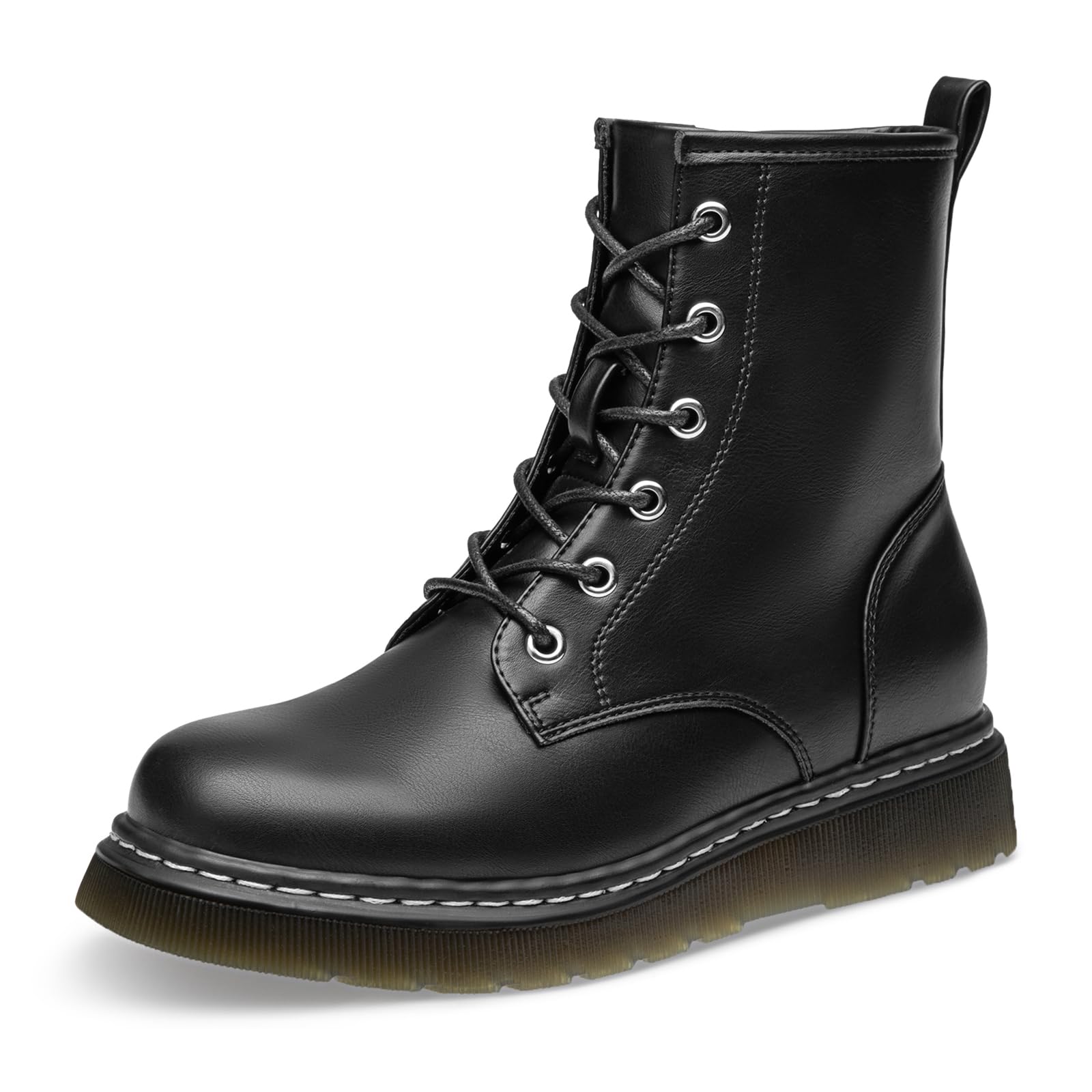
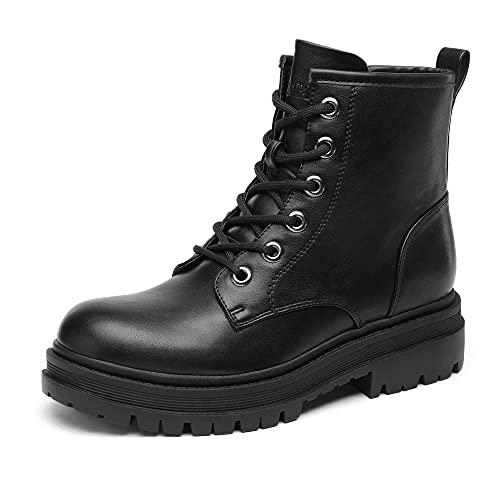
Combat style platforms pair laces, a thick lug sole and a shaft above the ankle. They grip well, protect the foot and suit jeans and casual work settings. The trade off is weight and a bold look. Most pairs cost about $70 to $180, and they fit walkers who want adjustment and durability more than a sleek silhouette.
Chelsea Style Platform Boots
Chelsea platforms use elastic side panels and a pull on shape, so dressing is fast and the front stays smooth with trousers, dresses and coats. Fit is less forgiving than laces, because the instep must hold your heel without squeezing. Expect about $80 to $200.
Tall and Knee High Platform Boots
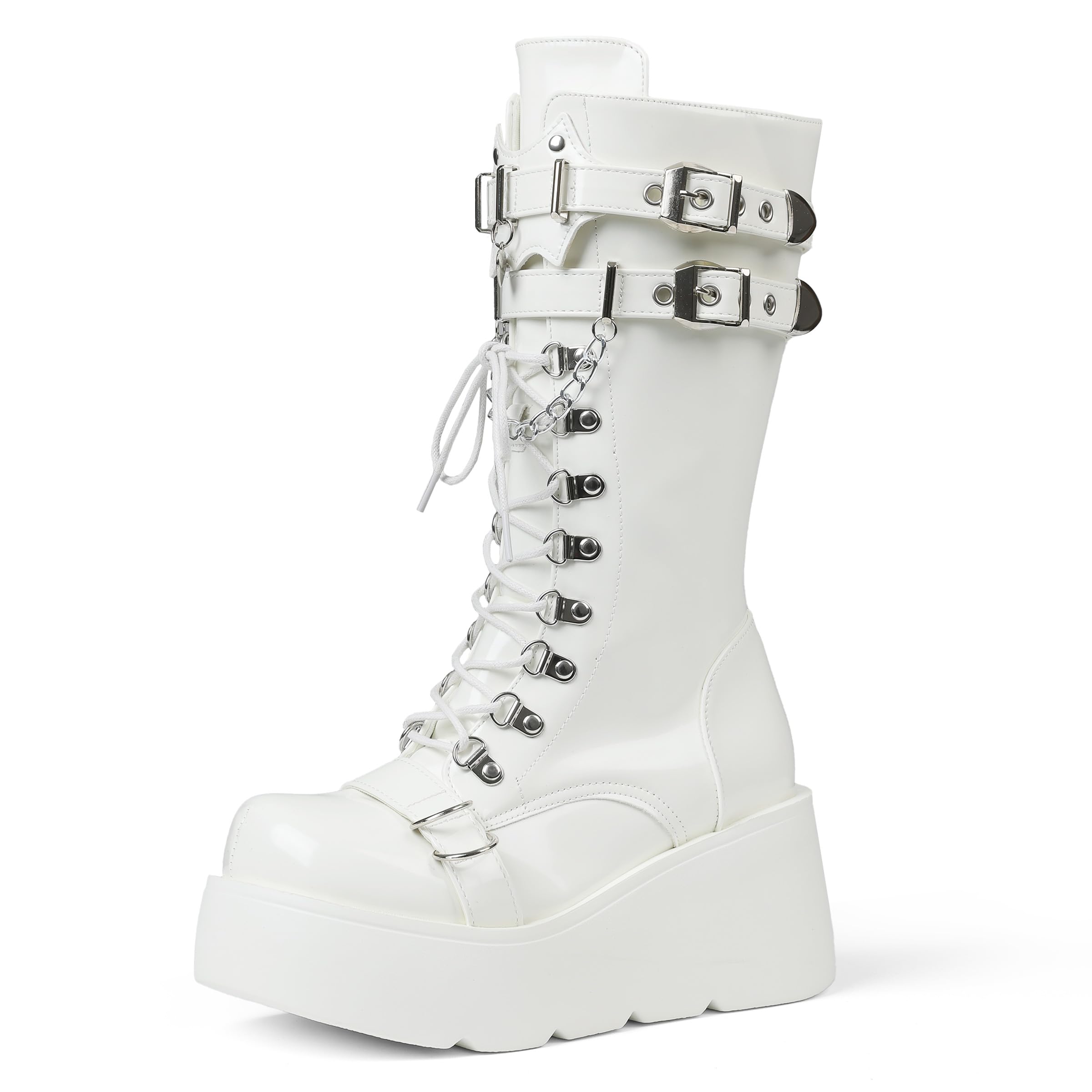
Tall platforms add warmth, rain coverage and a strong line with skirts and trousers. A side zip is almost essential, because pulling a tall shaft off without one strains the heel. Calf width matters as much as foot size, so measure your calf at its widest point. Prices often run about $100 to $250.
Dress Platform Boots With a Shaped Heel
Dress platforms keep a slimmer sole edge and a shaped heel, giving height with a formal finish for evenings and office wear. The base is narrower than a combat sole, so check stability on stairs. For warm weather events, see our guide to the best black platform sandals, and for a closed toe dress shoe see our guide to the best black platform pumps. Dress boots usually cost about $90 to $220.
If black is only one option and you want other shades in this same boot shape, see our guide to the best platform boots for the wider range.
Common Mistakes to Avoid
Most returns come from errors that a five minute check at home would catch.
- Buying the tallest platform for looks alone leaves you unstable on stairs and uneven pavement.
- Sizing black platform boots in the morning leads to pinched toes once your feet swell later.
- Choosing a smooth dress sole for wet streets leaves you with poor grip on polished stone and tile.
- Ignoring calf width on tall boots leaves a shaft that gaps, squeezes or will not zip fully.
- Wearing a brand new pair for a full day of travel turns a normal rub into blisters.
- Paying for a heavy lug sole you never use outdoors adds weight to every indoor step.
Care and Maintenance for Black Platform Boots
Brush off dust and dried mud after wear, then wipe the upper with a damp cloth so grit does not grind into the finish. Apply black cream or polish in thin layers where toes and heels scuff. Keep boots away from direct heat while they dry, because heat can crack leather and warp sole adhesives.
Let a wet pair dry at room temperature with insoles removed and paper inside to hold the shape. Rotate two pairs if you wear platforms daily, because foam needs time to recover. Check lugs, heel corners and zip teeth each month, and ask a cobbler about a loose platform bond early, since a small repair costs far less than a separated sole.
Black Platform Boots: Your Questions Answered
Can I wear black platform boots all day at work?
Yes, you can wear black platform boots all day if the drop is modest and the fit leaves room for swelling. Choose a pair you have already worn for shorter days, and bring spare socks for midday. Jobs with ladders or safety footwear rules may rule platforms out, so check your workplace policy first.
Do black platform boots need extra waterproofing for city rain?
Light city rain needs less protection than you might expect if the upper resists water and the sole seam is sealed. The weak point is often the tongue area and the zip, where water enters first. Dry the inside fully after a soaking, because a damp lining can smell.
Are expensive black platform boots worth the higher price?
Higher priced black platform boots are worth it when the cost buys a leather upper, a replaceable insole and a sole a cobbler can service. Price alone does not guarantee comfort, since a costly fashion pair can still pinch a wide forefoot. Spend first on the type you will wear weekly.
How should black platform boots fit around the ankle and heel?
Black platform boots should hold the heel firmly while the ankle can flex enough for stairs and driving. A small amount of heel lift inside is normal at first, but your heel should not clunk with each step. Test the fit on a step edge, because a raised sole changes leverage and a loose heel shows up faster there.
How long does the break in period take for black platform boots?
The break in period for black platform boots usually takes about three to five shorter wears for leather uppers. Stiff spots soften where the ankle bends and across the toes, while the sole itself changes very little. Wear them at home first, and use thicker socks on the second wear to ease tight areas.
When should I replace black platform boots instead of repairing them?
Replace black platform boots when the midsole feels flat, the platform bond shows gaps, or the heel wears at an angle that changes your stance. A cobbler can often fix lugs, zips and scuffs, so repair those first. Replace the pair when the upper cracks through at the flex point.
Wrapping Up
Match platform height to your balance, grip to your streets and toe box room to your foot at the end of the day. Then pick the type that fits your wardrobe and weather. Use the product table above to check height, shaft and price.
The right best black platform boots feel steady from the first step, not only good in a mirror. Buy the pair whose fit and sole suit the days you actually live, and you will reach for them often.


