
Best Black and White Rugs: Types Compared and How to Choose for 2026
Disclosure: We may earn a commission when you buy through links on this page, at no extra cost to you. As an Amazon Associate I earn from qualifying purchases. Learn more

Compare the best black and white rugs by material, pile, pattern scale, and care needs. A clear guide to choosing the right rug for every room at home.
A black and white rug can anchor a calm living room, sharpen a modern entry, or hide the daily evidence of kids and pets better than almost any other floor covering. The trouble is choice. Flatweaves, low pile synthetics, plush wool, and washable designs all wear the same two colors very differently, and picking by pattern alone often ends in a rug that sheds, slips, or fights your furniture. The best black and white rugs for your home depend on material, pile height, and how much traffic the room sees.
This guide compares the main rug types honestly, then walks through size, pattern scale, backing, and care. Start with the comparison table below and use the sections after it to narrow your choice by room.
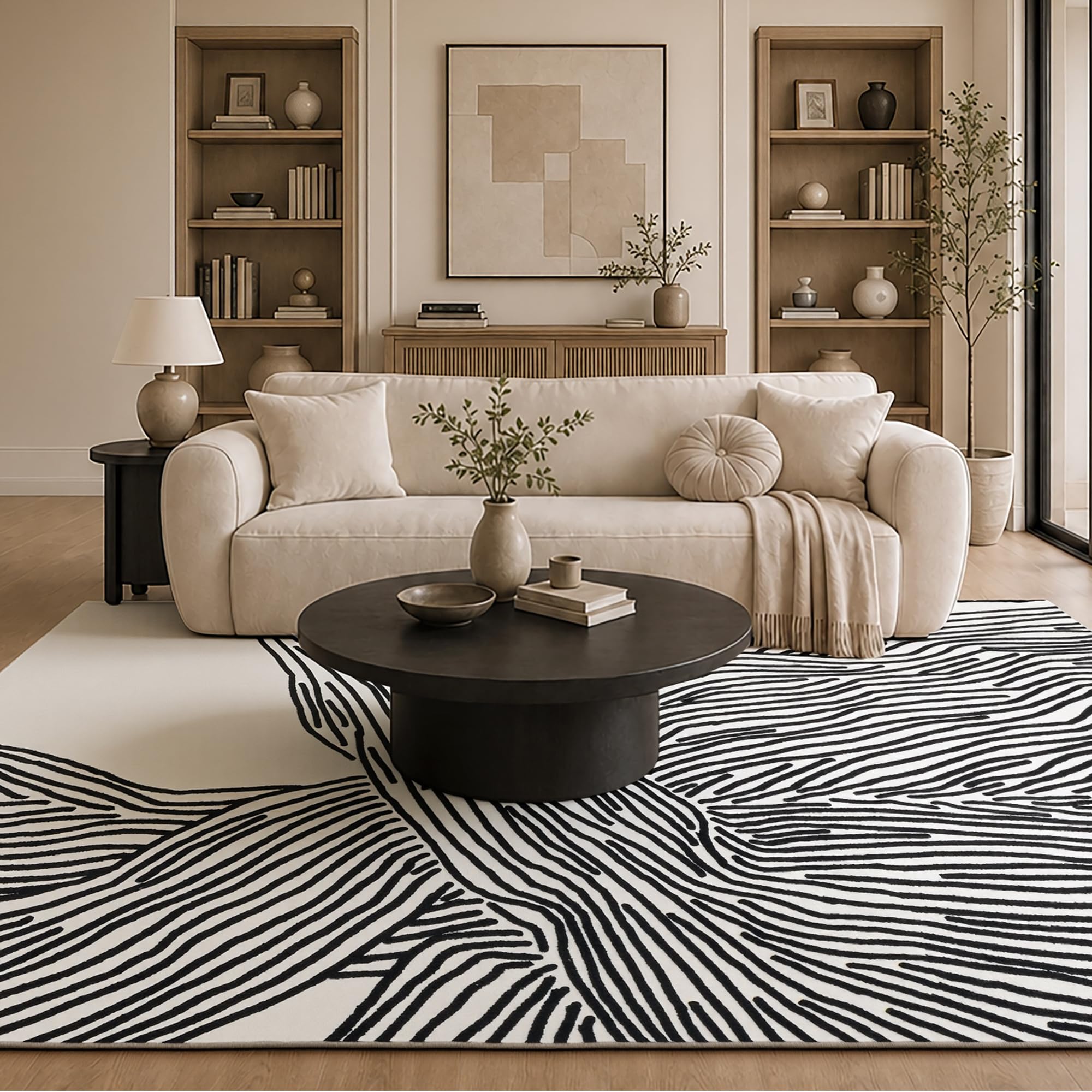

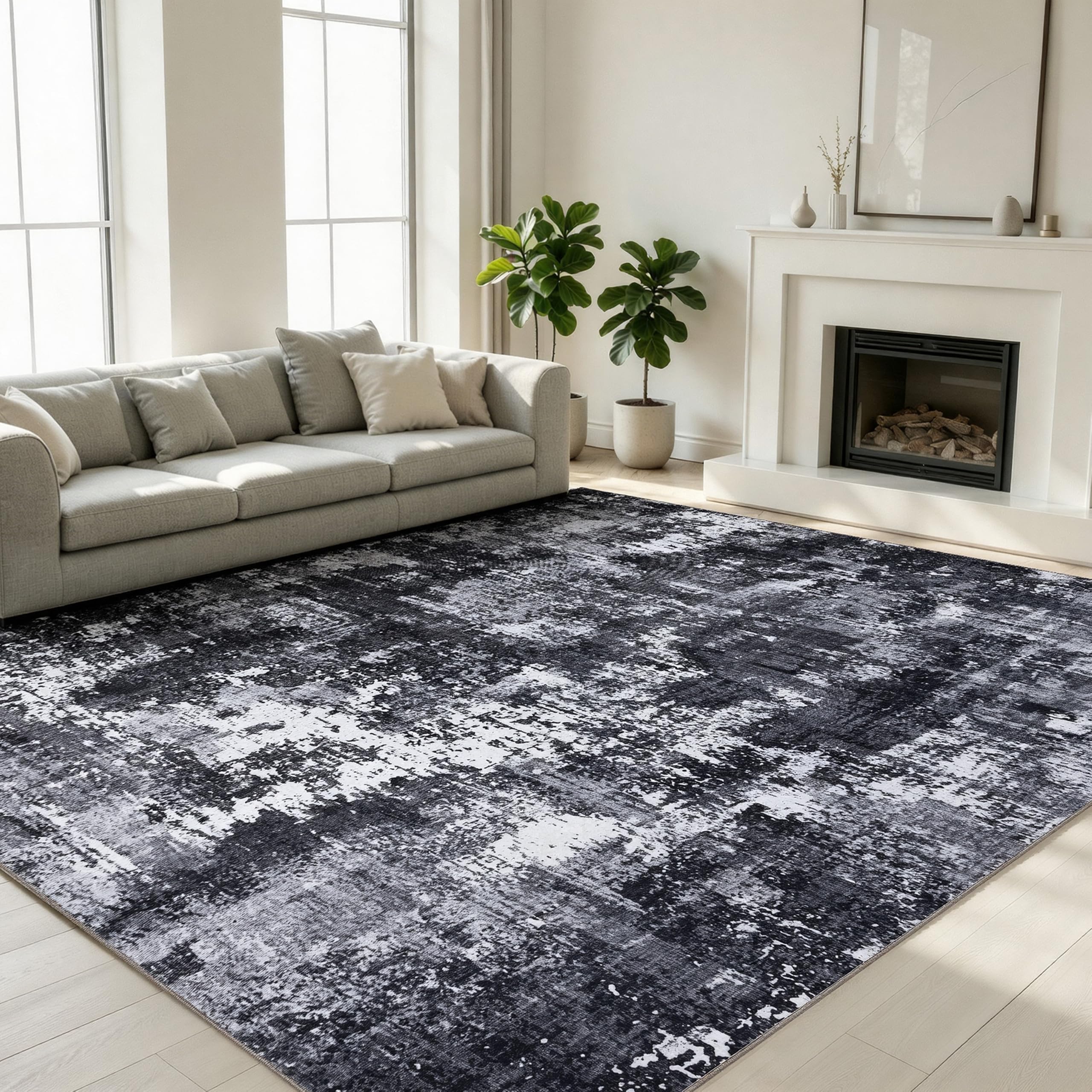
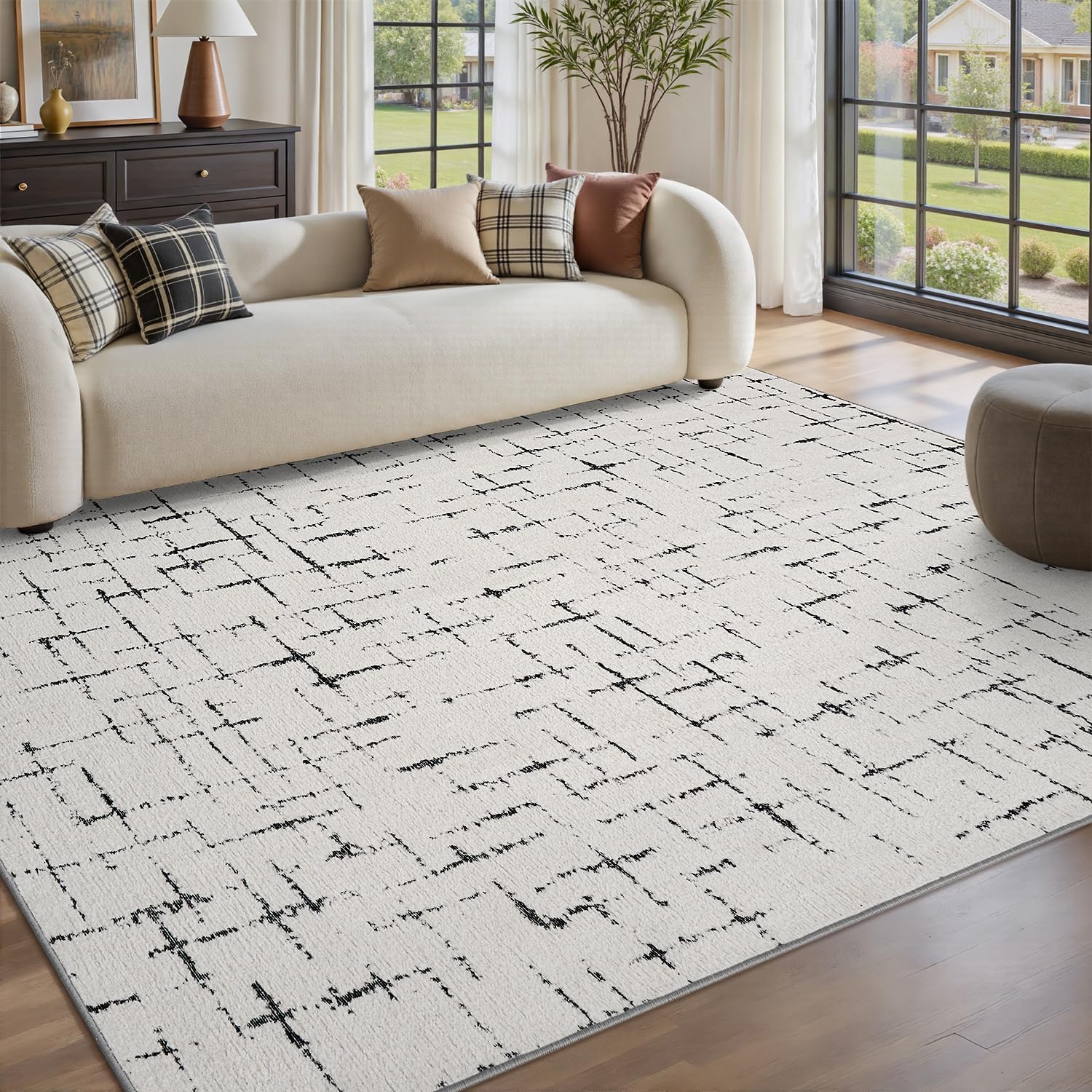
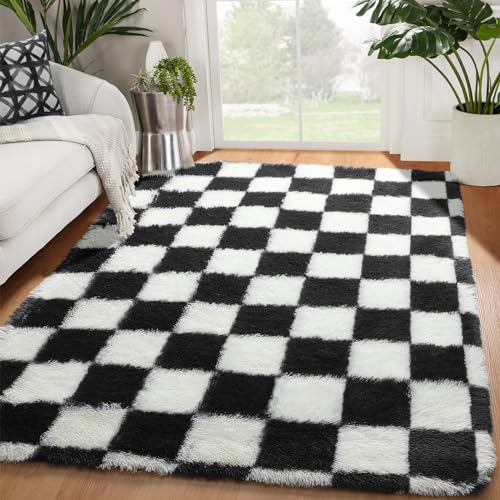
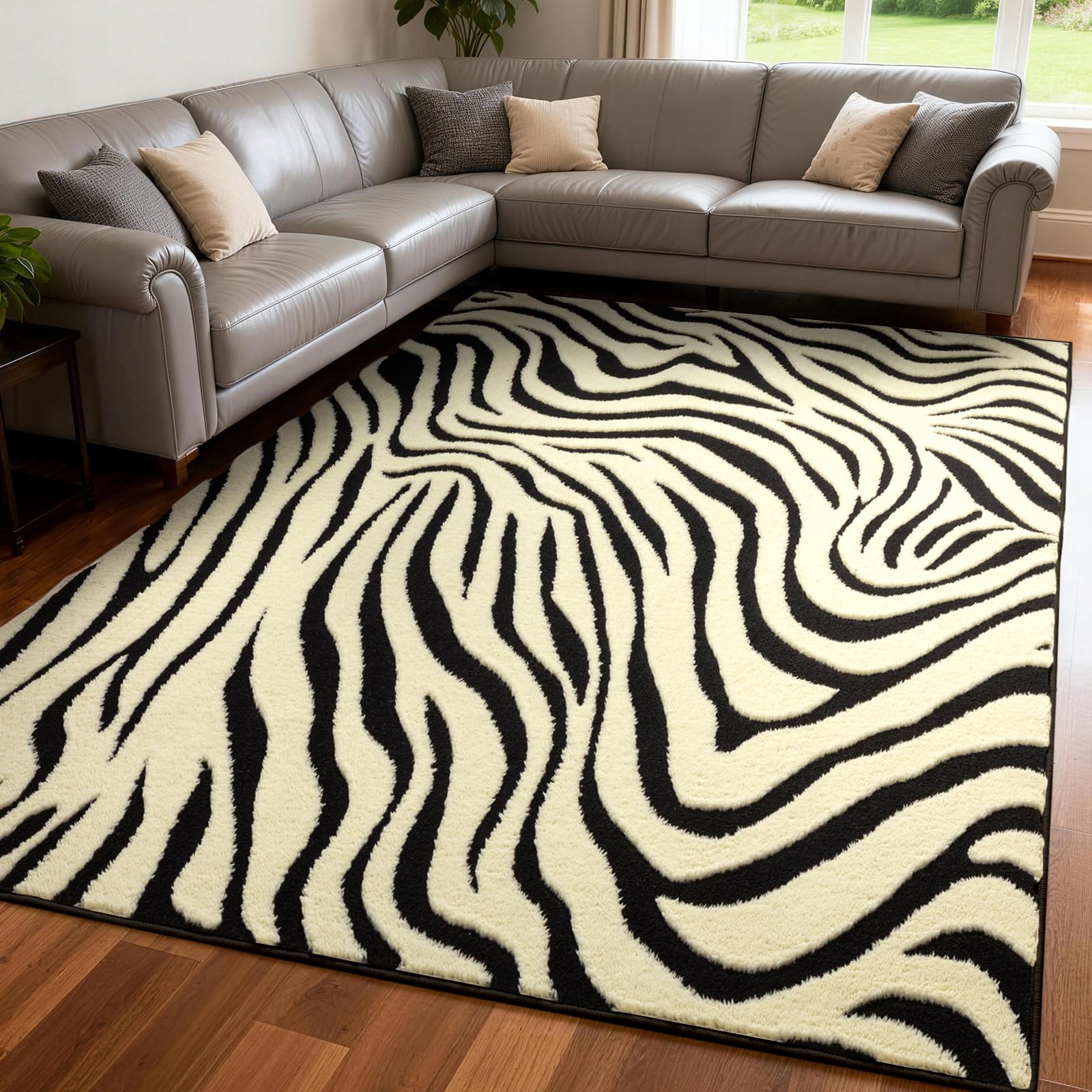
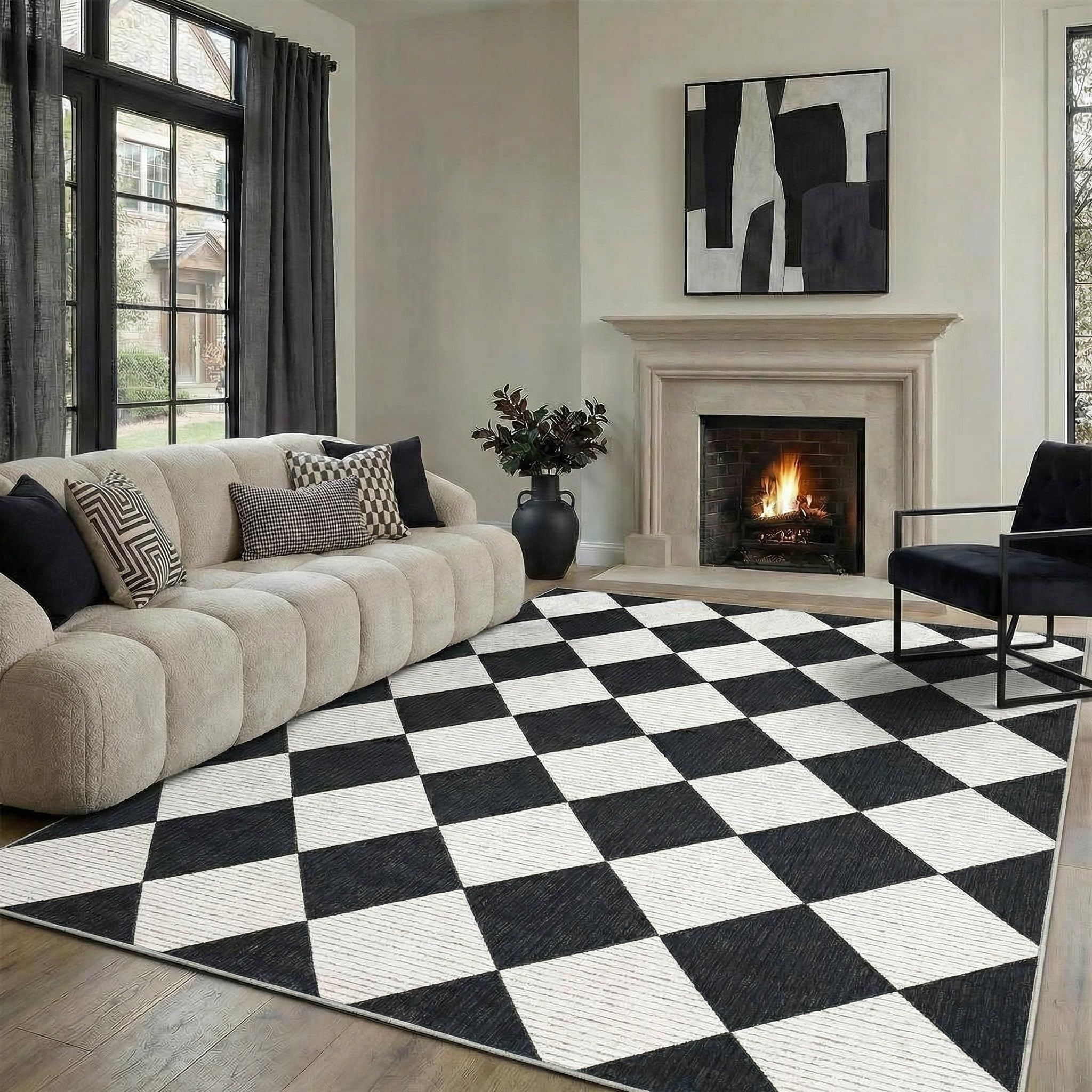


Types of Black and White Rugs Compared
Construction decides how a rug feels, wears, and cleans far more than the pattern printed or woven into it. A bold checkerboard in a flatweave behaves nothing like the same checkerboard in a deep pile. Read each type below with your room in mind: traffic level, chairs that slide, pets that shed, and how often you realiztically clean.
Flatweave and Kilim Style Rugs
Flatweave rugs have no pile at all. The pattern is woven directly into the structure, which makes these rugs thin, light, and easy to move or store. Doors swing over them without catching, dining chairs slide smoothly, and crumbs shake out outdoors in seconds. They are a strong fit for dining rooms, kitchens, and entries where a thick rug would cause constant friction.
The trade off is cushion. A flatweave adds almost no padding over hard floors, so standing comfort is limited and the rug can feel cool in winter. A good rug pad underneath fixes most of that, adding grip and a little softness. Prices usually run around $60 to $250 depending on size and fiber.
Low Pile Synthetic Rugs
Low pile rugs, most often made from polyester or polypropylene, are the practical default for busy homes. The short fibers resist crushing in hallways, release dirt easily during vacuuming, and shrug off most spills when cleaned promptly. Printed patterns in this group can be extremely sharp, so graphic stripes, geometrics, and checkerboards look crisp and deliberate.
Quality varies widely. Better versions use dense weaving that keeps the pattern clear at the edges and resists curling corners, while the cheapest options feel thin and can look faded within a year. Expect about $50 to $300 for common room sizes, with washable versions at the upper part of that range.
Wool and Wool Blend Rugs
Wool is the classic rug fiber for good reason. It feels warm and resilient underfoot, resists stains naturally thanks to its surface oils, and holds a woven pattern with depth that printing cannot match. A wool black and white rug suits living rooms and bedrooms where comfort matters and shoes are usually off. With basic care, a quality wool rug can serve a household for a decade or more.
The costs are price and maintenance. Wool rugs often run around $200 to $800, shed loose fibers during their first months, and need gentle cleaning rather than harsh scrubbing. They are a poor match for rooms with frequent spills or untrained pets, where a washable synthetic earns its keep instead.
High Pile and Shag Rugs
High pile rugs trade practicality for comfort. Long fibers create a soft, warm surface that suits bedrooms, nurseries, and quiet reading corners where you sit or walk barefoot. In black and white, shag patterns read as soft contrast rather than sharp graphics, because the long fibers blur the pattern edges. That softened look can be exactly right for a calm, layered room.
Cleaning is the catch. Crumbs and pet hair sink deep, vacuuming takes more passes, and dining chairs or doors struggle over the height. Keep shag out of eating areas and busy hallways. Prices typically sit around $80 to $350, and a pad is essential to stop sliding on smooth floors.
Pattern Scale: Graphic, Striped, or Subtle?
Once construction is settled, pattern scale shapes the whole room. Large scale geometrics and checkerboards make a strong statement and visually organize open plan spaces, but they demand that furniture placement respect the grid. If a sofa leg lands awkwardly across a bold pattern edge, the room can feel unsettled every time you look at it.
Stripes are the flexible middle ground. They lengthen a short room when run along its longest direction and hide wear patterns well because the eye follows the lines rather than resting on any single spot. Small scale patterns and distressed vintage style designs are the most forgiving of all: they disguise crumbs, pet hair, and minor stains between cleanings, which is why families often land on them for living rooms.
Practical know how: tape the rug outline on your floor with painter tape and live with it for a day before ordering. You will spot door swing problems, pattern clashes with your sofa fabric, and size mistakes that no product photo reveals. If you prefer a single color field instead, our guides to the best white rugs and the best black rugs cover those simpler styles.
How to Choose the Right Black and White Rug
Size and Placement
Size is the most common rug mistake. In a living room, the front legs of every seat should rest on the rug at minimum, and a rug that floats in the middle like a mat makes the room feel smaller. Leave roughly 8 to 18 inches of bare floor between the rug edge and the walls so the room keeps a calm border.
For dining rooms, add about 24 inches beyond the table on every side so chairs stay on the rug when pulled out. Measure before you shop and buy for the measurement, not for the price of the next size down.
Material and Fiber
Match fiber to the mess the room produces. Polypropylene and polyester handle moisture, muddy paws, and food spills with the least drama, and most washable rugs use one of these fibers. Wool offers the best feel and longevity in low spill rooms. Natural plant fibers such as jute usually appear in blended designs and bring texture, but they absorb spills and stain more readily.
Check the backing as well as the face. A rug with a nonslip backing may work without a pad on some floors, while woven cotton backings almost always need one for safety and comfort.
Room Traffic and Household Needs
Rate your rooms honestly. Entries, hallways, and family living rooms need low pile, dense construction, and patterns that hide soil. Bedrooms can carry plush pile and lighter patterns because traffic is gentle and shoes stay off. Homes with dogs should favor short fibers that release hair during vacuuming and avoid loops that claws can pull.
Color balance matters in real life too. A mostly white rug shows dark pet hair and soil, while a mostly black rug shows lint, dust, and light colored pet hair. A balanced mix with a mid scale pattern hides the widest range of everyday mess.
Durability and Care
Density is the durability signal you can judge from a listing: more fiber packed into each square inch means slower crushing and a longer life. Bound or serged edges resist fraying better than raw cuts. Read the care label before buying, not after the first spill, and confirm whether the rug is machine washable, spot clean only, or needs professional cleaning.
Ask about the return window as well. A rug looks different under your light and against your furniture than it does on a screen, and a fair return policy turns that risk into a reasonable trial at home.
Care and Maintenance Tips
- Vacuum weekly. Grit works down into fibers and cuts them over time, so regular vacuuming is the highest value habit you can build.
- Rotate the rug twice a year. Turning it evens out sunlight fading and traffic wear, which matters where black sections can fade unevenly.
- Blot spills, never rub. Rubbing pushes liquid deeper and distorts the pattern edge. Blot with a clean cloth and mild detergent solution.
- Use a rug pad. A pad prevents slipping, adds cushion, and extends rug life by reducing fiber stress against hard floors.
- Shake small rugs outdoors. A monthly shake clears dust that vacuuming misses, especially from flatweaves.
Frequently Asked Questions
How do I wash black and white rugs safely?
Wash only if the care label allows it, and always test a small corner first. The risk is dye transfer: strong black dye can bleed into white sections in hot water. Use cold water, mild detergent, and no bleach, then dry the rug flat and fully before replacing it. Spot cleaning handles most spills without putting the whole pattern at risk.
Do black and white rugs show dirt easily?
They show some things and hide others. White areas reveal dark soil and pet hair, while black areas reveal lint and light dust. The forgiving middle is a busy pattern that mixes both colors at a medium scale, which breaks up contrast so everyday debris blends in. In high traffic rooms, that busy pattern buys you days between vacuuming sessions.
What size rug should I buy for a living room?
Buy a rug large enough for the front legs of all seating to rest on it. For most living rooms that means at least 8 by 10 feet, and larger rooms often need 9 by 12 feet to look settled. Leave a border of bare floor near the walls. If you must choose between sizes, the larger one nearly always looks and functions better.
Are washable rugs worth the extra cost?
Washable rugs are worth it in homes with young children, pets, or a dining area that sees daily spills. Being able to machine wash a rug removes stains and odors that spot cleaning cannot, and that ability extends the useful life of the rug. In calm adult rooms with little spill risk, a standard rug plus prompt spot cleaning usually costs less overall.
How often should I replace my black and white rug?
Replace a rug when the pile stays flat and worn in traffic paths, edges fray beyond repair, or odors survive a deep clean. A quality wool rug can last ten years or more, while budget synthetics in busy rooms often look tired after three to five years. Rotation and a pad stretch every timeline, so care habits matter as much as purchase price.
The Bottom Line
Choose construction first, pattern second. Low pile synthetics serve busy rooms, wool rewards calm living spaces, flatweaves suit dining areas, and washable designs protect homes with kids and pets. Measure carefully, tape the outline before ordering, and compare your shortlist in the product table above. With those steps, finding the best black and white rugs for your rooms becomes a calm decision instead of a gamble.


