Best Bike for Mountain Trails in 2026: Every Type Explained Side by Side
Disclosure: We may earn a commission when you buy through links on this page, at no extra cost to you. As an Amazon Associate I earn from qualifying purchases. Learn more

Hardtail, full suspension, or electric? Match the best bike for mountain trails to your terrain, frame fit, gearing, and budget.
Standing in a bike shop or scrolling through listings, the range of machines can feel endless. Hardtails, full suspension bikes, electric models, and gravel bikes all claim a place on dirt, yet each one suits very different ground. This guide explains how to choose the best bike for mountain trails for the riding you actually do, starting with the trails themselves rather than the parts catalog.
We sort the main types side by side in the comparison table below, then walk through fit, suspension, gearing, and electric motors in plain terms. By the end you will know which type fits smooth park paths, rough rocky climbs, or steep descents, and what each type honestly costs to own and maintain over time.



The Trails You Ride Decide the Type
Every buying decision in this article flows from one question: what does your ground actually look like? A bike that feels perfect on groomed park dirt can feel nervous and harsh on broken rock, and a long travel machine built for steep descents will feel slow and heavy on gentle forest paths. Sort your usual riding into one of the three classes below before you look at a single component.
Smooth and Rolling Trails
Groomed singletrack, forest roads, and park paths with modest climbs reward a light and efficient bike. On this ground, pedaling efficiency matters more than suspension travel, because the surface does most of the smoothing for you. A hardtail or a short travel bike keeps weight low and prices sensible. Riders who stay on this class of trail all season rarely need anything more complex.
Rough and Rocky Trails
Loose rock, root steps, and washed out descents change the equation. Here the rear wheel needs help staying in contact with the ground, and your hands and back absorb far more punishment. A full suspension bike earns its extra cost on this class of trail, because controlled wheels grip better and fatigue builds more slowly. Tire volume and brake control also start to matter as much as raw fitness.
Steep and Technical Trails
Steep pitches, drops, and tight switchbacks call for the most capable machines and the most honest self assessment. Longer suspension travel, slack frame angles, and strong brakes all serve this ground, but the bike also gets heavier and more expensive. If only one ride in ten looks like this, buy for the other nine and walk the hard section. A bike matched to your common trails gets ridden far more often.
Types of Bikes Compared Side by Side
The four types below cover nearly every machine sold for dirt riding. The product table lists current models, and the table here sums up how the classes themselves differ before you compare individual bikes.
| Type | Best For | Pros | Cons | Typical Price |
|---|---|---|---|---|
| Hardtail mountain bike | Smooth to moderately rough trails | Light, simple, low upkeep, strong value | Rear wheel bounces on rough ground | about $500 to $1,500 |
| Full suspension mountain bike | Rough, rocky, and steep trails | Traction and comfort on broken ground | Heavier, pricier, more parts to service | about $1,500 to $4,000 |
| Electric mountain bike | Long climbs and bigger riding days | Motor help on climbs, more laps per day | Heaviest class, battery care, highest prices | about $2,500 to $6,000 |
| Gravel bike | Dirt roads and smooth easy paths | Fast on mixed surfaces, light to carry | Drop bars and skinny tires limit rough trail use | about $900 to $2,500 |
Hardtail Mountain Bikes
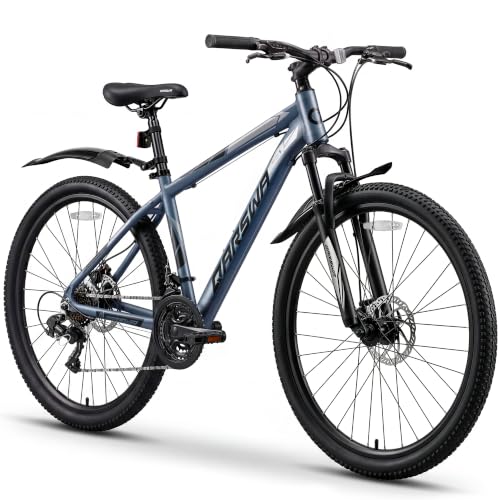
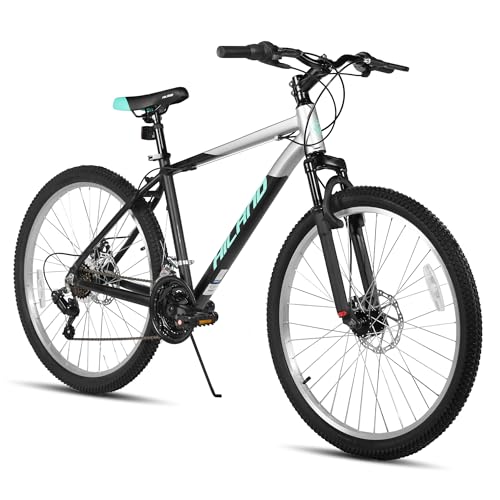
A hardtail has a suspension fork at the front and a rigid rear frame. That simple layout keeps weight down, prices down, and maintenance short, because there are no rear pivots or shock to service. On smooth and moderately rough trails a hardtail feels quick and direct, and it teaches good line choice because the bike will not hide mistakes. The limit shows up on long rocky descents, where the rear wheel skips and your legs become the suspension. For new riders and smooth trail networks, this is usually the sensible starting point.
Full Suspension Mountain Bikes
A full suspension bike adds a shock and linkage at the rear so both wheels can follow rough ground. The payoff is traction on loose climbs, control on descents, and less fatigue across a long ride. Trail and all mountain models sit in the middle of the travel range and suit the widest mix of terrain, which is why guides to the best all mountain trail bike focus on that balanced class. The costs are real: more money at purchase, more weight on climbs, and a shock service bill every season or two. Riders on genuinely rough trails accept those costs gladly.
Electric Mountain Bikes
An electric mountain bike adds a motor and battery to a hardtail or full suspension frame. Pedal assist helps most on long climbs and on days when you want one more descent than your legs would allow. The trade offs are weight, price, and battery care, and the bike still needs the same tires, brakes, and suspension as its unpowered twin. Trail access rules vary by land manager, so confirm that motorized assist is allowed where you ride before you spend. On permitted trails, this class opens bigger days to riders with limited time or recovering fitness.
Road and Gravel Bikes
Gravel bikes look like road bikes with wider tires and lower gears, and they shine on dirt roads, rail trails, and smooth park paths. They are light, fast, and simple, and many riders use one for both pavement and easy dirt. The honest limit is the riding position and tire width: drop bars give less leverage on steep descents, and narrow tires sink and wander in loose rock. If your mountain trails include roots, ledges, or chunky descents, treat a gravel bike as a second bike rather than your main trail machine.
Electric Mountain Bikes vs Commuter E Bikes: Which Should You Choose?
These two classes share motors and batteries, and that is where the similarity ends. An electric mountain bike is built around trail forces: a strong frame, wide knobby tires, real suspension, and brakes sized for long descents. Its motor sits at the pedals on most models, which keeps weight low and centered for balance on rough ground. A commuter e bike is built around pavement duty: narrower tires, a rack, lights, and often a hub motor, all tuned for streets and smooth paths.
On an actual mountain trail the commuter layout runs out of answers quickly. Skinny tires lose grip on loose climbs, small brakes fade on descents, and frames are not built for jumps or rock strikes. If your riding mixes town trips with gentle dirt roads, a commuter model can cover both at a lower price. If the trail is the main event, buy the electric mountain bike and accept the higher price as the cost of the right tool.
How to Choose the Right Bike
Frame Fit Comes First
Fit is the first purchase fact, ahead of every component on the spec sheet. A frame size class that fits your body is worth more than a fancier drivetrain or a lighter wheel set, because a bike that hurts your back or knees will sit in the garage no matter how good its parts are. Use the maker size chart as a starting point, then stand over the frame and sit on it if you can. Reach, stack, and standover height should let you move around the bike on descents without stretching or crowding.
Suspension Travel Serves the Trail
Suspension travel is a class choice, not a score. Short travel bikes feel lively and climb well on smooth ground, mid travel bikes cover the broad middle of trail riding, and long travel bikes exist for steep and rough descents. More travel is not better in itself: extra travel adds weight, softens pedaling, and can leave a bike feeling vague on easy trails. Match the travel class to the trail class you sorted in the first section, and let that decision rule out half the catalog at once.
Frame Material and Geometry
Aluminum frames dominate the middle price bands because they balance strength, weight, and cost well. Carbon frames save weight and can feel smoother, but they cost more and need more care after a crash. Steel appears on a few forgiving and durable builds at lower speeds of riding. Geometry matters as much as material: a slacker head angle steadies the bike on descents, while a steeper angle makes climbing and tight turns feel quicker. Modern trail geometry suits most riders, so avoid extreme numbers at either end.
Drivetrain and Gearing
Most trail bikes now use a single front chainring with a wide range cassette at the rear. This layout is simple to shift, drops the chain less often, and still gives a low gear for steep climbs on most models. Check the lowest gear rather than the number of gears: a big rear cog paired with a small front ring is what gets you up a loose climb without walking. Hydraulic disc brakes are the other spec worth insisting on, because they stop harder with less hand effort and keep working in wet and mud.
Motor, Battery, and Range for Electric Bikes
For electric models, motor placement and battery size shape the ride. Mid drive motors at the pedals balance best on trails and use the bike gears, so they climb efficiently. Hub motors cost less and suit gentle ground. Battery capacity is listed in watt hours, and real range depends on assist level, rider weight, and climbing, so treat maker range figures as best case numbers. A removable battery makes charging and storage easier, and a second battery is a common later purchase for riders who take long days.
Best Bikes for Specific Needs
Best Bike for Mountain Trails and Road
Some riders need one bike to cover dirt trails and the pavement ride to reach them. For that mix, a hardtail with moderate tires is the honest answer: it pedals well on roads, handles smooth to moderate trails, and costs less than a full suspension bike. Tire choice does much of the work here, since a smoother center tread rolls faster on pavement while side knobs still grip on dirt. Separate buying guides cover the component under both spellings, including the best trail mountain bike tyres guide and the best trail mountain bike tires guide, and either one treats the tire as the part that decides grip more than the frame does at this level.
Best Full Suspension Mountain Bike for Mountain Trails
Choose the full suspension route when your trails are rough enough that the rear wheel regularly leaves the ground or your hands ache after descents. Look for mid range travel, a dropper seat post that lowers the saddle for descents, and brakes with large rotors. Suspension setup matters as much as the parts: air pressure and rebound settings matched to your weight change the ride more than a price step does. Budget for a shock service each year, and remember that a well set up mid price bike beats a neglected expensive one on any trail.
Tips to Get the Most From Your Bike
- Check tire pressure before every ride, because a few pounds too high or too low changes grip and comfort more than most upgrades.
- Clean and lube the chain every 100 to 200 miles, and sooner after wet or dusty rides, to slow wear on the whole drivetrain.
- Book a professional tune up once a year so cable stretch, brake pads, and bearing wear get caught before they strand you.
- Store the bike dry and out of direct sun, and wash off mud before it dries into the pivots and seals.
Two related purchases sit outside the bike budget and deserve a line each. A helmet is a separate purchase that every trail rider needs, bought for fit rather than looks, and it should be replaced after any hard impact (see our mountain bike helmet guide). Route planning is software rather than hardware, and the best app for mountain bike trails is a guide to that separate category, useful for finding legal trails and checking distances before you drive to a trailhead.
Your Questions Answered
What features matter most in a bike for mountain trails?
Fit, brakes, and tires matter most, in that order. A frame that fits keeps you comfortable and in control, hydraulic disc brakes stop reliably in wet and steep conditions, and tires matched to your soil decide how much grip you actually get. Suspension class comes next, and it should match your trail class rather than your ambitions. Many riders searching for the best bike for mountain trails find that spending on tires and a proper setup beats spending on a lighter frame.
How much should I spend on a first mountain trail bike?
Plan on about $500 to $1,000 for a solid hardtail that will last for years of regular riding. Below that band, bikes often use parts that wear quickly and brakes that feel weak on descents. Above it, you gain a better fork, stronger brakes, and a wider gear range rather than a different kind of bike. Keep some budget aside for a helmet, a pump, and basic tools, because a first bike needs those from day one.
How far can an electric mountain bike go on one charge?
Most riders see about 20 to 50 miles per charge, and the spread is wide because assist level changes everything. Low assist on gentle trails can double the distance of high assist on steep climbs. Rider weight, tire pressure, and cold weather also cut into range, since batteries deliver less in the cold. If your usual loop is long, choose the larger battery option at purchase, because swapping to a bigger battery later is rarely cheap or simple.
What size mountain bike frame do I need?
Start with the maker size chart, which usually sorts riders by height into frame classes. Then check standover height: you want clear space between you and the top tube when standing flat footed over the bike. Reach should let you hold the bars with a slight bend in the elbows, not locked arms. Riders between sizes usually do better on the smaller frame for technical trails, because a shorter bike is easier to move around on descents.
Are electric mountain bikes allowed on mountain trails?
Rules differ by trail system, so check before you ride. Many land managers allow only the lowest assist class on shared trails, some allow all classes, and some ban motors entirely. Trailhead signs and the land manager website are the reliable sources, and fines or trail closures can follow when riders ignore the rules. This is one more reason to confirm access for your home trails before choosing an electric model over a regular one.
Wrapping Up
Sort your trails first, then let fit and brakes lead the decision, and the right type usually becomes obvious. Compare the classes in the product table, match suspension travel to your roughest regular trail rather than your hardest ever trail, and keep the running costs in view. Chosen that way, the best bike for mountain trails is simply the bike that fits your ground, your body, and your budget all at once.