Best Bell Boots: The Buyer Checklist We Use for 2026
Disclosure: We may earn a commission when you buy through links on this page, at no extra cost to you. As an Amazon Associate I earn from qualifying purchases. Learn more

Learn how to choose the best bell boots for your horse, with sizing steps, closure and material comparisons, fit checks, and simple care tips.
Bell boots wrap the pastern and cover the heel bulbs, so a hind toe that lands too close cannot strike or grab the heel of a front shoe. Choosing the best bell boots comes down to size, closure, material, and coverage, and the wrong pair spins, rubs, or tears within weeks. This guide walks through each factor in order, so you can match a pair to your horse.
Start with how your horse moves and where the boots will be worn, in the arena, on the trail, or in the paddock. Then work through the fit checks below, and compare the main styles side by side in the comparison table below before you order.




Who Should Buy Bell Boots?
Not every horse needs bell boots daily. They earn their place when a horse travels close behind, lives in shoes worth protecting, or works at speed where one bad step can bruise a heel.
Horses That Overreach in Ridden Work
If your horse forges or comes home with nicks on the heel bulbs after schooling, bell boots address the cause directly. The hind toe reaches into the space the front foot has just left, and a boot puts a tough layer between that toe and the skin and shoe heel. Choose fuller coverage that stays centered, because a boot that rotates leaves the spot it should protect exposed.
Horses Turned Out in Front Shoes
Turnout adds mud, gallops, and hours of wear a short ride never creates, so durability and a closure that stays shut matter most. If turnout is the main job, see our guide to the best bell boots for turnout for use specific sizing notes. Favor thick rubber or reinforced synthetic pairs, check them at every feed, and expect turnout boots to wear out fast.
Jumpers and Event Horses Working at Speed
Over fences, a front heel sits close to the ground at landing, and a hind foot scrambling for balance can strike hard. Riders in these sports pick boots with strong heel bulb coverage, a grippy inner lining that resists spin, and closures a groom can change fast between phases. A boot lost on course protects nothing.
Key Features to Compare
Sizing and Pastern Measurement
Size from the horse, not from a guess based on breed. Wrap a soft tape around the pastern just below the fetlock and note the measurement in inches. Match it to the maker size chart, since brand sizes vary widely. The boot should reach about ground level at the heel. If your horse falls between sizes, choose the larger one, since a small boot rides up and rubs.
Closure Style: Pull On Boots and Strap Closures
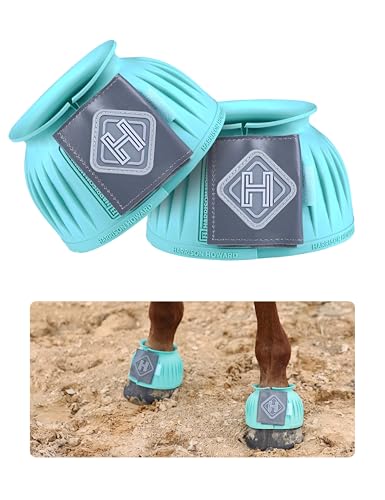
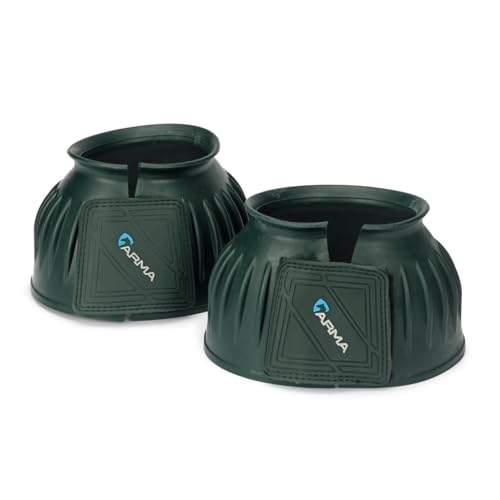
Pull on boots have no fastener to fail and sit smoothly against the leg, but stiff rubber can fight you over the hoof on a cold morning or a restless horse. Strap closures with hook and loop panels go on in seconds, yet straps collect mud and lose grip as the loops clog. Double strap designs spread pressure and resist a horse that rubs boots on a fence. Pick based on who fits the boots daily.
Materials and Thickness
Classic gum rubber is cheap, flexible, and easy to hose clean, though thin rubber tears at the heel after repeated strikes. PVC and other molded synthetics hold their shape and shrug off mud, but a hard rim can rub a thin skinned horse. Neoprene and ballistic style fabrics feel softer and absorb knocks well, at a higher price and with slower drying. Match thickness to the job: light pairs for flatwork, heavier pairs for hard strikes and rough turnout.
Shape, Height, and Heel Bulb Coverage
Coverage is the point of the boot, so judge the profile first. The back must wrap both heel bulbs fully and overlap the heel of the shoe, with no gap where a hind toe could slip under the rim. Taller profiles also guard the coronet band, which helps horses that clip high, while shorter profiles suit compact pasterns and trap less grit. An anatomical shape, wider at the back, centers the boot and cuts the twisting a plain round tube allows.
A Fit That Stays Put Without Rubbing
A good fit passes three quick tests at the barn. Slide one finger between the top of the boot and the pastern, so the rim holds without squeezing. The boot hangs evenly all around, with the lowest point at the back just brushing the ground. After ten minutes of walking and trotting in hand, it has not spun, climbed, or left the hair ruffled. Rolled top edges help sensitive skin, and a boot that rubs in one short session is the wrong shape.
Choosing Between Bell Boot Types and Uses
Best Horse Bell Boots: What to Check
When you shop the wider category of best horse bell boots listings, judge each pair on three horse specific points. First, temperament: a fidgety horse is safer in a strap closure you can remove fast than in a pull on boot mid stretch. Second, skin: horses prone to pastern scabs need smooth inner surfaces you can keep truly clean. Third, sound: some horses startle at the slap of loose rubber, and a closer fitting fabric boot runs quieter.
Boots for Schooling, Trails, and Recovery Days
For flatwork and hacking, comfort over hours counts most, so lighter boots with soft top edges are the usual pick. Trail riders should add one point the arena never tests: stream crossings add weight to some fabrics, so a boot that drains and dries fast beats one that stays soggy. During stall rest after a heel injury, ask your veterinarian before booting around the clock, because constant coverage traps moisture against healing skin.
Bell Boot Checklist Before You Buy
- Did you measure the pastern and match the number to this maker size chart?
- Does the profile cover both heel bulbs and the heel of the shoe?
- Can you fit one finger under the top edge without forcing it?
- Does the closure suit the person who will fit the boots every day?
- Is the material thick enough for turnout, speed work, or hard strikes?
- Can you clean the boot fully with a hose and a stiff brush?
Common Mistakes to Avoid
- Buying by breed or hoof size alone, which ignores pastern shape and leads to boots that spin.
- Choosing a boot so small that it rides up, leaving the heel bulbs bare when a hind toe lands.
- Leaving turnout boots on for days without a check, so trapped grit rubs the pastern raw.
- Treating a deep heel cut or sudden lameness as a boot problem, when both need a veterinarian or farrier instead.
- Ordering the thickest boot for every job, which adds heat and weight a horse in light flatwork does not need.
Keeping Bell Boots Clean and Sound
Bell boots live in mud, manure, and arena footing, so care is mostly cleaning and honest inspection. Hose pairs after muddy rides, scrub the inner surface where grit collects, and clear strap panels of clogged loops. Dry boots in moving air away from direct heat, because strong heat stiffens rubber and warps molded synthetics. Store clean pairs out of sunlight, which cracks rubber over a season.
Retire a pair when you see cracks at the flex point, a rim worn thin at the back, or straps that peel open easily. Keep one spare pair in the tack trunk if your horse wears boots daily, since a torn boot found on show morning leaves you choosing between bare heels and a bad fit.
Bell Boots: Your Questions Answered
How should bell boots fit on a horse?
Bell boots should sit snugly around the pastern, cover the heel bulbs, and hang low enough at the back to just brush the ground. One detail riders miss is symmetry: stand the horse square and view from behind, because a boot can feel right by hand yet hang crooked, and a crooked boot wears thin on one side within weeks. Recheck the fit after each trim cycle, since a changed hoof angle alters how the boot hangs.
Can a horse wear bell boots during turnout?
Yes, a horse can wear bell boots during turnout, and many shod horses wear them outside full time. Plan for a daily rhythm: bring the horse in, lift each rim, and clear out the mud and small stones that collect inside during the day. On wet ground, rotate a spare dry pair, because skin kept damp under any boot softens and rubs more easily.
Do bell boots go on the front legs only, or on all four legs?
Bell boots go on the front legs in almost every case, because the hind toe striking forward is the risk they guard against. Hind pairs are uncommon: hind pasterns are shaped differently, and many horses resent the feel behind. If your horse injures its own hind heels, that pattern points to a gait issue worth a veterinarian and farrier review before you add more gear.
Will bell boots stop a horse from pulling off a front shoe?
Bell boots lower the risk of a pulled front shoe, but no boot can promise a shoe stays on. Most pulled shoes start when the hind toe catches the heel of the front shoe, and full coverage at the back blocks that grab. Boots cannot fix a loose shoe or a horse overdue for the farrier, so treat repeated shoe loss as a shoeing problem first.
When should I replace a pair of bell boots for my horse?
Replace bell boots when the material cracks, the back rim wears thin, or the closure no longer holds. Watch for a subtler sign too: a boot that once sat centered but now twists to the same side every ride has lost its shape. Replacing then costs less than treating a heel bruise or resetting a torn off shoe.
Wrapping Up
Size from a real pastern measurement, pick the closure you will use well every day, and demand full heel bulb coverage in a material matched to the work. Check the fit in hand before you ride, and bring your veterinarian or farrier in when cuts, swelling, or repeated shoe loss show up. With those habits, the best bell boots for your horse are the pair that stays centered and guards the heel on every stride. Compare your shortlist against the product table above before you order.