
Best Beginner Riding Boots 2026: Matching the Right Model to Your Routine
Disclosure: We may earn a commission when you buy through links on this page, at no extra cost to you. As an Amazon Associate I earn from qualifying purchases. Learn more

Discover the best beginner riding boots for your needs. We match features to real use cases so you avoid overpaying and get the right fit the first time.
There is no single boot that suits every new rider, because a weekly lesson student and a beginner riding four days a week ask very different things of their footwear. The best beginner riding boots for you match your discipline, lesson schedule, and the shape of your foot and calf. Start with how often you ride, and the right style becomes easier to spot in the comparison table below.
A riding boot is safety gear as much as footwear. A defined heel helps keep your foot from sliding through the stirrup, a smooth sole lets your foot release if you fall, and a shaft or half chap protects your lower leg from stirrup leather pinch. This guide covers fit, closures, and materials so you can buy once and ride comfortably.





Who Should Buy Which Riding Boots?
Your schedule and barn rules decide more than fashion does. Some barns require a heeled boot but leave the style to you, while show barns may expect tall boots sooner.
For Lesson Students Riding Once or Twice a Week
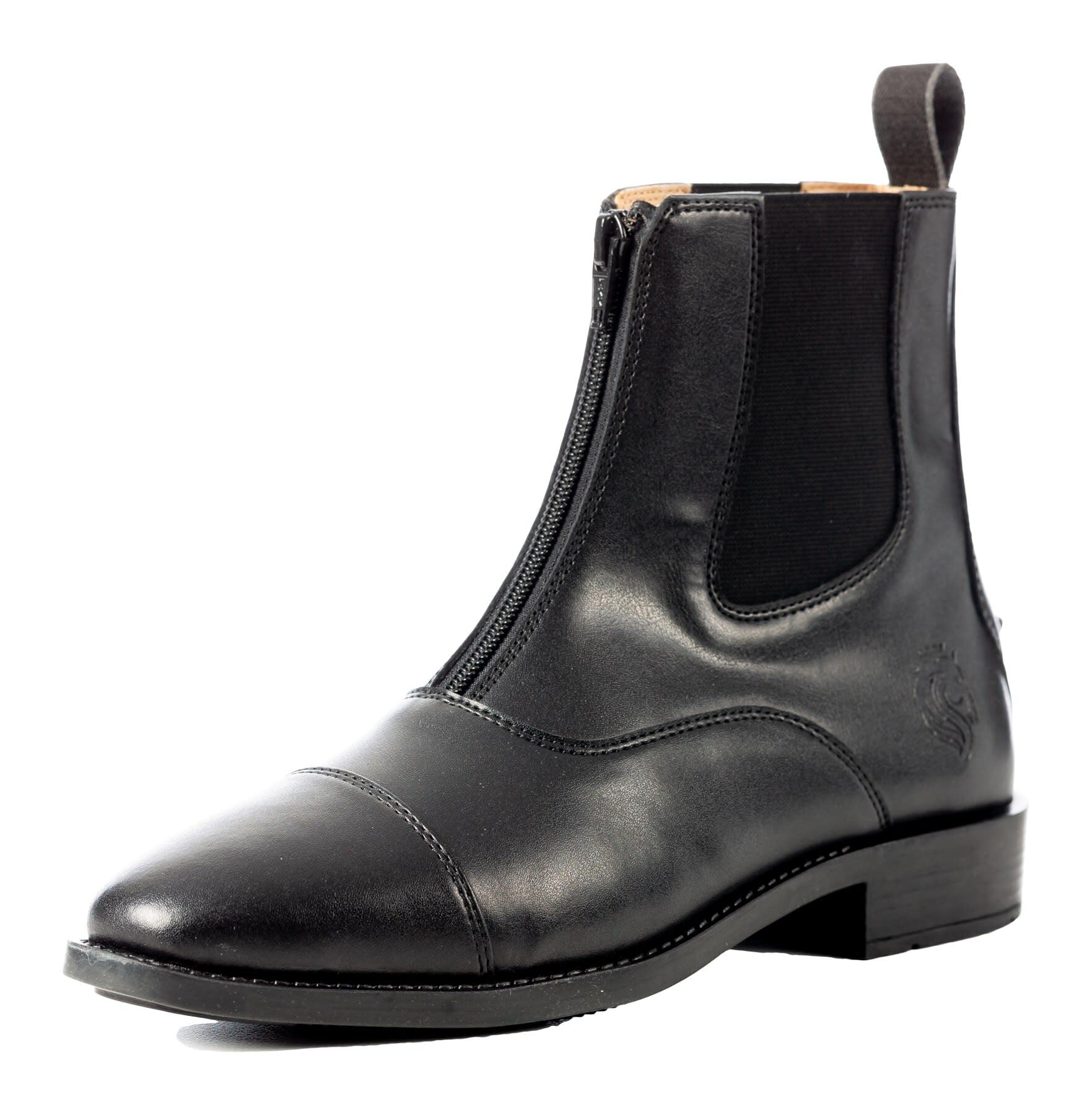
You need a safe heel, a sole that releases from the stirrup, and a price that makes sense while you decide how far riding will go. Paddock boots with half chaps give you that setup for about $80 to $150 for the boots alone, and each piece is easy to replace as you grow. If your barn allows either style, see our guide to the best horse riding boots for beginners.
For Weekend Beginners Moving Beyond Borrowed Boots
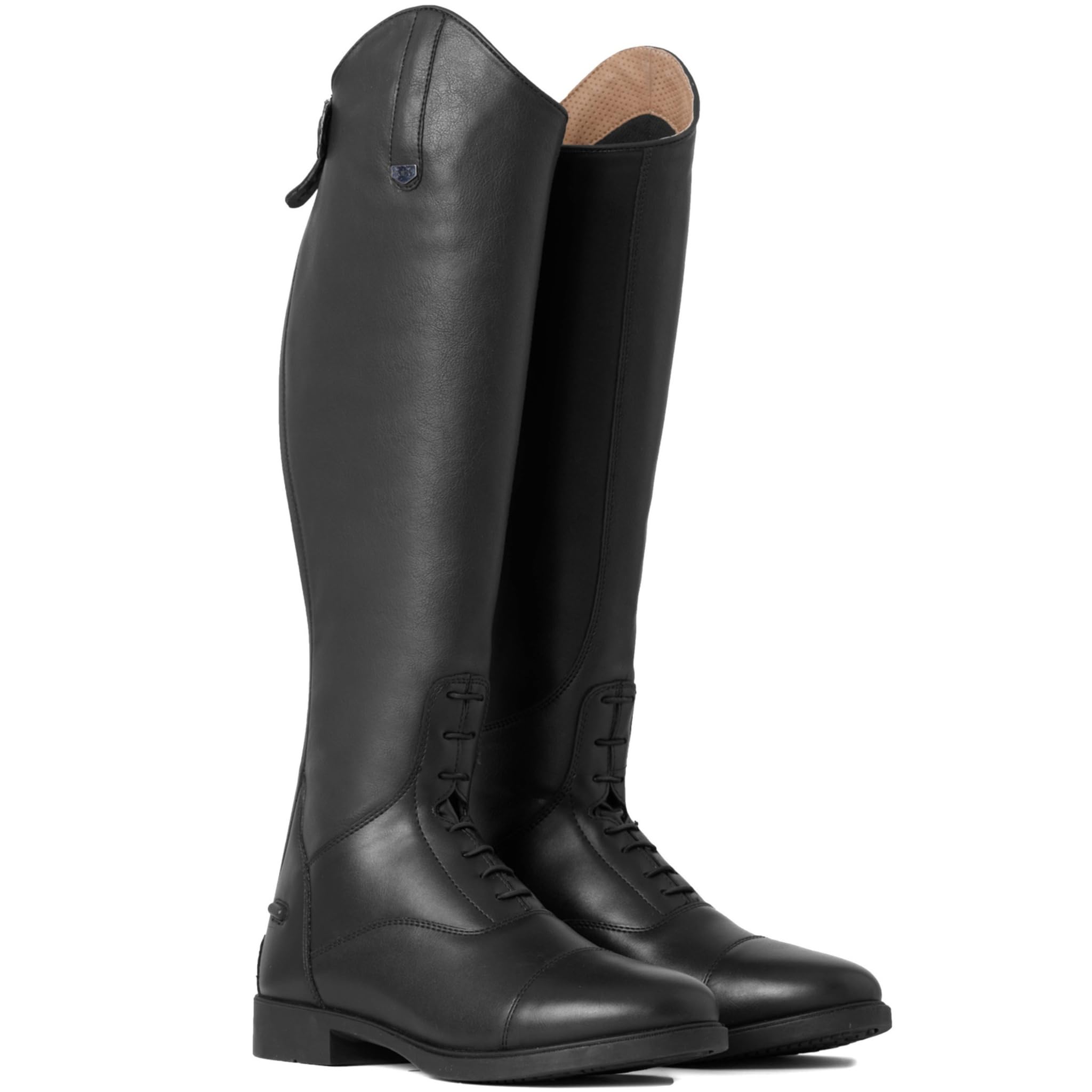
Borrowed barn boots rarely match your calf, and a poor fit makes it hard to keep your heels down and your leg quiet. Your own pair breaks in to your leg and gives a consistent feel in the stirrup. Look for tall boots or a mid height shaft in durable synthetic or entry level leather, with an elastic panel that forgives small calf changes. Riders comparing first pairs can also see our guide to the best beginner boots.
For Frequent Riders Planning Lessons and Local Shows
Riding three or more days a week wears entry level footwear fast, and local shows often expect the clean line of a tall boot. Prioritize zips that still work with dusty hands, leather that holds its shape, and a footbed you can stand in while grooming. Spending more buys durability and a closer calf fit, which supports a steadier leg as your trainer asks for more precise aids.
Key Features to Compare
Compare boots in this order: stirrup safety first, then fit, then details that make weekly use easier. A plain boot that fits well disappears under you in the saddle, while a handsome boot with the wrong heel holds your riding back.
Weight and Flexibility in Beginner Riding Boots
Weight matters because you groom and tack up in the same boots you ride in. Light synthetic boots feel easy on long barn days, while leather weighs more but molds to your ankle. A boot that bends enough at the ankle lets you drop weight into your heels, yet it should still feel supported when you post the trot. Very stiff shafts suit showing more than learning, and very soft shafts can collapse and rub.
Fit, Sizing, and Calf Width in Beginner Riding Boots
Measure both calves over the socks and breeches you ride in, late in the day when legs are at their largest, and note calf width and height to the back of your knee. Your foot needs thumb width of room ahead of your toes, and tall boots should feel snug at first and settle as they drop slightly. Stop and seek care if numbness does not fade after dismounting, sharp foot pain appears, or skin sores do not heal, and talk with your clinician about personal fit needs before riding on in a painful pair.
Heel Height and Outsole Grip for Stirrup Safety
Look for a heel of about 1 to 1.5 inches, tall enough to act as a stop against the stirrup without feeling like a fashion heel. The outsole should be mostly smooth, with light tread near the ball of the foot for grip on barn floors. Deep chunky tread can catch in the stirrup during a fall, so hiking boots are not a safe substitute.
Beginner Friendly Closures and Fit Aids
Closures decide how frustrating mounting up will be. Back zips are fast on lesson days, front laces let you fine tune ankle fit, and pull on styles remove zip failure but need pull tabs and a matching calf shape. Elastic panels add give as you learn, and a small spur rest keeps spurs level.
Upper Materials and Breathability in Riding Boots
Full grain leather breathes well, molds to your leg, and rewards cleaning with years of service, but it costs more and needs that care. Synthetic uppers cost less, shrug off a wet wash rack, and suit riders who are still growing, though they rarely mold as closely. Mesh panels on summer paddock styles boost airflow, so warm climate riders should value breathability over insulation.
Tall Boots or Paddock Boots: Choosing Your First Setup
Most beginners choose between two setups. Tall boots run to just below the knee, support the whole lower leg, and give the finished look shows expect. Paddock boots end at the ankle and pair with half chaps that cover the shin, mimicking much of the tall boot feel at lower cost. No single pair of best beginner riding boots suits both budgets and every barn rule, so let show plans decide.
- Choose tall boots if you plan to show soon, ride four or more days a week, or want one pair for lessons and the show ring.
- Choose paddock boots and half chaps if you are still growing, ride once or twice a week, or want pieces you can replace one at a time.
- Choose Western style boots only if you ride Western, since toe shape and stirrup fit differ from English tack.
Discipline should settle close calls. Riders still sampling English and Western lessons can compare styles in our guide to the best riding boots, and those set on English lessons can see our guide to the best horseback riding boots for beginners.
Common Mistakes to Avoid When Buying Riding Boots
- Buying hiking or fashion boots for lessons, because chunky tread and missing heels can trap a foot in the stirrup during a fall.
- Ordering tall boots from foot size alone, because an unmatched calf leaves the shaft gaping or cutting into the back of your knee.
- Choosing the cheapest pair with no defined heel, because you will replace unsafe footwear before your first show season ends.
- Sizing up for thick winter socks year round, because a loose foot slides forward and blisters on every long ride.
- Skipping your barn dress rules, because some lesson and show barns require tall boots sooner than you expect.
Care and Maintenance for Beginner Riding Boots
Brush mud off after every ride, paying attention to zip teeth and the seam where the sole meets the upper, since grit left in a zip shortens its life. Wet boots should air dry at room temperature away from direct heat, stuffed loosely with newspaper or boot trees so the shaft stands upright. Leather needs a light conditioner once the surface looks dry and pale, while synthetic uppers need only a damp cloth and mild soap.
Store tall boots upright with trees or rolled towels inside so the shaft does not fold at the ankle. Check heels and soles monthly for smooth worn spots, and seek repair advice once a zip sticks or cracks open along the ankle flex point.
Riding Boots: Your Questions Answered
What makes beginner riding boots different from advanced riding boots?
Beginner riding boots favor easy entry, forgiving calf panels, and moderate prices over the close fit and stiff shaft advanced riders prefer for showing. Softer leather or synthetic uppers break in faster and tolerate lesson barn wear. New riders also benefit from more calf widths in stock, since few first time buyers know their calf size before measuring.
Are expensive riding boots worth it for beginners?
Expensive riding boots are worth it for beginners only when you ride several days a week or plan to show within the year. Higher prices buy closer calf shaping, leather that holds up to daily use, and zips built for constant work. Riding once a week, a sound mid price pair around $150 to $350 for tall boots leaves budget for lessons, which improve your riding far faster than premium leather.
How should beginner riding boots fit in the foot and calf?
Beginner riding boots should feel snug in the calf and secure, not sloppy, in the foot, with your heel staying down when you walk. Test the fit in a stirrup before you commit: stand in the stirrups on a mounting block or a quiet horse and check toe room and shaft clearance behind your knee. A shaft that digs in when your knee bends will only get worse at the trot.
Do beginner riding boots need to be waterproof?
Beginner riding boots need to be waterproof only if your routine crosses wet ground often, such as turnout fields, wash racks, or rainy show grounds. One point riders miss is boot height: waterproofing helps little if water pours over a paddock boot top, so muddy farms favor tall waterproof styles. Arena only riders in dry regions can skip the membrane and enjoy a cooler boot.
Can beginners wear riding boots all day at the barn?
Beginners can wear riding boots for a full barn day if the footbed has modest cushioning and arch support and toes can lie flat. Riding soles are smoother than walking soles, though, so change into other footwear for slippery chores like pressure washing or icy yard work. A second dry pair on show weekends also keeps feet fresher than one damp pair worn throughout.
The Bottom Line
Start with stirrup safety, since the right heel and a smooth sole matter more than any style detail. Next, measure your calf and choose tall boots or a paddock setup that matches your schedule, discipline, and show plans. Chosen that way, the best beginner riding boots support your position, survive barn work, and leave your budget free for lessons. Compare your shortlist against the product table above.


