Best Beginner Drum Sets for Adults Made Simple: A Clear Buying Guide for 2026
Disclosure: We may earn a commission when you buy through links on this page, at no extra cost to you. As an Amazon Associate I earn from qualifying purchases. Learn more

Shopping for the best beginner drum sets for adults for the first time? Learn the terms, compare options, and avoid rookie mistakes with this easy guide.
Buying your first drum set as an adult is exciting and a little confusing. Shell packs, hardware, mesh heads, and module specs all compete for your attention before you have played a single beat. The good news is that the best beginner drum sets for adults share a short list of traits, and once you know the terms, comparing them becomes straightforward.
This guide starts with the basics, explains each key spec in plain English, and shows you the mistakes first time buyers make most often. By the end, you will be able to look at the comparison table below and judge any of the best adult beginner drum sets on fit, sound, and value for your space and goals.




Drum Sets 101: The Basics
A drum set, often called a kit, is a group of drums and cymbals played by one person using sticks and foot pedals. A standard five piece kit has a bass drum on the floor, a snare drum on a stand at your knees, two rack toms mounted above the bass drum, one floor tom beside your leg, a hi hat on a pedal stand, and at least one crash or ride cymbal.
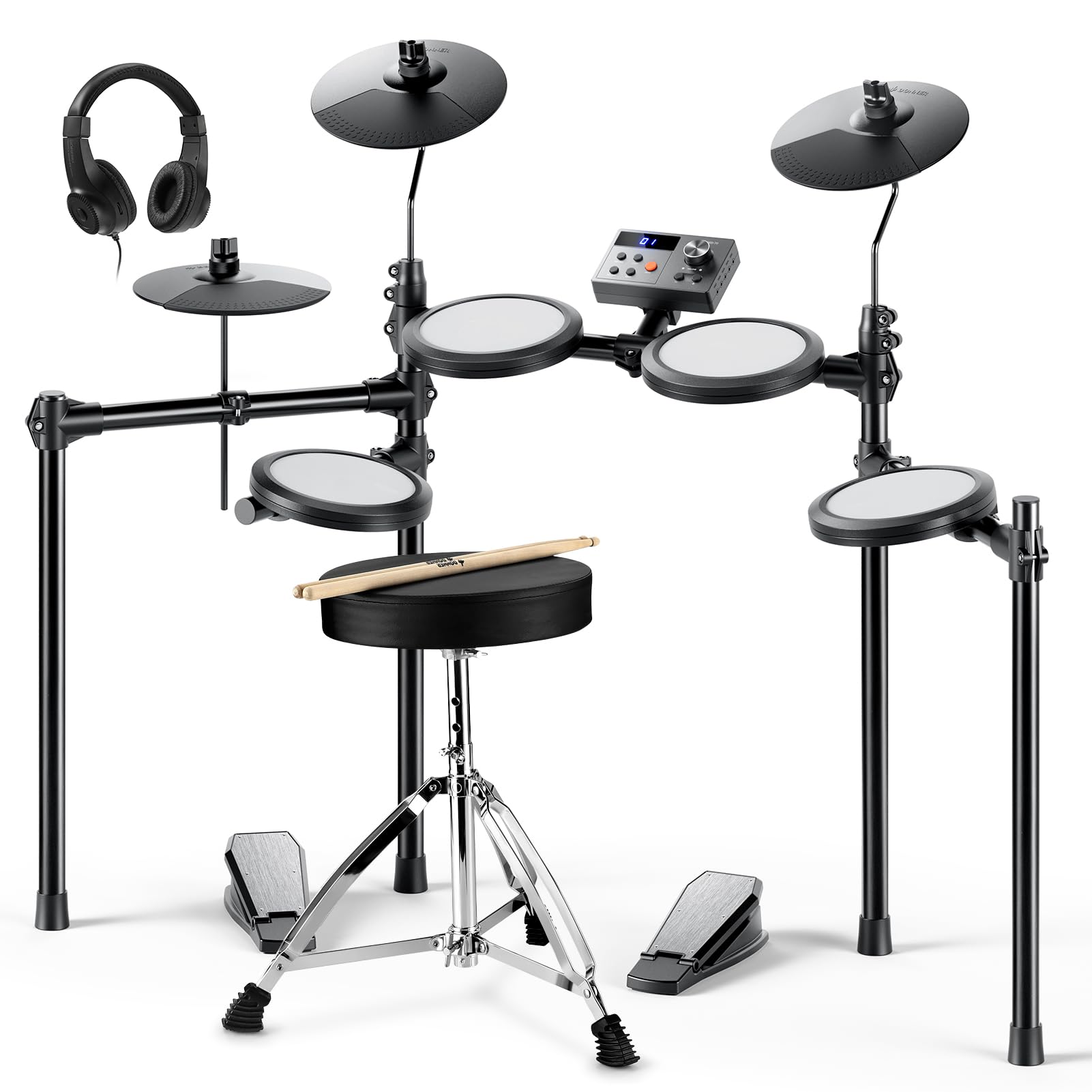
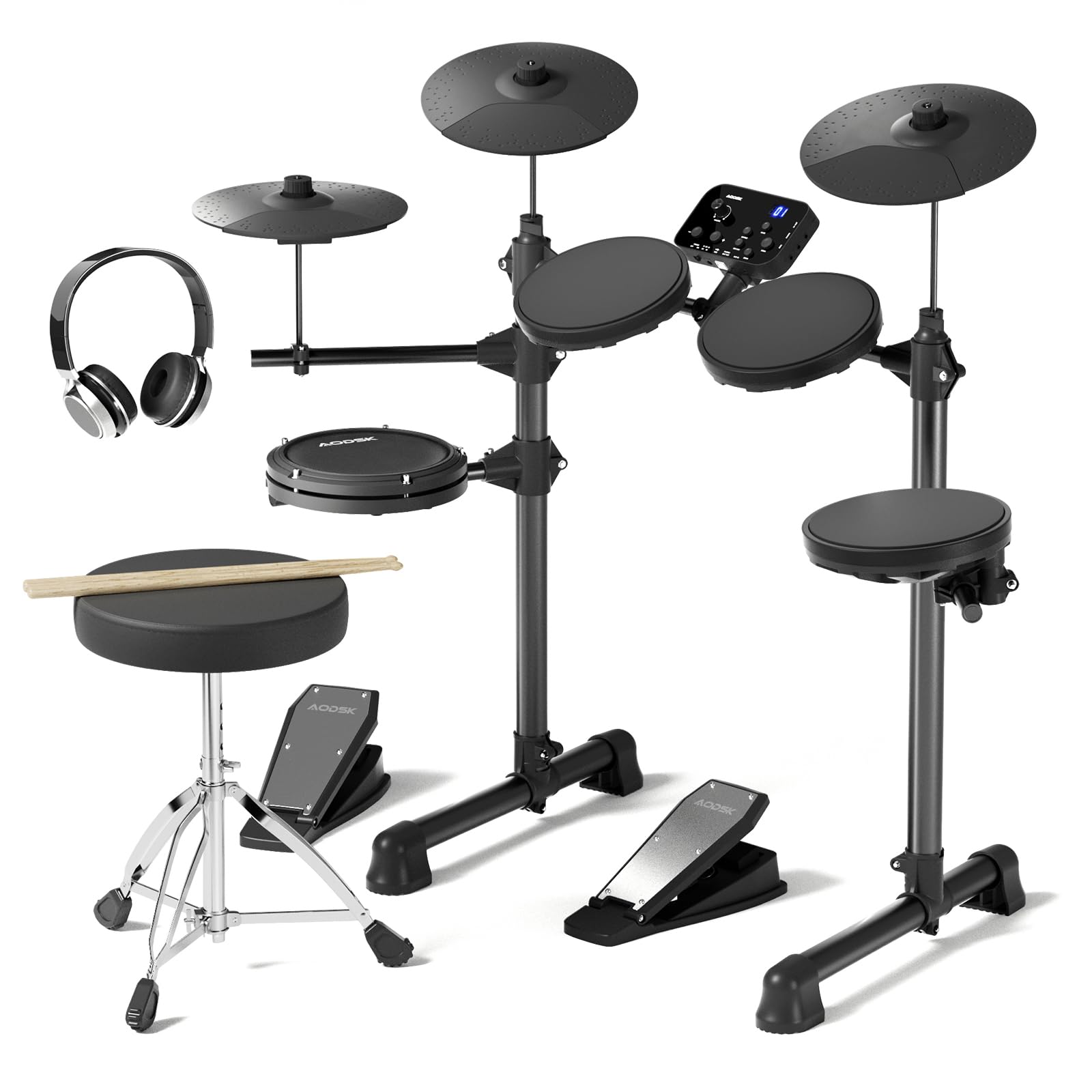
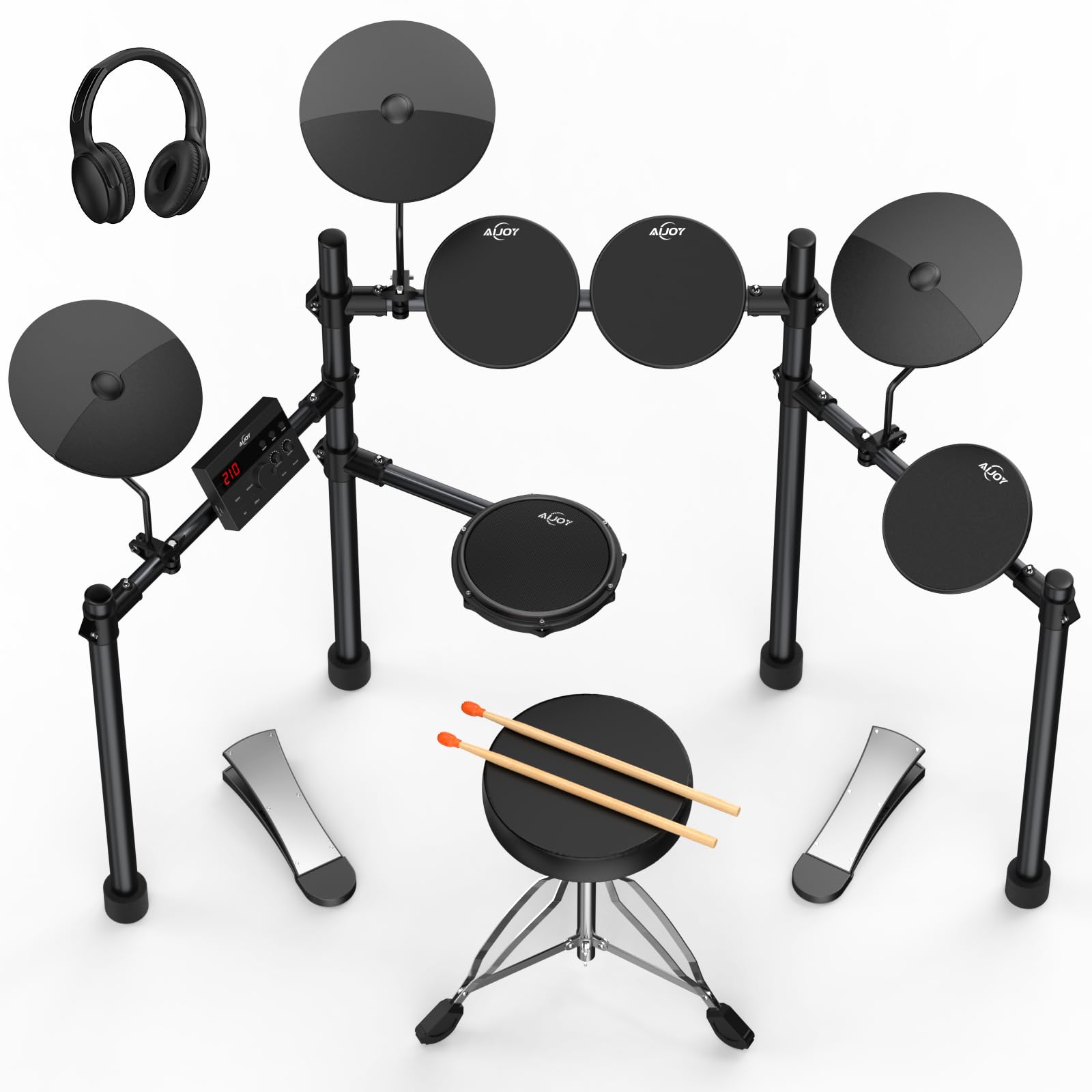
Acoustic kits make sound from wooden or metal shells with stretched heads that you strike. Electronic kits use rubber or mesh pads that trigger sounds from a module, which is a small computer with a library of kit sounds and usually a built in metronome and practice songs. Acoustic kits feel and sound completely natural but are loud. Electronic kits can be played through headphones at apartment friendly volume, which is why many adult beginners start there. Both types teach the same coordination, timing, and technique, so the choice is mostly about your space, your neighbors, and the feel you enjoy most.
Key Specs Explained in Plain English
Beginner Friendly Features That Matter
Beginner friendly means the kit helps you practice from day one. On electronic kits, look for a module with a metronome, a coach or timing check mode, and simple controls you can reach while seated. Mesh heads feel closer to real drums than hard rubber pads and are quieter against the stick. On acoustic kits, beginner friendly means complete packages: the throne (your seat), stands, pedals, and sticks included, plus heads that tune up without a fight. Clear setup diagrams and standard hardware sizes matter more than exotic finishes, because your first goal is to sit down and play, not to troubleshoot missing parts.
Features That Matter for Adults
Adults need hardware built for adult size and weight. Choose a throne rated for your weight with a thick padded seat, because you will sit on it for every practice session and a wobbly seat ruins posture. Stands and pedals should be double braced or at least sturdy single braced steel, and the bass drum pedal should feel smooth rather than springy and weak. Full size drums also matter. Adult kits use a bass drum of about 20 to 22 inches and a snare around 14 inches, which gives a natural playing position for longer arms and legs. Compact kits can suit small rooms, but check that the hi hat and snare heights adjust high enough for you.
Intended Use and Who It Is For
Be honest about where and how you will play. If you live in an apartment or practice after others sleep, an electronic kit with mesh heads and headphones is usually the honest answer. If you have a garage, a basement, or a tolerant household, an acoustic kit gives you the full sound and feel that most players dream about, and it can join a band without extra amplification. Think about your musical direction too. Lessons and structured practice favor kits with good practice tools, while casual jamming favors simple durable hardware. Our guide to the best drum sets for beginners covers the wider beginner market if you are still weighing both routes.
Build Quality and Materials
On acoustic kits, shells are commonly poplar, basswood, birch, or maple. At beginner prices, construction quality matters more than wood species: look for smooth bearing edges, even wrap or lacquer finishes, and lugs that turn without grit. Cymbals included with entry kits are often thin brass and sound bright and short; most players upgrade them later, so treat them as a starting point. On electronic kits, build quality shows in pad mounts that stay put, cables that feel solid, and a rack that does not creep across the floor. A sturdy frame and standard size clamps make future pad upgrades easy.
Safety and Certifications
Hearing safety is the serious topic in drumming. Acoustic drums easily reach volumes that can damage hearing with long exposure, so wear proper ear protection such as musician earplugs or isolation headphones every session, and keep practice stretches sensible. Electronic kits solve the room volume problem but can still be loud through headphones, so set a moderate level and resist creeping upward. Check that electronic kits sold in your market carry normal electrical safety marks for their power supplies, keep cables off walkways to avoid trips, and set stands so nothing can tip onto a child or pet.
Rookie Mistakes to Avoid
- Buying the kit before measuring your space. A full acoustic kit needs roughly a 5 by 5 foot area plus room for you behind it. Measure first, including door swing.
- Spending everything on drums and nothing on the seat and sticks. A poor throne and splintered sticks make practice miserable and can strain your back and wrists.
- Ignoring the neighbors. An acoustic kit in a thin walled apartment leads to complaints fast. Price mesh kits or practice pads into your plan honestly.
- Skipping the lesson budget. Even a few lessons or a good course fixes grip and posture habits that are hard to undo later.
- Chasing the biggest kit. More toms do not make you better. A solid five piece setup teaches every core skill and keeps setup and tuning simple.
Getting Started: Setup and First Use
Read the manual before first use, because every rack and module has a specific order of assembly. Build the kit in this order: frame or stands first, then the bass drum and pedals, then the snare and throne heights, and only then toms and cymbals. Sit down and adjust everything to your body before tightening fully. Your thighs should sit roughly level, the snare top near your belt line, and every drum reachable without leaning.
For electronic kits, connect pads to the module with the labeled cable loom, then spend ten minutes setting pad sensitivity so soft hits register and hard hits do not clip. Clean and inspect regularly: wipe cymbals and pads with a dry cloth, check wing nuts and cable ties monthly, and keep drinks off the rack. Keep spare sticks within reach, since a dropped stick mid song is normal at first. Players leaning toward electronics can compare notes in our guide to the best electronic drum sets for beginners.
FAQs
What makes drum sets for beginners different?
Beginner kits favor completeness and forgiveness over rare features. They include the hardware, seat, and pedals you need, use durable heads and pads that survive enthusiastic practice, and keep controls and tuning simple. Among the best adult beginner drum sets, the difference you feel most is stability: stands that stay planted and a throne that supports you through a full session.
What features matter most in drum sets for adults?
Sturdy hardware, a supportive throne, and full size playing positions matter most for adults. Adults also benefit from honest volume planning, whether that means mesh heads and headphones or a practice space where an acoustic kit can breathe. Our guide to the best drum sets for adults looks at kits for grown players in more detail once you know you will stick with the instrument.
Are expensive drum sets worth it?
Expensive kits are worth it later, not first. Higher prices buy richer shell tone, smoother hardware, and better cymbals, but none of that speeds up your first months of learning timing and coordination. A sound mid priced beginner kit plus lessons teaches more than a premium kit learned alone. Upgrade piece by piece, starting with the item you notice most, often the cymbals or the throne.
What features matter most when buying drum sets?
Fit for your space, build quality, and practice tools matter most across all drum sets. Check what is included, because a low price that omits the throne, pedal, or cymbals is not really low. If you want the broad picture of the category, our guide to the best drum sets explains how beginner, mid range, and premium kits differ in construction and cost.
How much should I spend on a drum set?
Most adults should plan on about $400 to $800 for a complete beginner kit with hardware included. Electronic kits with full mesh heads often sit in the upper part of that band, while entry acoustic kits sit lower but may need quieter practice gear later. Add a little for sticks, ear protection, and a lesson or course, and you have a realistic first year budget.
Final Thoughts on Beginner Drum Sets for Adults
Keep your decision simple: choose acoustic or electronic based on your space and volume limits, insist on sturdy hardware and a proper throne, and confirm that everything you need is in the box. Those three checks will steer you well among the best beginner drum sets for adults in the product table above. Set the kit up carefully, protect your hearing, and give yourself regular short practice sessions. Progress at the drums rewards consistency far more than gear. Apply these checks to any best beginner drum sets for adults you compare.