Best Battery Operated Under Cabinet Lighting (2026): Pucks, Bars and Strips
Disclosure: We may earn a commission when you buy through links on this page, at no extra cost to you. As an Amazon Associate I earn from qualifying purchases. Learn more

Brighten dark counters with no wiring: compare the best battery operated under cabinet lighting by lumens, battery type and mounting.
Dark counters make everyday kitchen work harder than it needs to be. Your own body blocks the ceiling light, spices hide at the back of the cabinet, and chopping feels like guesswork after sunset. The best battery operated under cabinet lighting fixes that without an electrician, without drilling into walls for wiring, and without giving up counter outlets. You mount the light, load the batteries, and the counter below lights up.
This guide compares battery operated options by brightness, color temperature, battery type, controls, and mounting style, so you can match a format to your cabinets instead of guessing. For the wider picture, our overview of the best under cabinet lighting covers every power type side by side. Use the product table below to scan the key differences, then read on for the details.




How to Compare Battery Operated Under Cabinet Lights
Because there is no wiring to hide mistakes, the quality of a battery operated light shows up in four places: how much light it puts on the counter, how natural that light looks, how often you will change or charge the batteries, and how the controls behave when your hands are wet or full. Runtime claims vary widely between brands, so treat them as rough guides and favor lights whose battery format you already keep at home.
Types of Battery Operated Under Cabinet Lighting
Puck Lights
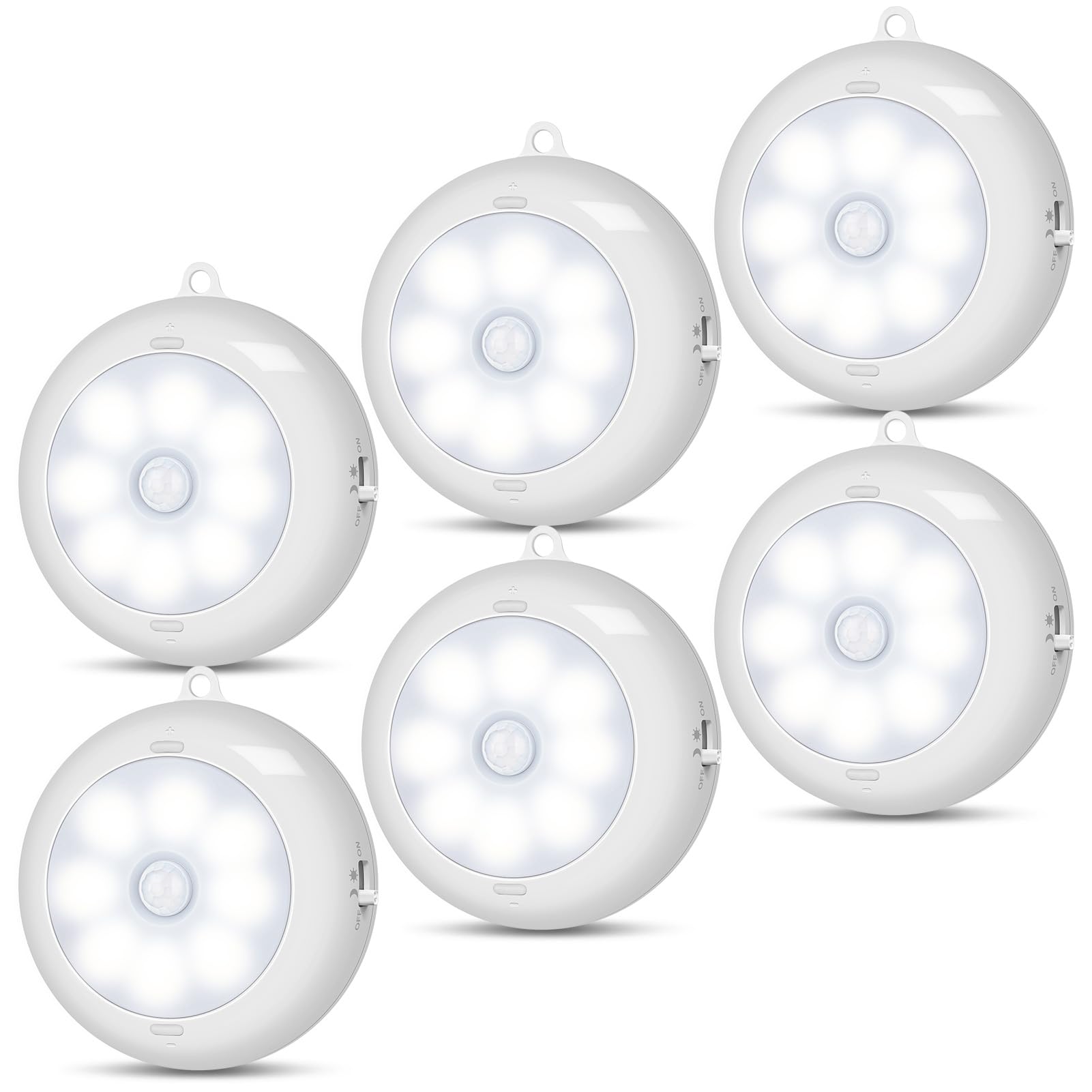
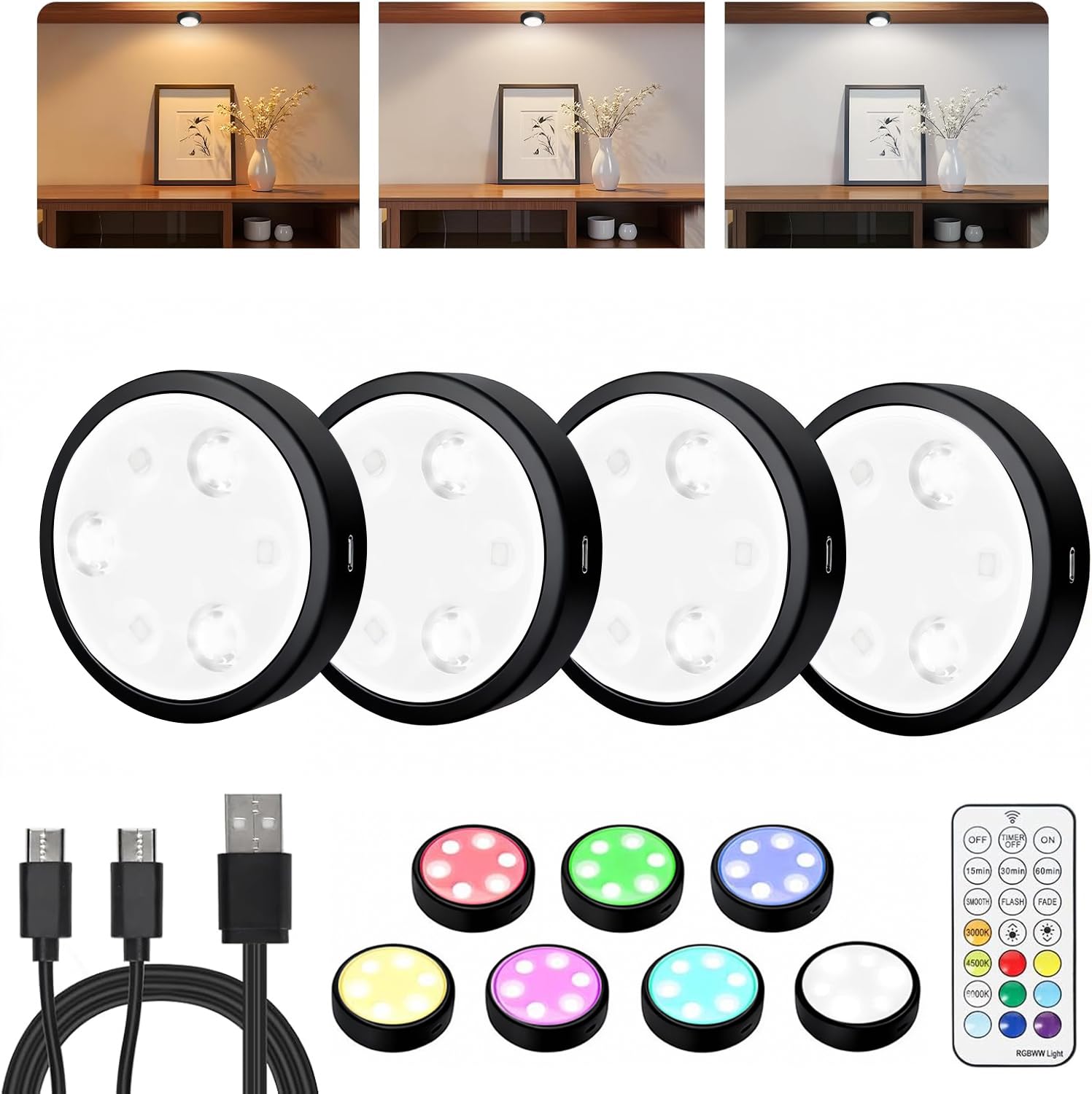
Pucks are small round lights, usually about 2 to 3 inches across, that mount one at a time under the cabinet. You place two or three along a run of cabinets and tap each one on or control the set with a remote. Pucks suit short runs and spots where you want light in one exact place, such as above a coffee station. The tradeoff is coverage: each puck lights a small circle, so long counters need several units and several sets of batteries.
Light Bars
Bars are slim rectangular fixtures, commonly 8 to 16 inches long, that spread light evenly along the counter below. One bar often replaces two or three pucks, which means fewer batteries and a cleaner look. Bars are the most common choice for kitchen counters because the light falls in a line rather than in separate pools. Many slide off a magnetic or bracket mount, so you can carry the light to the charger or swap cells without removing screws.
Strip Lights
Strips are flexible lengths of small LEDs on a backing you cut to size and stick along the underside of the cabinet. They give the most even coverage of the three formats and disappear from view almost completely. Most pair with a small battery pack that tucks behind the cabinet face frame. If even coverage matters more than raw brightness, see our guide to the best wireless under cabinet lighting, where strips and other cord free formats are compared in depth.
Key Features to Compare
Brightness in Lumens
Brightness decides whether a light is a gentle glow or real task lighting. For accent light inside a display cabinet, about 50 to 100 lumens per fixture is plenty. For counter work such as chopping, reading recipes, and finding small items at the back of a shelf, look for about 150 to 300 lumens per bar or puck set. Light also fades as batteries drain, so a model that starts a little brighter than you need will still look right near the end of a battery cycle. Check the lumen figure on the box rather than counting LEDs, because diode count alone tells you little.
Color Temperature
Color temperature, measured in kelvin, sets the mood and the accuracy of what you see. Warm light around 2700 to 3000K flatters wood cabinets and feels calm in the evening. Neutral light around 4000K shows food colors more honestly, which helps when you judge whether meat is cooked or produce is ripe. Cooler light near 5000K feels bright and clinical and suits garages and laundry rooms better than most kitchens. Some lights let you switch between settings, which helps when one run serves both cooking and evening ambiance. For more on diode based options, see the best led under cabinet lighting guide.
Battery Type and Runtime
You will meet three power formats. Disposable AA or AAA cells are cheap and easy to swap, but costs add up in lights you use daily. Built in rechargeable batteries charge over USB and remove the battery drawer entirely, though the light is out of service while it charges unless it slides off its mount. A few larger bars take C or D cells and run far longer between changes. Runtime depends on brightness level: a light used on its lowest setting for short bursts can run for months, while the same light left on high every evening may need fresh batteries within weeks.
Motion Sensing, Timers, and Remotes
Controls decide how pleasant a light is at 6 in the morning. A motion sensor turns the light on when you walk up and off after a short delay, which saves batteries and works when your hands are full. A timer that shuts the light off after 15 or 30 minutes protects against lights left on all night in a pantry. Remotes let you dim several pucks at once from across the room. Simple tap controls cost less and never get lost in a drawer, so match the control style to how many lights you run together.
Mounting Style and Fixture Size
Most battery lights mount with adhesive pads, magnets on a metal plate, or two small screws. Adhesive is fastest and suits renters, but it can fail in steamy kitchens, so clean the surface with alcohol and let the pad set overnight before hanging the light. Screw mounts hold best above stoves and dishwashers where heat and steam are constant. Measure the flat underside of your cabinet before ordering: many cabinets have a recessed panel with a face frame lip, and a bar longer than that flat area will not sit flush or stick properly.
Battery Operated vs Other Power Options
Battery power wins on installation and flexibility. There is no outlet to reach, no cord to hide, and no permanent change to the cabinet, so the lights move with you when you move house. The costs are ongoing: batteries to buy or charge, brightness that dips as cells drain, and output that rarely matches a wired fixture of the same size. If your remodel already opens the walls, the best hardwired under cabinet lighting gives stronger, steadier light on a wall switch with no battery upkeep. Models that plug in sit between the two, offering steady power where an outlet sits inside or below a cabinet. Choose battery power when speed, renters rules, or a single awkward cabinet make wiring a poor trade.
- Pros: installs in minutes, no electrician, no cords across the counter, easy to move or remove.
- Cons: batteries need changing or charging, output fades as batteries drain, top brightness is lower than wired fixtures.
How Much Should You Spend?
Single pucks and short bars under $20 suit closets, single cabinets, and trying the idea before committing. Expect basic tap controls and disposable batteries here. Sets in the about $20 to $50 range are the sweet spot for most kitchens: longer bars, rechargeable batteries, remotes, and motion sensing all appear here, usually in packs that cover a full counter run. Above about $50 you pay for longer fixtures, higher lumen output, and metal housings that shrug off kitchen heat better than thin plastic. Spending more does not remove battery upkeep, so put the extra money toward runtime and controls rather than brightness alone.
Common Mistakes to Avoid
- Buying one light for a long counter: a single puck leaves bright pools and dark gaps, so plan one fixture every 12 to 18 inches of counter you actually use.
- Mounting too close to the wall: light placed at the back of the cabinet lights the backsplash, not your cutting board, so mount toward the front edge of the cabinet underside.
- Mixing color temperatures: a warm bar beside a cool puck looks like a mistake every time both are on, so buy the same kelvin rating for the whole run.
- Ignoring the steam zone: adhesive mounts above a kettle or stove soften and let go, so use screws or a bracket mount in those spots.
- Forgetting spare batteries: a light that dies mid recipe teaches this fast, so keep one charged set or pack of cells in the kitchen drawer.
Care and Maintenance
Battery lights ask for little upkeep beyond power. Wipe the lens and housing with a soft damp cloth monthly, because cooking grease builds a film that quietly dims the light and yellows the color. Never soak the fixture or spray cleaner straight onto it, since moisture near the battery contacts causes corrosion. If a light flickers early in a battery cycle, clean the contacts with a dry cloth, check for white or green crust on the cells, and replace any leaking cell at once. Store spares in a cool drawer away from the oven, because heat shortens battery life even when the light is off.
FAQ
How long do batteries last in battery operated under cabinet lights?
It depends on how you use the light. A motion sensing light in a pantry that runs a few minutes a day can go many months on one set of cells. A kitchen bar used on high for two hours every evening may need charging or fresh batteries every few weeks. Lights with a low setting you actually use stretch runtime the most, so pick a model whose lowest level is still bright enough for evening tasks.
Can battery operated under cabinet lights be bright enough for food prep?
Yes, if you plan the layout rather than relying on one fixture. Two bars of about 200 lumens each, mounted toward the front of the cabinet and spaced along the counter, give even light with few hand shadows. Angle matters as much as output: light that falls slightly in front of you keeps your own shadow off the cutting board. For detailed work like deboning fish, a focused lens pattern helps more than extra lumens spread wide.
Will adhesive mounts damage cabinet paint or wood finish?
Quality foam pads usually remove cleanly if you warm them with a hair dryer and peel slowly, but cheap pads can lift paint or leave residue on soft finishes. Test one pad inside a door or on a hidden edge first and wait a day before mounting the full set. If your cabinets are newly painted or antique, choose screw mounts instead: two tiny holes under the cabinet are invisible in daily use and far easier to fill later than a torn finish.
Do battery operated under cabinet lights work in closets and pantries?
They often work better there than in kitchens. Closets and pantries rarely have outlets, visits are short, and motion sensing means the light is on before your hand reaches the shelf. Pucks suit single shelves and small linen closets, while a short bar covers a pantry top shelf in one piece. Cool neutral light near 4000K helps you tell navy from black clothing, a detail warm light tends to hide.
What color temperature suits a kitchen with warm wood cabinets?
Light around 3000K usually flatters warm wood because it echoes the tones already in the grain. Going cooler, near 5000K, can make honey colored oak look gray and washed out. If your counters are white or gray stone, 3500 to 4000K keeps them looking clean without turning the room cold. When in doubt, buy one switchable light first, live with each setting for a few days, then order the rest to match.
Final Thoughts
Battery operated lighting is the fastest honest upgrade a dark kitchen can get: minutes to install, no cords, and light exactly where your hands work. Match the format to the space, pucks for single spots, bars for counters, strips for even coverage, and keep brightness, color temperature, and battery format consistent across the whole run. The best battery operated under cabinet lighting for your home is the set you will still be happy to feed with batteries a year from now, so favor easy mounts and controls you enjoy using. Compare the formats in the product table above before ordering, and read the under cabinet lighting buying guide if you want help planning a whole kitchen layout.