Best Battery Box 2026 Buying Guide for Your Home
Disclosure: We may earn a commission when you buy through links on this page, at no extra cost to you. As an Amazon Associate I earn from qualifying purchases. Learn more

The best battery box fits your battery group, vents gas and mounts firmly. Compare vented, snap-top, lockable and power-center boxes.
A battery box holds a car, boat, RV or trolling-motor battery in place, keeps its terminals covered and protects nearby gear from acid and sparks. The best battery box fits your battery group size, closes tightly, vents gas and mounts firmly so it does not shift on rough roads or water.
The product table compares current boxes by size, material and mounting. This guide explains the types, the checks that prevent a wrong-size purchase and the safety basics for installing one.




Types of Battery Boxes
Vented Marine Boxes
These plastic boxes carry a strap and a vented lid. They suit boats, kayaks with trolling motors and utility trailers. Most are sized by BCI group number, such as Group 24, 27 or 31, so the match is simple.
Snap-Top and Strap-Down Boxes
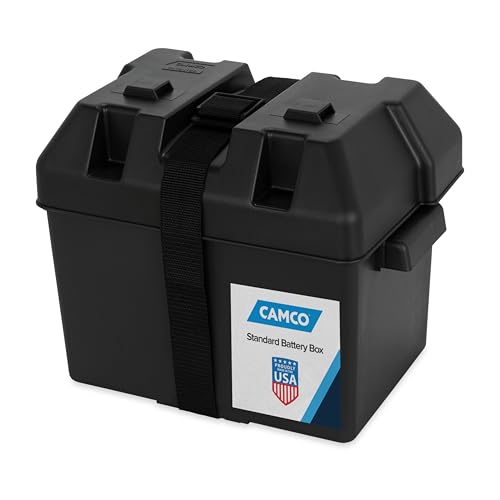
Snap-top boxes close with latches and cover the terminals. They are easy to open for checks and cost very little. Strap-down versions hold the battery with a belt and suit tight bilge spaces.
Power Center and Smart Battery Boxes
These larger boxes include built-in outlets, a voltage display, USB ports and sometimes a breaker. They are popular for trolling motors, camping and small off-grid setups, and they cost more.
Lockable and Relocation Boxes
Locking boxes keep thieves out and are common on trailers. Stainless steel relocation kits move the battery to a safer spot on a truck or RV. They cost the most but last the longest.
Key Features to Compare
- Internal size: the box must fit your battery group with a little room for cables.
- Terminal openings: the lid should leave space for your cable ends without pinching them.
- Lid fit: a snug lid or latch keeps water and debris out and stays shut on rough roads.
- Venting: vents let gas escape from lead-acid batteries and reduce heat build-up.
- Mounting points: strong tie-down points and a secure strap keep the battery from moving.
- Material: UV-resistant polypropylene lasts outdoors, while steel suits heavy-duty installs.
How to Choose the Right Battery Box
Start with the label on your battery. Note the group size and measure its length, width and height, adding a little for the lid and cables. A box that is slightly too small will not close, and one that is too big lets the battery slide. Lithium batteries often come in standard group sizes, so the same box can fit.
Next, think about use. A kayak or small boat needs a light box with a carry handle. A trailer or RV may need a lockable or stainless box. A trolling motor setup is easier with a power-center box. Basic boxes cost about $10 to $40, while smart and stainless models cost more. For a related need, our guide to the best battery jump box covers portable starting packs.
Installation and Safety
Place the box on a flat, dry surface where it can be strapped down. Keep it away from fuel, open flames and anything that could short the terminals. Connect the positive cable first and the negative last when installing, and reverse the order when removing. Wear eye protection and gloves when handling a lead-acid battery.
Check local rules for boats and RVs. If you are unsure about wiring or fuses, ask a qualified marine or auto electrician.
Care and Maintenance
- Wipe the box and terminals with a dry cloth and clean any corrosion with a baking soda and water mix.
- Check the strap and latches for wear each season.
- Look inside for cracks, spills or standing water after a trip.
- Keep the vent openings clear of dirt.
- Store the battery and box in a cool, dry place over winter.
Common Mistakes to Avoid
- Buying by looks and not by group size.
- Using a box with no vents for a flooded lead-acid battery.
- Letting the battery rattle because the strap is loose.
- Ignoring terminal clearance and crushing the cables when the lid closes.
- Leaving the box in standing water on a boat floor.
Battery Box: Questions Answered
What size battery box do I need?
Match it to the battery group number printed on the label, such as Group 24 or 27. If in doubt, measure the battery and compare it with the inside size listed for the box.
Do lithium batteries need a vented box?
Lithium (LiFePO4) batteries do not vent gas in normal use, but a box still protects the terminals and holds the battery in place. Follow the battery maker's instructions.
Is a battery box waterproof?
Most plastic boxes are water-resistant, not sealed. They keep splashes out but are not made for submersion, so mount them above the bilge.
Can I use a battery box for a car battery?
Yes, for a spare battery, a trailer or a relocation project. Make sure the box matches the group size and is mounted securely.
How do I stop corrosion on terminals?
Keep the box dry, tighten the connections and apply a thin coat of dielectric grease or a protective spray after cleaning.
Choosing a Box by Battery Group Size
Battery group sizes set the outer dimensions, and boxes are made around them. Group 24 batteries measure roughly 10.3 inches long, 6.8 inches wide and 8.9 inches high, Group 27 measures about 12.1 by 6.8 by 8.9 inches, and Group 31 measures about 13 by 6.8 by 9.4 inches. Many boxes fit two neighboring sizes, such as 24 to 31, which helps if you plan to upgrade the battery later.
For a lithium battery, check the exact dimensions in the listing, since some packs are shorter than the lead-acid group they replace. Leave about half an inch of room around the battery so the lid closes over the terminals without pressing on them.
Where to Mount the Box
On a boat, place the box as low and close to the center line as practical, away from fuel tanks and bilge water, and fix it to a solid surface with the strap or bolts provided. In a truck bed or trailer, keep the box clear of road spray and exhaust heat. In an RV or camper, use a box in a ventilated compartment so any gas from a flooded battery can escape. Whichever place you choose, keep cable runs short and protect them with a fuse close to the battery.
Final Thoughts
Choose by group size, then by use: a simple vented box for a boat, a lockable one for a trailer, a power center for a trolling motor. A secure strap and a lid that closes cleanly matter more than extras. The best battery box is the one that fits snugly and keeps the terminals safe. Use the product table to compare current boxes by size and price.