Best Bathroom Exhaust Fans for Small Bathroom (2026): Sizing and Fit Guide
Disclosure: We may earn a commission when you buy through links on this page, at no extra cost to you. As an Amazon Associate I earn from qualifying purchases. Learn more
Choose the best bathroom exhaust fan for small bathroom by CFM, sone rating, housing size, duct fit and humidity or timer controls.
A small bathroom fogs up fast, holds odors longer than you expect, and gives moisture nowhere to go. Choosing the best bathroom exhaust fan for small bathroom means clearing that damp air without a jet engine sound in a tiny room, and without a housing so large it will not fit between your joists. This guide walks you through sizing, sound, fit, and controls so you can choose with confidence.
We compare the main types and the features that matter in a compact space instead of naming specific models. Use the product table below to line up airflow, sound level, and housing size, then read on for how those numbers apply to your room.




Who Should Buy a Bathroom Exhaust Fan for a Small Bathroom?
Small rooms create their own needs. Moisture builds up in a smaller volume of air, the fan sits closer to your ears, and ceiling space is often tight.
Owners of a Small Full Bath With a Shower or Tub
Your main problem is steam. One hot shower can saturate a compact room, fog the mirror, and leave damp air on paint, grout, and cabinet finishes. You need steady airflow matched to the room area, plus a control that keeps the fan running after you leave. A humidity sensing model or a timer switch suits you well.
Owners of a Powder Room or Half Bath
With no shower, your needs are simpler. Odor removal matters more than long run time for steam, and a basic 50 CFM fan is usually plenty. Sound still counts, since a loud fan feels even louder in a small space. Skip humidity sensing and put the savings toward a quieter motor.
Owners Replacing a Tired or Noisy Old Fan
If your current fan rattles, hums, or barely moves a tissue held to the grille, a replacement that fits the existing opening saves ceiling work. Measure the old housing and duct before you shop, since a close match turns the job into a swap rather than a remodel. Our guide on how to replace a bathroom exhaust fan walks through that process step by step.
Types of Bathroom Exhaust Fans to Compare for Small Bathrooms
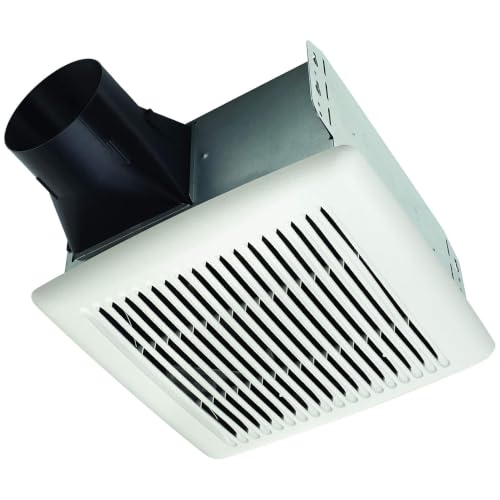
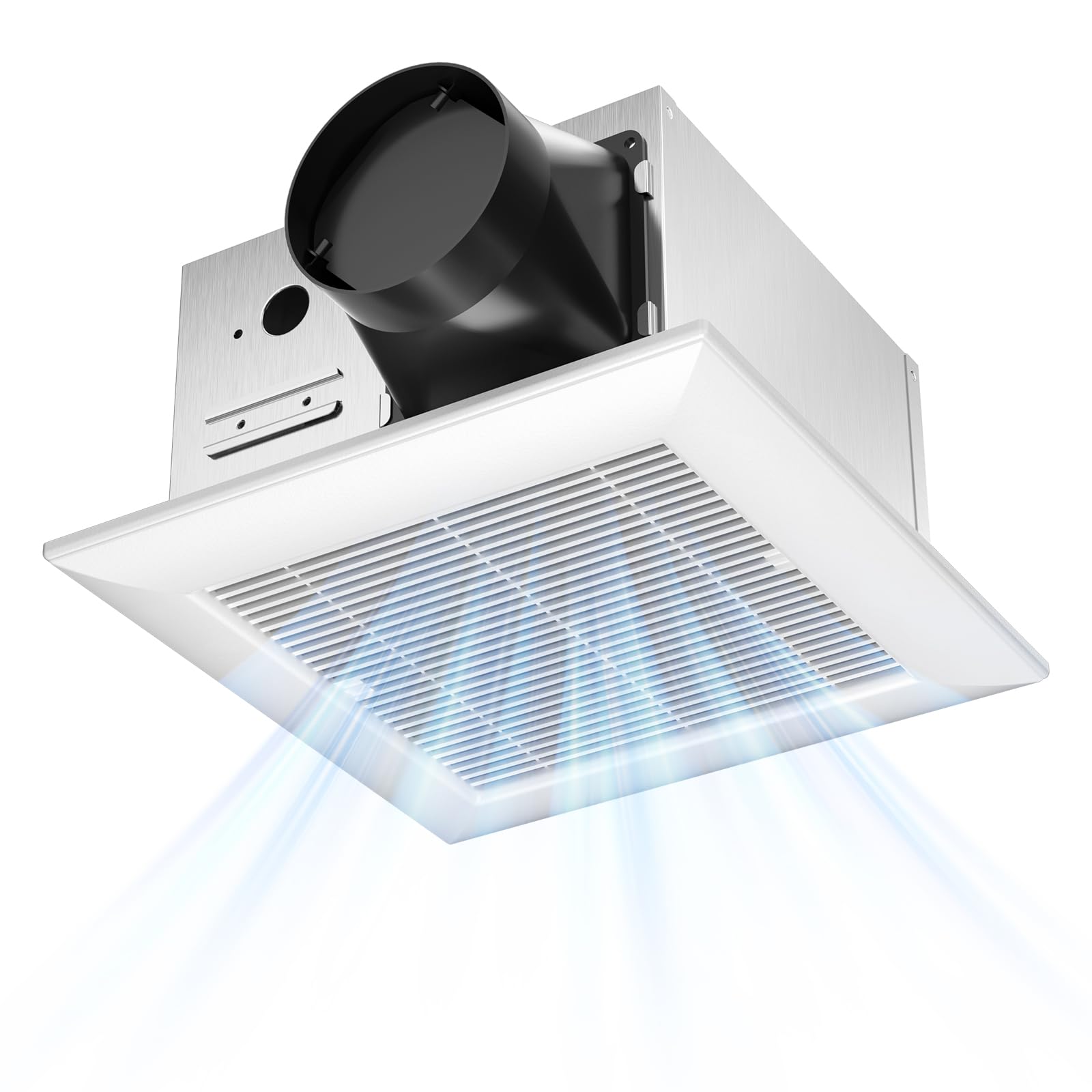
Most small bathrooms use a ceiling mount fan, which vents through a duct to the roof or an exterior wall. It fits the widest range of rooms and is the easiest type to match on a replacement. Choose it first unless ceiling access or the duct route rules it out.
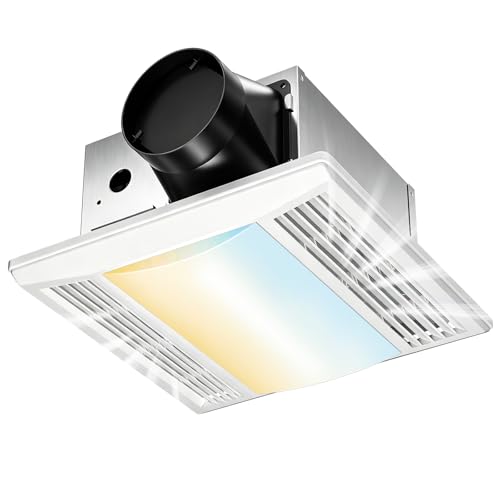
A fan with a built in light makes sense when your small bathroom has one ceiling fixture, since it clears air and lights the room from a single cutout. If that appeals to you, see our guide to the best bathroom exhaust fan with light for how the lighting options differ. Check that light and fan can be switched separately.
A wall mount fan serves a bathroom with no usable ceiling space, such as one under a sloped roof. An inline fan, with the motor placed along the duct away from the room, is the quietest route, but it needs room in the duct path and costs more to install.
Combo units add heat. A small room warms quickly, so modest heater output goes a long way, and our guide to the best bathroom exhaust fan with heater explains the wiring those models need. Heater models draw more power and may need a dedicated circuit.
Key Features to Compare
The best bathroom exhaust fan for small bathroom is not the strongest one on the shelf. It is the one whose airflow, sound, housing, and controls all match a compact room, and the four factors below are where that match is won or lost.
Airflow in CFM, Sized to the Room
Airflow is measured in CFM, or cubic feet per minute, and the common sizing rule is about 1 CFM for each square foot of floor area. That puts most small bathrooms at 50 CFM or 80 CFM. A fan that is too small leaves steam behind, while a much larger fan adds noise and cost without clearing the room noticeably faster. Measure your floor and round to the nearest common size.
Sound Level in Sones
Fan noise is rated in sones, and lower is quieter. In a small bathroom you stand close to the fan, so a model at 1.0 sone or below feels far more pleasant than one at 2.0 sones or more. If early showers happen while others sleep nearby, our guide to the best quiet bathroom exhaust fan covers the quietest designs in more depth. A bent duct or loose grille can make any fan louder than its rating.
Housing Size and Duct Fit
Compact housings matter when joists are close together or the ceiling cavity is shallow. Check housing width, depth, and cutout size, especially on a replacement where the new unit must cover the old opening. Duct size matters too, since most small fans use a 4 inch duct and a smaller or crushed duct raises noise and cuts performance. Aim for a short, smooth duct run outside.
Humidity Sensing and Controls
A humidity sensor turns the fan on when moisture rises and off after the air dries, which suits a room where steam builds quickly. A timer switch gives similar protection at lower cost, letting the fan run for a set period after your shower. Motion sensing suits a powder room, where visits are short. Pick one control style and use it every time.
Measurements and Compatibility With Your Setup
Start with the room. Measure length and width in feet, multiply them for floor area, and note ceiling height, since a tall ceiling adds air volume. Then measure the existing housing or the ceiling space for a new fan, and note joist spacing if you can see it from an attic.
Next, follow the duct. Confirm its diameter, where it exits, and whether the exterior cap opens freely. A fan must vent outdoors, never into an attic or wall cavity, because dumping damp air inside trades a foggy mirror for hidden moisture damage. Also check switch and wiring, since sensing and heater models can need different wiring, and check the gap under the door, which lets fresh air in.
What Matters Most in a Small Bathroom
Concentration is the core issue. Steam from one shower fills a small volume of air far faster than a large bath, so mirrors fog sooner, surfaces stay wet longer, and paint and grout take more abuse. That is why run time and automatic controls punch above their weight here, while headline airflow numbers matter less than many shoppers assume.
Keep perspective, too. A fan chosen for a large primary bath, like the models in our guide to the best bathroom exhaust fan, will often be oversized, louder, and harder to fit. A right sized small room fan costs less and does the job better.
Cost and Installation: DIY or a Pro?
Fan prices alone run about $50 to $250 for this size class. Basic 50 CFM models sit at about $50 to $100, quiet sensing models at about $100 to $200, and combo units with light or heat can pass $200. Spending more mainly buys lower sound and smarter controls.
A confident homeowner can often handle a like for like replacement with the existing duct and wiring in a few hours. A first time installation or new wiring is a bigger job, and a licensed electrician or HVAC pro is the safer call. For a breakdown of labor and parts, see our guide to bathroom exhaust fan installation cost before you set your budget.
Common Mistakes to Avoid
- Buying the highest CFM fan you can find, which leaves you with extra noise and cost and no real gain in a small room.
- Venting the fan into the attic, which moves moisture into the structure instead of removing it from the house.
- Skipping the duct check, which lets a crushed or undersized duct choke a fan that was sized correctly on paper.
- Turning the fan off the moment you leave the shower, which leaves most of the steam still in the room.
- Choosing by grille style alone, which can leave you with a fan that looks fine but sounds harsh at close range.
How to Make Your Bathroom Exhaust Fan Last Longer
Dust is the main enemy. It coats the grille and fan wheel over time, which cuts airflow and makes the motor work harder and louder. Take the grille down twice a year, wash it in warm soapy water, dry it fully, and vacuum the housing gently with a brush attachment while power is off at the breaker.
Give the rest of the system a quick look then, too. Make sure the damper and the exterior cap move freely, since a stuck damper blocks airflow even when the motor runs well. Note any new grinding or rattling, because a change in sound often arrives before a failure.
FAQ
What is the best bathroom exhaust fan for small bathroom?
For most small bathrooms it is a ceiling mount fan at 50 CFM or 80 CFM, rated at 1.0 sone or below, with a timer or humidity sensor. One detail shoppers often miss is grille size, since the new grille should fully cover the old ceiling opening so no patching is needed. Match those points to your room and you have the right fan.
Can a bathroom exhaust fan be too strong for a small bathroom?
Yes. A fan far above the size your room needs can pull the door shut, whistle through the gap under the door, and waste air you paid to heat or cool. In homes with fuel burning water heaters or furnaces, very strong exhaust can also interfere with how those appliances vent. Staying near the sizing rule avoids this and keeps noise down.
Does a small bathroom exhaust fan need its own switch?
A separate switch, or a timer switch in place of a standard one, is a strong upgrade. It lets you run the fan without the light, or leave it running after you turn the light off. Some humidity sensing fans wire to a standard switch and manage themselves from there. Check the wiring diagram before you open the wall, since control options vary.
How long does a bathroom exhaust fan last?
Most bathroom exhaust fans last about 10 years, and many run longer with regular cleaning. Life shortens when a fan runs in a dusty housing or vents through a blocked duct. Warning signs of the end include a motor that hums but starts slowly, airflow that stays weak after cleaning, and bearing noise that cleaning does not fix.
Can you install a bathroom exhaust fan where none exists now?
Yes, but it is a larger project than a replacement because it adds a ceiling cutout, a duct run, an exterior vent cap, and often new wiring. Top floor rooms with attic access are the easiest case, while a first floor bathroom may need a wall mount fan or a duct run through a closet. Local codes may require a permit for the electrical work.
Final Thoughts
Size airflow to the floor area, keep sound at or below 1.0 sone, confirm housing and duct fit, and choose a control that runs the fan after every shower. Do those four things and the best bathroom exhaust fan for small bathroom for your home becomes an easy call. Compare your short list against the product table above and order with confidence.