Best Bath Pillows for Tub by Budget: Smart Choices for 2026
Disclosure: We may earn a commission when you buy through links on this page, at no extra cost to you. As an Amazon Associate I earn from qualifying purchases. Learn more
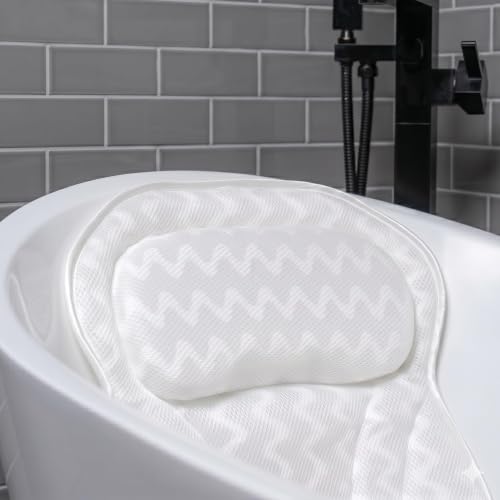
Soakers who want neck and back support: best bath pillows for tub compared by fit, suction, drying time, and price.
A good soak should relax your neck and shoulders, not leave you sliding down the tub or propping yourself up with a folded towel. The best bath pillows for tub use shapes and grips made for a wet, curved surface, and the right one depends on your tub, your height, and how long you like to stay in the water. The product table gives a quick side by side view of the picks before you read the detail.
Prices in this guide are wide because a simple pillow and a thick contoured pillow with strong suction are very different products. This guide compares types, materials, and features so you can match the pillow to your tub rather than paying for features you will not use.
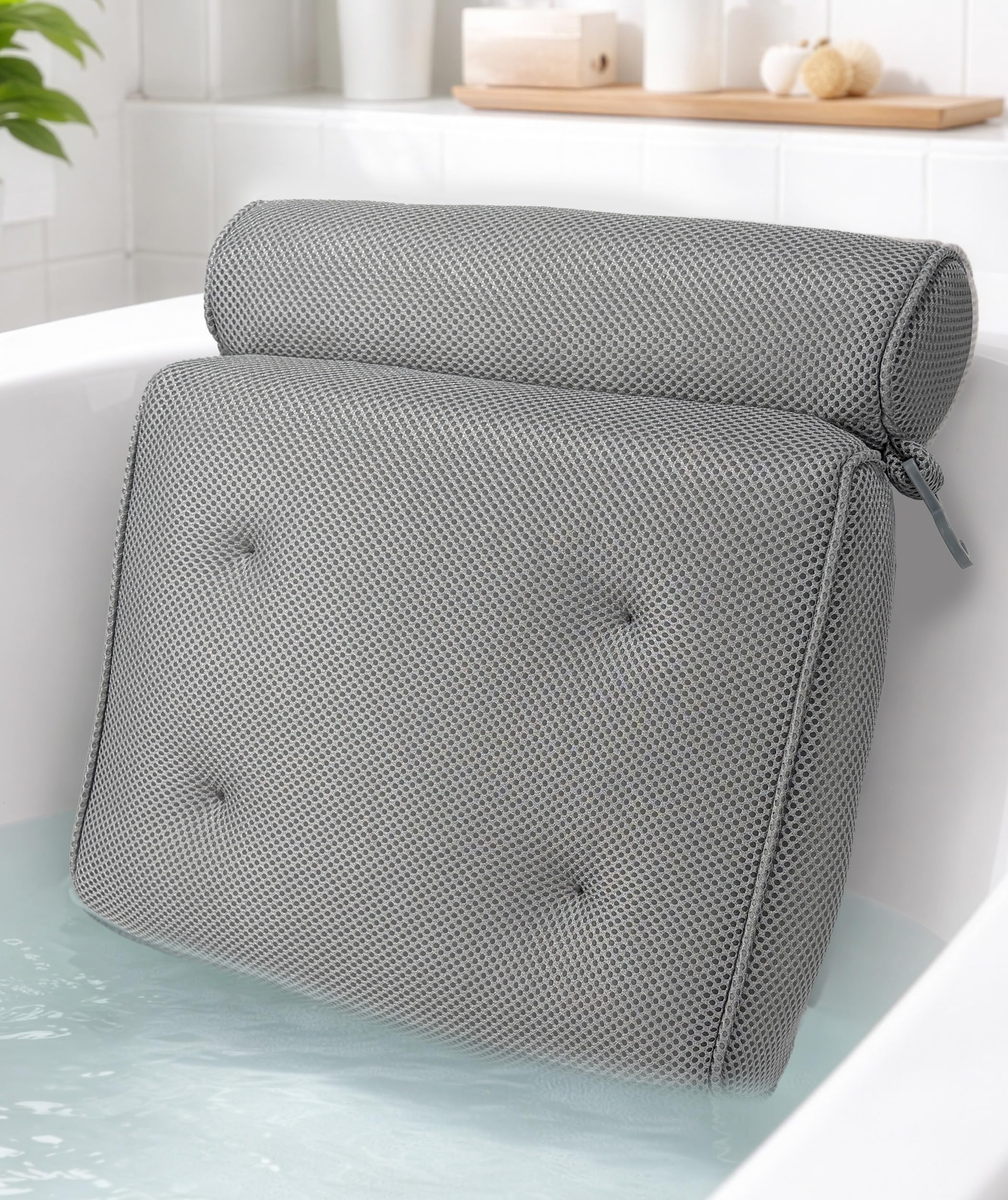


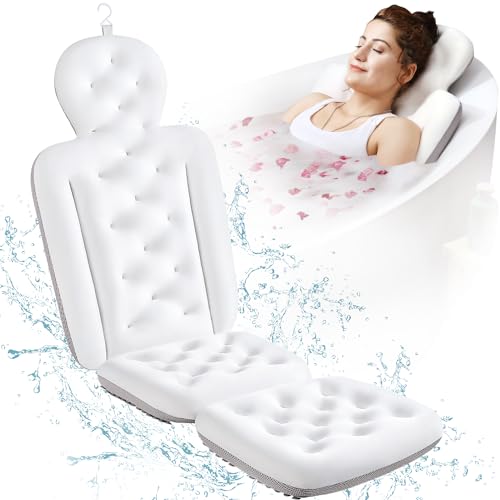

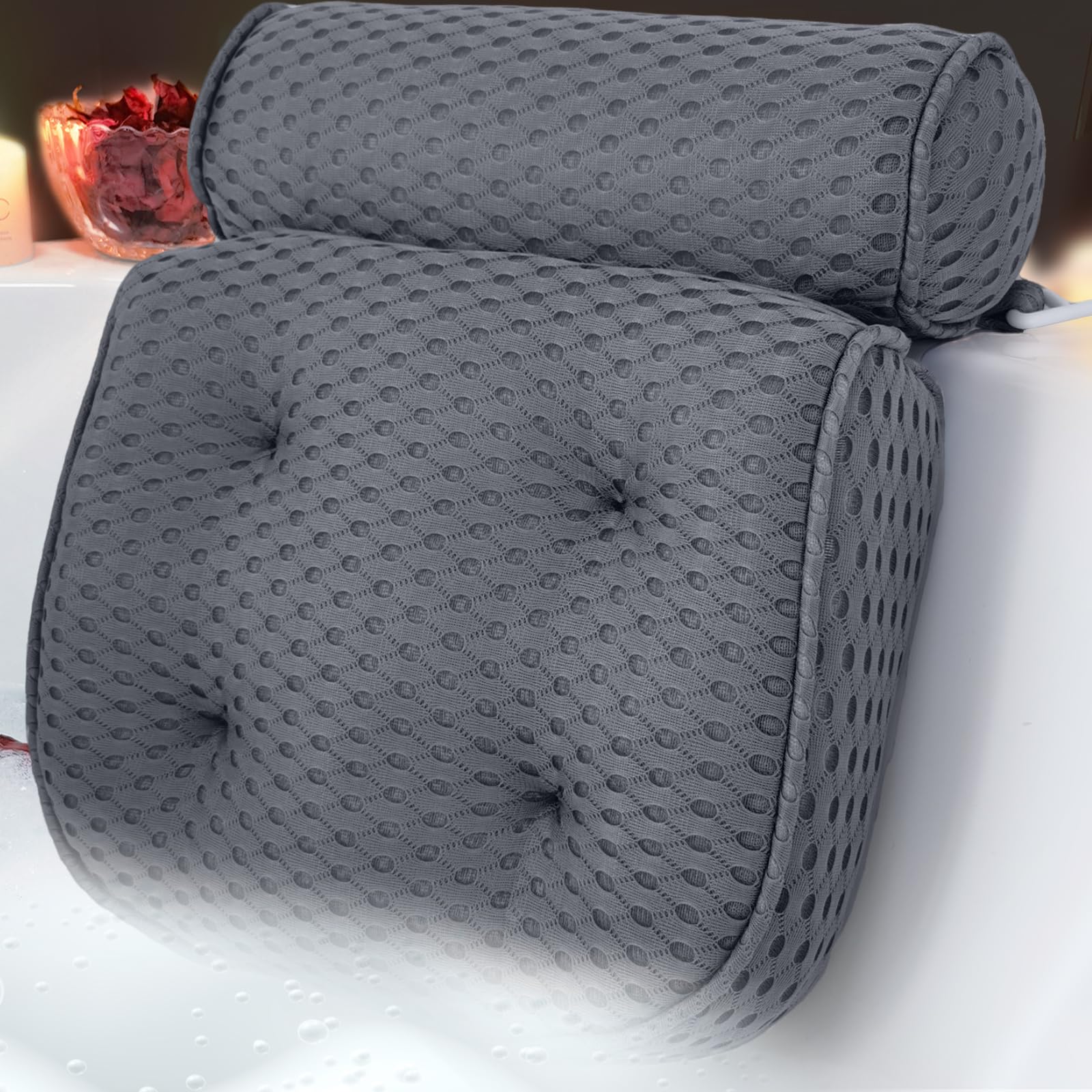


Who Benefits Most From a Tub Pillow
Long soakers benefit most, because a pillow supports the head and neck during a bath that lasts 20 minutes or more. Without support, many people rest their head on hard porcelain or tile, and that can turn a relaxing bath into an achy one. A pillow with a raised neck roll and a head panel spreads that support over a wider area.
People with curved or sloped tub ends also benefit, because the pillow fills the gap between the head and the tub wall. Readers with a straight backed tub may need a different shape, and our guide to best bath pillow for straight back tubs explains the flatter panel and grip layout that suits that shape. People who share a tub should look for a pillow that can be moved and reattached easily rather than one fixed in a single spot.
Shorter bathers and taller bathers need different coverage. A short pillow may support only the neck for a taller person, while a long two panel pillow can support the head, neck, and upper back at once. Check the pillow length against the distance from the tub rim to the waterline before you buy. If you want full length support, our full body bath pillow guide covers longer designs. If you use a bath pillow for comfort only, choose by fit and drying time rather than by firmness claims alone.
What Each Spending Level Gets You
At the lowest price level, around $15 to $20, you will usually find simple inflatable or silicone pillows and thin panels. Inflatable pillows pack small and travel well, but they can feel bouncy and may need topping up with air. Thin panels are light and easy to hang dry, but they give less neck support than a contoured design.
Simple Pillows Around $15 to $20
Simple pillows suit short baths and occasional use. Look for several suction cups, a cover that can be wiped clean, and a shape that matches your tub end. Avoid a pillow that is wider than the flat area at the end of your tub, because the edges will fold and lift during the bath.
Mid Priced Pillows Around $25 to $30
Mid priced pillows often add a contoured neck roll, thicker padding, and more suction cups. This level is a good starting point for regular soakers who want steady support without a luxury price. Many designs at this level use mesh or quick dry covers, which help the pillow dry between baths and reduce that damp feeling on the next use.
Higher Priced Pillows Around $45 and Up
Higher priced pillows tend to offer larger panels, stronger suction layouts, and covers that feel softer against the skin. Some include a head panel plus a separate neck roll, or a longer back panel for taller bathers. Pay the extra only if you need the larger coverage or you soak often enough that faster drying and sturdier grips matter.
Features Worth Paying For and Ones to Skip
Support shape matters more than thickness alone. A pillow that is thick in the middle but flat at the neck can push the head forward, while a contoured roll under the neck keeps the head in a more neutral position. If you like to recline, choose a longer panel that supports the upper back as well as the head.
Support Shape and Tub Fit
Measure the width and slope of the tub end where your head will rest. A pillow made for a curved tub will not sit flat on a straight wall, and a flat pillow may gap on a deeply curved end. Suction cups need a smooth, clean surface to hold, so a textured tub wall can limit your choices. If your tub has a textured floor or walls, our guide to best bath mats for textured tubs covers grip options for those surfaces.
Waterproof Cover and Fast Drying
A waterproof or water resistant cover keeps the inner padding from soaking up bath water. Mesh covers dry faster than thick fabric covers, but they may feel less soft. After each bath, hang the pillow where air can reach both sides. A pillow that stays damp in a closed bathroom is more likely to develop a musty smell.
Suction and Staying in Place
Suction cups are the main grip system for tub pillows, and their number and placement matter. Cups spread across the panel hold better than two cups clustered in the middle. Press each cup firmly onto a clean, wet surface and check that the panel does not lift when you lean back. If the cups lose grip, clean both the cups and the tub surface, because soap film is a common cause.
Cleaning and Mildew Resistance
Choose a pillow you can rinse and dry fully after use. Removable covers that can be machine washed are easier to keep fresh, but check the care label for temperature and drying guidance. A pillow with sealed seams and a smooth cover is easier to wipe down than one with deep stitching that traps water. Replace a pillow if the cover cracks, the padding stays soggy, or a musty smell remains after washing and full drying.
Material Feel and Thickness
Foam and mesh padding give steady, even support and hold their shape during a long soak. Inflatable pillows let you change firmness by adding or releasing air, but they can feel less stable. Gel layers and open cell foam are marketed for cooling, yet in a warm bath the water temperature matters far more than a cooling layer in the pillow. For a tub pillow, drying speed and support shape are better reasons to pay more than a cooling claim.
Long Term Costs to Consider
The pillow itself is usually the main cost, but replacement matters too. Suction cups can wear out, covers can crack, and padding can lose shape after many baths. A lower priced pillow replaced every year may cost about the same over time as a sturdier pillow that lasts longer.
Budget for a mild cleaner or a replacement cover if your model offers one, and store the pillow hung up rather than left in standing water. Hanging the pillow also helps it dry fully and keeps the suction cups from flattening. A washable cover can also save money, because you can refresh the pillow surface instead of replacing the whole pillow when it stains.
Bath Pillows: Your Questions Answered
What features matter most in bath pillows for tub?
Fit, grip, and drying matter most in bath pillows for tub use. A pillow that matches your tub slope and stays in place will feel better than a thicker pillow that slides during the bath. Check suction layout, panel length, and whether the cover dries fully between baths. Storage matters too: a pillow that hangs from a hook dries faster and lasts longer than one left sitting in the tub.
Is a higher thread count always better for a bath pillow?
No, thread count is not a useful measure for a bath pillow. Thread count describes woven bed linen, not a waterproof tub pillow cover. For a tub pillow, look instead at cover smoothness, seam sealing, and drying time. A smooth cover that wipes clean and dries quickly will stay fresher than a thick fabric cover that holds water.
How often should I replace my bath pillow?
Replace a bath pillow when support fades, suction no longer holds after cleaning, or the cover shows cracks or a lasting smell. For regular soakers, that may be about once a year, while occasional users may get longer use. Rinsing after each bath and hanging the pillow to dry fully can extend its life. Do not keep using a pillow with cracked seams that let water into the padding.
How do I wash bath pillows safely?
Rinse the pillow with clean water after each bath and hang it to dry with air on both sides. For a deeper clean, follow the care label, and use a mild cleaner rather than a harsh chemical that could damage the cover or suction cups. Avoid soaking a foam pillow for a long time, because trapped water can lead to a musty smell. Let the pillow dry fully before storing it in a closed cabinet.
Do cooling bath pillows help in a warm bath?
Cooling layers make little difference once you are in warm bath water, because the water sets the temperature around the pillow. A gel or open cell layer may feel cooler for a moment when you first lean back, but that effect fades quickly. If you want a fresher feeling bath, choose a quick dry mesh cover and fresh water over a cooling claim. People who enjoy very hot baths may prefer a thinner panel that does not trap heat against the neck.
Final Thoughts
Start with tub fit and suction, then choose the support shape that matches how you recline. A mid priced contoured pillow suits most regular soakers, while a simple inflatable pillow suits travel and occasional use. If you also soak in a hot tub, note that hot tub pillows use different mounts and water chemistry, and our guide to best hot tub pillows covers those differences. Check the product table once more, compare panel length and drying time, and pick the best bath pillows for tub for your tub shape and soaking habit.