Best Bath Pillow for Straight Back Tubs: A Buying Guide for 2026
Disclosure: We may earn a commission when you buy through links on this page, at no extra cost to you. As an Amazon Associate I earn from qualifying purchases. Learn more
Compare the best bath pillow for straight back tubs by suction grip, cushion thickness, and drying speed, plus fit and care tips for a more comfortable soak.
A straight back tub gives you almost nothing to lean on. The wall rises nearly vertical, so a long soak can leave your head tipped back and your shoulders pressed against cold, hard enamel or acrylic. The right best bath pillow for straight back tubs turns that flat wall into real support, and the product table shows the main options side by side.
Straight back tubs ask more from a pillow than sloped or curved tubs do. The back panel has to sit flat against a vertical wall, the suction cups have to hold on a smooth upright surface, and the cushion itself has to supply the recline angle the tub does not provide. This guide covers those fit points, and it explains how bath pillows differ in thickness, fabric, and drying speed.


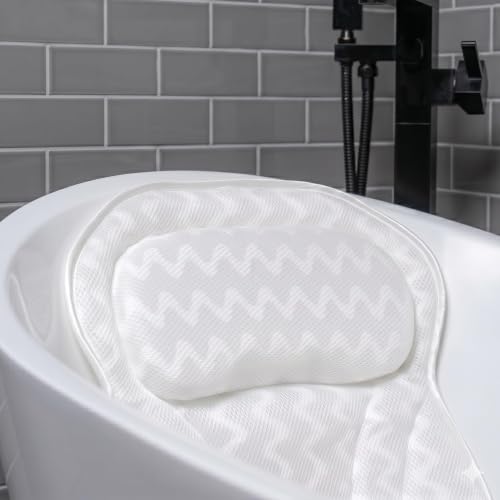


How to Choose the Best Bath Pillow for Straight Back Tubs
Most buying mistakes with this accessory come from treating it like a bed pillow. A bath pillow works wet, sticks to the tub instead of lying loose, and has to match one specific wall shape. When you shop for the best bath pillow for straight back tubs, the six points below decide whether it feels supportive or just slides into the water.
Features That Matter for Straight Back Tubs
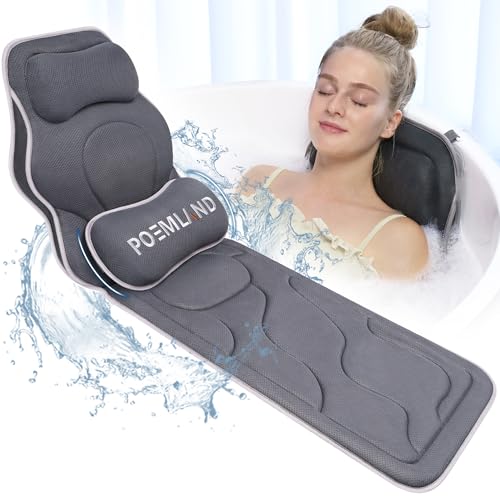
Look first at the back panel. On a straight back tub the pillow needs a flat, fairly stiff panel that sits flush from the waterline to the rim, because a soft curved pillow bridges across the wall and rocks when you shift your weight. Corner suction cups matter more here than on a sloped tub, since your full upper body weight hangs on them instead of resting partly on the tub shape. A panel that spans most of the back wall also keeps your shoulders from touching the cold surface at the edges.
Material and Fill
Nearly every bath pillow is foam padding sealed inside a mesh cover, and the foam density decides how it feels. Denser foam holds its shape and keeps your head from sinking until it presses the hard wall behind the pillow. Softer foam feels plush at first but flattens during a long soak. Fills borrowed from bed pillows, such as down or loose fiber, are a poor fit here because they absorb bath water and stay soggy for days.
Drying Speed and Airflow
A pillow that stays damp between baths will smell musty within weeks, so drying speed deserves as much attention as comfort. Open weave mesh and air mesh covers let water drain out and air move through the foam, and they dry hours faster than tight woven covers. A hanging loop at the top edge helps you store the pillow on a hook or shower head where both faces can dry. If your bathroom has no window or fan, put drying speed at the top of your list.
Thickness and Support
Thickness is what replaces the recline angle your tub lacks. Most bath pillows run about 2 to 4 inches thick at the head section, and the thicker end of that range suits a fully vertical tub wall. A raised, contoured headrest cradles your head so your neck can relax, while a wider lower section supports your shoulders and upper back. Treat the pillow as a comfort aid only. If back or neck pain keeps returning outside the tub, talk with a clinician rather than expecting a cushion to fix it, and for support in bed or in a chair, see our guide to best back pillows.
Size and Fit
Measure before you order. Note the width of the back wall inside the tub, often about 24 to 30 inches near the top, and the height from the tub floor to the rim. The pillow should span most of that width without its edges folding against the side walls, and its top edge should reach the rim so your head rests above the waterline. If your tub is sloped or curved instead, the sizing rules change, and our guide to best bath pillows for tub covers those shapes.
Grip and Staying Power
Suction cups are the only thing holding the pillow up, so count them and check their size. Four to seven cups is typical, and larger cups grip smooth acrylic and fiberglass better than small ones. Textured, tiled, or stone resin tubs give cups far less to hold, and some pillows will never stick well to them. Press each cup onto a clean, dry wall before you run the water, starting with the top corners, so the panel hangs straight instead of sagging to one side.
Types of Bath Pillows
Bath pillows fall into four broad types, and the right one depends on how much of your back you want covered and how much storage space you have.
Two Panel Pillows
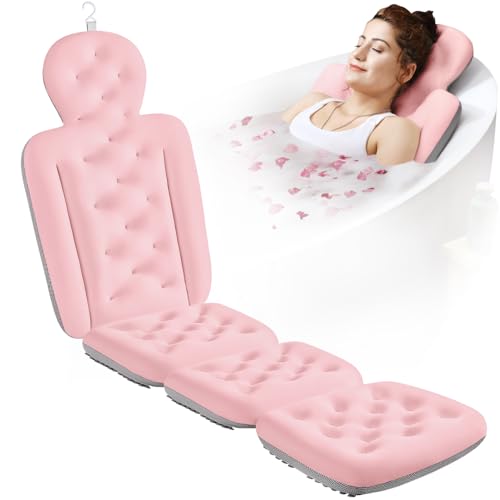
The most common style joins a head panel to a back panel with a flexible fold, so the pillow bends where your neck meets your shoulders. It suits straight back tubs well because each panel can sit flat against the vertical wall. The fold also lets it drape over the rim for drying. Downsides are modest: the joint can collect soap film, and thin models offer limited shoulder cushioning.
Full Back Pillows
A full back pillow is one tall panel that runs from your head down to your lower back. It gives the most complete barrier between your body and a cold tub wall, which long soakers tend to prefer. The trade off is bulk. A large panel takes longer to dry, needs more wall space to store, and its extra suction cups take a minute to set each time.
Contoured Neck Pillows
These smaller pillows support only the head and neck, with a shaped ridge that follows the curve of your skull. They fit narrow tubs where a wide panel would fold, and they are easy to rinse and store. They leave your shoulders and back against the tub wall, so they work best for shorter baths or for people who mainly want head support while reading.
Inflatable Pillows
Inflatable models let you adjust firmness by adding or releasing air, and they pack flat for travel or a guest bathroom. They are usually the lowest priced option, at about $10 to $20. The compromises are real, though: vinyl surfaces feel less pleasant than mesh, seams can start to leak after repeated folding, and an air filled pillow can feel wobbly against a straight wall.
How to Make Your Bath Pillow Last Longer
- Rinse the pillow after every soak, because soap and bath oils coat the suction cups and weaken their grip over time.
- Hang it by its loop or stand it on edge after use so both faces dry instead of staying pressed against the tub.
- Wash the mesh surface about once a week with mild soap and water, following the care label if the maker gives one.
- Store the pillow out of the tub between baths, since standing water breaks foam down faster than air drying does.
- Check the suction cups every month for cracks or flattened edges, and clean the tub wall where they attach.
Frequently Asked Questions
What features matter most in bath pillows for straight back tubs?
Start with the tub itself: smooth walls hold suction cups well, while textured finishes may not hold any pillow securely, so check your tub surface before anything else. After that, a flat stiff back panel, at least four large suction cups, and a fast drying mesh cover matter most. Thickness comes next, because it supplies the recline your tub lacks. If a listing hides cup count or panel size, treat that as a warning sign and look at a clearer option.
How do I stop a bath pillow from sliding down the tub wall?
Attach the pillow before the tub fills, then check it again once the water is warm. Heat and steam can loosen a cup that was only partly seated, so a quick press around each cup after the tub fills keeps the panel in place for the whole soak. Also keep bath oils off the wall area behind the pillow, because a greasy film is the most common reason a well made pillow starts to creep downward mid bath.
How do I wash a bath pillow safely?
Most bath pillows are surface wash only. Wipe or gently scrub the mesh with warm water and a small amount of mild soap, rinse until the water runs clear, and squeeze out excess water without twisting the foam core. Skip bleach and harsh cleaners, which can break down mesh fibers and foam. Let the pillow air dry completely, ideally hanging, before the next use, because putting it away damp is what allows mildew to start inside the cover.
How often should I replace a bath pillow?
Replace it when the foam no longer springs back, the cups crack or stop holding, or the mesh tears. With regular weekly use and good drying habits, many pillows last about one to two years before one of those signs shows up. A pillow that smells musty even after washing has usually absorbed mildew deep in the foam, and washing will not reverse that, so replacement is the practical answer rather than stronger chemicals.
Can a bath pillow make a straight back tub feel less upright?
Yes, within limits. A thicker pillow, especially a two panel or full back style, pushes your shoulders a few inches away from the wall and tilts your upper body slightly, which takes the edge off the vertical feel. It cannot change the tub shape itself, so keep expectations modest. Filling the tub a little deeper also helps, because buoyancy lifts some weight off your back and lets the cushion do less work.
Final Thoughts
For a straight back tub, fit comes first: a flat panel that matches the wall, enough suction cups to hold it, and a cover that dries between baths. Match the thickness to how upright your tub feels, and pick the type that fits your soaking habits and storage space. The best bath pillow for straight back tubs for you is the one that stays put and feels supportive for a full soak, so compare the options in the product table above before you order.