Best Bass Speakers for Bass Guitar: Cabinets Compared for 2026
Disclosure: We may earn a commission when you buy through links on this page, at no extra cost to you. As an Amazon Associate I earn from qualifying purchases. Learn more

Match impedance, power handling and cabinet size to your amp with this guide to the best bass speakers for bass guitar.
A bass guitar needs a speaker that can move a lot of air without turning notes to mud, and that is why the best bass speakers for bass guitar are cabinets built for low frequencies rather than ordinary full range or home audio speakers. This guide explains how to match a cabinet to your amp, your band, and the rooms you play in, so the low end stays clear when everyone else turns up.
Prices run from about $200 for a single 15 inch cabinet to well over $900 for a loud four by ten. Use the comparison table to check sizes, then read on for the specs that matter most: impedance, power handling, driver layout, and weight.


Who Needs a Dedicated Bass Guitar Speaker?
A bass guitar plays down to roughly 41 Hz on a standard four string and lower on a five string. Guitar speakers roll off well above that, and small home speakers cannot handle the power an amp sends them. A cabinet made for bass guitar uses larger or stronger drivers and a sturdier box.
Players Who Already Own an Amp Head
If you own a head or a pedal style amp, you need a cabinet to hear it. Pick one with an impedance your head accepts and a power rating at or above the head's output. This is the most common reason to buy a stand alone cabinet.
Gigging and Rehearsing Bassists
Band rehearsals and small clubs call for a cabinet that is loud enough to stay audible next to a drummer. Many players choose a 2x10 or 4x10 for that job, because it blends punch with portability. A rolling bag or built in casters will save your back.
Home and Practice Players
For a bedroom or garage, a single 10 or 12 inch cabinet is usually plenty. Quiet practice rarely needs more than 100 watts, and a smaller cabinet is far easier to store.
Key Features to Compare in Bass Speakers for Bass Guitar
When you compare bass speakers for bass guitar, start with the numbers that decide whether the cabinet will work with your amp and then look at the layout that shapes the sound.
Impedance and Amp Matching
Cabinets are rated at 4, 8, or sometimes 16 ohms. Your amp head lists the lowest load it can drive safely. Running a cabinet below that rating can overheat the amp, so check the back panel of both before you plug in. Two cabinets wired in parallel halve the total load, which is an easy mistake to make.
Power Handling
Look at the continuous (RMS) rating, not the peak figure. Choose a cabinet rated at or slightly above your amp's output, because an underrated speaker can distort or fail when pushed. More headroom also keeps the tone clean at gig volume.
Driver Size and Layout
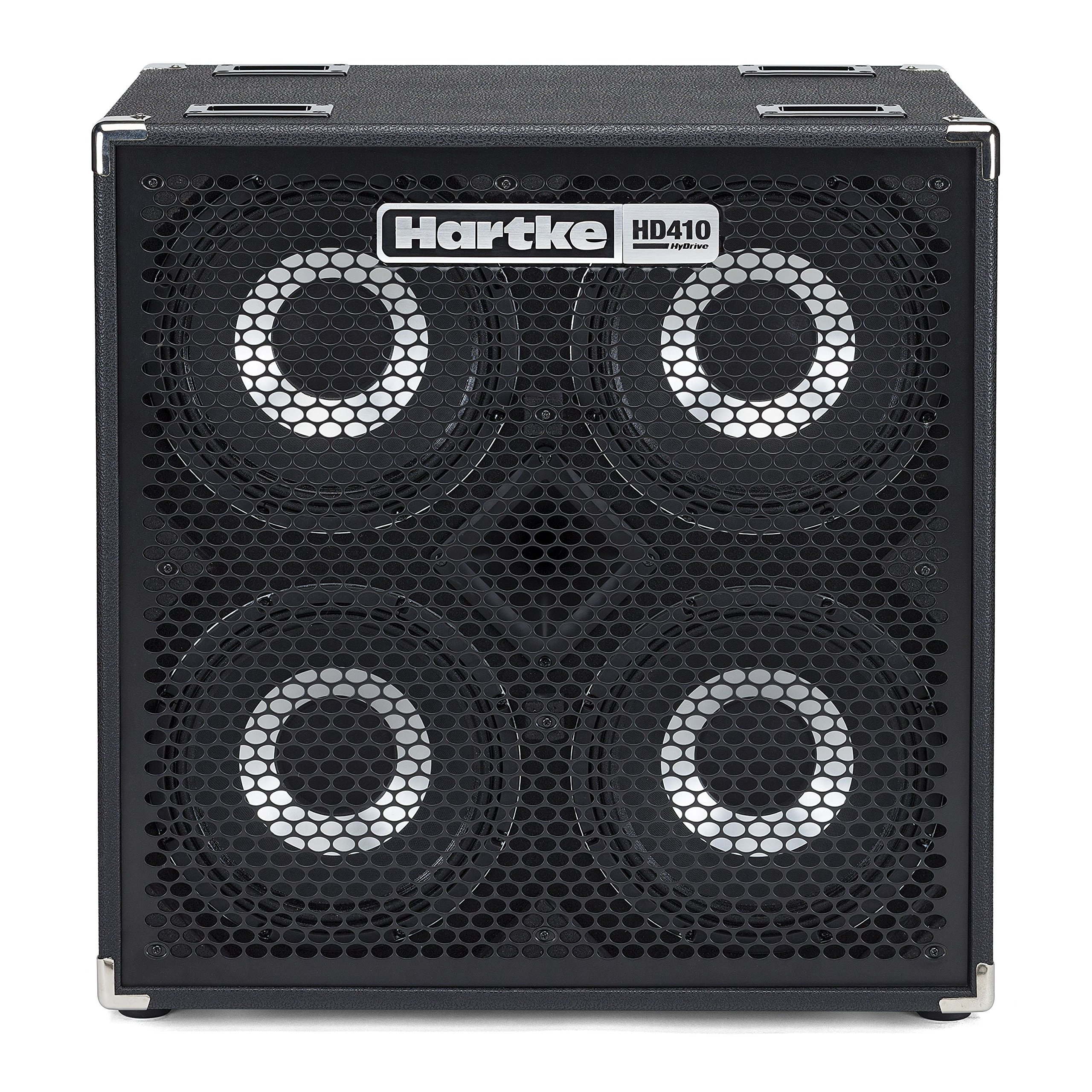
A 15 inch driver moves the most air and suits deep, rounded tones. A 10 inch driver is faster and tighter, with stronger midrange punch for fingerstyle and pick playing. Four 10s give both speed and volume, while a pair of 12s is a common middle ground. Some cabinets add a horn or tweeter for extra clarity on slap and fast runs.
Cabinet Size and Weight
A 4x10 can weigh more than 60 pounds, while a 1x12 or 2x10 is far easier to carry. If you load in and out of venues, check weight, handles, and casters before sound alone. Compact designs are tempting, but they usually trade away some low end.
Build Quality and Connections
Plywood and birch boxes hold up better than thin particle board. Look for metal corners, a protective grille, and Speakon or quarter inch jacks that feel firm. A second jack lets you daisy chain another cabinet later.
Passive Versus Powered Cabinets
A passive cabinet needs a separate amplifier, while a powered cabinet has the amp built in. Passive boxes are lighter on the wallet and let you pair any head you like. Powered boxes are convenient and often lighter to carry, but they cost more and tie you to one built in amp. Full range powered cabinets also suit players who use modelers and direct boxes.
Matching a Cabinet to Your Situation
- Practice and small rehearsal rooms: one 10 or 12 inch cabinet at around 200 watts.
- Club gigs: a 2x10 or 4x10 rated at 400 watts or more.
- Bigger stages or loud drummers: a 4x10 or a pair of cabinets, with PA support if needed.
- Deep tone for rock, blues, and reggae: a 15 inch or 2x15 layout.
- Lightweight travel: a compact 2x8 or neodymium magnet design.
Common Mistakes to Avoid
Buying on wattage alone is the most common error. A 1000 watt label means little if the cabinet is poorly built or mismatched in impedance. Another mistake is choosing the biggest cabinet without checking whether you can lift it. Finally, avoid plugging a bass amp into a guitar cabinet that is not rated for the low notes and the power, because it can blow the speakers quickly.
Care and Maintenance
Keep the cabinet dry and away from direct heat. Dust the grille with a soft cloth and check the corners and feet for loose screws every few months. Always power the amp down before you connect or disconnect speaker cables, and use proper speaker cable rather than a thin instrument lead. Transport the cabinet in a padded cover so the grille and drivers stay safe.
Bass Speakers for Bass Guitar: Your Questions Answered
Can I use a guitar speaker cabinet for bass guitar?
It is risky. Guitar cabinets are not built to handle bass frequencies at gig power and can distort or blow a speaker. Use a cabinet marked for bass, or one that lists a bass friendly power rating.
Is a 4x10 better than a 1x15?
Neither is better in every case. A 4x10 is louder, tighter, and clearer, while a 1x15 offers a deeper, rounder tone and is easier to carry. Your style and room should guide the choice.
How many watts do I need?
Home practice needs about 50 to 150 watts. Rehearsals and small shows typically need 200 to 500 watts, and large stages may call for more or for PA reinforcement.
Can I run two cabinets from one amp head?
Yes, if the combined impedance stays within what the head can drive and each cabinet can handle its share of the power. Check the amp manual before wiring them together.
Do I need a powered cabinet or a passive one?
If you already have a head, a passive cabinet is simpler and cheaper. If you want one box that does everything, or you use a modeler, a powered cabinet makes sense.
Final Thoughts
Start with the room and the amp you own, then match impedance, power handling, and size to your needs. Use the product table to compare cabinets side by side and compare weight before you buy. When those checks are done, the best bass speakers for bass guitar for you will be the cabinet that is loud enough, light enough to carry, and clear down low.