
Best Bamboo Kitchen Drawer Organizers (2026): Expandable, Fixed and Deep Trays
Disclosure: We may earn a commission when you buy through links on this page, at no extra cost to you. As an Amazon Associate I earn from qualifying purchases. Learn more
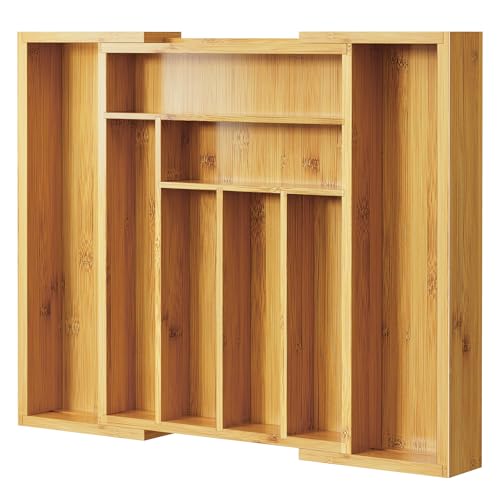
The best bamboo kitchen drawer organizer fits your drawer first. Compare expandable, fixed and deep trays by size, bays and care.
Open most kitchen drawers in a busy family home and you will find the same scene. Forks slide over spoons, a ladle wedges the drawer shut, and the one tool you need sits at the very back. A best bamboo kitchen drawer organizer fixes that daily scramble by giving every utensil a fixed home, and bamboo does it with a warm look that suits real kitchens rather than showroom ones.
This guide helps you choose by space, household size, and budget. We compare the main bamboo styles, explain the measurements that decide fit, and flag the features worth paying for. Start with the product table below, then use the checklist to match a style to your drawer and your routine.
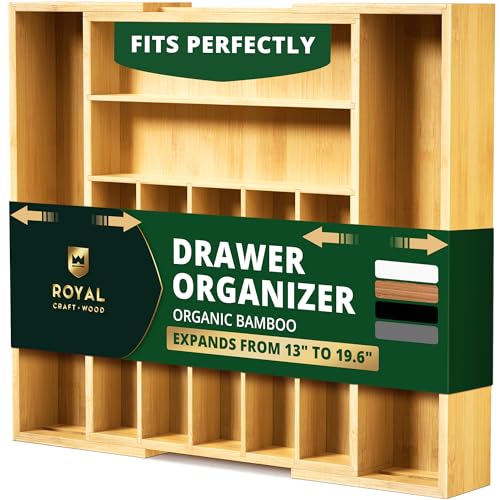
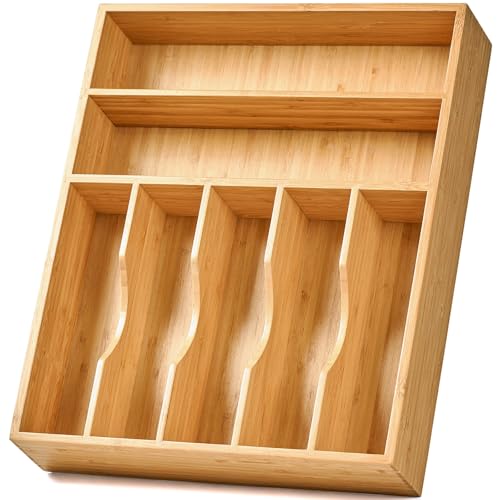
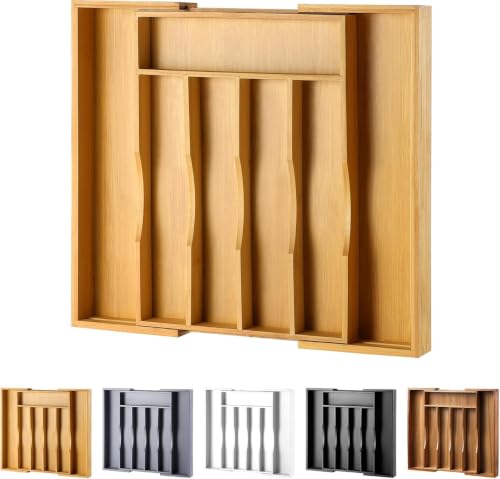
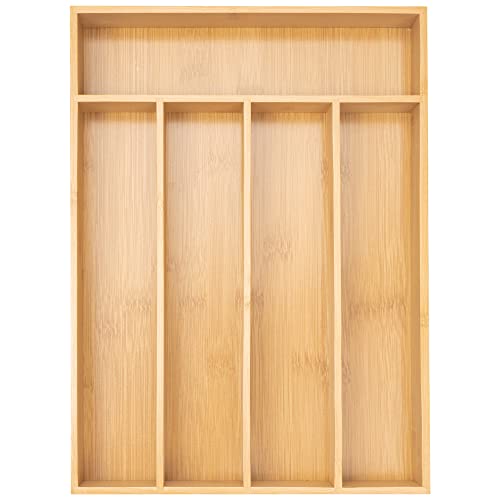

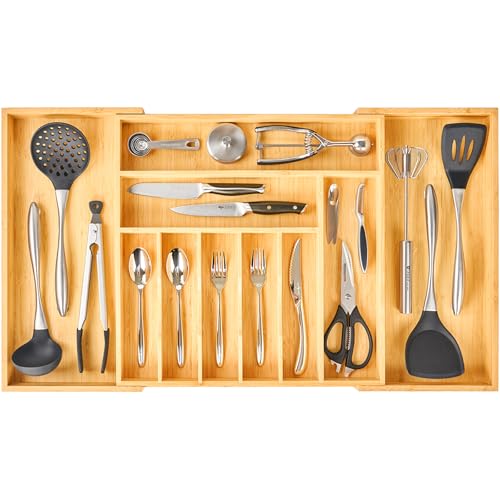
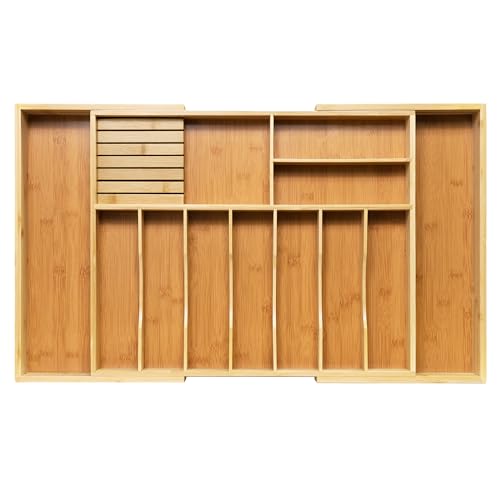


Quick Answer: The 3 Styles in 30 Seconds
If you want the short version, three bamboo styles cover almost every home. An expandable tray suits most standard drawers and growing utensil sets. A compact fixed tray suits small kitchens and tight budgets. A deep or two level tray suits large households that store bulky tools in tall drawers. The right choice depends on your drawer dimensions first and your budget second.
Before You Buy: A Quick Checklist for Choosing a Kitchen Drawer Organizer
Size: Match It to Your Space
Measure the inside of your drawer before you look at any tray. Record the width, the depth from front to back, and the height of the drawer box, then subtract about half an inch from the width and depth so the tray can drop in without forcing. Bamboo trays come in small fixed sizes for narrow drawers, large fixed sizes for wide ones, and expandable designs that slide outward to fill the space. Deep drawers need a taller tray or a second level, while shallow drawers need a low profile tray so utensil handles clear the counter above when the drawer closes.
Which Type Fits Your Routine
Fixed bamboo trays are the simplest option and work well when your drawer matches a standard size. Expandable trays add sliding side sections, which helps in wide drawers and lets the tray move with you to a future home. Adjustable dividers suit mixed loads, such as a junk drawer holding tools, batteries, and tape, because you can resize each bay. Clear plastic and acrylic trays show contents at a glance but can look cold and may crack at the corners over time. Wooden trays in other finishes cost more and weigh more. For most homes, bamboo in an expandable or divider format balances looks, weight, and daily ease.
Features Worth It (and Ones to Skip)
Dividers are the feature that earns its keep, because they stop long utensils from drifting across the tray every time the drawer moves. Wide bays at one end suit serving spoons and spatulas, while narrow bays suit cutlery. A built in knife block section is worth it only if you store knives in a drawer and want the blades covered and separated. Skip decorative inserts and extra mini compartments you have no items for, since every unused bay steals space from the tools you reach for daily. If your drawer holds mostly cutlery, our guide to the best kitchen drawer organizer for utensils covers silverware layouts in more detail.
Materials and Food Contact Safety
Most bamboo trays use laminated bamboo strips pressed and glued into panels, then finished with a light coating. Look for a smooth finish with no rough edges, since splinters and lifted grain make a tray hard to wipe clean. Bamboo is a grass, so it handles the dry environment of a drawer well, but it is not made for soaking. Some makers describe their bamboo as food safe for dry utensil contact, which is the use here, because clean and dry cutlery rests on the surface rather than food itself. Plastic trays often advertise themselves as BPA free, a point that matters more for food storage than for a utensil tray, so do not pay extra for that label on bamboo.
Realistic Budget Ranges
Most bamboo drawer trays fall between about $15 and $50. Under $20 usually buys a compact fixed tray with five or six bays, a fair match for a first apartment or a single cutlery drawer. Between about $20 and $30 you will find most expandable trays, with more bays and thicker panels. Above about $30 to $50, expect larger formats, two level designs, or divider sets for deep drawers. Spending more mainly buys size and sturdier joinery, not better bamboo, so measure first and let fit set your budget.
Three Bamboo Drawer Organizer Styles Compared
1. Best for Most Homes: The Expandable Tray
An expandable tray starts at a standard width and slides outward on both sides, so one tray fits a range of drawers. That flexibility is why it suits most homes, including renters who may move and families whose utensil collection keeps growing. Look for six to eight bays in the closed position, smooth sliding action, and side sections deep enough to hold forks without tipping. The trade off is that the sliding sections add seams where crumbs collect, so this style needs a quick brush out more often than a fixed tray.
2. Best Value: The Compact Fixed Tray
A compact fixed tray is a single molded layout of five or six bays, sized for one cutlery set and a few serving pieces. It is the lowest cost route into bamboo and the easiest to clean, because there are no moving parts and no seams. It suits small households, narrow drawers, and anyone organizing a second drawer for baking tools or a tea and coffee kit. The trade off is zero flexibility. If your drawer is wider than the tray, the empty gap beside it becomes a slide zone for loose items, so check your measurements with extra care.
3. Best Long Term Investment: The Deep Drawer or Two Level Tray
Homes with tall drawers waste a lot of vertical space with a flat tray. A deep tray with tall dividers, or a two level design with a sliding top layer, uses that height for bulky tools, whisks, and tongs. This style suits large families and keen cooks who keep many tools in one place. The panels tend to be thicker and the joinery stronger at this price, which helps the tray survive years of daily use. The trade off is weight and cost, and the top layer must slide smoothly or it becomes the part you fight every morning.
Our Selection Process for the Best Bamboo Kitchen Drawer Organizers
We judge bamboo trays on five criteria: material quality and finish, capacity and fit across common drawer sizes, how well dividers hold items in place, how easy the tray is to clean, and value for the price range. We base these judgments on maker specifications, stated dimensions, and patterns in verified buyer feedback, such as reports of cracked corners or trays arriving smaller than listed.
What We Like and What We Don't About Bamboo vs Other Kitchen Drawer Organizers
Bamboo brings clear strengths to a drawer. It is lighter than solid wood, resists the knife nicks and stains that mark up plastic, and its natural grain hides crumbs and small scratches between cleanings. Many households also prefer it for looks, since a bamboo cutlery tray warms up a white or rental kitchen without a remodel. On the down side, bamboo cannot go in the dishwasher and should not soak, so cleaning takes a cloth and a minute of patience. It can also crack if a heavy drawer slams it against the frame for months. Plastic wins on price and dishwasher safety, and metal mesh wins on drainage for wet items, but for dry utensils in a family kitchen, bamboo is the balanced middle. If you are comparing materials across the whole category, start with our guide to the best kitchen drawer organizer.
Common Buying Mistakes to Avoid
- Guessing the drawer size. A tray that is an inch too wide will not fit at all, and returns cost you time and postage.
- Forgetting drawer height. A tall tray in a shallow drawer means utensil handles jam against the frame and the drawer will not close.
- Buying more compartments than you own items for. Empty bays waste the space you paid to organize.
- Ignoring replacement and care costs. A cheap tray with thin panels may split within a year, which makes the midrange tray the cheaper buy over time.
- Putting knives loose in a cutlery bay. Loose blades dull against other metal and are a hazard when you reach in quickly.
Cost of Ownership and Care
A bamboo tray has no running costs, no filters, and no parts to replace on a schedule. The real cost of ownership is a few minutes of care. Wipe the tray with a damp cloth, dry it fully before returning it to the drawer, and never leave it soaking in the sink. A light coat of food grade mineral oil once or twice a year keeps the surface from drying out and helps it resist stains. Keep heavy cast iron tools in a different drawer, since repeated heavy loads can bow thin panels. Treated this way, a bamboo tray should serve for years, and the only likely extra purchase is a liner if your drawer base is rough.
Your Questions, Answered
What is the most reliable kitchen drawer organizer brand?
Reliability in this category comes from build cues rather than a famous name. Look for panels of even thickness, tight joints with no visible gaps, and a finish that feels smooth on every edge. Listings that state full dimensions and show the tray inside a real drawer tend to come from makers with consistent quality control. A newer listing with detailed sizing is a safer bet than a well known name with vague measurements.
How do you clean a kitchen drawer organizer?
Empty the tray, shake the crumbs into the bin, and wipe each bay with a damp cloth and a drop of mild soap. For sticky spots, a paste of baking soda and water lifts residue without scratching the finish. Dry the tray fully with a towel before you reload it, because trapped moisture under cutlery can leave marks on bamboo. Skip the dishwasher, since heat and standing water can split laminated panels.
Is a kitchen drawer organizer worth it?
For most households, yes, because the payoff shows up every day. A tray ends the search for matching cutlery, protects drawer bases from scratches, and makes it obvious when a piece is missing after a meal. The value rises with household size, since more hands in the drawer means more drift without dividers. If you cook rarely and own one small set, a simple tray still pays for itself in calm mornings.
How long does a kitchen drawer organizer last?
A bamboo tray in daily use commonly lasts several years, and the limiting factor is usually damage rather than wear. Cracks start at corners after drops or repeated slamming, and water damage shortens life faster than anything else. One sign of a tray near the end is a bay divider that flexes when you press it, which means the glue joint is giving way. At that point, replacement is safer than repair for anything holding knives.
The Bottom Line
Start with your measurements, then pick the style that matches your household. The expandable tray is the safest all round choice, the compact fixed tray covers small homes on a budget, and the deep or two level tray rewards large families with tall drawers. Whichever route you take, choosing a best bamboo kitchen drawer organizer that truly fits is what turns a messy drawer into a calm one. Compare your shortlist against the product table above before you order.


