
Best Baking Sets for Beginners: A First Time Buyer's Guide for 2026
Disclosure: We may earn a commission when you buy through links on this page, at no extra cost to you. As an Amazon Associate I earn from qualifying purchases. Learn more

Pick your first baking set with a beginner guide to pans, materials, sizes, and care.
Buying your first baking set can feel confusing, because sets range from five basic pieces to boxes of thirty tools you may never touch. This guide to the best baking sets for beginners starts with the basics, explains each part in plain English, and helps you buy once instead of buying twice.
You do not need a huge set to bake well. You need the right core pieces, in sizes that fit your oven, made from materials that heat evenly and clean up without a fight. The comparison table below shows the main styles side by side, and the sections after it turn the jargon into simple decisions.




Baking Sets 101: The Basics
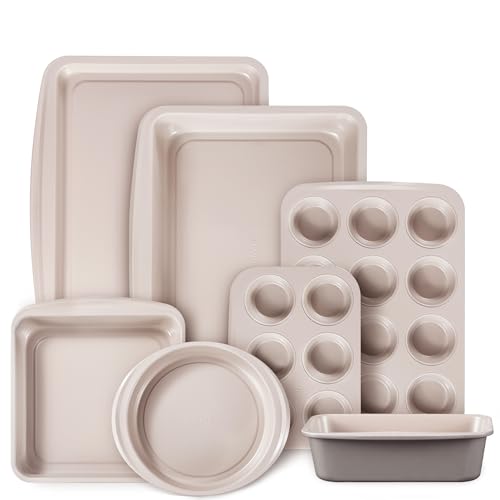
A baking set is a grouped collection of pans and tools sold together for a lower total price than buying each piece alone. A typical beginner set includes one or two sheet pans, a muffin pan, a loaf pan, a round or square cake pan, and sometimes measuring tools, a spatula, and a whisk. The pans do the real work, because they hold your food in the oven and control how it browns. The tools are helpful extras, but they should never be the reason you choose one set over another.
Terms you will see often are simple once translated. Nonstick means the pan has a coating that releases food easily and needs gentle care. Gauge means metal thickness, and a lower gauge number means thicker, sturdier metal. Rimmed sheet pans have a raised edge that stops juices running off, while rimless sheets let cookies slide off easily. When you compare sets in our broader guide to the best baking sets, you will see these same terms used for sets aimed at experienced bakers too.
Key Specs Explained in Plain English
Beginner Friendly Features That Matter
The most helpful features for a new baker are the ones that prevent early failures. Rolled edges on sheet pans resist warping and give you a safe grip with oven mitts. Clear size markings stamped into the metal stop you guessing which pan a recipe means. Light colored pans are forgiving because you can see browning as it happens, while very dark pans can overbrown the bottom of cookies before you notice. Look for sets where every piece works for several recipes, rather than single purpose shapes you will use once a year.
Intended Use and Who It Is For
Think about what you will actually bake in your first three months. If cookies and sheet pan dinners top your list, a set built around two large sheet pans serves you better than one built around cake pans. If you dream of birthday cakes, you need two round pans of the same size, because most cake recipes bake two layers at once, and a set with only one round pan will frustrate you on day one. Bread bakers need a loaf pan with enough depth for a good rise. Match the set to your real menu, not to the longest list of pieces on the box.
Size, Weight, and Fit for Your Space
Measure your oven inside before you buy, because a standard half sheet pan is about 18 by 13 inches and some compact ovens cannot take it with the door closed. Leave at least an inch of space around a pan so hot air can circulate, or your food bakes unevenly. Check your cabinets too. Sets that nest inside each other store in half the space of sets that do not. Weight matters more than people expect. A thick, high quality pan feels solid but can be heavy when loaded with a roast chicken and vegetables, so be honest about what you can lift safely with mitts on.
Safety and Certifications
Check the stated maximum oven temperature for any nonstick set, because many coatings are rated to about 450 degrees Fahrenheit and some recipes, like pizza and artisan bread, run hotter. If you plan to bake at high heat, plain metal or silicone rated for higher temperatures is the safer match. Look for a clear statement that coatings are made without PFOA, and wash new pans before first use. Stop using a pan if its coating is deeply scratched, peeling, or flaking, and replace it rather than baking on a damaged surface. When in doubt about a material and your health questions, ask the maker directly for its safety documentation.
Key Performance Specs
The spec that decides your results is how evenly the metal spreads heat. Aluminum is the most common beginner choice because it heats evenly, stays light, and costs less. Aluminized steel is stronger and resists warping longer, at a slightly higher price. Thicker pans, around 18 gauge or lower for sheet pans, warp less and brown more evenly than thin pans that pop and twist in a hot oven. Silicone pans release food beautifully and store flat, but they are floppy, so you must set them on a firm sheet before filling them, or batter will spill on the way to the oven.
Rookie Mistakes to Avoid
- Counting pieces instead of checking them. A thirty piece set often pads the count with small tools you already own, while a ten piece set may contain every pan you truly need.
- Buying pans that do not fit your oven. Measure first, because returning a set after you have washed it is a hassle you can avoid in two minutes.
- Putting nonstick pans in the dishwasher. Most coatings last far longer with hand washing, even when a box claims dishwasher safety, because harsh detergents dull the surface over time.
- Using metal tools and cooking spray on nonstick. Metal scratches the coating, and spray residue builds into a sticky film. Use a light wipe of oil and wooden or silicone tools instead.
- Choosing only dark pans. Dark metal browns food faster, so recipes timed for light pans can burn on the bottom. New bakers get more predictable results from light or medium finishes.
Getting Started: Setup and First Use
When your set arrives, wash every piece in warm soapy water, dry it fully, and read any care sheet in the box before the first bake. Do a quick fit test in a cold oven to confirm each pan slides in with room around it. For your first bake, choose a forgiving recipe like chocolate chip cookies, line the sheet with parchment, and watch the first batch closely, because your oven may run hotter or cooler than the recipe assumes. Write the actual time and result on the recipe. That small note habit teaches you your oven faster than any gadget, and it turns your second batch into a success on purpose.
FAQs
What makes baking sets for beginners different?
Sets aimed at beginners focus on versatile core pans, forgiving light finishes, and simple care, rather than specialty shapes. They usually skip items like tart pans and springform pans until you know you need them. The best ones also keep sizes standard, so the pans match the dimensions most recipes assume, which removes a whole category of early confusion and failed bakes.
How much should I spend on a baking set?
Most beginners do well spending about $40 to $90 on a core set of sturdy pans. Under about $30, metal is often thin and warps early, which leads to uneven baking and a second purchase. Above about $100, you are often paying for extra specialty pieces or premium finishes that matter more once you bake weekly and know exactly which shapes your recipes demand.
How long does a baking set last?
Plain aluminum or aluminized steel pans can last many years, often a decade, with basic care. Nonstick pans have a shorter life, commonly about three to five years before the coating wears and food starts to stick. You can extend both by avoiding overheating empty pans, skipping the dishwasher, and storing pans with a cloth or paper layer between stacked pieces.
Are expensive baking sets worth it?
They can be, but only after you bake often enough to feel the difference. Thicker metal warps less and browns more evenly, which weekly bakers notice in every batch. If you bake once a month, a solid midrange set gives you nearly the same results, and the money saved buys better ingredients, which improve your baking more than a premium pan would at this stage.
What features matter most when buying baking sets?
Even heating, the right sizes for your oven, and pans you will use weekly matter most. Check metal thickness, confirm two sheet pans if you bake cookies, and make sure the set includes a muffin pan only if muffins or cupcakes are truly on your list. A short set of pieces you use constantly beats a large set that fills a cabinet and gathers dust.
How do I maintain a baking set?
Wash pans soon after use so baked on sugars do not harden, soak stubborn spots instead of scouring them, and dry pans fully before stacking to prevent water marks and rust on steel edges. Season plain steel lightly if the maker advises it. Store nonstick pans with a soft layer between them, because most coating damage happens in the cabinet, not the oven.
The Bottom Line
Choose your set by the pans you will use every week, in sizes that fit your oven, made from metal thick enough to stay flat. Keep care simple, start with forgiving recipes, and add specialty pieces only when a recipe you love demands one. Look back at the product table above with those three tests in mind, and the best baking sets for beginners for your kitchen will be easy to spot.


