Best Anodized Cookware Sets for 2026: Checklist and Buying Guide
Disclosure: We may earn a commission when you buy through links on this page, at no extra cost to you. As an Amazon Associate I earn from qualifying purchases. Learn more

Best anodized cookware sets compared by coating safety, heat, set size, weight and care, with price tiers.
A cookware set is a long commitment, and glossy photos hide the details that decide daily cooking. This checklist helps you judge the best anodized cookware sets by construction, coating safety, and the pieces you will truly use, instead of by piece count alone.
Work through each check in order, note your stove type and oven habits, and bring those notes when you shop. The product table is a useful place to compare set sizes and materials once your checklist is set.





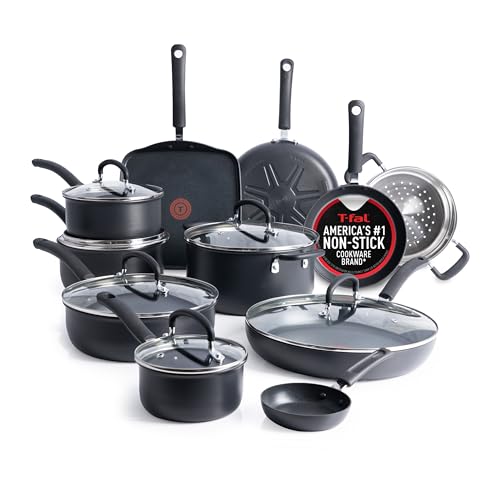
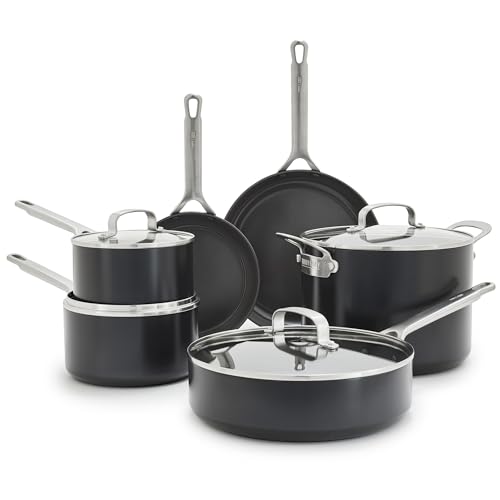
How to Evaluate Anodized Cookware Sets
Material: How Hard Anodized Aluminum Compares
Hard anodized aluminum is aluminum treated to form a hard, dark surface that resists corrosion and warping better than plain aluminum. It heats quickly and evenly, weighs far less than cast iron, and lacks the searing power of heavy stainless steel or copper at high heat. Stainless steel tolerates metal utensils and very high heat, carbon steel and cast iron sear beautifully but need seasoning, and copper offers superb control at high cost and upkeep. For most home cooks, anodized sets win on easy handling and even heating for everyday meals.
Nonstick Coating Safety
Many anodized sets carry a nonstick coating, so check that it is listed as PFOA free and ask what the coating system is. PTFE coatings are safe at normal cooking temperatures but degrade if overheated empty on high heat, so use low to medium heat and never preheat an empty coated pan for long. Ceramic style coatings tolerate heat differently and often wear sooner. Ventilate your kitchen, keep pet birds away from cooking fumes as a general caution, and replace a pan once the coating is deeply scratched or flaking.
Cleaning and Dishwasher Safety
Hand washing protects anodized surfaces and coatings, even when a maker calls a set dishwasher safe. Dishwasher detergents are harsh and can dull the anodized finish and shorten coating life. Wash in warm soapy water, use a soft sponge, and soak stuck food instead of scrubbing with abrasive pads. Dry promptly to avoid water spots. A know how point: a paste of baking soda and water lifts light discoloration without scratching, and it costs almost nothing compared with specialty cleaners.
Warranty and Expected Lifespan
Read warranty terms for the body and the coating separately, because they often differ. The anodized body can last a decade or more with kind care, while nonstick surfaces commonly perform well for about two to five years of regular use. A lifetime warranty on the body sounds generous, but exclusions for overheating and dishwasher damage are common. Keep your receipt and register the set if the maker offers it, since warranty claims without proof of purchase often stall.
Weight and Ergonomics
Lift the largest skillet and the stockpot with one hand and imagine them full of food and water. Anodized sets are popular because they stay manageable for cooks who find cast iron too heavy. Handles should feel secure with a damp hand or a mitt, stay reasonably cool on the stove, and be riveted or firmly attached. Lids should sit flat without rattling. If you cook for a crowd often, check that the biggest pan still feels balanced when you tilt it to pour.
Heat Distribution and Construction
Look for a thick, flat base that sits steady on your burner and resists warping. Some anodized pans add an encapsulated base or a stainless steel disc to improve induction compatibility and stability. Even heating matters most for sauces, eggs, and grains, where hot spots scorch a ring into the food. On gas, a slightly smaller base than the flame wastes energy and overheats handles, so match pan diameter to your most used burners. Fully clad construction is a stainless steel concept, while anodized sets rely on aluminum thickness for evenness.
Set Size and Pieces You Actually Need
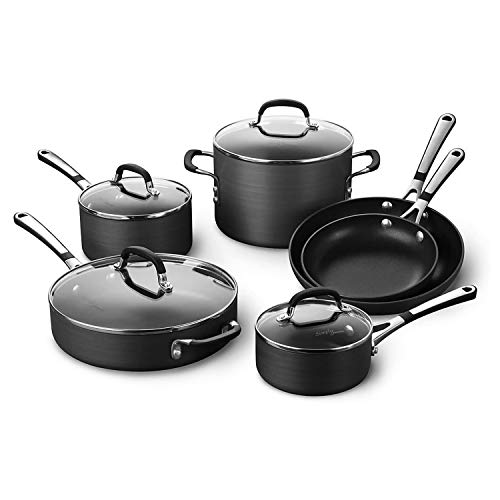
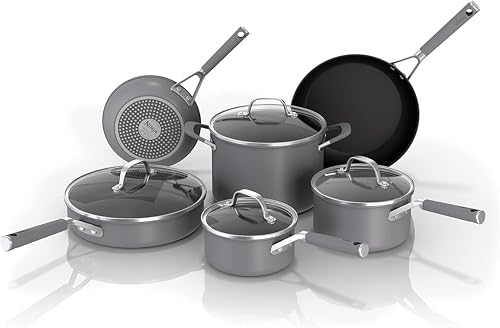
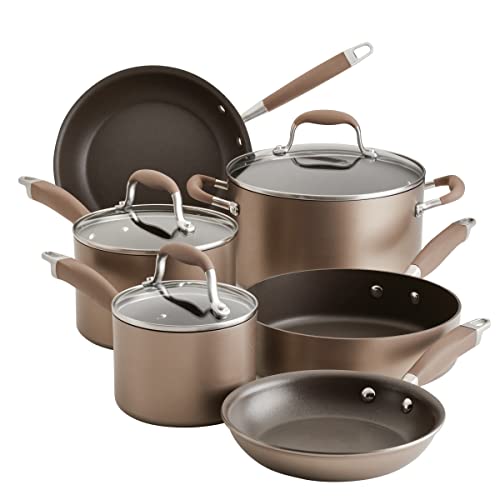
Count pieces skeptically, because lids often count as pieces. A useful core is a small and a large skillet, a saucepan with lid, a larger pot for soups, and a saute pan or Dutch oven style pot. If you rarely cook pasta, a giant stockpot wastes storage. Compare your list with broader options in our guide to the best kitchen cookware sets before deciding that a bigger set is better value. Buying a compact set plus one open stock specialty pan often serves real cooking better than a huge boxed set.
What Each Price Tier Usually Delivers
Budget Tier Sets
Budget sets, often under about $150, give you thin but serviceable anodized bodies and basic coatings that suit first apartments and light cooking. Expect fewer oven safe parts, simpler handles, and coatings that wear sooner. This tier is a sensible trial if you are unsure how much you will cook. The trade off is replacement sooner, so judge cost over about three years of use, not just the shelf price on day one.
Midrange Sets for Most Homes
Midrange sets, roughly about $150 to $350, usually add thicker bases, better coatings, glass lids with steam vents, and higher oven temperature ratings. For most households this is the sweet spot of durability and price. Pieces nest better and handles feel sturdier. If you are furnishing a family kitchen, compare this tier with our guide to the best home cookware sets, which looks at family sized needs across materials.
Premium Tier Sets
Premium sets above about $350 compete on coating longevity, induction ready bases, refined handles, and stronger warranties. The cooking difference over midrange is real but modest for simple meals, so buy premium for heavy daily use or for induction compatibility you truly need. Cooks who already own stainless steel may enjoy contrast, and our guide to the best stainless cookware sets explains where uncoated pans still beat coated ones for searing and deglazing.
Quick Buyer Checklist
- Does the set work on my stove, including induction if I have it?
- Is the coating clearly listed as PFOA free, with a stated oven temperature limit?
- Do I already own and use at least two thirds of the pieces in the box?
- Can I lift the largest pan comfortably when I picture it full?
- Are lids shared sensibly between pans, or will storage become a puzzle?
- Does the warranty cover the coating, and for how long?
- Do the handles and knobs tolerate my usual oven temperatures?
- Will the set fit my cabinets and dishwasher, even if I plan to hand wash?
Red Flags to Watch For
- Vague coating claims. Words like miracle or lifetime nonstick without a named coating system or temperature limit deserve skepticism.
- No induction information. If compatibility is unclear, assume the set will not work on induction until the maker confirms it.
- Very short warranty. A one year warranty on a set marketed as premium signals low confidence from the maker.
- Inflated piece counts. Utensils and lids padded into the count hide how few pans you actually get.
- Thin, flexible bases. A base you can flex by hand will likely warp and spin on a flat cooktop.
For a general comparison across everyday cooking styles, see our guide to the best cooking cookware sets and note how your own menu maps to piece choices.
Tips to Get the Most From Your Anodized Cookware Set
Use wooden or silicone utensils on coated surfaces, and avoid cooking sprays that leave sticky residue. Preheat on medium, add oil once the pan is warm, and let food release naturally instead of forcing it. Avoid thermal shock by letting a hot pan cool before washing, since plunging it into cold water can warp the base. Store pans with soft liners or cloth between them to protect coatings. With these habits, a midrange set can serve well beyond its expected coating life.
FAQs
How long does nonstick cookware last?
Nonstick cookware typically performs well for about two to five years with daily use, and longer with gentle heat and hand washing. The body often outlasts the coating by years. One point many buyers miss is that darkening food release is a gradual decline, not a sudden failure, so plan replacement when eggs start sticking despite correct preheating and oil, rather than waiting for visible flaking.
Is it better to buy a cookware set or individual pieces?
A set is better when you need the basic core at once and the price per pan beats buying separately. Individual pieces win when you already own good pans and need only one upgrade. A hybrid path works well for many cooks: buy a modest set for the core, then add one specialty pan later. That approach avoids paying for duplicate skillets that budget sets love to include.
What cookware material is the safest?
No single material is safest for every use, because safety depends on correct use. Stainless steel and cast iron have inert cooking surfaces with no coating to degrade, while modern PFOA free nonstick is considered safe when used below its temperature limits and replaced when damaged. If coating worries you, choose an uncoated anodized or stainless pan for high heat work and keep coated pans for eggs and fish at moderate heat.
How do I know if a pan works on induction?
Check the base with a magnet: if a magnet sticks firmly across the bottom, the pan will usually work on induction. Makers also print an induction symbol on the base or box. Plain anodized aluminum is not magnetic, so anodized pans need a bonded steel base to qualify. Check your cooktop manual too, because some induction units require a minimum pan diameter to detect the pan at all.
The Bottom Line
Judge any set by coating honesty, base thickness, and whether the pieces match your real menu, in that order. The product table can confirm sizes and stove compatibility once you settle those points. Chosen with this checklist, the best anodized cookware sets give you easy, even cooking without the weight or upkeep of heavier materials.