
Best Baking Pan Sets 2026: A Practical Buying Guide
Disclosure: We may earn a commission when you buy through links on this page, at no extra cost to you. As an Amazon Associate I earn from qualifying purchases. Learn more

Choose baking pan sets by material, coating, size, and oven fit so cakes, cookies, and breads bake evenly.
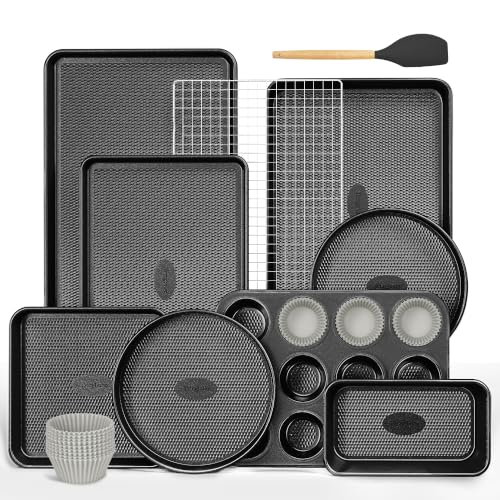
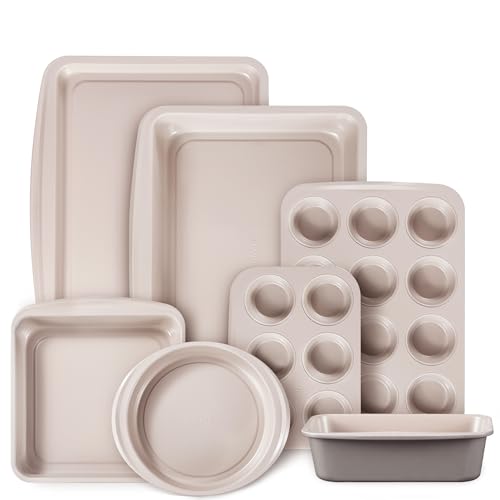
A good set of baking pans covers most recipes with just a few pieces: sheet pans for cookies and roasting, round pans for layer cakes, a loaf pan, and a muffin tin. The best baking pan sets use metal that heats evenly, fit your oven with room to spare, and survive years of washing. Check the product table above for current options, then use this guide to judge material, coating, and size.
Pans shape the result as much as the recipe does. A thin pan can warp and brown unevenly, while a heavy gauge pan bakes steadily. Knowing the differences helps you buy once instead of twice.





Who Should Buy a Baking Pan Set?
New Bakers Setting Up a Kitchen
A set costs less than buying each pan alone and ensures that the shapes match standard recipes. Look for a set built around two sheet pans, a muffin pan, a loaf pan, and two round pans of the same size.
Weekly Home Bakers
If you bake often, choose thicker metal and a durable coating or an uncoated finish that can take metal tools. Heavier pans warp less and give more even browning.
Small Kitchens and Gift Buyers
Nesting or stackable sets save cabinet space and are a practical gift for a first apartment or college move.
Types of Baking Pans in a Set
Sheet Pans
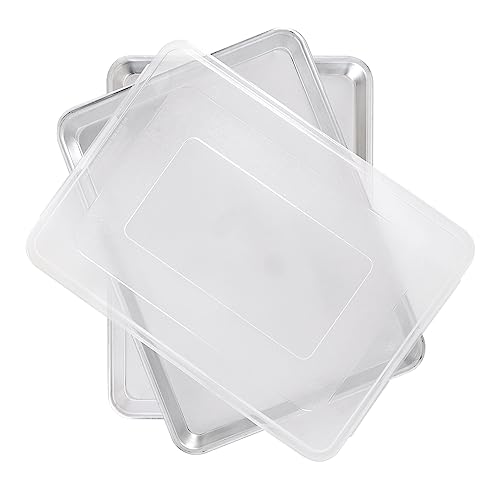
Half sheet pans, about 18 by 13 inches, bake cookies, roast vegetables, and hold tray bakes. Rolled rims resist warping, and a quarter sheet suits small ovens.
Round and Square Cake Pans
Two 8 or 9 inch round pans bake layer cakes. Straight sides and a slightly deep wall help cakes rise evenly. Square pans suit brownies and bars.
Loaf Pans
A 9 by 5 inch loaf pan is the standard size for bread, banana bread, and pound cake. Check that the pan is deep enough for your favorite recipes.
Muffin and Cupcake Pans
A 12 cup muffin tin covers muffins and cupcakes. Nonstick coatings make it easier to release small bakes.
Within the same family, our guide to the best baking sets also covers mixing tools and measuring gear, while this guide focuses on the pans.
Key Features to Compare
Material and Heat Spread
Aluminum and aluminized steel spread heat quickly and evenly, and they are the best all round choices. Carbon steel is sturdy and common in nonstick sets but can rust if the coating is damaged. Glass and ceramic dishes hold heat longer and suit casseroles, but they are slower to react and can break with sudden temperature changes.
Color and Coating
Light colored pans bake gently, while dark nonstick pans brown faster and can overbake edges, so you may need to lower the temperature by about 25 degrees Fahrenheit. Check the stated maximum oven temperature, because many nonstick coatings are rated to about 450 degrees. Replace any pan with flaking or deeply scratched coating.
Thickness and Warping
Heavier gauge metal resists warping and gives steadier results. A thin sheet pan that pops in a hot oven can slide food around and bake unevenly.
Rims, Handles, and Grip
Wide handles or rolled edges make it safer to lift a hot pan with oven mitts. Stackable or nesting designs make storage easier.
Sizing Your Set to Your Oven
Measure the width and depth of your oven shelf before you order. A half sheet pan will not fit some compact or toaster style ovens with the door closed. Leave about an inch of space around each pan so air can circulate, and check that tall pans do not touch the rack above. If you have a small oven, look for quarter sheets or sets with smaller pans.
Choosing Pans by What You Bake
Cookie bakers get the most from heavy half sheet pans with rolled rims, because thick metal prevents the hot spots that burn the bottoms. Cake bakers need two identical round pans with straight sides, and a springform or removable bottom pan is useful for cheesecake. If you bake bread, a sturdy loaf pan with a light finish gives a golden crust without overbrowning the base. Brownies and bars bake best in a square pan with sharp corners, and a muffin tin with deep cups gives well domed tops. Sets that include a cooling rack that fits inside a sheet pan let you roast and cool on the same piece of metal.
Consider how you clean, too. Pans with smooth interiors and rounded corners wash faster than pans with deep seams where batter hides. If you share a household with several bakers, pick a set with a coating that tolerates occasional scrubbing, or keep a few uncoated pans for sticky, roasted, or high heat recipes.
Care and Maintenance
- Wash nonstick pans by hand with a soft sponge, even when the box says dishwasher safe, to extend the coating's life.
- Dry pans fully before stacking to prevent rust on steel edges.
- Use wooden or silicone tools on nonstick surfaces.
- Line pans with parchment for sticky bakes to protect the finish.
- Let pans cool before washing to prevent warping from thermal shock.
Common Mistakes to Avoid
Buying on piece count alone is the most frequent mistake, since sets with twenty or more pieces often include small tools you already own. Others include ignoring oven size, choosing very dark pans without adjusting temperature, and scrubbing nonstick coatings with abrasive pads.
Frequently Asked Questions
How many pans do I really need?
Two sheet pans, two round cake pans, a loaf pan, and a muffin pan handle nearly every common recipe.
Is nonstick better than plain aluminum?
Nonstick is easier for beginners and for sticky bakes. Plain aluminum is more durable and can be scrubbed, and it works well with parchment or a light coating of oil.
Are dark pans a problem?
They brown faster. Lower your oven temperature a little or shorten the baking time to avoid dark bottoms.
How long do baking pans last?
Uncoated aluminum or steel pans can last decades. Nonstick pans usually last three to five years with good care.
How much should I spend?
Around $30 to $80 buys a good starter set. Premium sets cost more because of heavier metal and better coatings.
Final Thoughts
Start with the pans you will use every week, confirm they fit your oven, and choose metal that stays flat and heats evenly. The best baking pan sets are simple, sturdy, and easy to clean. Compare your shortlist in the product table above before you order.


