Best Back Rest Pillows: Reviews and Buying Guide for 2026
Disclosure: We may earn a commission when you buy through links on this page, at no extra cost to you. As an Amazon Associate I earn from qualifying purchases. Learn more

Compare the best back rest pillows for reading and relaxing in bed by fill, firmness, size, cooling, and support.
Sitting up in bed sounds simple until a stack of sleeping pillows slides flat behind you. The best back rest pillows solve that problem with a firm, upright shape that supports your back, neck, and shoulders while you read, watch TV, or work on a laptop. Instead of a soft pile that needs constant adjusting, you get one stable piece you can lean against for long stretches.
Choosing well comes down to fit and fill rather than looks alone. Your height, the softness of your mattress, and whether you run warm all change which shape feels right. Start with the comparison table below, then use the sections that follow to narrow your choice with confidence.


Who Should Buy a Back Rest Pillow?
A back rest pillow earns its space when you spend time sitting up in bed. If your main goal is support while sleeping flat, see our guide to the best back pillows for options shaped for the night rather than for upright sitting.
Readers and TV Watchers Who Stay Upright for Hours
You are the classic buyer for this product. A tall back, a firm core, and arms at a natural elbow height keep your shoulders from creeping upward while you turn pages or hold a remote. Look for a headrest area that cradles your neck without pushing your head forward.
Students and Remote Workers Who Use the Bed as a Desk
A back rest pillow gives you a steadier base than loose cushions when you type from bed for an hour or two. Arms wide enough to rest your forearms reduce the shoulder tension that builds when your elbows hang unsupported. Treat this setup as a change of position, not as a full replacement for a chair and desk during a long workday.
People Who Rest Upright During the Day
Some buyers need to rest with the upper body raised, whether for comfort after a tiring day or because lying flat simply feels worse. If ongoing aches are your main concern, see our guide to the best pillows for back pain as well, and remember that a pillow supports rest but never treats the cause of pain.
How to Choose a Back Rest Pillow That Fits You
The product table above collects the shapes, sizes, and fills worth comparing as you shop for the best back rest pillows for your bed. Work through the factors below in order, since a pillow that fails on size or support will disappoint no matter how nice its cover feels.
Material and Fill
Fill decides how the pillow feels in the first minute and after the first month. Solid memory foam molds to your back and holds its shape, while shredded foam feels softer and lets you push fill where you need it. Polyester fiber is light and plump at first but flattens fastest, and a hybrid fill blends foam pieces with fiber for a middle feel. Covers are usually cotton in a percale or sateen weave, linen, or fabric made from bamboo, and a removable cover matters more than the fabric name.
Support and Pressure Relief
Good support means your whole back stays in contact with the pillow, from the lower back up to the shoulder blades. A shaped lumbar zone keeps the small of your back from sinking into a hollow, which is where most aching starts. Pressure relief matters at the tailbone and shoulder blades, where bone sits close to the surface and a too firm surface can feel harsh. If you are comparing options for an aching back, see our guide to the best pillows for bad back for more on support choices.
Know the warning signs that a pillow cannot fix. Pain that shoots down a leg, new numbness or weakness, back pain after a fall, or any change in bladder or bowel control needs prompt medical care. Talk with your clinician about ongoing pain and about the raised position that is safe for your own situation.
Firmness and Loft for Your Sitting Position
Firmness describes how much the pillow gives under your weight, and loft describes how thick and tall it sits behind you. Heavier readers compress soft fiber quickly, so a medium firm or firm foam core usually serves them longer. Lighter readers often find that same core pushy and may prefer shredded fill they can soften. Sit mostly upright for reading and you need height that reaches the shoulder blades.
Cooling and Breathability
A large pillow against your back blocks airflow, so warm sleepers should look closely at cooling design. Open cell memory foam moves more air than dense foam, and gel added to foam can feel cool at first touch, though the effect fades as the foam warms. Cotton covers breathe better than thick synthetic velour, and mesh side panels help heat escape. If you often wake warm after reading in bed, breathability deserves as much weight as firmness in your decision.
Size and Fit
Match the pillow to your torso first and your bed second. The back should rise at least to your shoulder blades, and taller buyers may need the top edge to reach the base of the neck. Width should let your arms rest without your elbows slipping off the sides, yet still leave room for a partner on a queen or king bed.
Certifications and Trial Periods
CertiPUR US tells you a foam was made without certain harmful chemicals and meets standards for emissions and durability. OEKO TEX on a cover means the fabric was tested for substances that can irritate skin. Both are useful safety signals, but neither promises the pillow will feel comfortable to you. That is why a sleep trial or a generous return window matters, since only leaning on the pillow at home shows whether the height and firmness suit your body.
Noise and Shifting Fill
Small annoyances grow when you use a pillow every night. Some covers rustle each time you shift, which can bother a light sleeping partner beside you. Shredded fill can migrate to one side and leave a thin spot behind your lower back, so a zippered inner case that lets you move fill back is worth having.
Types of Back Rest Pillows
Most designs fall into three families, and knowing the family helps you read listings faster. If you want to compare broader lounge options beyond upright bed use, see our guide to the best rest pillows once you know which of the shapes below suits you best.
Wedge Style Back Rest Pillows
A wedge is a firm foam triangle that raises your upper body at a steady angle. Wedges suit people who want a modest incline for reading propped on extra pillows. They offer little side support, and the fixed angle cannot be adjusted, so pick the incline carefully.
Husband Style Pillows With Arms
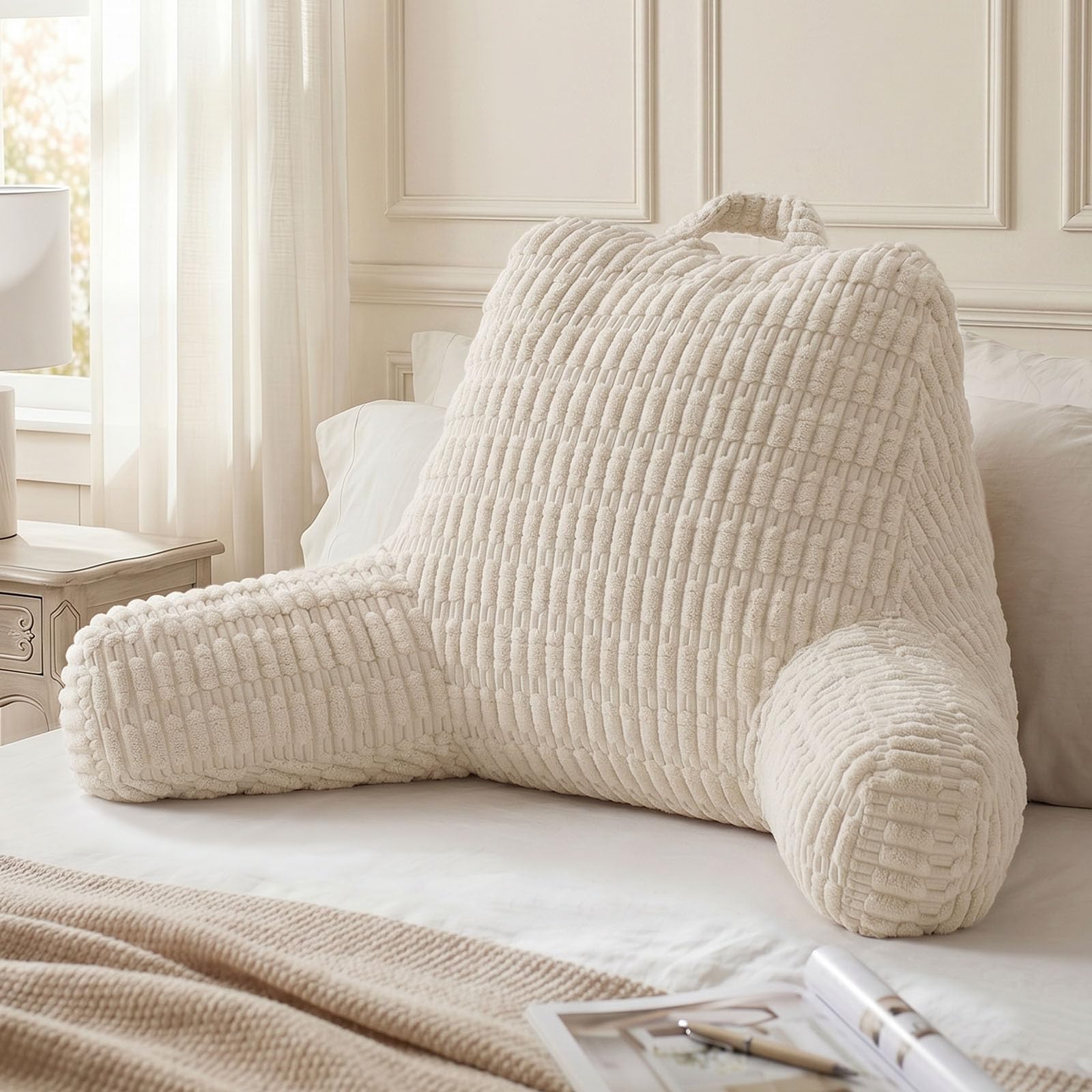
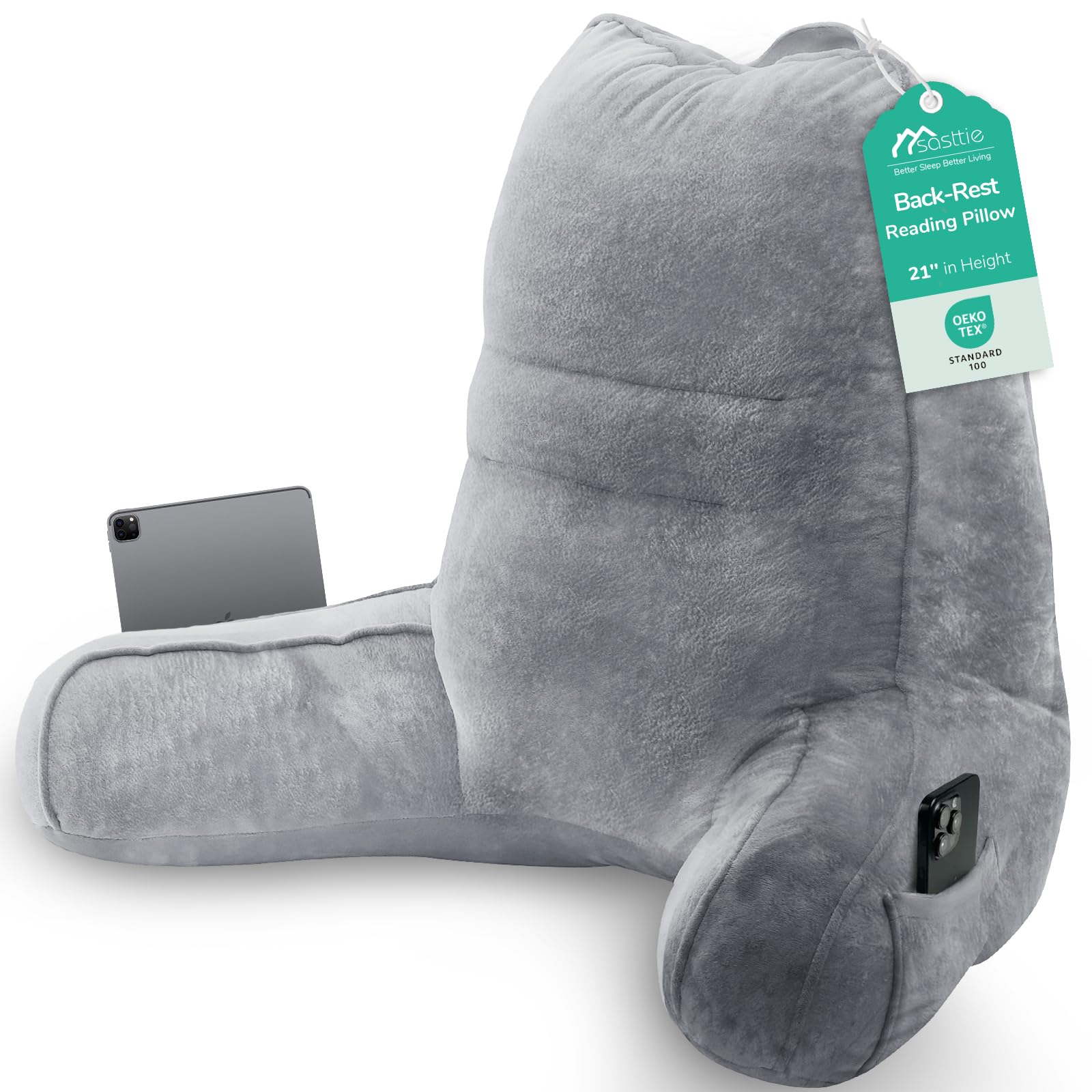
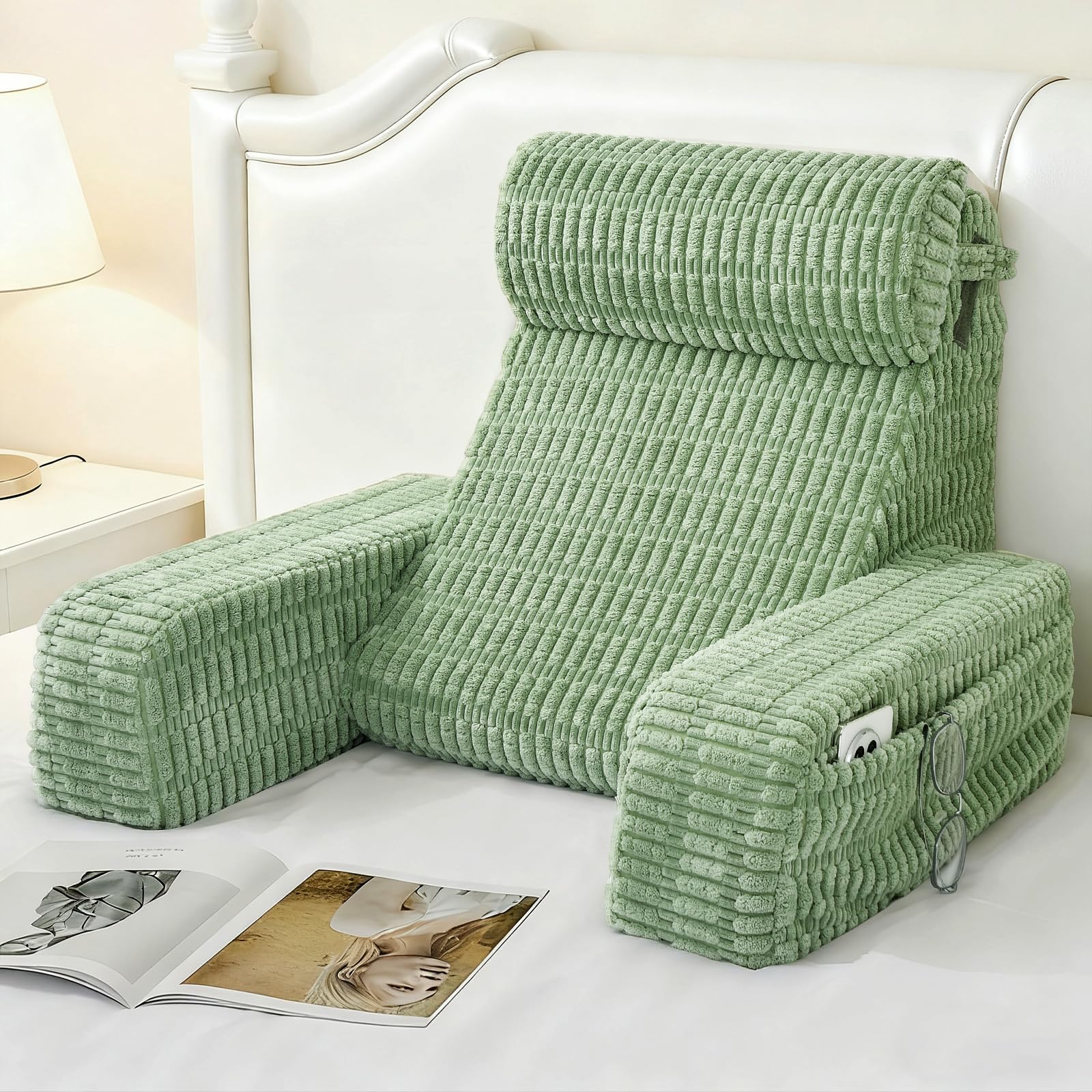
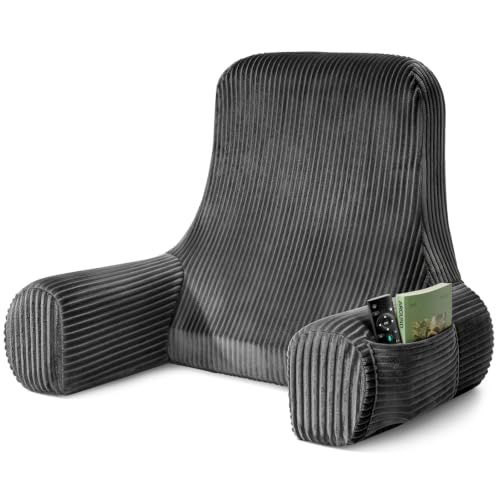
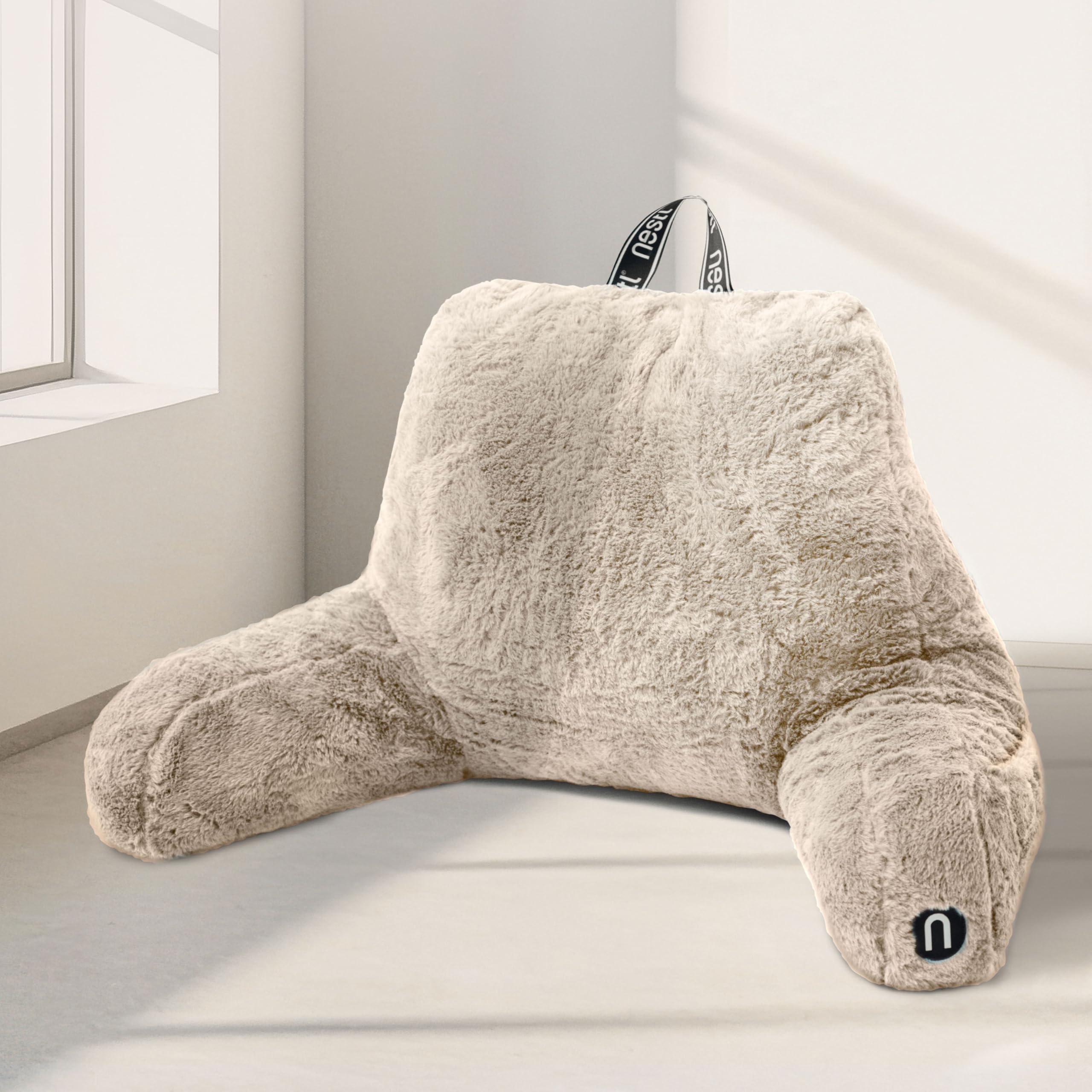
The husband style is the tall back with two arms that most people picture for this product. It works like a chair back on the bed, giving your elbows a place to rest and your back a tall surface to lean on. This shape suits long reading sessions and upright laptop use.
Hybrid and Memory Foam Designs
A hybrid design mixes materials, often a foam core for structure with a softer fiber or shredded layer against your back. A full memory foam design feels firmer and more even, with slow pressure relief as it warms and molds. Pure foam designs reward buyers who measured well and want the most stable lean.
Common Mistakes to Avoid
Most returns trace back to a short list of avoidable errors.
- Buying by bed size alone, because a king size label says nothing about whether the back height matches your torso.
- Choosing the softest fill for long reading sessions, because soft fiber flattens and leaves your lower back unsupported within weeks.
- Ignoring cover care labels, because a cover you cannot remove or wash will hold odors and sweat over time.
- Sitting on the pillow arms, because arms are made for resting elbows and their seams can split under full body weight.
- Skipping the return policy, because firmness is personal and a pillow you cannot return is a costly guess.
- Expecting a pillow to cure back pain, because ongoing pain needs medical advice rather than a new cushion.
Care and Maintenance Tips
A back rest pillow works hard every evening, and simple habits keep its support even and its cover fresh.
- Fluff fiber and shredded fills daily with a few firm shakes, since regular fluffing keeps fill from packing into one corner.
- Wash the removable cover on the cycle the label allows, and dry it fully before putting it back on the pillow.
- Air the pillow near an open window every week or two, because fresh air clears the stale smell that builds up in foam and fiber.
- Spot clean spills on the inner pillow at once with a barely damp cloth, since moisture that soaks into foam takes a long time to dry.
- Turn the pillow end for end every few weeks if the design allows it, so the area behind your shoulders does not wear first.
- Store the pillow dry and uncompressed in a closet or on the bed, because squeezing it into a tight bin for months can leave foam slow to recover.
Never put a solid foam core in a washing machine, since agitation can tear the foam and a soaked core is hard to dry through.
Frequently Asked Questions
What firmness level in a back rest pillow helps most with back pain?
Medium firm suits most people, because it holds the lower back in contact without feeling like a board. Test any new pillow with a twenty minute reading session at home rather than a quick lean in a store. For a wider look at options, see our guide to the best pillows for back problems before you decide.
Are cooling back rest pillows worth the cost for warm sleepers?
They can be, if you regularly stop reading because your back feels hot against the pillow. The biggest gains come from a breathable cotton cover and open cell foam, not from gel alone. If you run warm only in summer, a spare cotton cover may solve the problem for less money than a new pillow.
How do you wash a back rest pillow without damaging the fill?
Wash only the removable cover unless the care label clearly says the whole pillow can go in a machine. Fiber filled pillows that are machine washable need a gentle cycle and a long, complete dry before use. When in doubt, spot clean the inner pillow and wash the cover more often.
Is a higher thread count always better for a back rest pillow cover?
No, a higher thread count is not always better in a back rest pillow cover. Very high counts often come from thin yarns twisted together, which can feel dense and trap heat rather than breathe. A moderate count in a percale weave usually feels cooler and crisper, while sateen feels smoother against skin. Yarn quality and weave matter more than the biggest number on the label.
How often should you replace a back rest pillow?
Replace a back rest pillow when it stops holding your sitting position, which is often after about two to three years of nightly use. A clear sign is a hollow behind your lower back that returns within minutes even after thorough fluffing. If only the cover is worn or stained, replace the cover first and keep using the pillow.
Final Thoughts
Start with size and support, then choose a fill that matches how firm and how warm you like to sit. The comparison table above pulls the key shapes and specs together so you can compare without rereading every section. Get those basics right and the details, from cover weave to carry handles, fall into place.
The right best back rest pillows choice is the one that keeps your back in full contact, your arms rested, and your shoulders relaxed for the whole chapter, not just the first page. Measure your torso, check the return window, and pick the shape that fits how you actually spend your evenings in bed.