
Best Aux Cable for Speakers in 2026: Budget, Midrange, and Premium Levels Explained
Disclosure: We may earn a commission when you buy through links on this page, at no extra cost to you. As an Amazon Associate I earn from qualifying purchases. Learn more
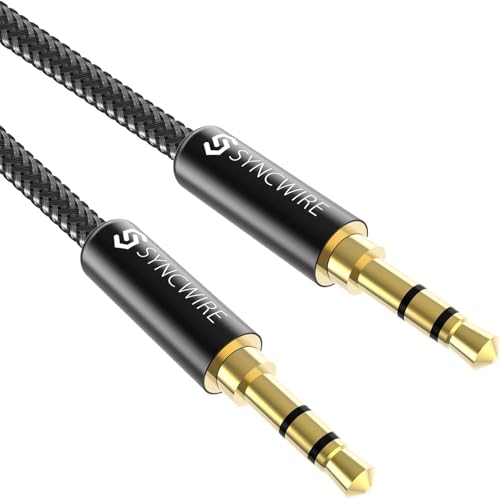
Compare the best aux cable for speakers at every price point. Learn what you get at budget, midrange, and premium levels and where spending more pays off.
Prices for a short analog cable can range from a few dollars to the cost of a nice dinner, and listings often look almost identical in photos. Finding the best aux cable for speakers starts with matching plug shape, length, and build to the speaker you already own. This guide breaks down budget, middle, and premium levels so you can use the comparison table below with a clear sense of what extra money actually buys.
An aux cable carries a finished stereo signal from a phone, tablet, computer, or player into a powered speaker that has an analog input. It does not power the speaker, and it does not replace the heavier wire that joins a separate amplifier to passive speakers. Keep that single job in mind as you read, because secure fit and lasting build matter more here than exotic promises.




Who Should Buy Which Aux Cable for Speakers?
Choose by the connection you make most often. The room, the distance, and how often the cable moves will point you to the right length and build.
Home Listeners With Powered Speakers on a Shelf
You leave the cable plugged in behind a shelf or a desk, so a neat fixed run matters more than extreme flex life. Choose a length that reaches without a tight pull or a large loose coil. If you are still choosing the speaker itself, see our guide to the best speakers with aux input to confirm the input type before you order a cable.
Car Listeners Using a Dashboard Aux Input
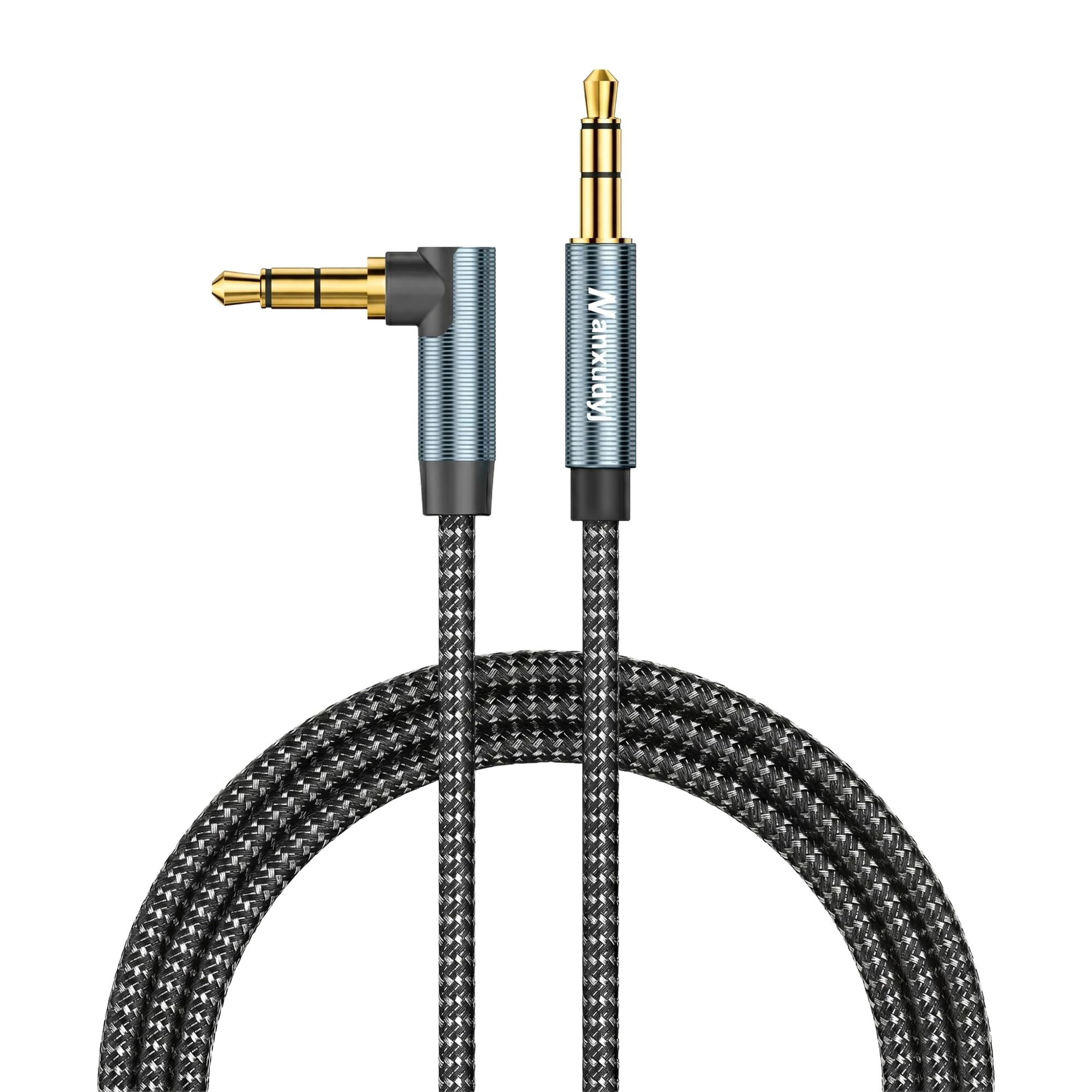
You plug in often, and the cable lives in heat, sunlight, and a moving cabin. Choose a short cable, often about 3 to 4 feet, so loose loops stay clear of controls and pedals. A right angle plug can sit flatter against a dashboard socket, and a tougher jacket helps when the cable gets shut in a console lid or tossed in a door pocket.
Desk and Portable Speaker Users Who Move Often
You carry the speaker between rooms, a patio, or a work site, and the cable gets coiled and packed again and again. Choose a braided jacket and strong strain relief at each plug. If the speaker itself travels with you, see our guide to the best portable aux speakers for models built around that same wired input.
Key Features of the Best Aux Cable for Speakers
Compare these factors in order, so a low price cannot hide a plug that fits poorly or a jacket that splits early.
Plug Type and Shape for Your Speaker Input
Most speaker aux inputs take a standard 3.5 mm stereo plug, called TRS, with two dark rings near the tip. A straight plug suits open sockets on a shelf speaker, while a right angle plug suits tight spaces where a straight plug would stick out and get knocked. Check both ends before you buy, because some gear uses different socket sizes and needs an adapter rather than a new cable.
Cable Length for Home, Car, and Desk Reach
Common lengths run from about 1 to 15 feet, and the right choice is the shortest cable that still lets you place your source comfortably. A cable that is too short pulls on both sockets and can work loose during play. A cable that is far too long forms loops that catch on chair legs and add clutter. Measure the actual path, around furniture rather than straight across it, then add a small amount of slack.
Conductors and Shielding for Clean, Quiet Sound
Inside the jacket, copper conductors carry the left and right channels, and foil or braided shielding around them helps block buzz from power cords and nearby electronics. Oxygen free copper is a sound standard choice at any price. For a broader look at analog audio leads, see our guide to the best audio cables for speakers. Shielding matters most on longer runs behind a television or a power strip.
Jacket Material, Bend Strength, and Tangle Control
A smooth PVC jacket costs less and wipes clean, but it can feel stiff in cold rooms and may crack after years of sharp bends. A braided nylon jacket resists fraying where the cable rubs a desk edge and usually survives more bends before the wires inside fatigue. Braided cables also coil into looser loops, so they tangle less in a bag. Choose braid if the cable moves daily, and simple PVC for a fixed shelf run.
Connector Housing, Strain Relief, and Case Fit
The strain relief is the flexible section where the cable meets the plug, and it carries most of the stress when you unplug or shift the speaker. Longer, tapered relief lasts better than a short rigid collar. Metal housings feel solid and resist crushing, while molded plastic housings weigh less. If your phone stays in a thick case, choose a plug with a narrow stepped shoulder, since a wide housing may stop short of a full click into the socket.
Aux Cable Prices From Spare PVC Cords to Metal Housed Builds
At each level, the best aux cable for speakers is the one whose build matches how often it moves. Higher prices should buy durability and fit, not claims of dramatic sound changes.
Budget Tier: Simple PVC Spares at About $5 to $10
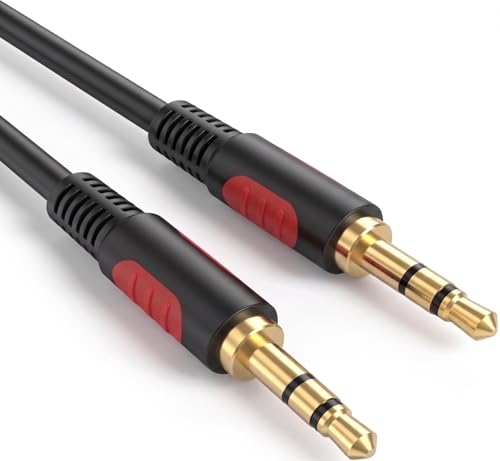
Expect a basic PVC jacket, molded plastic plugs, and standard copper conductors. Sound on a short run is usually fine, since the signal path is simple and short. The trade off is thinner strain relief and a jacket that stiffens with age. This level suits a spare cable in a drawer, a guest room speaker, or a fixed run that rarely gets touched.
Middle Tier: Braided Jackets and Firmer Plugs at About $10 to $20
Expect a braided nylon jacket, longer strain relief, and metal or reinforced plug housings with gold plated contacts. This is where daily use gets easier, because the cable coils neatly, resists fraying, and survives frequent plugging. For most home, car, and desk setups, this level gives the best balance of price and service life without paying for looks alone.
Premium Tier: Thicker Conductors and Metal Housings at About $20 to $35
Expect thicker conductors, denser shielding, heavy metal housings, and sometimes an adapter in the box. These cables suit long shelf runs near power cords and users who plug and unplug many times a day. Pay this much only when you need the extra length, shielding, or build, because a short quiet run gains little from the step up.
Common Mistakes to Avoid
- Buying a microphone cable with three rings on the plug can leave speaker sound thin or one sided, since the extra contact is meant for a headset mic.
- Pulling the cable itself to unplug it strains the wires inside the relief and leads to crackling within months.
- Ordering the longest cable in the listing creates loops that trip feet, catch chair wheels, and pick up more buzz near power cords.
- Forcing a wide plug housing through a phone case opening leaves the plug partly seated and causes sound to drop when the phone moves.
- Confusing an aux cable with speaker wire wastes money, since an aux cable cannot carry amplified power from a receiver to passive speakers.
How to Make Your Aux Cable Last Longer
Coil the cable in loose loops about the width of your hand, and never wrap it tightly around the speaker or your phone. Tight wrapping twists the conductors inside and weakens them near the plugs. Store the coiled cable in a dry drawer away from direct sun, since heat and light age both PVC and nylon jackets over time.
Grip the plug housing, not the cable, each time you connect or disconnect. Wipe the metal plug with a dry cloth if sound turns scratchy, and check that no lint sits inside the speaker socket. Replace the cable when sound drops in one channel as you gently flex the section near a plug, because that sign points to a broken inner wire that cleaning cannot fix.
FAQ
What features matter most in an aux cable for speakers?
Secure plug fit, correct length, and solid strain relief matter most in an aux cable for speakers. Those three decide whether the cable stays seated, reaches without pulling, and survives daily handling. One extra check helps at checkout: confirm the listing shows the same plug size at both ends, because a few cables pair a small plug with a larger studio plug meant for different gear.
How long should an aux cable for speakers be in a car?
An aux cable for speakers in a car should usually be about 3 to 4 feet long. That reach lets a passenger hold the phone while keeping loose cable away from the gear selector and hand brake. If your socket sits inside a deep console, measure from the socket to where the phone rests before you order, since console layouts vary more than dashboard layouts.
Why does an aux cable for speakers crackle or play on one side only?
An aux cable for speakers crackles or loses one side when a plug is partly seated, dirty, or hiding a broken inner wire. Push each plug in until it clicks, rotate it gently to clear light grime, and try a second source to rule out the speaker socket. If the fault moves as you flex the cable near one plug, the wire inside that end has failed.
Does gold plating on an aux cable plug improve sound?
Gold plating on an aux cable plug does not change the sound you hear in normal home use. Its real value is resisting corrosion on the contact surface, which helps in humid rooms, coastal homes, and cars where bare metal can dull over time. A clean, fully seated plain plug will always outperform a dirty gold plated plug that sits loose in the socket.
Wrapping Up
Match the plug, the length, and the jacket to the place where the cable will actually live, then choose the price tier that fits how often it moves. Use the product table above to compare lengths, jackets, and plug shapes side by side.
When you shop for the best aux cable for speakers with those points settled, the choice is usually simple. A well fitted middle tier cable serves most speakers for years, and a cheap spare covers the day one gets left behind.


