Best Automotive Flashlight at Every Price for 2026
Disclosure: We may earn a commission when you buy through links on this page, at no extra cost to you. As an Amazon Associate I earn from qualifying purchases. Learn more

A practical guide to the best automotive flashlight for roadside, garage, and emergency use, with brightness, power, and mounting tips.
Choosing a best automotive flashlight is less about buying the brightest light on the shelf and more about matching the light to the jobs you actually do. A light for changing a tire at night needs a different beam and grip than a light for reading an engine bay. The product table gives you a quick way to weigh those tradeoffs side by side.
Prices range widely, from simple pocket lights to sturdy work lights with magnetic bases and long runtimes. This guide explains what each price level usually delivers and which features are worth paying for. Use it to spend where it matters for your vehicle and your driving habits.


Who Should Buy Which Automotive Flashlight?
Different drivers reach for a flashlight in different moments. The right choice depends on whether you need a light for emergencies, regular maintenance, or hands free work.
For Drivers Who Want Roadside Readiness
If your main need is a light you can grab during a breakdown, prioritize a compact light that lives in the glove box or door pocket. Look for a simple control you can operate with cold or gloved hands, plus a beam wide enough to light the ground around a tire. A long shelf life matters here, since the light may sit unused for months. Check it a few times a year, and keep it where you can reach it without climbing into the trunk in the dark.
For Home Mechanics and Garage Users
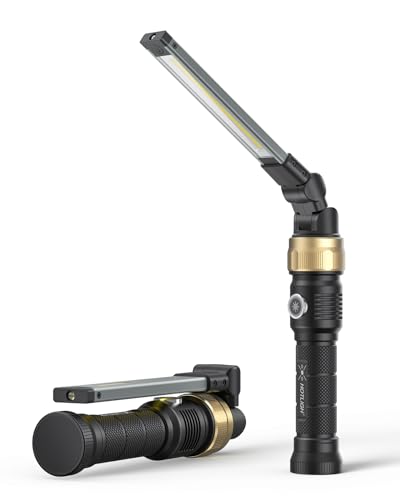
If you work on your own vehicle, a hands free design is usually more useful than raw brightness. A magnetic base lets you stick the light to a fender or hood, while a hook lets you hang it from a raised hood. A wide flood beam lights a whole work area, while a narrower beam helps you inspect a single bolt or hose. Adjustable brightness helps too, because a very bright light can glare off chrome at close range.
For Night Workers and Long Trips
If you drive at night or travel far from services, runtime and durability move to the top of the list. A light that runs for several hours on a medium setting is more useful than one that is very bright for only a short time. Weather resistance matters when you work in rain, and a textured grip helps when your hands are wet or oily. Carry a spare power source on long trips, and choose a light with a low mode for cabin use.
What Your Money Gets You at Each Price Level
Automotive flashlights usually fall into three broad spending levels. The differences are mostly about build quality, brightness control, and power options.
Value Level: Simple and Dependable
At the value level, expect a basic handheld light with one or two brightness modes and a simple push button. Bodies are often lightweight plastic or thin metal, and the beam is usually fixed. These lights work well as a backup in a glove box or a second light for occasional use. You can expect to spend about $10 to $25 at this level.
Everyday Level: Better Control and Build
In the middle level, you usually get multiple brightness modes, a rechargeable cell, and a stronger body. Many lights at this level add a magnetic base, a pocket clip, or a spot to flood adjustment. Water resistance is more common, and the switch is often easier to find by feel in the dark. You can expect to spend about $25 to $60 here.
Work Ready Level: Built for Hard Use
At the higher level, expect a rugged body, sealed switches, long runtimes, and flexible mounting. Some lights offer a strong magnet and a stand for hands free use. Charging may use a common cable, and the light may warn you when the battery is low. You can expect to spend about $60 to $120 at this level.
What Makes the Best Automotive Flashlight: Features to Pay For and Skip
Not every feature on the box matters for automotive use. Focus on the ones that change how the light works in a real garage or at the roadside.
Brightness and Beam Shape
Lumens tell you how much light a flashlight produces, but they do not tell you how useful the beam is. A narrow beam throws far down a road, while a wide beam lights a work area evenly. For most automotive jobs, a medium beam with a smooth edge is the most useful shape. Choose a light with at least two brightness levels so you can match the beam to the task.
Power Source and Runtime
Rechargeable lights cost less to run over time and are easy to top up from a vehicle outlet or a home charger. Disposable battery lights are simpler to store for long periods and easy to revive with fresh cells. Runtime figures are usually given at the brightest setting, so check the runtime at a medium setting for a realistic picture. For more on rechargeable options, see our guide to the best rechargeable flashlight.
Weather Resistance and Durability
A basic splash resistant rating is enough for light rain and damp garages. A higher rating helps if you work outdoors in heavy rain or drop the light in a puddle. Look for a sealed lens and a switch that does not trap grit. Drop resistance matters more than many buyers expect, since a light often falls from a fender onto hard ground, and a rubberized grip and lanyard loop reduce drops in the first place.
Battery Type and Charging
Most automotive flashlights use rechargeable lithium ion cells or standard disposable cells. Rechargeable cells offer better value over time, but they lose charge slowly in storage, so check them regularly. Disposable cells hold a charge longer on the shelf, which suits an emergency light. Charging through a common cable is more convenient than a special dock you could lose, so follow the manufacturer's instructions for charging and storage and keep small parts and batteries away from children.
Mounting and Hands Free Use
A magnetic base is one of the most useful features for automotive work, because it frees both hands while you change a tire or check a hose. A hook serves the same purpose when there is no flat metal surface nearby. A pocket clip keeps the light within reach and stops it rolling under a seat. If you only need a light for occasional roadside use, a simple handheld design is enough.
Warranty and Support
A clear warranty tells you how the maker handles a failed switch, a cracked lens, or a battery that stops holding a charge. Longer coverage is more valuable on a light you use often, since switches and charging ports wear with use. Check whether the warranty covers the battery, since some makers exclude it. Keep your receipt and the maker contact details with your vehicle documents.
Long Term Costs to Factor In
The purchase price is only part of the cost of owning an automotive flashlight. Rechargeable lights need a cable and eventually a replacement cell, while disposable battery lights need fresh cells over time. Accessories such as a holster, a mount, or a vehicle charger add to the total. A sturdy light that lasts years usually costs less overall than a cheap light replaced twice.
Automotive Flashlights: Your Questions Answered
How long will an automotive flashlight run?
An automotive flashlight can run from under an hour at full brightness to many hours on a low setting, depending on its battery and mode. The brightest mode always drains power fastest, so it is rarely the best choice for a long job. For roadside work, a medium mode that lasts several hours is usually the most practical setting. Carry a spare power source if you expect a long repair in the dark.
How long do rechargeable flashlight batteries last?
Rechargeable flashlight batteries usually last for hundreds of charge cycles before their capacity drops noticeably. How long they last in practice depends on how often you charge them, how deeply you drain them, and how you store them. Heat and full discharge shorten battery life, so avoid leaving a light in a hot vehicle for long periods. Replace a battery when runtime drops sharply after charging.
Are solar charging options worth it for an automotive flashlight?
Solar charging is rarely the main reason to choose an automotive flashlight. A small solar panel charges slowly and needs direct sunlight, which is not reliable during a night breakdown. Solar charging can help top up a light left on a dashboard during the day, but it should not replace a proper charger. For most drivers, a rechargeable light with a common cable is the more dependable choice.
How many lumens do I need for automotive work?
Most automotive work is comfortable with a light in the range of a few hundred lumens, with a lower mode for close work and a higher mode for a larger area. Very high lumen figures sound impressive, but they can cause glare and drain the battery quickly. Beam shape matters as much as the number, since a well shaped medium beam shows detail better than a harsh bright spot. Choose control over raw output.
What size automotive flashlight should I choose?
The right size depends on where you plan to keep the light and how you plan to hold it. A compact light fits a glove box or a jacket pocket and is easy to carry on a walk to a fuel station. A larger light offers a better grip, a bigger battery, and often a magnetic base, but it is less convenient to carry every day. For compact everyday options, see our guide to the best small flashlights.
Wrapping Up
The right automotive flashlight is the one that fits your most common job, not the one with the highest brightness number. Start with beam shape and power source, then check mounting, durability, and warranty against how often you will use the light. A mid level light with good controls and a magnetic base suits most drivers, while a simple value light works well as a backup. Review the product table above once more, then pick the best automotive flashlight for your vehicle and your routine.