
Best Audioengine Speakers: Buying Guide and How to Choose for 2026
Disclosure: We may earn a commission when you buy through links on this page, at no extra cost to you. As an Amazon Associate I earn from qualifying purchases. Learn more

Best audioengine speakers compared by room size, inputs and bass, from the compact A2 desktop pair to the larger HD6 bookshelf model.
Audioengine makes powered speakers for desks, shelves and small living rooms, from compact computer pairs to larger bookshelf models with more inputs and output. Picking the best audioengine speakers for your space comes down to room size, the inputs you need and how much bass you want without a subwoofer. This guide covers the main models and what separates them.
Use the product table below once you know which size and connection style fit your setup.


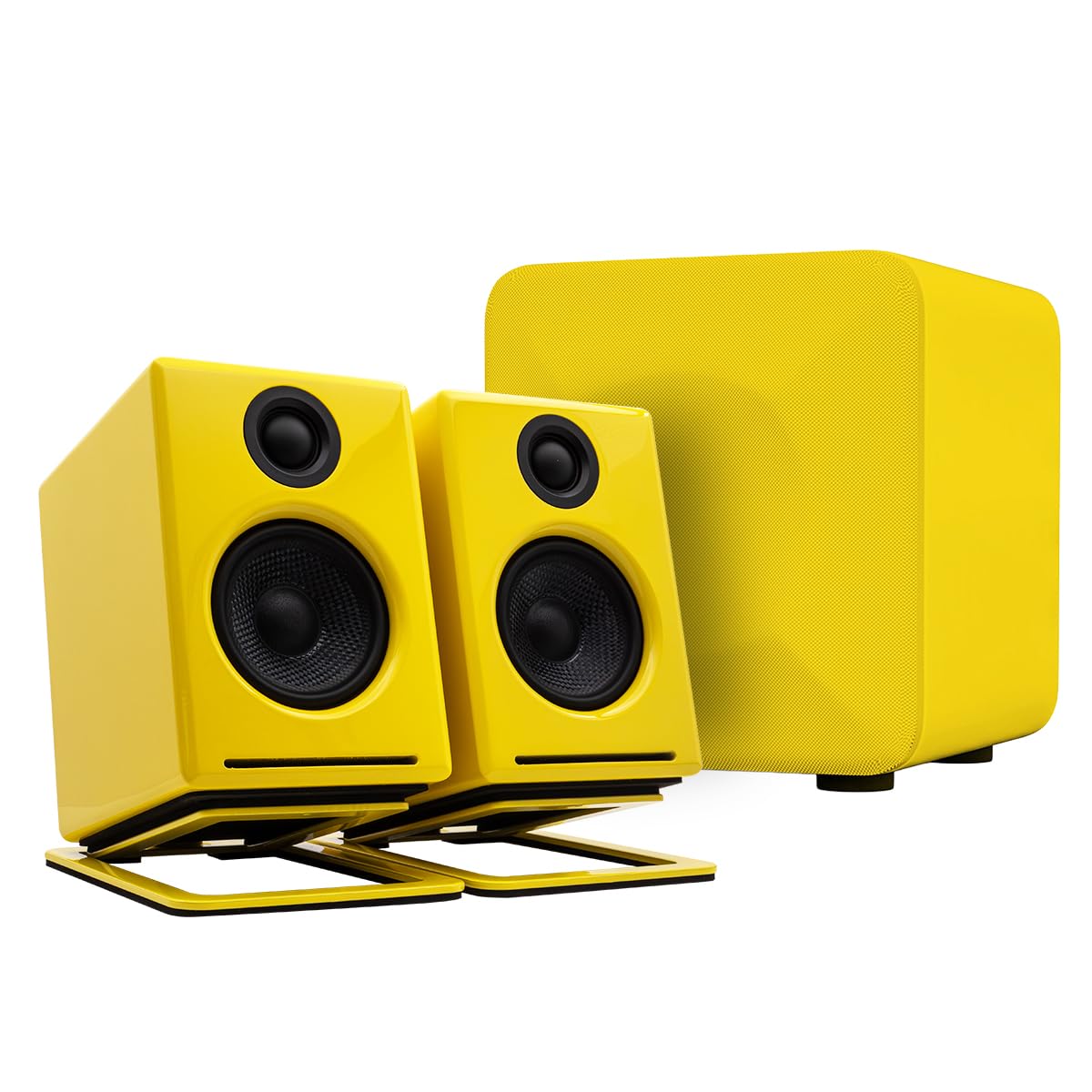
The Audioengine Range at a Glance
Every active model in the range puts the amplifier inside one cabinet, so you plug in a single power cable and run a short lead to the second speaker. Larger models add bigger woofers, more power and more inputs. Smaller ones focus on desk use with a compact footprint.
Desktop Models: A2+ and A2 HD
The A2 family is the compact desktop choice. These pairs are built for nearfield listening about three feet away, and they suit a computer desk, a small bedroom or a kitchen counter. Bluetooth versions let you play from a phone as well as from a computer or TV over USB or a 3.5mm cable. Bass is modest, so add a subwoofer later if you want more weight.
Bookshelf Models: A5+, HD5 and HD6
The A5+ is a wired bookshelf pair with a larger woofer and much more output, aimed at living rooms, studios and turntable setups. The HD5 and HD6 add Bluetooth and digital inputs, and the HD6 is the largest powered pair in the line with the fullest bass. Expect them to need real shelf or stand space.
Passive Models: P4
The P4 is a passive bookshelf speaker, so it needs a separate amplifier or receiver. It suits buyers who already own an amp or want to build a stereo system piece by piece. If you want plug in simplicity, choose one of the powered pairs instead.
How to Choose Audioengine Speakers
Room Size and Placement
Match the speaker size to the room. A compact pair fills a study and strains in an open plan living area, where the A5+, HD5 or HD6 earns its place. Put tweeters near ear height on stands or a shelf, and leave some space behind rear ported cabinets so bass does not boom against a wall. On a desk, angled pads that aim the speakers at your ears help clarity.
Sound Character
Audioengine tunes its speakers toward a warm, relaxed balance that suits long listening sessions. That is pleasant for music, films and games, and it is why the best audioengine speakers suit long listening sessions at a desk or in a living room. If you edit audio and want a strictly flat studio monitor, listen carefully, because a pleasant tuning is not the same as a neutral one.
Inputs and Wireless
List every source you own before you buy. Analog RCA or 3.5mm inputs suit turntables with a phono stage and older gear, USB gives a clean path from a computer, and optical works well for televisions. Bluetooth adds phone convenience, and models with aptX HD support give better wireless detail from compatible phones. The A5+ is wired only, so check the listing for each model.
Adding a Subwoofer and Stands
Most powered pairs have a subwoofer output, which lets you add bass later without replacing the speakers. Stands such as the DS1M and DS2M lift small speakers to ear height and decouple them from the desk. Compare the wider field in our guides to the best bt speakers and the best sounding speakers.
Care and Placement Tips
- Dust cabinets and drivers with a dry cloth, and never spray cleaner onto a cone or tweeter.
- Leave ventilation space around the powered cabinet, since heat shortens amplifier life.
- Avoid maximum volume for long sessions, because sustained strain can damage drivers.
- Keep the speakers indoors and away from bathroom steam, kitchen splashes and damp.
- Check cable connections now and then and replace frayed leads before they crackle.
Audioengine Speakers: Your Questions Answered
Do Audioengine speakers need a separate amplifier?
The A2, A5+, HD5 and HD6 are powered, so the amplifier is built in and you can connect a computer, phone or TV directly. The P4 is passive and does need an external amplifier or receiver.
Which model suits a desk?
The A2 pair is sized for nearfield desk use. If your desk is deep and you want more bass, the HD5 can work, but check that you have enough space behind the monitor.
Can I use them with a turntable?
Yes, if the turntable has a built in phono stage or you add a phono preamp. Then connect it to an analog input. The A5+ is a popular choice for this setup.
Do I need a subwoofer?
Not for most rooms. The larger pairs reach low enough for music and films. Add a subwoofer if you want more impact, especially with the smaller desktop pair.
Are they good for outdoor use?
No. They are indoor speakers with no weather sealing, so keep them off patios and away from moisture. For outdoor sound, choose a sealed portable or outdoor speaker.
Wrapping Up
Choose by room first, inputs second and budget last. A compact A2 pair suits a desk, while the HD5, HD6 or A5+ suit a living room. Compare the options in the product table against your source list, and the best audioengine speakers for your home will be the pair that fits without adapters, strain or wasted features.


