
Best Attic Fan Thermostat 2026: Controls for Power Attic Ventilators
Disclosure: We may earn a commission when you buy through links on this page, at no extra cost to you. As an Amazon Associate I earn from qualifying purchases. Learn more
Best attic fan thermostat guide: adjustable, dual thermostat humidistat and plug in controllers for power attic ventilators, with ratings and setup tips.
An attic fan thermostat does one job: it switches your attic fan on when the attic gets hot and off when it cools, so heat does not build up above your living space. Choosing the best attic fan thermostat comes down to a temperature range that suits your climate, a rating that matches your fan and controls you can set once and trust.
The product table lists hardwired thermostats, a dual thermostat and humidistat control, and plug in controllers. The sections below explain each type.


Best Attic Fan Thermostat Basics
A thermostat is a temperature switch between the power supply and the fan motor. When attic air reaches the set point, often around 90 to 110 degrees Fahrenheit, the switch closes and the fan runs. When the attic cools, it opens and the fan stops. Basic units use a dial, digital units add a display and a remote sensor, and combination units add a humidistat that also runs the fan when humidity rises.
Key Features Explained in Plain English
- Temperature range: adjustable from about 60 to 160 degrees Fahrenheit for most hardwired models
- Amp rating: must meet or exceed the fan's motor current
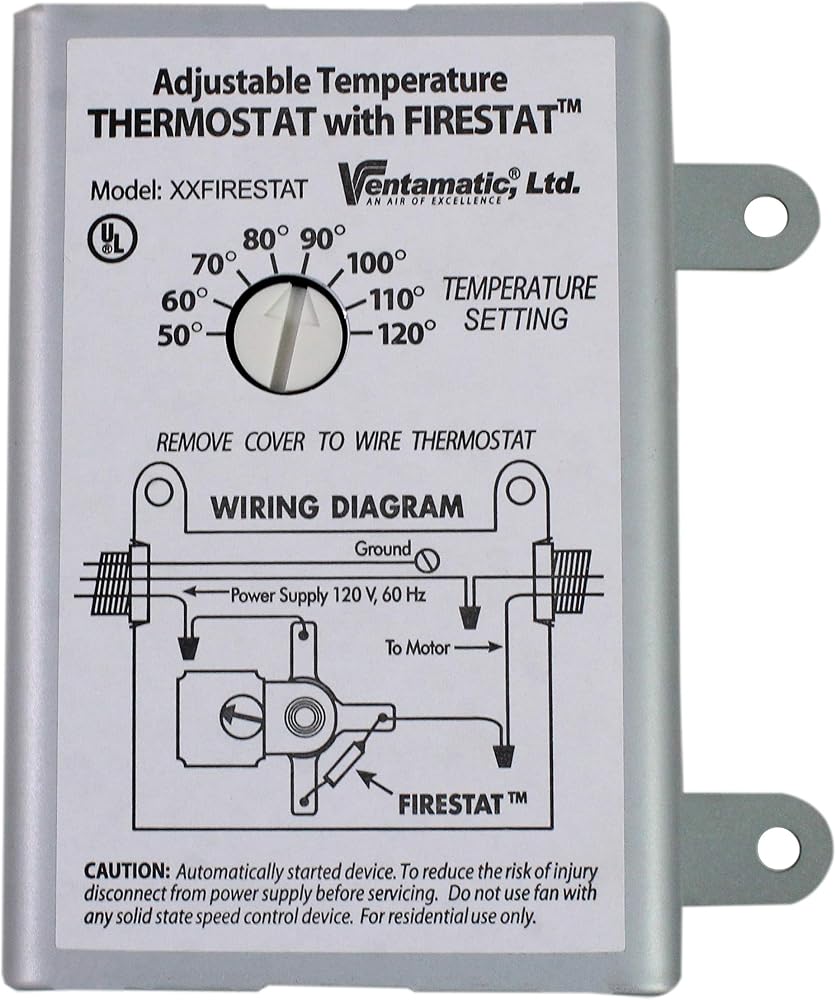
- Firestat: a safety cutoff that shuts the fan down at very high temperatures
- Humidistat: an optional control for damp attics
- Plug in or hardwired: plug in controllers are simpler, while hardwired units replace the existing switch
Types of Attic Fan Thermostats
Hardwired adjustable thermostats
The Ventamatic XXFIRESTAT is a common choice for power attic ventilators and includes a firestat.
Dual thermostat humidistat controls
The Ventamatic XXDUOSTAT runs the fan on temperature or humidity and suits climates where moisture builds up.
Plug in controllers
BN-LINK, DIGITEN and AC Infinity controllers plug into an outlet and switch the fan automatically. They suit fans with a plug, not hardwired fans.
Rookie Mistakes to Avoid
- Choosing a thermostat with an amp rating below the fan's current.
- Setting the temperature too low, which makes the fan run constantly.
- Ignoring intake vents, which the fan needs to pull air.
- Wiring without turning off the power.
Getting Started: Setup and First Use
Turn off power at the breaker before any wiring work, and follow the maker's wiring diagram. If you are not comfortable with electrical work, hire a licensed electrician. Mount the thermostat or sensor in the attic away from direct sun, set a starting point near 100 degrees Fahrenheit and adjust after a few days.
Typical Specs of Attic Fan Controls
| Type | Typical range | Typical rating | Notes |
|---|---|---|---|
| Ventamatic XXFIRESTAT | About 60 to 160 degrees Fahrenheit | 10 amps | Includes a firestat cutoff |
| Ventamatic XXDUOSTAT | Thermostat plus 35 to 95 percent humidity | Up to 10 amps | Runs on temperature or humidity |
| BN-LINK digital controller | About 40 to 108 degrees Fahrenheit | 8.3 amps, 1000 watts | Plug in outlet controller |
| AC Infinity Controller 2 | Adjustable temperature | Check the label for the rating | Plug in with speed control |
Always read the rating label for your model. Compare it with the amp or wattage of your fan motor, and leave some margin.
Why the amp rating matters
A fan motor draws extra current when it starts. If the thermostat is under rated, contacts can wear out or fail. Choose a control rated at least 20 percent above your fan's running amps.
What Temperature to Set
Many installers start between 95 and 110 degrees Fahrenheit. A lower setting runs the fan longer and uses more electricity, while a higher setting lets the attic stay hot. In humid climates, humidistat settings of 50 to 60 percent can help prevent damp attic problems. Adjust after a week of observation.
Attic Ventilation Basics
A power attic fan needs enough intake vents, such as soffit vents, to bring in outside air. Too little intake can pull conditioned air from your home through ceiling gaps, which wastes energy. A common guide is one square foot of vent opening for each 300 cubic feet per minute of fan capacity. Check manufacturer guidance for your fan.
Installation Safety
- Turn off power at the breaker and confirm with a voltage tester.
- Use the wire gauge and connectors that the maker specifies.
- Mount the thermostat or sensor away from direct sun and heat sources.
- Follow local electrical codes, and use a licensed electrician if unsure.
Troubleshooting
- Fan runs all the time: raise the set temperature and check for sensor placement near a hot spot.
- Fan never starts: check power, wiring and the temperature setting.
- Fan cycles on and off often: widen the differential, if available, or move the sensor.
- Humming without turning: check the motor and capacitor.
Choosing Between Types
Hardwired thermostats suit fans already wired into the attic circuit. A dual thermostat and humidistat suits damp climates. Plug in controllers are easiest for fans with plugs and for people who rent. If you want extra features such as speed control and a display, an AC Infinity style controller is useful, though you should check that it suits your fan type.
Related Guides
See best attic fans with humidistat and thermostat, best temperature to set attic fan thermostat and best intelligent thermostat.
FAQs
What temperature should I set?
Many people start around 100 degrees Fahrenheit and adjust for their climate and attic.
Can I replace a fixed thermostat?
Yes, if the new one matches the fan's voltage and amp rating. Follow the instructions.
Do I need a humidistat?
In humid climates it helps prevent moisture buildup in winter.
Can I use a plug in controller?
Yes, for plug in fans, as long as the rating matches the fan.
Do I need a firestat?
A firestat is a safety cutoff that turns the fan off at very high attic temperatures. Check the maker's description of how it works, and follow the installation instructions.
Can a plug in thermostat control a hardwired fan?
No. Hardwired fans need a hardwired thermostat. Plug in controllers are for fans with plugs.
Final Thoughts
Match the control to your fan, set it sensibly and keep your vents clear. Compare the product table, and the best attic fan thermostat will help your attic stay cooler with little effort.


