
Best Atmos Add On Speakers 2026: Upgrade Your Home Theater
Disclosure: We may earn a commission when you buy through links on this page, at no extra cost to you. As an Amazon Associate I earn from qualifying purchases. Learn more

Best atmos add on speakers explained: upward firing Dolby Atmos modules that upgrade a 5.1 or 7.1 system with height sound without cutting the ceiling.
You do not need to rebuild a home theater to get overhead sound. The best atmos add on speakers are compact modules that sit on top of your existing speakers or on a shelf, fire sound upward and let the ceiling bounce it down to you, adding the height layer that Dolby Atmos uses.
The product table lists add on and height modules from Sony, ELAC, Polk, Klipsch and SVS. This guide explains how they work and what to check before you buy.


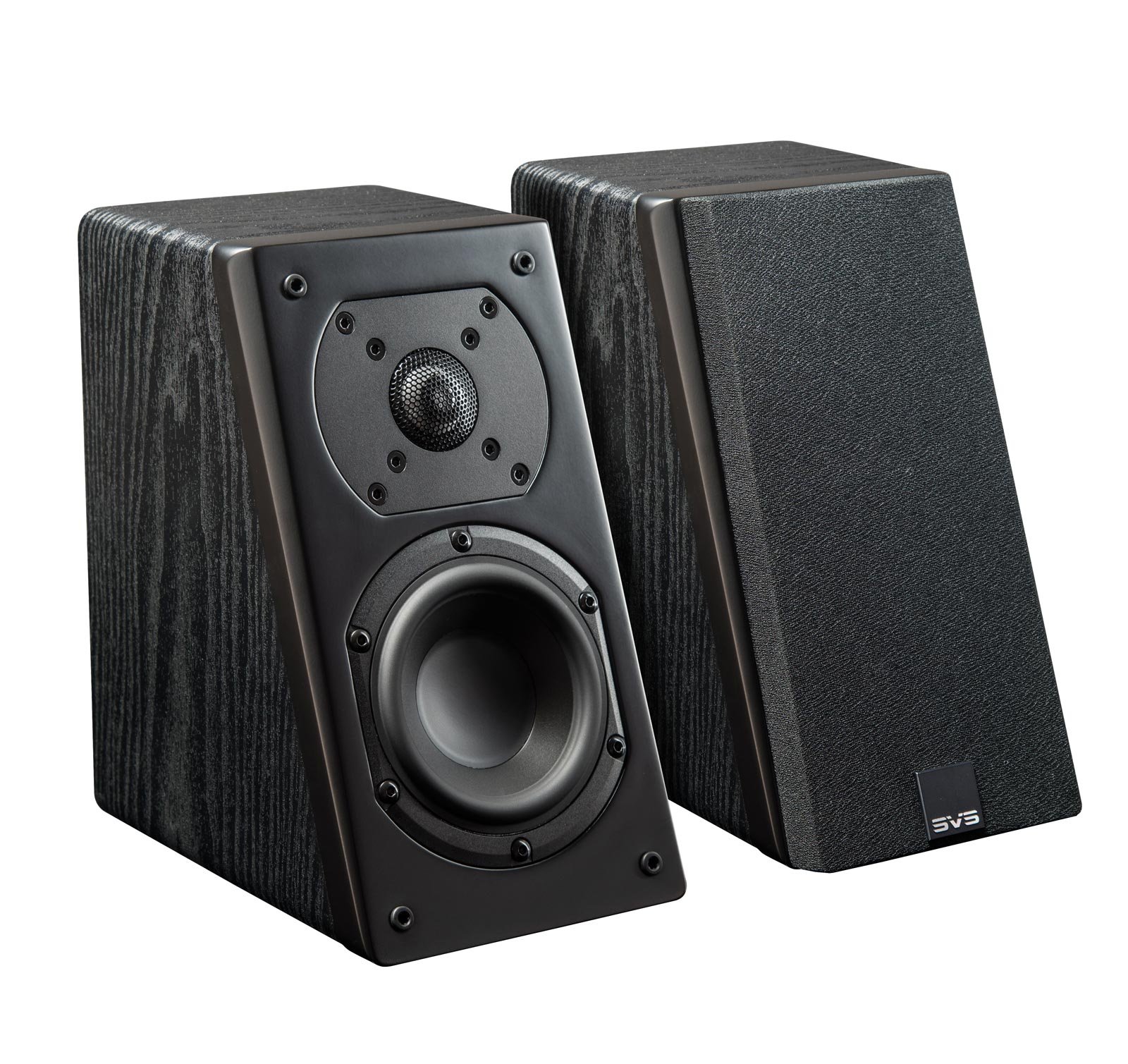
Who Should Buy the Best Atmos Add On Speakers
If you already own a 5.1 or 7.1 speaker set and an Atmos capable receiver, add on modules are the simplest upgrade. They suit rooms where cutting ceiling holes is not practical, such as rentals. They work best with flat ceilings roughly eight to ten feet high.
How They Work
An add on module has a driver angled upward. It sends height effects to the ceiling, which reflects them toward the listening area. Some modules are separate boxes, while others are speakers with a built in upward firing driver. Your receiver needs Dolby Atmos decoding and extra amplifier channels (for example 5.1.2 or 7.1.2).
What Your Money Gets You at Each Price Tier
Lower priced modules, like the Polk Monitor XT90 or Sony SSCSE pair, add height effects at modest cost. Mid priced options such as the ELAC Debut A4.2 and Klipsch R-41SA offer more refined sound and matching finishes. Higher priced modules, like the SVS Prime Elevation, provide stronger output and wider sweet spots.
Features Worth Paying For (and Ones to Skip)
- Worth it: tonal match with your main speakers, a precise upward angle and a stable base.
- Worth it: enough power handling for your receiver.
- Skip: extra cosmetic grilles if you will tuck them behind furniture.
- Skip: very high wattage ratings that your receiver cannot drive.
Long Term Costs to Factor In
Plan for speaker cable, possibly an upgraded receiver and an extra amplifier if your current one lacks channels. Calibrate the system with your receiver's setup tool and set the correct ceiling height. Moving the room layout later may require another calibration.
Typical Specs of Add On Modules
Add on modules are compact, usually 4 to 8 inches wide, weigh 2 to 8 pounds and use a 3 to 4 inch driver angled upward by about 10 to 20 degrees. Sensitivity runs from 86 to 90 dB and nominal impedance is 4 to 8 ohms. Power handling is typically 50 to 150 watts. Prices range from about 119 dollars a pair for the Polk Monitor XT90 up to 450 dollars for the SVS Prime Elevation.
Matching to your main speakers
Modules from the same brand blend best. Klipsch horn loaded modules sound lively next to Klipsch speakers, while Polk modules pair with Polk towers and bookshelf speakers. If your fronts are from another brand, choose a neutral sounding module with a similar frequency range.
Ceiling and room requirements
Ceiling height of eight to ten feet works best. Textured or acoustic ceilings absorb sound and reduce the effect, and ceilings above twelve feet or highly angled ceilings scatter it. Place modules on or near your front and surround speakers, about two to four feet from the ceiling, and aim at the point halfway between speaker and listener.
Receiver and Cabling Requirements
You need an Atmos receiver with at least seven built in amplifier channels for a 5.1.2 layout, nine for 7.1.2, and more for 5.1.4. Use speaker wire of 16 gauge for runs under fifty feet and 14 gauge for longer runs. Label cables and keep them away from power cords to avoid hum. Many receivers include a calibration microphone that sets distances and levels.
Setup Steps
- Confirm that your receiver lists a Dolby Atmos 5.1.2 or 7.1.2 mode and has the height channel outputs.
- Place each module on top of a front or surround speaker with the upward driver facing the ceiling.
- Run speaker wire to the height outputs, observing polarity.
- Choose the add on speaker mode in the receiver menu, so it knows these are upward firing.
- Run the auto calibration, then play Atmos content and adjust the height level.
Troubleshooting Weak Height Effects
- No sound from heights: check that the receiver is in an Atmos mode and that the source is sending Atmos.
- Effects seem to come from the speaker: check ceiling height, angle and the speaker mode setting.
- Harsh sound: lower the height level by 2 to 3 decibels and check the crossover.
- Fuzzy imaging: move modules away from walls and furniture.
How Atmos Differs From Standard Surround
Traditional surround sound assigns audio to fixed channels. Dolby Atmos adds sound objects that can sit anywhere in the room, including overhead. Your receiver decides which speakers play each object, so adding height channels lets it place sounds above you. Add on modules give the receiver a place to put those sounds without changing the rest of your speakers.
Budget Planning
| Item | Typical cost | Notes |
|---|---|---|
| Add on modules | 120 to 450 dollars a pair | Two for 5.1.2, four for 5.1.4 |
| Atmos receiver | 350 to 900 dollars | Needs enough amplifier channels |
| Speaker wire and mounts | 20 to 60 dollars | 16 gauge wire is common |
Related Guides
Read more in best dolby atmos add on speakers, best dolby atmos speakers, best ceiling speakers atmos and best atmos speakers.
Frequently Asked Questions
Do add on modules work with any receiver?
You need a Dolby Atmos capable receiver or processor, plus enough amplifier channels for the height layer.
Does my ceiling matter?
Yes. Flat, hard ceilings reflect best. Very high, angled or heavily textured ceilings reduce the effect.
Can I put them on my existing speakers?
Many are designed to sit on top of bookshelf or tower speakers, with a cable run back to the receiver.
Are ceiling speakers better?
In ceiling speakers give direct overhead sound but need installation. Add on modules are simpler and removable.
Can I use add on modules with a soundbar?
Only if the soundbar system has height channel outputs. Most soundbars use built in height drivers instead.
Wrapping Up
Match the modules to your receiver, ceiling and existing speakers. Compare the product table, and the best atmos add on speakers will bring overhead effects to your movies with little disruption.


