
Best ASRock Motherboards: Socket, Size and Compatibility Guide
Disclosure: We may earn a commission when you buy through links on this page, at no extra cost to you. As an Amazon Associate I earn from qualifying purchases. Learn more

Match socket, chipset, size, memory, and ports to your build. See how to choose the best asrock motherboards with simple compatibility checks.
A motherboard decides what CPU, memory, storage, and expansion cards your PC can use, so compatibility checks matter more than looks or extra features. This guide to the best asrock motherboards explains how to match socket, chipset, size, and ports to your build, so you can compare the product table with a clear plan.
ASRock makes boards for budget builds, mainstream gaming PCs, small-form-factor systems, and workstations. The right one depends on the CPU you choose and the case you own.


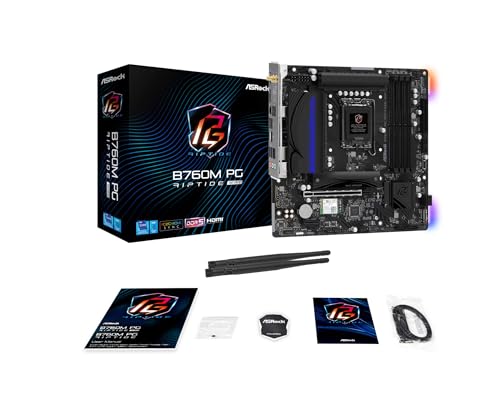


Who These Boards Suit
ASRock boards suit PC builders who want solid features at a fair price, from first-time builders to enthusiasts upgrading an older system. They also suit people building a compact PC or a home office machine, where a simple, reliable board matters more than flashy lighting.
Key Features to Compare
- Socket and chipset: the socket must match your CPU, and the chipset decides memory speed, expansion, and extra features. Confirm both before ordering.
- Form factor: ATX, micro-ATX, and mini-ITX boards fit different cases, so match the board size to your case and cooling space.
- Memory support: check the memory type, slot count, and maximum capacity, which decide how much RAM you can install now and later.
- Storage connections: count the M.2 and SATA connections and check their speeds. Layout affects how many drives you can add.
- Expansion and ports: PCIe slots, USB ports, and network options decide which graphics cards, capture cards, and peripherals you can connect.
Wi-Fi and Bluetooth can be built in or missing, so check that if you do not plan to use a wired connection. Other useful extras include a USB-C port, a BIOS flashback button, and an easy-to-reach debug display for troubleshooting.
Choosing the Best ASRock Motherboards by Size
ATX
Full-size ATX boards offer the most slots and ports, so they suit large cases, multiple drives, and expansion cards. They also tend to have the strongest power delivery, which matters for high-end CPUs.
Micro-ATX
Micro-ATX boards trim the slot count to save space and money. They fit most mid-tower cases and are a good choice for gaming and office builds that need only one graphics card.
Mini-ITX
Mini-ITX boards are tiny and suit compact cases. They usually offer two memory slots and one expansion slot, and they leave little room for cooling, so plan the case and cooler carefully.
Compatibility Checks
List your CPU, case, power supply, and graphics card first, then check the board against that list. Confirm the BIOS supports your CPU, especially for newer chips on older boards, and check cooler clearance around the memory slots and top PCIe slot. Measure case clearance for large graphics cards and tall coolers, and make sure the power supply has the connectors the board needs.
A short compatibility check before ordering saves a rebuild later.
Care and Lasting Use
Keep the box, manual, and spare screws until the build is finished. Update the BIOS only when you have a clear reason and a stable power supply, and follow the maker's steps closely. Keep chipset and network drivers current, and clean dust from fans and filters so temperatures stay reasonable. Label cables during the build, which makes later drive or card changes easier.
Common Mistakes to Avoid
- Buying a board whose socket does not match the CPU.
- Choosing a size that does not fit the case.
- Counting memory slots but ignoring supported speed and capacity.
- Paying for features, such as extra M.2 slots, that you will never use.
- Skipping the return policy until a problem appears.
Related Guides
For more options, read the best computer motherboards guide. By size or platform, see the best matx motherboards, best itx motherboards, and best motherboards am4 guides, or the best looking motherboards guide if style matters.
Frequently Asked Questions
What should I check first when choosing a motherboard?
Start with the CPU. The socket must match, and the chipset must support the features you need. Then check the form factor against your case.
Do I need a BIOS update for a new CPU?
Sometimes. Newer CPUs on older boards may need a BIOS update before they will start. Check the maker's CPU support list for the board and BIOS version.
How much memory can a board support?
It depends on the board. Check the supported memory type, speed, slot count, and maximum capacity in the specifications before you plan an upgrade.
Are mini-ITX boards harder to build with?
They take more planning because of tight spaces and fewer slots, but they are fine for builders who check cooler and cable clearance first.
Is a more expensive board better for gaming?
Not always. For most gaming PCs, a mid-priced board with solid power delivery and enough ports is enough. Spend more only if you need extra features or a high-end CPU.
Final Thoughts
The best asrock motherboards are the ones that match your CPU, fit your case, and offer the ports and storage you will use. Compare the options in the product table, check compatibility carefully, and keep the return policy handy until the build is stable.


