
Best Array Speakers 2026: Coverage First, Volume Second
Disclosure: We may earn a commission when you buy through links on this page, at no extra cost to you. As an Amazon Associate I earn from qualifying purchases. Learn more

Understand array speakers for rooms, venues, and DJ use: line arrays, column arrays, coverage, power, and placement explained in plain terms.
Choosing the best array speakers starts with coverage, not loudness. Array speakers use several small drivers in a line or column to spread sound evenly across a room, so listeners at the back hear clearly without listeners at the front being blasted. This guide explains line arrays, column arrays, and portable columns, so you can match a system to your room and audience.
The comparison table below lists array types, typical coverage, and power needs side by side. Use it to plan for your real space, whether that means a living room, a small venue, a place of worship, or a DJ setup. A system that covers evenly at moderate volume always beats a louder system that leaves dead spots and harsh hot spots.







How Array Speakers Work
A single speaker spreads sound widely, which causes reflections and uneven volume as distance grows. An array stacks drivers vertically, which narrows vertical spread and keeps sound focused at listener height over longer distances. The result is clearer speech and music at the back of a room without excessive volume near the speakers.
Driver size and count shape the sound. Smaller drivers handle mid and high frequencies cleanly in a column, while larger drivers or a separate subwoofer supply bass. Arrays rarely produce deep bass alone, so most systems pair columns with a subwoofer for full range music. Judge an array as a system, including its sub, rather than as a lone column.
Line Arrays for Larger Spaces
Line arrays suit halls, theatres, and outdoor events where sound must reach far with even coverage. They hang or stack in curved arrangements that aim sound across the audience, and their modular design scales from small halls to large venues. Setup needs rigging knowledge and careful aiming, so larger systems suit professional installers and event crews.
For most buyers, a full line array is more system than needed. If your audience stays under a few hundred people in one room, a column array usually covers the space with far simpler setup. Reserve true line arrays for venues where distance, crowd size, and speech clarity demand professional design.
Column Arrays for Rooms and Small Venues
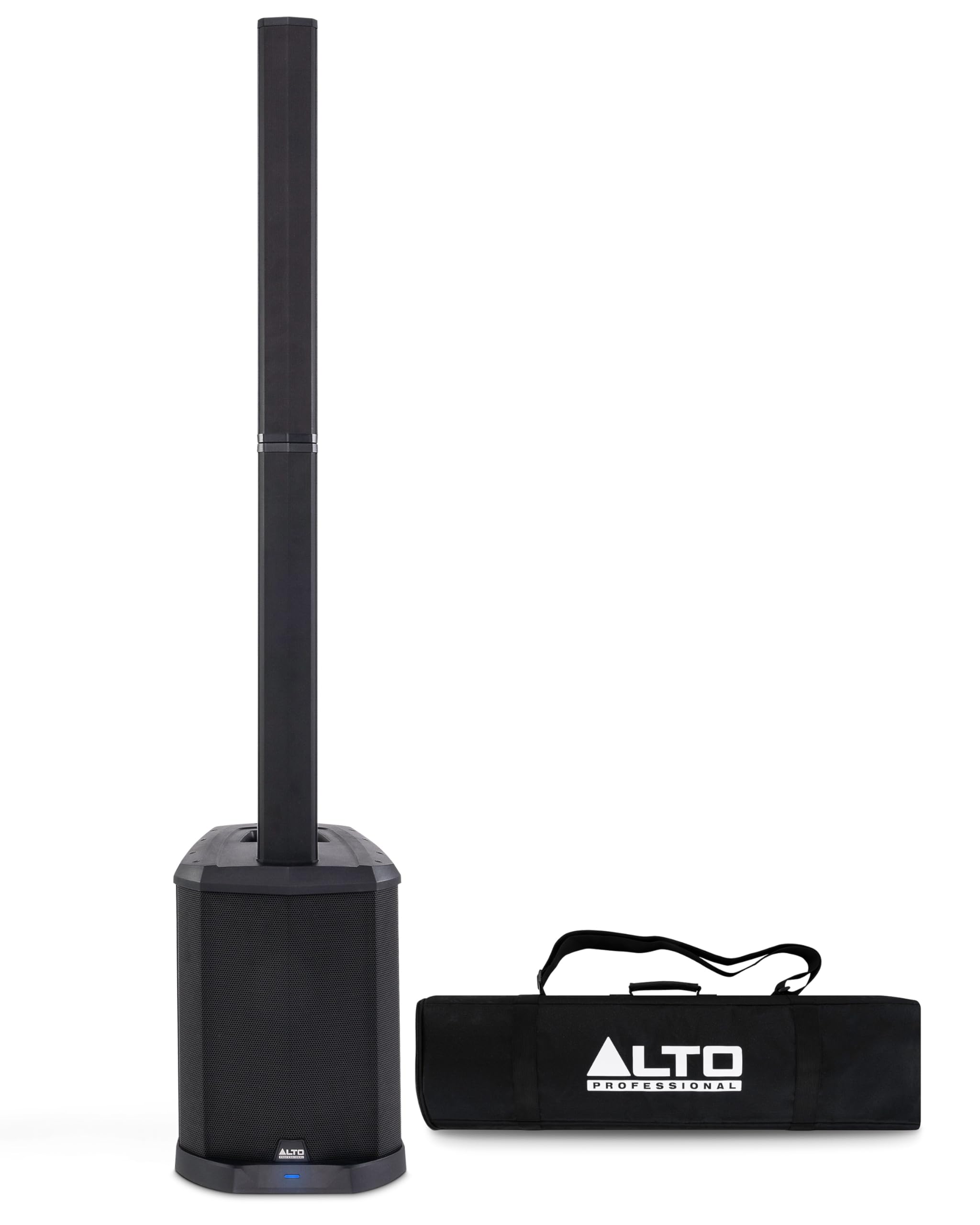
Column arrays suit rooms, cafes, houses of worship, and small venues, since a slim column on a stand or subwoofer covers a wide area with minimal visual intrusion. Speech stays intelligible across the room, and music sounds balanced without the boom and echo of a single large box. Setup is simple: place the column, connect the mixer or source, and adjust aim.
Coverage width matters most. A column with wide horizontal spread covers a broad room from one position, while a narrower column suits long rooms where two columns cover the length. Test placement by walking the room during sound check, listening for even volume and clarity, and move the column before adding volume to fix a dead spot.
Portable Columns for DJs and Events
Portable column systems pair a column with a powered subwoofer and a small mixer, giving DJs and event hosts a complete system in a few bags. They suit weddings, parties, and mobile events where setup speed and clean looks matter. Battery powered options add flexibility for outdoor spots without mains power, though battery life limits volume and runtime.
Check inputs before buying, since DJs need multiple channels for decks, microphones, and phones. Bluetooth suits casual playback but adds latency that matters for live mixing, so wired connections remain the reliable choice for performance. Weight and transport matter too, since a system you dread carrying will stay home more often.
Power, Bass, and Room Acoustics
Power ratings confuse buyers, since makers quote peak watts that flatter small systems. Focus instead on coverage, clarity, and how the system sounds at your normal volume in your actual room. A modest system that sounds clean at event volume beats a high wattage system that distorts when pushed, and distortion damages both sound quality and hearing.
Room acoustics shape results as much as hardware. Hard floors and bare walls reflect sound and blur speech, while curtains, carpets, and soft furniture tame reflections. Bass builds up in corners, so subwoofer placement deserves testing rather than defaulting to a corner. Walk the room, listen, and adjust placement before spending more on power.
Buying and Setting Up With Confidence
Match the system to your largest regular audience, not to rare peak events, since oversized systems cost more and complicate setup. Check warranty, spare parts, and local service, especially for powered systems where amplifier failure stops the whole unit. Keep cables, stands, and covers together, since missing accessories delay events more often than hardware faults.
During setup, aim columns at listener height, keep them clear of walls that cause reflections, and set volume by walking the room. Protect hearing by keeping levels comfortable for conversation at the back, and warn nearby residents for outdoor events. A well placed array at moderate volume serves an audience better than a loud system fighting a bad room.
Mixers, Sources, and Simple Signal Chains
Sound quality depends on the whole signal chain, not only the speakers. A simple mixer lets you balance microphones, music players, and instruments before they reach the speakers, and it prevents the distortion that comes from overloading a single input. For speech events, a small mixer with microphone EQ improves clarity far more than extra speaker power.
Source quality matters too. Compressed phone audio over Bluetooth sounds thinner than wired audio from a laptop or dedicated player, especially through revealing column speakers. Use wired connections for important events, keep volume levels moderate at each stage of the chain, and test the full setup in the room before guests arrive. A clean signal through modest speakers beats a noisy signal through expensive ones.
For related buying guides, see best line array speakers for larger venues, best column array speakers for rooms and small venues, best line array speakers for dj for DJ use, best bt speakers for casual wireless listening and best sounding speakers for general sound quality.
Frequently Asked Questions
Are array speakers better than normal speakers?
Arrays suit spaces where even coverage matters, such as long rooms, halls, and venues with audiences spread over distance. Normal point source speakers suit small rooms and near field listening, where wide spread and simplicity matter more. Judge by your room shape and audience layout, not by a general claim of superiority. A column array in a small bedroom wastes its coverage advantage.
Do array speakers need a subwoofer?
Most column arrays benefit from a subwoofer, since small column drivers handle mids and highs well but lack deep bass. Speech only systems can work without a sub, but music with bass needs one for full sound. Many portable systems include a matched sub, which simplifies pairing. If you buy separates, match the sub to the column maker guidance for crossover and power.
Can one column speaker cover a whole room?
One column can cover a small to medium room when placed well and aimed at listener height. Long rooms, L shaped rooms, and large audiences usually need two columns for even coverage. Walk the room during setup and listen for quiet spots before adding volume, since placement fixes many problems that volume cannot. Two modest columns often beat one loud column.
Are portable column systems good for DJs?
Portable column systems suit many DJ events, especially weddings and parties where clean looks and quick setup matter. They deliver even coverage and clear vocals, and the built in mixer handles decks and microphones. For very large or bass heavy events, larger traditional systems may suit better. Test the system at event volume with your actual music before committing to it.
How do I place array speakers in a room?
Place columns at listener height, clear of walls that reflect sound, and aimed across the audience rather than along a wall. Avoid corners for subwoofers unless testing shows they help, since corners boost bass unevenly. Walk the room during sound check, listen for dead spots and harsh spots, and adjust position before raising volume. Good placement improves clarity more than extra power.
Final Thoughts
The best array speaker system covers your room evenly at comfortable volume, with clear speech and balanced music from front to back. Column arrays suit most rooms and small venues, line arrays suit larger professional spaces, and portable columns suit mobile events where setup speed matters.
Use the product table above to compare types and coverage, then test placement in your actual room before judging volume. Even coverage, sensible power, and a matched subwoofer will serve your audience better than raw loudness alone.
Choose the best array speakers for your room by coverage first, then power, then price.


