
Best Ariat Boots for Riding in 2026: What Actually Matters Before You Buy
Disclosure: We may earn a commission when you buy through links on this page, at no extra cost to you. As an Amazon Associate I earn from qualifying purchases. Learn more

Compare the best ariat boots for riding with a checklist on heel height, calf fit, closures, leather and support, plus sizing steps and care advice.
A riding boot has two jobs at once. It must hold your foot steady in the stirrup while you ride, and it must stay comfortable through grooming, tacking up and walking the barn aisle. The best ariat boots for riding balance both jobs, and the comparison table below shows how the main styles differ.
Ariat builds boots for English and western riders, so the range covers tall boots, paddock boots and western styles with a riding heel. Your discipline, your calf shape and how much ground work you do matter more than looks.


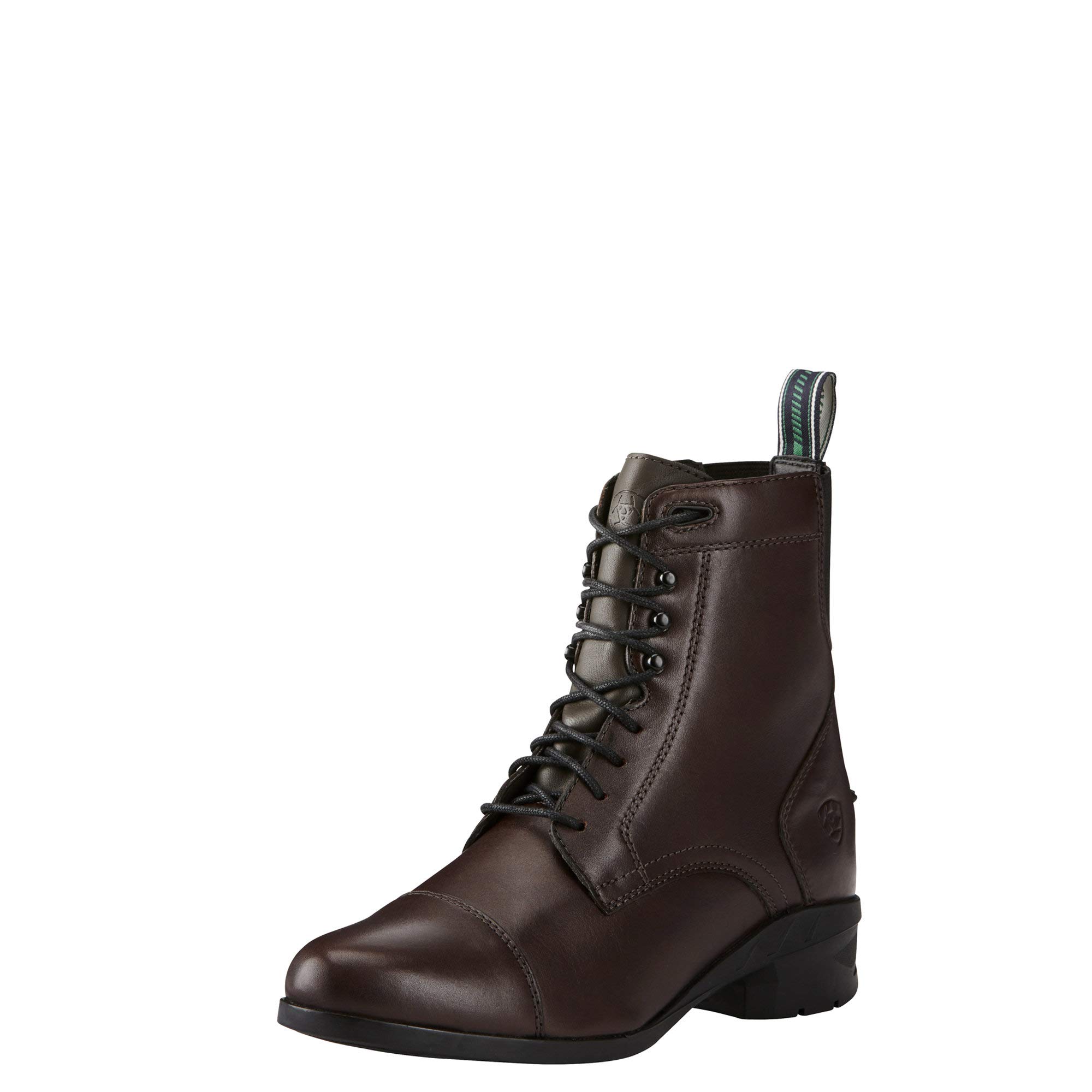


Who Should Buy Which Ariat Riding Boots?
Start with the riding you actually do each week. A show rider, a lesson rider and a trail rider load a boot in different ways, and each group below points to a different part of the Ariat range.
English Riders Who School and Show in Tall Boots
You ride with a long stirrup and your lower leg stays close to the horse, so a tall boot gives you a clean line and steady contact along the calf. Choose a close calf fit and a low heel of about 1 inch. Keep an older pair for mucking stalls so your show leather stays polished.
Lesson and Trail Riders Who Prefer Paddock Boots and Half Chaps
You ride a few times a week, often on different horses. A paddock boot with half chaps gives you ankle freedom, a shorter break in and a lower total cost than a tall boot. It also suits growing riders, since you can replace the chap alone when calf size changes. Pick a defined heel and a smooth toe that slides cleanly in the stirrup.
Western Riders Who Split Time Between Saddle and Ground
You may ride out, then walk, open gates and load a trailer in the same boots. A western riding boot gives you a taller angled heel that holds the stirrup, a broader toe and more ground grip than an English boot. Look for a shaft that clears your calf while you walk and a footbed built for hours on concrete and dirt.
Key Features to Compare
When you compare the best ariat boots for riding side by side, five factors separate a boot that merely fits from one that rides well all season. For the wider English market, see our guide to the best horse riding boots for tall and paddock styles across brands.
Heel Height and Stirrup Safety
The heel is a safety part, not a style detail. A defined heel of about 1 to 1.5 inches stops your foot from sliding forward through the stirrup, and smooth sole edges let the boot slip free if you fall. English boots use a low stacked heel, while western riding boots use a slightly taller angled heel. Fashion boots with a flat sole or chunky block heel fail this job, so check heel shape first.
Shaft Height and Calf Fit on Tall Boots
A tall boot is sized by calf width and shaft height as well as by foot size. The top of the shaft should sit just below the back of your knee, since a shaft that touches the knee crease rubs every time you post. Calf fit should feel even and snug, with no gap at the top and no pinch behind the ankle. Ariat tall boots come in slim, regular and full calf widths, so your tape measurement below decides the pair.
Closures: Back Zip, Front Laces or Pull On
A full back zip makes tall boots fast to put on and gives a smooth leg, but its teeth need to stay clean to last. Front laces over the ankle let you tune tightness as the leather softens, which helps riders between calf sizes. Pull on boots have no hardware to fail, yet they need a snug instep and more effort to remove. An elastic panel beside the zip adds give for calves that change with fitness and season.
Leather Quality and the Break In Period
Full grain leather molds to your leg over the first rides and usually outlasts corrected or split leather. A lined shaft holds its shape longer, while a soft panel boot feels broken in sooner but may wrinkle and drop faster. Stiffness at the ankle on day one is normal, since that fold is where the boot learns your position. Synthetic shafts cost less and shrug off water, yet rarely mold as closely.
Footbed Support and Outsole Grip
You stand and walk far more than you sit in the saddle, so the footbed matters on every barn day. A cushioned footbed with a stabilizing shank supports your arch while you lead horses and stand ringside. The outsole needs enough tread for wet concrete and arena footing, but deep lugs can catch in a stirrup, so riding soles keep tread shallow under the ball of the foot. A grippy inner calf panel adds quiet leg contact without bulk.
How to Measure Your Foot and Calf for Ariat Riding Boots
Measure in the afternoon, when your feet are at their largest, and wear the breeches and riding socks you plan to ride in. The same steps apply across brands, and our guide to the best riding boots explains general height charts for comparing makers.
- Stand on paper, trace each foot and measure from heel to longest toe.
- Sit with your knee bent and your foot flat, and wrap a soft tape around the widest part of each calf.
- Measure from the floor up the back of your leg to the crease behind your knee for shaft height.
- Write down the larger calf number if your legs differ, since the boot must fit that leg first.
- Match all three numbers to the size chart for the exact style, because calf widths differ between tall boot families.
Between sizes, favor the calf and height numbers. An insert can take up a little room in the foot, but nothing fixes a shaft that digs into your knee or gaps at the top.
Common Mistakes to Avoid
Most returns and sore first rides trace back to a short list of errors.
- Buying tall boots by shoe size alone leaves the calf too tight to zip or too loose to hold your leg still.
- Choosing a fashion boot with a flat sole or chunky tread raises the chance of a foot catching in the stirrup during a fall.
- Wearing brand new tall boots for a long first ride almost guarantees blisters and sore ankles.
- Letting a shaft that touches the back of your knee slide by will rub the skin raw within a few rides.
- Storing leather boots in a hot car trunk dries the leather and warps the shape of the shaft.
Care and Maintenance for Leather Riding Boots
Wipe dust and arena grit off the leather after each ride with a soft damp cloth, since dry grit works into the creases and wears the surface. Clean with a leather soap when the boots look dull, then add a thin coat of conditioner once the leather feels dry. Brush grit from zipper teeth before it jams, and work the zip slowly rather than forcing it.
Stand tall boots upright with boot shapers or rolled towels inside so the shaft keeps its line, and store paddock boots with the laces loosened. Let wet boots dry at room temperature away from heaters and direct sun, stuffed with newspaper for the first hours. Rotate two pairs if you ride daily, because a rest day lets the footbed recover.
Frequently Asked Questions
How should new Ariat tall riding boots fit at the calf?
New Ariat tall riding boots should feel snug at the calf, almost tight, without cutting off circulation. Expect the shaft to drop about half an inch to three quarters of an inch as creases form at the ankle, so a new boot can sit slightly higher than its final height. If you cannot close the zip over your usual breeches, the calf size is wrong and no break in will fix that.
Can Ariat western boots be worn with English stirrup irons?
Yes, Ariat western boots can be worn with English stirrup irons when the heel is defined and the toe fits the iron with room to spare. Leave roughly half an inch of clearance across the widest part of the boot so it can release in a fall. Avoid wide fashion toes that wedge against the iron sides, and size the iron to the boot, not only to your shoe size.
How long does it take to break in leather Ariat riding boots?
Most leather Ariat riding boots feel settled after about 5 to 10 short rides. Start with rides of 20 to 30 minutes and walk the barn in them between sessions, since ankle flexing does most of the softening. Tight spots that cause numbness are a fit problem, not a stage to push through.
Should I choose a zip or pull on closure for Ariat tall boots?
Choose a zip closure if you want fast changes at shows and a closer fit over the ankle, and choose pull on if you want the fewest parts to maintain. A worn zip can usually be replaced by a boot repair shop, which extends the life of good leather. Pull on styles reward boot pulls and a boot jack, which protect the loops and heel from strain.
Can Ariat riding boots handle daily barn chores in wet weather?
Ariat riding boots can handle light chores, but daily mucking and wet work will shorten their life. Manure and urine carry acids that dry and crack leather, so rinse the soles and lower leather with clean water after chores and let the boots dry fully. Water resistant styles shed splashes and wet grass. Many riders keep a rubber barn boot for wet jobs and save the riding pair for the saddle.
Our Verdict
Start with fit: the right heel for your stirrup, a calf that matches your tape measurement and a closure you will use on every ride. Then choose leather and support that suit your discipline. Compare your short list with the product table above, and see our guide to the best ariat boots for the full range. Chosen with those checks, the best ariat boots for riding feel steady in the stirrup and easy through a full barn day.


