
Best Amp for Magnepan Speakers at Every Price: What Your Money Really Gets You in 2026
Disclosure: We may earn a commission when you buy through links on this page, at no extra cost to you. As an Amazon Associate I earn from qualifying purchases. Learn more

A price tier guide to the best amp for magnepan speakers, explaining the current, power, and stability planar panels need at every budget level.
Magnepan panels are famous for open, lifelike sound, and just as famous for exposing a weak amplifier. They are a mostly resistive 4 ohm load with low sensitivity, so they ask for real current rather than flashy watt claims. That is why the best amp for magnepan speakers can cost anywhere from a few hundred dollars to several thousand, and why knowing what each tier buys you matters.
This guide breaks the market into budget, midrange, and premium tiers, then explains which specifications actually change the sound with planar panels. The comparison table below lists current options, and the sections after it show where extra money pays off and where it does not.


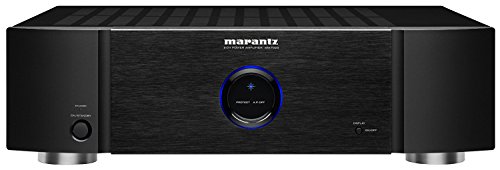


Picks by Budget Tier
Read these tiers as capability levels rather than product rankings. Each one describes the kind of amp that belongs there, who it suits, and the compromise you accept at that spend. Compare them against the product table above once you know your tier.
Budget Tier
Budget amps for Magnepans, around $300 to $700, should still deliver at least 100 watts per channel into 4 ohms with a stable power supply. At this level you typically get a straightforward integrated amp or a compact power amp, honest output, and few extras. The compromise is headroom: large panels in a big room will run out of steam on loud orchestral peaks. For the smaller Magnepan models in a modest room, a careful budget pick can sound genuinely good, provided the maker states a true 4 ohm rating.
Midrange Tier
Midrange amps, around $700 to $1,800, are the sweet spot for most Magnepan owners. Expect 150 to 250 watts per channel into 4 ohms, a larger transformer, and output stages that hold their composure as panels dip toward demanding passages. You also gain better connectors, quieter backgrounds, and often a remote controlled integrated layout that keeps the system simple. This tier drives mid size panels in average rooms without strain, and it is where bass control and image stability take a clear step forward.
Premium Tier
Premium amps, around $1,800 to $5,000 and beyond, add very high current delivery, separate power supplies per channel in some designs, and power reserves that keep panels relaxed at any sane volume. Build quality, warranty support, and resale value also improve. This tier suits the largest Magnepan models, big rooms, and listeners who play dynamic recordings loudly. The law of diminishing returns is real here, but so is the ease and authority that abundant current brings to planar speakers.
What Your Money Gets You at Each Price Tier
Budget Tier: What to Expect
At the budget level, spend on the power supply and nothing else. A modest feature list is fine, but the amp must be rated into 4 ohms without warnings in the manual, and its weight is a rough clue to transformer size. Avoid receivers whose 4 ohm figures rely on dynamic burst measurements. Many owners pair a budget power amp with a simple preamp or a streaming source with volume control, which keeps costs down while feeding the panels properly. If you are shopping this tier, our overview of the best amp for speakers explains how to read power ratings across brands.
Midrange Tier: The Sweet Spot for Most Buyers
Midrange money buys current headroom, and headroom is what Magnepans convert into calm, unforced sound. Peaks that made a budget amp harden now pass cleanly, and low bass lines stay defined instead of blurring. You also tend to get balanced inputs, a proper binding post set that accepts heavy speaker cable, and protection circuits that guard expensive panels without intruding on normal listening. For most owners this tier ends the upgrade urge for years, especially when paired with careful panel placement.
Premium Tier: When Spending More Pays Off
Premium spending pays off when your panels, room, and habits demand it. Large true ribbon models draw serious current at high levels, and premium amps answer with output stages that barely notice. You also buy refinement in quiet passages, where lower noise floors let hall ambience and soft detail survive. Consider this tier a long term anchor for the system rather than a quick fix, and weigh it against room treatment, which may offer a bigger gain if your space is bare and reflective.
Features Worth Paying For (and Ones to Skip)
Features That Matter for Magnepan Speakers
Magnepan speakers present a nearly flat 4 ohm impedance and low sensitivity around 86 dB, so the features that matter are current delivery, stability, and honest ratings. Look for power that roughly doubles, or at least rises steeply, as impedance drops from 8 to 4 ohms. A stated damping factor above 100 helps the amp control the large panel surface. Skip judging by 8 ohm watts alone, because an amp can look powerful there and still wilt into a Magnepan load. Panel owners comparing speaker models themselves can start with our guide to the best magnepan speakers.
Sound Quality and Tuning
Panels reveal tuning choices quickly, since they add little box coloration of their own. A neutral amp with low distortion lets the Magnepan character lead, while a warm leaning amp can soften the top end if your room is bright. Tone controls are less useful than placement: moving panels a few inches changes balance more than most equalizers. If you like to fine tune, a preamp with a gentle loudness option for low volume listening is worth more than a stack of sound modes you will never use twice.
Build Quality and Connections
Pay for solid binding posts, a sturdy chassis, and a volume control that tracks evenly at low levels, because panel listening often happens at moderate volume late in the evening. Balanced inputs earn their cost if your source offers them and cable runs are long. Skip paying extra for features aimed at home theater if this is a two channel system, and skip bi wiring terminals as a decision factor, since single runs of good cable serve Magnepans well. Compact listening rooms sometimes suit a smaller chassis, and our notes on the best mini amp for speakers explain when a small amp is a sensible match.
Cooling and Reliability
Powerful amps make heat, and how a design sheds it predicts long term reliability. Large external heat sinks and open ventilation are good signs, while a sealed slim case with a fan that runs constantly deserves caution. Class D designs run far cooler and can now drive panels very well, which suits closed cabinets. Class AB designs run warmer and need open shelf space. Either way, budget a few inches of clearance above the amp, and treat thermal shutdown during normal listening as a sign the match is wrong.
Long Term Costs to Factor In
The purchase price is not the whole story. Good speaker cable of adequate gauge is a one time cost, and longer runs to panels placed well into the room may need thicker cable than you expect. Powerful amps draw more electricity, though at normal listening levels the yearly cost stays modest. Tubes, if you choose a tube design, are a recurring expense every few years. Finally, Magnepan panels themselves can be serviced and rebuilt by the maker for many years, so an amp with a strong warranty and a service network protects a system you may keep for decades.
Amps: Your Questions Answered
What features matter most in amps for magnepan speakers?
Current delivery into 4 ohms matters most, followed by stability and a quiet noise floor. Check that power rises strongly from the 8 ohm to the 4 ohm rating, and favor amps whose manuals welcome 4 ohm loads without restriction. One point buyers miss is input sensitivity: panels invite longer listening at moderate volume, so a volume control that moves in fine steps makes daily use far more pleasant.
How much power do Magnepan speakers really need?
Most owners should start around 100 to 200 watts per channel into 4 ohms. Smaller rooms and smaller panels can work with less, while large panels played loudly need more. Because sensitivity is low, doubling power adds only 3 dB of volume, so buy headroom for clean peaks rather than chasing loudness. A smaller amp played within its limits sounds better than a big one chosen only for its badge value.
Can a receiver drive Magnepan speakers?
Some receivers can, but many struggle. Check for a genuine 4 ohm rating, preamp outputs for adding a power amp later, and a power supply that is not shared thinly across many channels. A common path is to run the receiver as the control center and add a two channel power amp for the panels. If the receiver manual warns against 4 ohm loads, believe it and plan on a separate amp from the start.
Do Magnepan speakers need a subwoofer with a strong amp?
Not always, but many owners enjoy the support below about 50 Hz where panels roll off. A subwoofer also relieves the main amp of the deepest bass, which can clean up the midrange at higher volumes. If you add one, choose an amp and subwoofer pairing with a proper crossover rather than simply turning the subwoofer up, and blend by ear at your listening seat over several days.
Where should I place Magnepan speakers for the best sound?
Give panels room to breathe, usually at least three feet from the wall behind them, with open space if you can manage more. Their dipole radiation sends as much sound backward as forward, so a cramped corner placement chokes the spaciousness people buy them for. Toe in is a matter of taste, and many owners swap which side the tweeters sit on to fine tune the image, a free adjustment worth trying before any gear change.
The Bottom Line
Choose your tier by panel size and room, insist on honest 4 ohm current, and spend the rest on placement and cables. The comparison table above will help you compare candidates side by side. Follow those rules and you will find the best amp for magnepan speakers for your budget without paying for power you cannot use or features you will never touch.


