
Best Airline Approved Dog Crate in 2026: Buying Guide for Cabin and Cargo Travel
Disclosure: We may earn a commission when you buy through links on this page, at no extra cost to you. As an Amazon Associate I earn from qualifying purchases. Learn more
The best airline approved dog crate matches your dog, your airline and where your dog rides. Compare kennels, carriers and sizes.
Booking a flight with your dog is stressful enough without a gate agent turning you away because the crate fails a rule you never saw. Airlines set their own limits for cabin and cargo travel, and a crate that works at home may not qualify in the air. The best airline approved dog crate matches your dog, your airline, and the part of the plane your dog will ride in.
This guide compares the main crate types on size and fit, durability, and safety and materials. Use the product table to see current options, then read on for sizing, features, and the mistakes that get crates refused at check in.


Three Crate Types That Meet Airline Rules
No single crate suits every flight, because cabin and cargo rules differ sharply. The three types below cover nearly every airline situation, from a small dog under the seat to a large dog in the cargo hold.
Hard Plastic Kennels for Cargo Travel
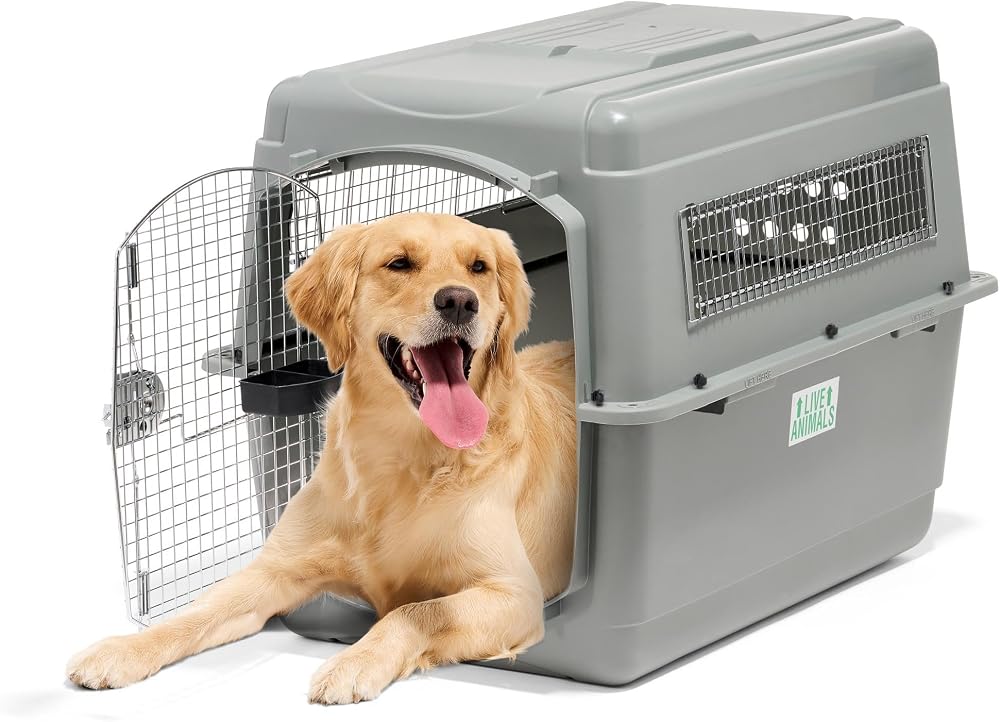
Hard plastic kennels are the standard choice for dogs traveling in the cargo hold. The solid shell protects your dog from bumps during loading, and the sturdy door locks shut so it cannot swing open in transit. Most models have ventilation openings on several sides, a solid bottom that contains spills, and hardware that holds the two shell halves firmly together. They suit medium and large dogs best. The trade off is bulk, since a big kennel takes real storage space at home.
Soft Sided Carriers for Cabin Travel
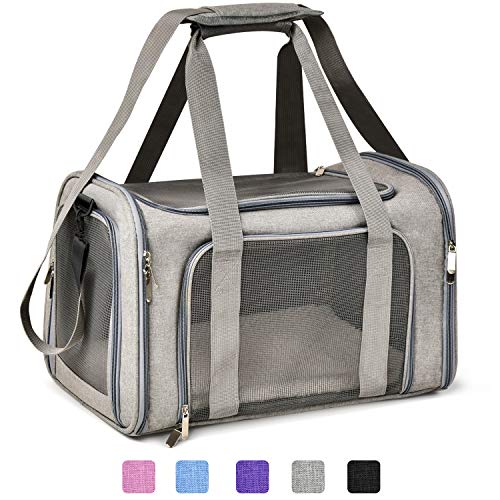
Soft sided carriers are built for small dogs riding in the cabin with you. The flexible sides squeeze slightly to fit under the seat in front of you, and mesh panels give your dog air and a view out. Most have a padded base, a shoulder strap, and a top or side opening that makes loading a nervous dog easier. They only work if your dog fits the cabin limits your airline sets. They are not suitable for cargo travel, and a determined chewer can work through mesh or zips.
Sturdy Metal Kennels for Strong Dogs
Sturdy metal kennels serve strong dogs and known escape artists who travel in cargo. Welded panels and reinforced corners resist bending far better than thin wire, and secure latches are harder for a dog to paw open. Some designs fold down for storage, which helps if you fly only a few times a year. Weight is the main drawback, since a heavy kennel plus a large dog can push you toward airline weight limits for checked pets. Check that total against your airline limit before you commit.
How to Evaluate an Airline Ready Crate
Start with the rules, not the product photos. Every airline publishes its own pet policy, and the details that matter most are the maximum crate dimensions, the maximum combined weight of dog and crate, and whether pets are accepted in the cabin, in cargo, or both. A crate only counts as approved when it meets the policy of your airline.
Once you know those limits, judge each crate on five points. Size and fit decide whether your dog can stand, turn, and lie down in a natural position. Durability decides whether the shell, door, and fasteners survive handling. Safety and materials decide whether edges are smooth and parts stay secure. Ease of cleaning matters after a long flight. Value matters last, because the cheapest crate is poor value if an airline refuses it. For home crates, our guide to the best dog crate covers more styles.
How to Choose the Right Dog Crate
Size and Form Factor
Airline crates come in lengths of about 24, 30, 36, 42, and 48 inches, and the right one follows your dog, not the space in your car. A dog traveling in cargo needs room to stand without the ears or head touching the top, turn around, and lie flat. Cabin carriers are far smaller, because they must slide under a seat. If your dog falls between sizes, the larger size is usually safer for cargo, within the airline size cap.
Type
Match the type to where your dog will ride. Plastic kennels are the default for cargo because the solid shell and secure door meet most airline conditions. Soft sided carriers are for the cabin only. Wire crates are popular at home, but many airlines will not accept them for cargo since the open sides give less protection. Our breakdown of wire vs plastic dog crate designs explains how the two compare. Furniture style crates look good at home, yet they are rarely accepted for flights.
Features Worth Paying For
A few features genuinely help on travel day. Clip on food and water cups let staff offer water during a long layover without opening the door. An absorbent pad protects the crate floor and your dog from spills. Tie down points and clear label space for your contact details and a live animal notice are worth having for cargo trips. Skip decorative covers for flights, because covers can block ventilation openings.
Sizing for Your Pet
Measure your dog before you shop. Record the length from nose to the base of the tail, and the height from the floor to the top of the head or ears while standing. Then compare those numbers with the inside dimensions of the crate, not the outside measurements printed in large type. For a fuller walkthrough of measuring, see what size dog crate do i need. Airlines expect the space to suit the dog on the day of travel, so size a puppy crate for the dog flying, not the adult it will become.
Materials and Chew Resistance
Thick molded plastic resists chewing better than fabric and wipes clean, which is why it dominates cargo travel. Metal panels and doors suit dogs that bite or push at barriers, but check that welds and edges are smooth so your dog cannot catch a lip or paw. Soft carriers use fabric and mesh, so reserve them for calm small dogs. Whatever the material, inspect the door hardware closely. Plastic clips holding shell halves together are a weak point on some kennels, and metal bolts are a stronger choice for cargo.
Cleaning and Odor Control
Travel crates need a full wash before and after each trip, so simple shapes clean fastest. A plastic kennel splits into two halves that you can scrub, rinse, and dry in the sun. Removable trays and washable pads handle the mess from a nervous stomach. Avoid crates with deep grooves and fabric linings that trap smells. For step by step washing methods, read how to clean a dog crate before your first trip.
Safety
Safety on a flight starts with the door. It should lock securely, stay shut if the crate tips, and resist a dog pushing from inside. Ventilation openings must let air flow on multiple sides for cargo kennels, and they should be small enough that your dog cannot push a nose or paw through. Inside, there should be no sharp edges, loose parts, or gaps where a collar could catch. Remove toys for cargo flights, since loose objects can shift and frighten your dog in transit.
How Much Should You Spend?
Small cabin carriers often cost under $50, and basic plastic kennels for medium dogs usually fall between about $50 and $100. Large cargo kennels commonly run about $100 to $250, while heavy metal kennels can reach about $250 to $500. Higher prices generally buy thicker shells, stronger door hardware, and better fasteners. Spend first on correct size and a secure door, because those two points decide whether your dog flies at all.
Airline Approved Versus Other Dog Crates: Pros and Cons
A standard home crate is built for rest and training in one place. An airline ready crate is built to satisfy a pet policy, protect a dog during handling, and stay secure when you are not nearby.
- Pro: secure locking doors and strong shells that meet typical cargo conditions
- Pro: ventilation and solid floors designed for travel, not just rest
- Pro: sizes matched to airline limits, which lowers the risk of refusal
- Con: bulkier and heavier than home crates, so storage and carrying take effort
- Con: approval is never universal, since each airline sets its own rules
- Con: soft cabin carriers only suit small, calm dogs that meet strict size limits
If your dog is big, start with cargo kennels and our guide to the best large dog crate. If your dog is small enough for the cabin, compare carriers in our best small dog crate roundup and confirm the under seat dimensions with your airline.
Common Mistakes to Avoid
- Assuming approval is universal, which leads to refusal when your airline applies different size or door rules.
- Buying by outside dimensions, which leaves your dog cramped because inside space is smaller than the label suggests.
- Traveling in a wire or furniture style crate, which many airlines reject for cargo travel.
- Leaving a collar, loose toy, or thick bedding inside, which creates snag and overheating risks during the flight.
- Introducing the crate on travel day, which panics a dog that has never rested in it before.
How to Make Your Crate Last Longer
Store the crate indoors, out of strong sun, because heat and sunlight can make plastic brittle over time. Check bolts, clips, and door hinges before every trip and tighten or replace worn parts right away. Wash and dry the shell fully before storage so damp corners do not grow mildew. Keep spare fasteners in your travel kit.
FAQ
What is the best airline approved dog crate for a first flight?
For a first flight, the safest pick is the crate type that matches where your dog will ride, sized from fresh measurements and checked against your airline policy in writing. Choose a plastic kennel for cargo or a soft carrier for the cabin, then let your dog nap and eat in it at home for at least two weeks. That settling period lowers stress far more than any extra feature.
Are airline approved dog crates worth it?
Yes, if you plan to fly more than once or your dog must travel in cargo, because a compliant crate removes the biggest risk on travel day, refusal at check in. Owners who fly once with a small cabin dog may spend less and still travel safely. Either way, keep the airline pet policy saved on your phone, since staff at different airports can read borderline sizes differently and written proof helps.
How long does an airline approved dog crate last?
A plastic or metal kennel used a few times a year often lasts five years or more, while a soft cabin carrier may wear out sooner from zips and mesh strain. Retire any crate with a cracked shell, a bent door, or fasteners that no longer hold tight. Damage from one rough baggage trip can quietly weaken the shell, so inspect it after every flight, not just before the next one.
Can one dog crate work for both cabin and cargo travel?
Almost never, because the two spaces demand opposite designs. Cabin carriers are small and flexible so they fit under a seat, while cargo kennels are rigid, larger, and built with secure doors and airflow on several sides. A cargo sized dog will never fit a cabin carrier. Plan on one crate per travel style, and if you switch airlines, recheck the limits because cabin space varies by aircraft.
What should you put inside a dog crate for a flight?
Keep the inside simple. A thin absorbent pad gives comfort without raising your dog too close to the top of the crate, and a familiar item with your scent can help a nervous dog settle. Attach water cups only as your airline directs, since cups often spill during loading. Skip food inside the crate for most flights, and feed a light meal several hours before departure instead, which reduces the chance of sickness.
Final Thoughts
The right crate starts with your airline written rules, then your dog honest measurements, and only then the style you prefer. Hard plastic kennels cover most cargo trips, soft carriers suit small cabin dogs, and sturdy metal kennels protect strong dogs. Compare the product table above once more, measure your dog tonight, and confirm the limits with your airline before you pay. Chosen that way, the best airline approved dog crate becomes one less thing to worry about on travel day.


