
Best Air Pump for Mountain Bike: Our 2026 Checklist and Buying Guide
Disclosure: We may earn a commission when you buy through links on this page, at no extra cost to you. As an Amazon Associate I earn from qualifying purchases. Learn more

Use this checklist to choose the best air pump for mountain bike riding, with clear guidance on valves, gauges, air volume, portability, and price tiers.
A mountain bike pump has one job that road gear does badly. It must move a lot of air at low pressure, accurately, whether you are in your garage or fixing a flat miles from the trailhead. This checklist shows how we evaluate the best air pump for mountain bike use, criterion by criterion, so you can score any model yourself.
Work through the comparison table below with these criteria beside you. A pump that passes on valve fit, volume, and gauge accuracy will serve you for years.



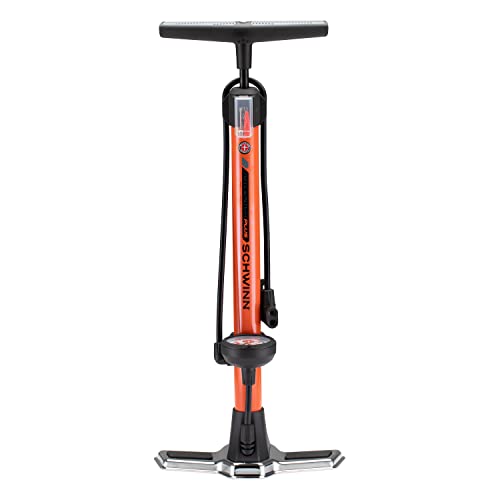
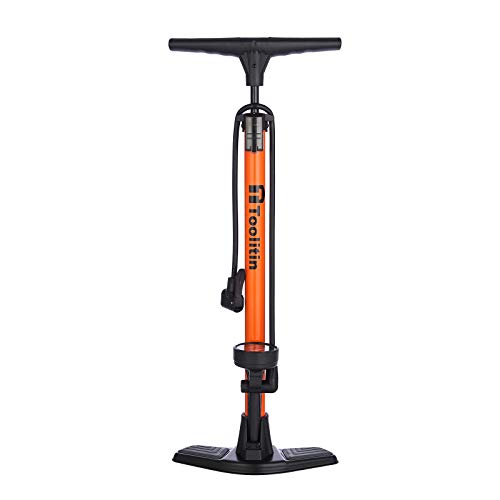


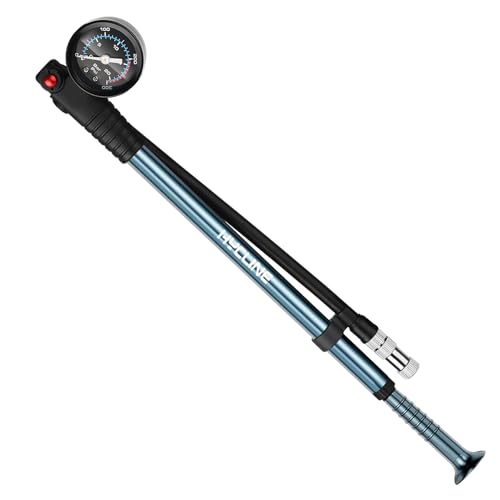
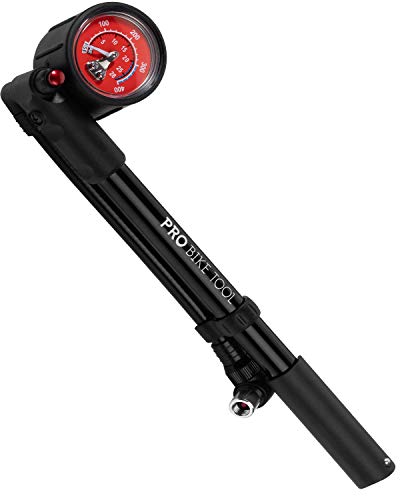


How We Evaluate Air Pumps
Features That Matter for Mountain Bike
Mountain tires are high volume and low pressure, typically 20 to 30 psi, so the pump must push a large amount of air per stroke rather than force a small amount to high pressure. A pump built for road tires can take hundreds of strokes to fill a wide trail tire. Look for a large barrel chamber, a head that seals on Presta valves without leaking, and a gauge readable in the low range. Bonus features that earn their place include a fold out foot peg or handle for leverage and a hose, which lets the pump move without tugging the valve stem sideways and tearing it.
Bike Type and Riding Style
Cross country riders count grams and often choose a compact mini pump that lives in a jersey pocket or pack. Trail and enduro riders, who run wider tires and fix flats in rougher places, do better with a larger mini pump or a frame mounted high volume model. Downhill riders mostly rely on a floor pump at the truck or workshop, since their tires rarely need trailside air. Electric mountain bike tires need exactly the same air as regular tires, so any pump here suits them. Match the pump to where you will actually use it, not to the riding you hope to do someday.
Sizing and Fit
Size here means the pump itself. Mini pumps run about 7 to 11 inches long. Shorter models hide easily in a pack but need many more strokes per tire, while longer models fill faster and strain your arm less. Check frame mounting before you buy, because a bottle cage mount bracket only helps if your frame has the space and the pump clears your suspension linkage. If you carry it in a pack, confirm the head has a dust cap and the handle locks closed, so it does not rattle or collect grit while you ride.
Pressure Versus Volume
Every pump trades pressure against volume. High volume pumps move more air per stroke and top out around 60 to 90 psi, which is plenty for mountain tires and makes seating and filling fast. High pressure pumps reach 120 psi or more but move little air, a poor match for wide tires. Read the stated maximum pressure with suspicion if no volume is given, because a big number alone tells you nothing about fill speed. The practical test is strokes to reach about 25 psi in a 29 by 2.4 inch tire. Good high volume mini pumps manage that in roughly 100 strokes or fewer, and any floor pump should do it in about 20 to 30 strokes.
Wheel Size and Tires
Bigger wheels and wider tires hold more air, so a 29 inch wheel with a 2.6 inch tire needs noticeably more strokes than a 27.5 inch wheel with a 2.2 inch tire. Fat tire bikes are the extreme case, where only a true high volume pump makes sense. Tubeless tires add one more demand. After a trailside repair, you may need a fast burst of air to reseat the bead, which mini pumps rarely deliver, so many tubeless riders carry a CO2 inflator as a backup for that single moment and use the pump for top ups. If you are comparing formats for home use, our guide to the best mountain bike floor pump explains why a floor pump is the anchor of any home setup.
Materials and Build Quality
Aluminum barrels shrug off drops on rock and resist the dents that ruin a pump seal, while plastic barrels keep cost and weight down but age faster in sun and cold. The chuck, the part that grips the valve, is the most common failure point, so a metal chuck with a replaceable rubber seal is worth paying for. A steel base and a long hose mark out a serious floor pump. Seals and chucks that the maker sells as spare parts signal a pump built to be serviced, not replaced.
Three Price Tiers That Pass Our Checklist
Best Overall
The balanced tier, usually about $40 to $80 for a mini pump or $60 to $100 for a floor pump, is where most riders should land. At this level you get an aluminum barrel, an accurate low range gauge on floor models, a secure chuck that works on Presta and Schrader valves, and spare seals available. This tier suits riders who ride weekly and fix their own flats. It is also the tier our broader guide to the best mountain bike pump focuses on, since the balance of speed, size, and durability fits the widest range of trail riders.
Best Value
The value tier, roughly $20 to $40, covers the basics honestly. Expect a smaller barrel, more strokes per fill, and either no gauge or a coarse one, plus a plastic or mixed material build. That is a fair trade for riders who ride a few times a month and mainly need emergency air. Riders comparing general bike pumps beyond mountain use can also see our overview of the best air pumps for bikes for how the wider category breaks down.
Best for Heavy Use
The heavy use tier, about $80 and up, buys durability and speed. Think oversized barrels that fill a tire in a handful of strokes, large easy to read gauges, metal everything, and workshop grade floor pumps with serviceable parts. Guides, shop mechanics, and riders who inflate tires daily get their money back here. Weight matters less in this tier because these pumps live in the garage or vehicle. If your riding also includes air suspension, note that forks and shocks need a separate specialist tool, covered in our guide to the best mountain bike shock pumps, and a tire pump cannot substitute for one.
Quick Buyer Checklist
- Does the chuck fit Presta valves securely, and Schrader too if your family bikes need it?
- Is the pump high volume, with a stated design for wide low pressure tires?
- Can you read or add a gauge that is accurate in the 15 to 40 psi range?
- Does the size fit your pack, pocket, or frame mount without rattling?
- Are replacement seals and chucks sold for this model?
- Is the barrel metal if the pump will live a hard life in a vehicle or workshop?
- For tubeless riders, do you also carry a CO2 backup for reseating a bead?
- Does the warranty run at least a year, with a clear way to claim it?
Red Flags to Watch For
- Only a huge pressure number is advertised. A claim of 160 psi with no volume figures usually means slow fills on mountain tires.
- No spare parts exist. If seals and chucks cannot be bought, the first worn seal ends the pump life.
- A gauge scaled only for road use. A dial that starts reading clearly above 30 psi cannot help you set 24 psi with any confidence.
- A very short warranty or none. Makers who expect failures price that risk into short coverage.
- Valve claims that mention cars only. A pump aimed at car tires may lack a Presta head entirely, so always confirm bicycle valve support in writing.
Setup and Care Tips
Check tire pressure before every ride, because a pump with a gauge makes that a ten second habit. Store pumps out of direct sun, wipe grit off the chuck before attaching it so dirt never reaches the valve core, and replace the chuck seal at the first sign of leaking at the valve. A drop of the maker approved lubricant on the main seal once a season keeps strokes smooth. For riders who prefer the smallest carry option that still fills a wide tire, our guide to the best mini pump for mountain bike use compares the compact end of the range.
Air Pumps: Your Questions Answered
What features matter most in air pumps for mountain bike?
High air volume per stroke matters most, followed by a secure Presta chuck and a way to measure low pressure accurately. Those three decide whether a trailside flat takes three minutes or fifteen. After that, size and build quality separate a pump you tolerate from one you trust. Ignore maximum pressure claims until you have checked volume, since mountain tires never need road bike pressures but always need plenty of air moved quickly.
What size pump do I need for a mountain bike?
Choose size by where the pump will live. A pump around 9 to 11 inches balances fill speed and pack space for most trail riders. Go shorter only if pocket carry is essential and you accept extra strokes, and go with a full floor pump for home use where size costs nothing. Riders on 29 inch wheels with wide tires feel the difference most, because their tires hold the most air and punish an undersized pump on every fill.
Floor pump or mini pump for beginners?
Buy the floor pump first if you can only afford one. You will use it before nearly every ride, its gauge teaches you what correct pressure feels like, and it makes tubeless top ups easy. Add a mini pump later for trailside flats. Beginners who start with only a tiny mini pump often underinflate at home because filling takes so long, and that habit causes pinch flats and vague handling.
Can a mini pump seat a tubeless tire bead?
Usually not from a fully unseated state, because seating needs a sudden rush of air that slow strokes cannot deliver. A floor pump with a charge chamber, a compressor, or a CO2 inflator handles that job. A mini pump still earns its place for topping up a tire that stayed seated after a puncture sealed. Remove the valve core for faster airflow when you do attempt a seat with a floor pump.
Can I use the same pump for an e bike and a regular mountain bike?
Yes, because e bike tires are bicycle tires with the same valves and similar pressures. The motor and battery change nothing about inflation. What can differ is tire width, since many e bikes run wider tires that reward a high volume pump even more. Legal class rules for e bikes concern motors and speed, not pumps, so buy for your tire size and ignore the motor entirely when you choose inflation gear.
How much should I spend on my first mountain bike pump?
About $50 to $80 for a floor pump, or about $30 to $50 for a trail mini pump, buys durable tools that pass every point on the checklist above. Spending less usually means plastic parts and no spares, while spending far more mainly buys speed and finish. If your budget forces a choice, fund the floor pump first and carry a borrowed or basic mini pump for one season rather than the other way around.
Wrapping Up
Score any pump on volume, chuck fit, and gauge accuracy first, then on size and build. Those criteria protect you from slow fills, torn valves, and guesswork pressures on every ride. When you are ready to pick the best air pump for mountain bike riding for your budget, return to the product table above and run your short list through the checklist one final time.


