Best Air Compressors for Nail Guns: Tank, Weight and Pressure Guide
Disclosure: We may earn a commission when you buy through links on this page, at no extra cost to you. As an Amazon Associate I earn from qualifying purchases. Learn more

The best air compressor for nail guns holds steady pressure and is light enough to carry. Compare pancake, hot dog and larger shop tanks.
A compressor that runs an impact wrench well can still disappoint with a nailer if pressure sags mid row or the tank takes too long to recover. Nail guns ask for steady pressure in short bursts, plus a unit you can carry to the room or roof where the work is. Finding the best air compressor for nail guns means matching tank size, airflow, and weight to the nailers you actually own.
This guide compares the main compressor types on power and performance, runtime, and ergonomics and weight, so you can skip the guesswork. Use the comparison table below to see how the types stack up, then read on for the sizing and feature details. If you are still weighing a general purpose unit against one set up only for nailing, our guide to the best air compressor covers the wider field.

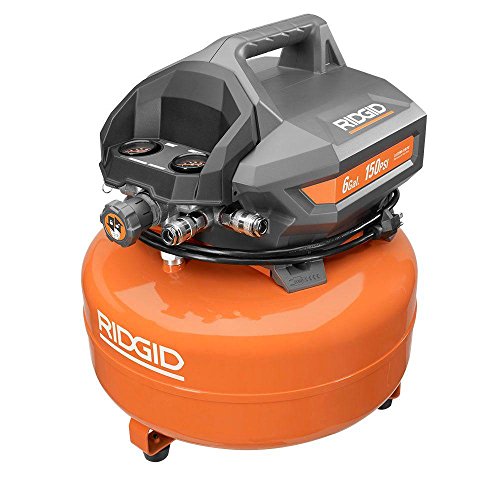
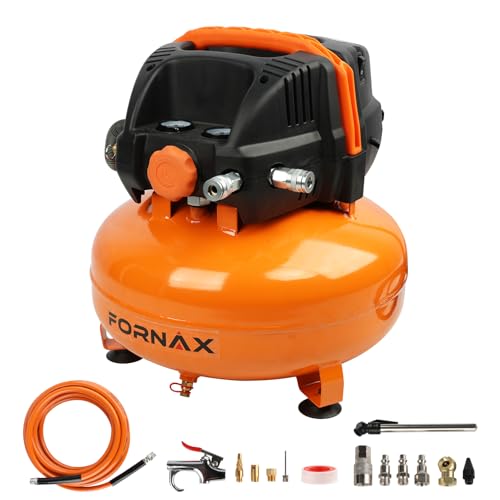
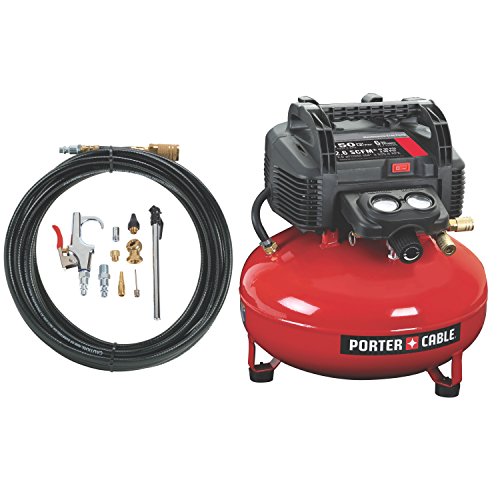


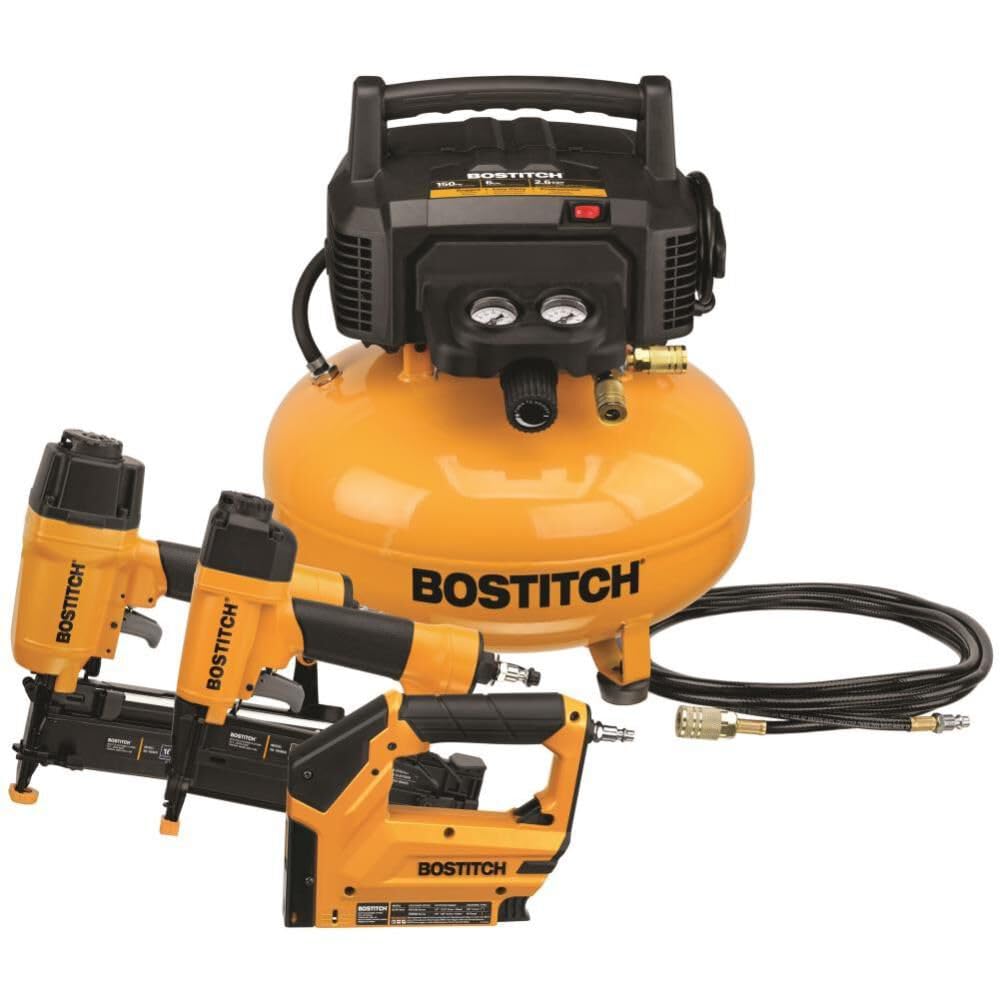
Compressor Types at a Glance
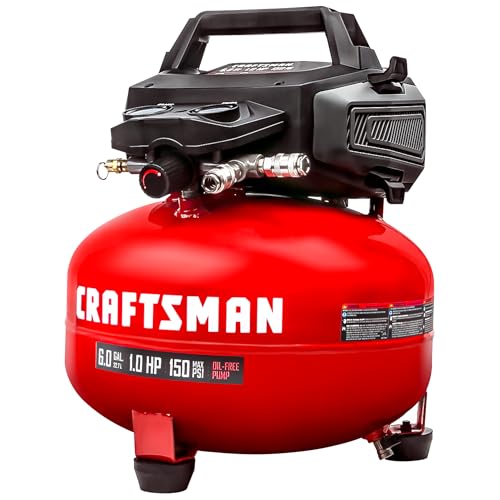
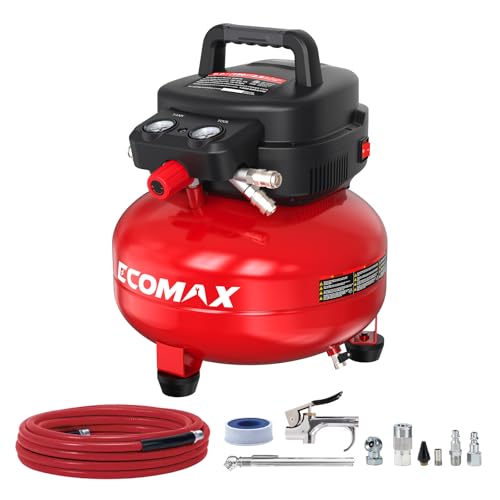
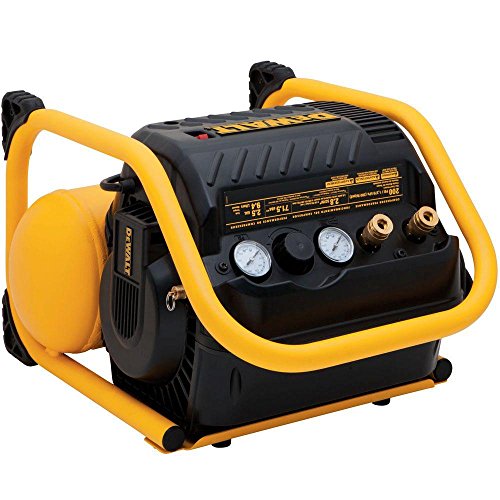
Three tank shapes cover nearly all nailing work. Each trades stored air against weight and floor space, and the right pick depends on your largest nailer and how far you carry the unit.
- Pancake: a flat, stable tank, usually about 6 gallons, that stores well and resists tipping in a truck bed.
- Hot dog: a long, low tank, often 1 to 3 gallons, that slides into tight storage and suits small nailers.
- Twin stack and larger shop tanks: two small tanks or one tank of 8 gallons or more, giving longer runs between motor cycles for framing crews.
Compressor Types Compared for Nailing Work
Pancake Compressors for Trim and Mixed Jobs
A pancake unit is the default choice for most home nailing because the wide, flat tank sits stable on floors and truck beds and the handle sits on top for one handed carrying between rooms. A tank of about 6 gallons buffers a finish nailer or brad nailer comfortably and can keep up with short framing bursts. If this shape sounds right, the best pancake air compressor guide compares models in this class. Expect weights around 30 pounds, light enough for stairs but heavy enough that you will plan your trips.
Compact Hot Dog and Twin Stack Compressors
Hot dog tanks run long and low, so they tuck under a bench or behind a truck seat where a pancake will not fit. Tanks of 1 to 3 gallons suit brad nailers, pin nailers, and staplers that sip air, but the motor cycles often under a framing nailer. A twin stack pairs two small tanks for about 4 to 5 gallons total, splitting the difference between storage and bulk. Choose this group when storage space is your tightest limit and your nailers are small.
Larger Shop Compressors for Framing Crews
Tanks of 8 to 20 gallons or more change the rhythm of framing work because the motor rests while stored air feeds several nailers in rotation. Two users can share one unit through a splitter on big jobs. The cost is portability, since these units often weigh 60 pounds or more and many need wheels or a fixed spot in the garage. Pick this class when framing is your main work and the compressor travels by truck rather than by hand.
How We Chose the Criteria for This Guide
Since this guide compares types rather than ranking individual models, the criteria come from manufacturer specifications and standard nailing requirements. We weighed power and performance first, because a nailer that stops driving flush wastes more time than any other flaw. Runtime and tank recovery came next, then ergonomics and weight, durability, and warranty length. Every factor below is one you can check on a spec sheet before you buy.
How to Choose the Right Air Compressor for Nail Guns
Size and Form Factor
Tank size decides how many nails you drive before the motor restarts. About 1 to 2 gallons covers pin and brad nailers for craft and trim touch ups. About 6 gallons handles finish work and roofing bursts for one user. Tanks of 8 gallons and up support framing crews. Shape matters too, and our comparison of pancake vs hot dog compressor designs explains how footprint and stability differ. Measure your storage spot before ordering, because a unit that lives buried in a corner rarely gets used.
Type, Pump Style, and Noise
Beyond shape, decide how the pump handles lubrication and sound. Oil lubricated pumps tend to run quieter and last longer with basic upkeep, while oil free pumps need almost no maintenance and can sit on any side during transport. Our explainer on oil vs oil free compressor designs walks through that trade in full. Quiet rated models, often near 60 to 70 decibels, let you work in occupied homes without shouting over the motor. Standard models run louder, which matters less outdoors or in an empty remodel.
Features Worth Paying For
Spend first on a regulator that holds its setting and gauges you can read at a glance, because nail depth depends on stable pressure at the tool. A second coupler pays off when a helper runs a second nailer. Roll cage frames protect gauges and fittings when the unit rides in a truck. Skip bundles packed with blow guns and tire chucks if you already own them, and skip extra horsepower claims that do not raise delivered airflow.
Cordless vs Corded and Gas Models
Corded electric models deliver unlimited runtime wherever an outlet reaches, which covers most home and shop nailing at the lowest cost. Cordless models trade that for freedom on ladders, roofs, and punch list work far from power, and the best cordless air compressor options suit small nailers best. Gas engine models serve remote framing sites with no power at all, but they add exhaust, noise, and engine upkeep. For most readers, corded covers the bulk of the work and cordless earns its place as a second, lighter unit.
Battery Platform for Cordless Models
If you go cordless, the battery platform matters as much as the compressor itself. Buying into a platform you already own for drills and saws saves the cost of extra packs and chargers. Check how many nails a single charge delivers with your largest nailer, since runtime claims often use a small brad nailer. Two smaller packs swapped through the day usually beat one large pack that leaves you waiting at noon.
Brushless Motors in Cordless Compressors
Brushless motors appear on many newer cordless models and bring two practical gains. They draw less current for the same work, which stretches each charge, and they have no brushes to wear out or replace. The result is a compact unit that refills a small tank quickly without heating up during repeated cycles. This matters most on trim jobs where the compressor cycles dozens of times a day. On corded models the motor type matters far less, so do not pay a premium for it there.
Accessories and Warranty
A flexible hose of 25 to 50 feet reaches across most rooms without moving the tank, and quality couplers stop the slow leaks that make a motor cycle at rest. Our walkthrough of how to use an air compressor covers safe hookup and pressure checks for your first setup. Look for a warranty of at least one year, with longer coverage on the pump counting as a real plus. Keep the receipt and register the unit, because warranty claims on compressors often need proof of purchase.
How Much Should You Spend?
Under about $100 you get small tanks for brad and pin nailers, fine for crafts and light trim. About $100 to $200 covers the 6 gallon pancake class that suits most home users. About $200 to $400 buys quieter pumps, twin stack tanks, or capable cordless models. Above about $400 you are paying for large shop tanks and crew level recovery. Match the tier to your largest nailer, not your smallest, and leave room in the budget for a good hose.
What Matters Most in an Air Compressor for Nail Guns
Nailers are easy loads compared with sanders or grinders, because each shot uses a small puff of air. What separates a good match from a frustrating one is pressure stability. Most nail guns work best at about 90 to 120 PSI, and a compressor with a maximum pressure of 150 PSI or more keeps a reserve above the regulator setting, so the last nails in a row drive as flush as the first. Airflow needs stay modest, roughly 2 to 3 CFM at 90 PSI for one framing nailer used at a normal pace.
Recovery time is the second factor readers underestimate. A small tank with a fast pump can outrun a bigger tank with a slow one during steady trim work, because the motor restores pressure between shots. Weight shapes your day as well. A unit under about 30 pounds moves room to room without a second thought, while heavier shop models earn their keep only when they stay put. Noise completes the picture for indoor work, where a quiet model lets you run baseboards in a finished home without driving everyone out.
FAQ
What is the best air compressor for nail guns?
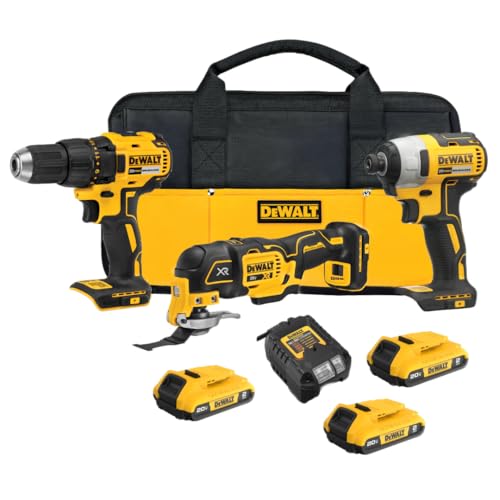
For most home users it is a pancake model of about 6 gallons with a maximum pressure near 150 PSI, because that mix covers brad, finish, and light framing nailers without excess weight. Framing crews should look at larger tanks for shared use. The best choice is always the smallest unit that runs your largest nailer at a steady pace, since oversizing only adds weight and cost.
What should I look for in an air compressor for nail guns?
Start with maximum pressure, delivered airflow at 90 PSI, and tank size, then check weight and noise for where you work. One detail many buyers miss is the cut in pressure, the point where the motor restarts. A narrow gap between cut in and maximum pressure keeps nail depth consistent across a long run of trim. Also confirm the regulator adjusts in small steps, because coarse regulators make fine depth tuning hard.
How long does an air compressor last?
A home use compressor often lasts about 5 to 10 years, with the pump and pressure switch wearing first. One habit extends that span more than any other: store the unit with the tank drain open so moisture never sits against the steel between jobs. Cordless models also depend on battery health, and packs usually fade before the compressor itself does. Replace worn couplers and hoses as they age rather than replacing the whole unit.
Is an air compressor worth it if I own only one nail gun?
Yes, in most cases, because one compressor powers every pneumatic nailer you add later, plus tire inflation and dust blowing around the shop. The math works even sooner if you rent tools now, since rental fees add up across a few weekends. Buyers with a single small brad nailer and rare projects are the exception. For them, a battery powered nailer with no compressor at all can be the simpler purchase.
How do you clean an air compressor used with nail guns?
Unplug the unit, pull the safety valve ring to release all pressure, then wipe the tank and roll cage with a damp cloth. Clean or replace the intake filter, since a clogged filter makes the pump work harder and refill more slowly. Check the hose for cracks while you work. Skip solvents on painted surfaces and never spray water into the motor housing. Store the compressor indoors once it is dry.
What makes an air compressor brand reliable for nailing work?
Reliability shows up in parts support more than in any single spec. Brands that stock replacement pressure switches, regulators, and check valves years after sale keep a compressor working instead of sidelined. A clear warranty with local service options matters for the same reason. Consistent gauges and honest airflow ratings are also good signs, because brands that publish careful numbers tend to build to them. Ask local tool repair shops which brands they can service quickly.
Final Thoughts
Match the tank to your largest nailer, keep pressure stable, and choose a weight you will happily carry to the work. The product table above sums up how the main types compare on those points. Pick well and the best air compressor for nail guns for your bench will drive nails flush all day without pauses that break your rhythm.