
Best Affordable Binoculars in 2026: Every Type Explained Side by Side
Disclosure: We may earn a commission when you buy through links on this page, at no extra cost to you. As an Amazon Associate I earn from qualifying purchases. Learn more

Compare the best affordable binoculars by type, from compact to night vision, with pros, cons and typical prices.
Shopping for binoculars on a budget starts with a puzzle: several genuinely different types share the same shelf and similar prices. A pocket pair for stadium seats, a standard pair for birding trails, and an electronic pair for watching after dark all promise clear views, yet each one fails at the job the others do well. This guide to the best affordable binoculars compares the types themselves, so the comparison table below can be read with the right expectations.
The honest starting point is that no type wins at everything. Small lenses travel light but gather little light, large lenses stay bright at dusk but live in a bag, and high magnification reaches far while making every tremor in your hands look bigger. Read the type sections first, then use the choosing section to match a type to your budget and your habits.


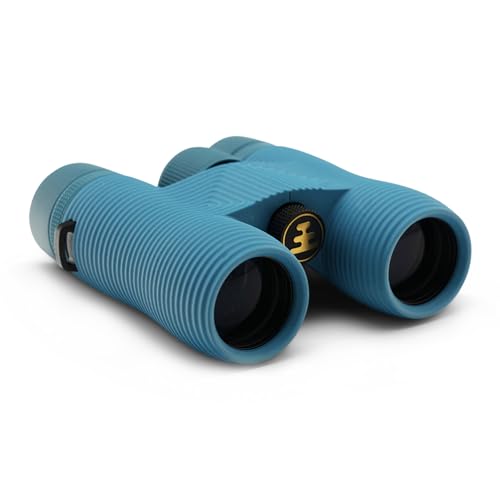

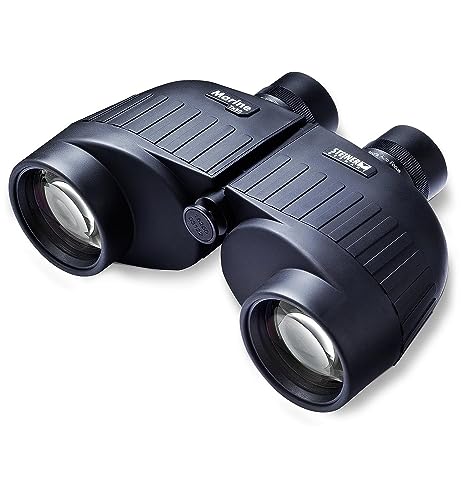
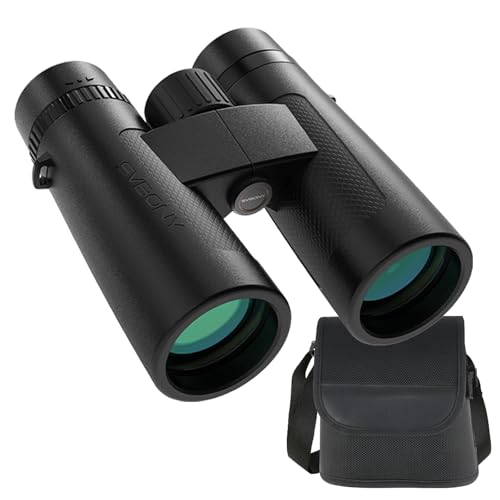
The Best Affordable Binoculars by Type, Side by Side
The product table above lists current models with live prices. The table in this section does a different job: it compares the types themselves, because a fair price for one type can be a poor deal for another. Prices shown are typical shelf ranges for each class, not promises about any single listing.
| Type | Best For | Strengths | Trade Offs | Typical Price |
|---|---|---|---|---|
| Compact | Travel, concerts, stadium seats | Fits a pocket, light on the neck | Dim in low light, narrow view | around $25 to $60 |
| Standard | Everyday nature and sports use | Balanced brightness, steady view | Too bulky for a pocket | around $50 to $120 |
| High power | Shorelines, plains, distant detail | Reaches far subjects | Shake shows up, narrow view | around $60 to $150 |
| Night vision | Watching after dark | Sees where plain glass cannot | Needs batteries, screen based view | around $90 to $200 |
Compact Binoculars: The Pocket Class
Compact binoculars are built around small objective lenses, usually in the 21 to 28 mm range, in formats such as 8x25 or 10x25. The bodies fold or narrow down until the pair fits a jacket pocket or a small belt pouch, and the weight stays low enough that a neck strap never becomes a burden. That portability is the whole point: this is the class people actually carry to concerts, stadium seats, and city sightseeing. The trade is brightness, since small front lenses collect little light and the image dims early at dawn and dusk, so choose a compact when being there matters more than squeezing out the last detail.
Standard Binoculars: The All Round Class
Standard binoculars pair a moderate magnification with 40 to 44 mm objective lenses, in formats such as 8x42 and 10x42. This is the class most nature watchers settle on, because it balances brightness, field width, and size better than any other type at an affordable price. Two body layouts exist: porro prism bodies are wider with offset barrels, while roof prism bodies run straight and slimmer, and both layouts can deliver a clear view when the glass is decent. An 8x42 shows a wide, steady picture, while a 10x42 trades a little width and steadiness for extra reach, and for a first serious pair meant to cover many uses, this class is the safest place to spend.
High Power Binoculars: Built for Distance
High power binoculars start around 12x magnification and pair it with lenses of 50 mm or more, in formats such as 12x50 or 15x70. They exist for subjects that stay far away: shorebirds across a marsh, boats on open water, or detail on distant ridgelines. The reach is real, but so is the cost, since every tremor in your hands is magnified along with the subject and the field of view narrows until finding a moving subject takes practice. Many owners end up resting the pair on a tripod, a fence post, or a car window to get the steady view the numbers promise, so pick this class only when distance is truly your main problem.
Night Vision Binoculars: The Electronic Branch
Night vision binoculars leave the classic glass formula behind, using a digital sensor plus an infrared illuminator instead of two large objective lenses, and showing the scene on small screens inside the body. That lets them reveal a dark yard, a campsite edge, or animals moving after sunset in a way no affordable glass pair can match. The costs are batteries, a screen based view that feels different from looking through glass, and an image that softens as distance grows. A companion guide covers best affordable night vision binoculars in depth, including illuminator range classes, and the branch is best treated as a specialist tool: wonderful after dark, and the wrong purchase for daytime birding or sports.
Matching a Type to the Way You Will Use It
Birding rewards a wide field and a bright image, because the subject is small, quick, and often backlit among leaves. Standard 8x42 models dominate here, since the wide view makes a moving bird easier to find and follow. Close focus distance also matters more than beginners expect, since warblers and butterflies can appear just a few steps away. A dedicated guide to best affordable binoculars for birding compares the birding specific trade offs in detail.
Hunting asks for brightness in the first and last minutes of light, when game moves and shadows swallow detail. Standard and high power types both serve here, with the larger objective lenses earning their weight at dawn and dusk. Fog resistance matters as much as raw clarity, since a pair that fogs internally on a cold morning is useless no matter how sharp it looked in the store. Weight also counts on long walks into rough country, so many hunters accept the standard class and skip the heaviest glass.
Sports and concerts favor the compact and standard classes. From stadium seats, an 8x compact follows the play without the image bouncing, and it rides home in a pocket afterward. Theater and concert watchers value the same steadiness plus a close focus for stages that sit nearer than a playing field. High power types are a poor fit here, since the narrow field loses fast action and the shake grows tiring over a full event.
Backyard viewing and casual sky watching suit the standard class too. Feeders, hawks circling overhead, and the moon all sit at comfortable distances for an 8x42 or 10x42, and the same pair serves on holiday walks and school events. This versatility is why standard models are the default suggestion when one pair must cover a household of different interests. Nobody in the family needs a specialist tool for the feeder outside the kitchen window.
How to Choose the Right Pair
Reading the Two Numbers: Magnification and Objective Size
Every binocular is labeled with two numbers, such as 8x42, where the first number is the magnification and subjects appear eight times closer than with the unaided eye. The second number is the diameter of the front lenses in millimeters, and it sets how much light the pair can gather. Moving from 8x to 10x brings subjects closer, but it also narrows the field of view and magnifies the shake in your hands. More power is not simply better; for handheld use, 8x is the steadier and often the smarter choice.
Exit Pupil: The Hidden Number Behind Brightness
Divide the objective size by the magnification and you get the exit pupil, the width of the light beam that reaches your eye. An 8x42 gives about 5 mm, while a 10x25 compact gives only about 2.5 mm. In dim light your own pupil opens wider, so a pair whose exit pupil is small starts to feel dim at dusk no matter how clean the glass is, which is why compact pairs fade early in the evening while standard pairs keep working. No affordable binocular turns night into day, but matching the exit pupil to the hours you watch in is the most honest brightness check you can do from the label.
Coatings and Glass, Described as Classes
Lens coatings are sold as a ladder of classes: coated, fully coated, multicoated, and fully multicoated, with each step promising less glare and better contrast. Treat those labels as rough classes rather than precise grades, because makers apply the words differently and coating claims are not comparable across brands. At affordable prices the honest trade is a narrower field of view and edges that look dimmer and softer than the center, not optics that are useless. A fully multicoated standard pair will still show birds, games, and landscapes clearly for years of regular use.
Focus Wheel, Eyecups, and Handling
Most pairs in this guide use a center focus wheel plus a smaller diopter ring that adjusts for the difference between your two eyes. The wheel should turn smoothly through its whole travel, with no gritty spots and no loose play, because you will adjust it constantly. Eyecups that twist up and down let glasses wearers and bare eyed watchers share the same pair by changing how close the eye sits to the lens. Also check the hinge: it should hold the spacing you set between the barrels instead of drifting while you watch.
Sealing, Fog Resistance, and Armor
Listings use water language loosely, so read it in classes. Splash resistant pairs shrug off light rain, while genuinely waterproof pairs are sealed with rings and can survive a soaking. Fogproof models are filled with nitrogen or a similar dry gas so the inside surfaces stay clear when you step from a warm car into cold air. A rubber armor coating adds grip and softens knocks against rails and rocks, and if your watching happens outdoors in real weather, sealed and fogproof construction is worth more than a small step up in magnification.
What You Can Realistically Get on a Budget
Under about $50, expect honest basics: usable glass, simple coatings, and mechanics that vary a little from pair to pair. Between about $50 and $120, the standard class becomes genuinely good, with wider fields, better coatings, and sealed bodies entering the picture. Spend the money on the focus mechanism and on barrels aligned well enough that both eyes see one merged image, and save on extras such as fancy cases. Star ratings deserve the same skepticism: a near perfect average built on a handful of ratings means little, while a slightly lower average across thousands of owners says far more, which is why roundups of best rated binoculars are best read for the pattern of owner comments rather than the headline score.
How to Make Your Pair of Binoculars Last Longer
Clean the lenses with a proper lens cloth, never a shirt tail, and blow loose grit away first so it does not get ground across the coating. Keep the caps on whenever the pair is not in use, and store it in a dry, padded bag rather than loose in a car trunk. Check the neck strap and its lugs from time to time, since a failed strap is how most binoculars meet the ground. If the pair gets wet, let it dry at room temperature before sealing it away in its case, and give the body a quick wipe after salt air or dust to keep the armor and hinges working smoothly.
Questions Answered
Which affordable binoculars work best in low light?
Standard models with large objective lenses work best in low light, because their exit pupil stays wide enough to feed a dilated eye. An 8x42 keeps a usable image well into dusk, while a 10x25 compact fades much earlier. One point buyers miss: steadiness matters as much as brightness at dusk, so brace your elbows against your ribs or lean on a railing and the dim image sharpens noticeably. Coating class helps at the margins, but no coating rescues a tiny front lens once the light is gone.
What do the numbers 8x42 and 10x42 mean on binoculars?
The first number is magnification and the second is the front lens diameter in millimeters, so a 10x42 magnifies ten times with 42 mm lenses. A detail worth knowing beyond the code itself: many listings also print a field of view figure, such as the width visible at 1,000 yards, and the 8x version of a pair almost always shows the wider figure. When two pairs share a code but differ in field width, the wider one is usually easier for a beginner to aim and enjoy.
How much should I spend on a first pair of binoculars?
About $50 to $120 buys a first pair that most people keep for years, especially in the standard 8x42 class. Below that range, pairs can still be fun for stadiums and travel, but alignment and focus feel vary more from copy to copy. One cost people forget to plan for is a decent strap and case, which protect the purchase better than any extended warranty pitch at checkout. If the budget is firm, buy the standard class on sale rather than a high power pair at full price.
Which specs matter most when a beginner chooses binoculars?
Magnification, objective size, and field of view matter most, in that order, because together they decide how close, how bright, and how wide the view feels. After those three, look at close focus distance, a spec rarely printed in headlines: a pair that focuses down to about six feet can frame butterflies and garden birds, while one that stops at fifteen feet cannot. Weight matters as well, since a heavy pair gets left at home no matter how good its glass is.
Is a smartphone camera enough instead of binoculars?
No, not for real viewing. A phone camera crops and enlarges a small sensor image, so distant detail turns soft and blocky, while binoculars present a true optical image to both eyes at once. Phones also drain their battery on camera duty and wash out in bright sun, though a phone does win for sharing a quick photo of what you saw. For watching wildlife, games, or the moon for more than a few seconds, even an affordable pair of binoculars is the better tool.
Wrapping Up
Choosing among the types comes down to three checks: where the pair will travel, how much light your watching hours offer, and how steady your hands are at the magnification you want. Compacts win on portability, standard models win on balance, high power types win on reach, and night vision owns the dark. A modest pair in the right class will outserve a fancier pair in the wrong one. Match the type first and the specs second, and the best affordable binoculars for your life become easy to spot in the product table above.


