Best Adjustable High Chairs in 2026: Buying Guide and Top Options
Disclosure: We may earn a commission when you buy through links on this page, at no extra cost to you. As an Amazon Associate I earn from qualifying purchases. Learn more
A practical guide to the best adjustable high chair: sizes, features, budget ranges, and mistakes to avoid before you buy.
A fixed height chair rarely fits every stage of feeding. Your baby starts out needing a high seat, strong support, and a tray close to the chest, then grows into a toddler who wants to sit at the table with everyone else. The best adjustable high chair solves that problem by letting you change seat height, footrest position, and often seat depth as your child grows, so one chair can serve for years.
This guide compares the main types of adjustable chairs and the features that change daily use, from harness design to cleaning. If adjustability is not your top priority, our guide to the best high chair covers the wider field. Use the comparison table below to line up the types before you read the details.




Who Should Buy an Adjustable High Chair?
Parents who want one chair from first foods through toddlerhood
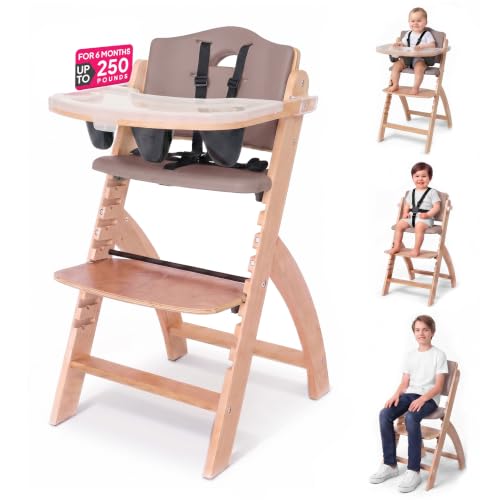
You plan to start solids around six months and would rather buy once than replace the chair a year later. A chair with several seat heights, a moving footrest, and a removable tray can start as a feeding seat and later pull up to the table without the tray. That long span of use is the main reason to pay for adjustment range instead of choosing a basic fixed chair.
Families whose tables and counters sit at different heights
You feed your child at a low dining table on some days and at a taller kitchen counter on others. Height settings let the tray or the chair itself line up with each surface, so your child is neither reaching up nor slumped below the food. Measure both surfaces before you shop, because the number of height positions matters less than whether one of them matches your furniture.
Grandparents and caregivers who seat children of different ages
You may feed a young baby on Monday and a preschool grandchild on Friday. Quick adjustment matters more for you than a perfect fit for one child, so look for changes you can make without tools. A seat and footrest that slide and click into place will get used, while a design that needs a screwdriver for every change will usually stay in one position.
Types of Adjustable High Chairs Compared
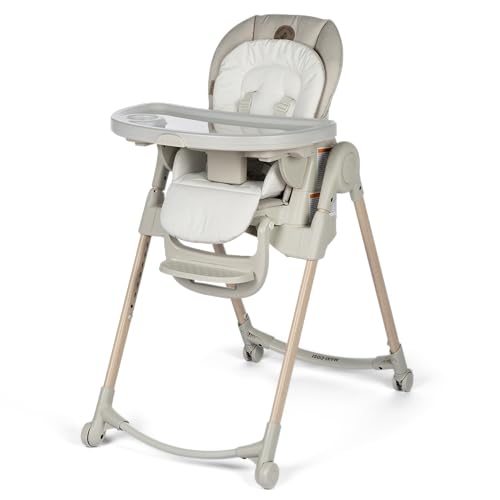
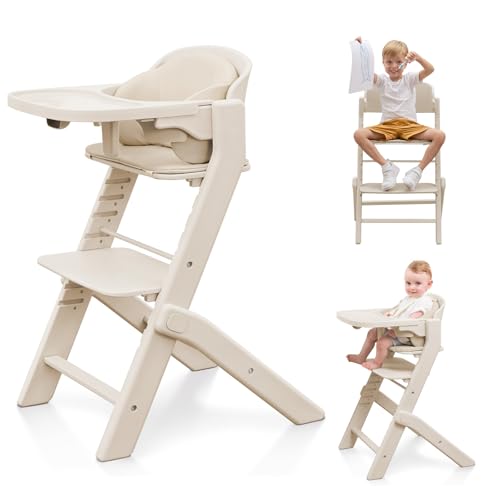
Convertible chairs change shape over time, often moving from a baby seat with a tray to a toddler chair and sometimes to a youth seat. Wooden grow with you chairs use a frame with many slot positions for the seat and footrest, and they tend to last the longest but take up a steady footprint. Folding adjustable chairs add height settings to a frame that collapses for storage, which suits homes that put the chair away between meals.
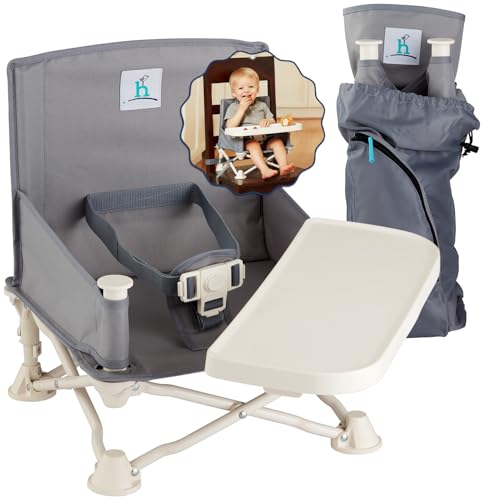
Compact adjustable chairs keep a smaller base and fewer positions, and hook on seats clamp to a table edge rather than standing on the floor. Booster style seats strap onto a dining chair and adjust in height with risers or legs. Our guide on how to choose a high chair covers these formats in more depth.
Key Features to Compare
Seat height and footrest adjustment
Seat height decides whether the tray clears your table and whether your child can later sit at the table itself. Count the positions, but also check the lowest and highest settings against your own furniture measurements. The footrest deserves equal attention. Dangling feet make children fidget and shift during meals, so the footrest should move in small steps and sit flat under your child at each stage. A footrest that only adjusts when you unbolt it will rarely end up in the right place.
Seat depth, backrest, and recline positions
A young baby needs a seat that is shallow enough for the back to rest against the backrest while the knees bend at the edge. Adjustable seat depth, or an insert that reduces the seat size, keeps small babies from slouching sideways. Some chairs add a gentle recline for early feeding before a baby sits fully upright. Recline is a short stage feature, so value it only if you plan to start before your child sits with steady control, and always use the harness in every position.
Harness design and safety standards
Look for a five point harness or a three point harness paired with a crotch post that stops a child from sliding down. Straps should adjust at the shoulders as your child grows and should release with a buckle you can open with one hand while still resisting a toddler who pushes on it. In the United States, choose a chair that meets the federal high chair standard enforced by the CPSC and look for JPMA certification as an added sign the model was tested to that standard.
Tray size, removal, and dishwasher care
The tray is the surface your child eats from, bangs on, and pushes food off, so its design shapes every meal. A tray with a raised rim keeps cups and food from sliding off too fast, and a removable top insert makes cleanup after messy meals much simpler. Check that you can remove the tray with one hand while holding your child with the other. Also confirm the tray stores somewhere sensible, such as hooks on the back legs, when you pull the chair up to the table.
Fold, footprint, and room fit
Measure the floor space the chair occupies with the tray on, because wide legs and a large tray can crowd a small dining area. If space is tight, compare the options in our guide to the best high chair for small spaces before you commit. A chair that folds flat can lean against a wall or slide into a closet, and our roundup of the best folding high chair covers that style. Wheels help on hard floors but should lock, since a chair that rolls while a child climbs in is a fall risk.
Age, weight, and height limits
Every adjustable chair lists a minimum age or readiness point and a maximum weight for each mode, and those limits change when the chair converts. A seat rated generously in baby mode may carry a much lower limit once it becomes a booster, or the reverse. Read the limits mode by mode rather than trusting the largest number on the box. Stop using a mode once your child passes its limit, even if the chair still looks sturdy, because the rating covers stability as well as strength.
Adjustable vs Other High Chairs: Pros and Cons
The clear advantage of an adjustable chair is fit over time. The seat, footrest, and tray can track your child growth, which supports better posture at meals and stretches one purchase across several years. The trade offs are real, though. Adjustable chairs usually cost more, weigh more, and have more moving parts to clean and check. A simple fixed chair can be lighter, cheaper, and faster to wipe down.
Portable and hook on seats solve a different problem, travel and small tables, and our guide to the best portable high chair covers those options. Many families pair one adjustable chair at home with one simple portable seat for trips. That pairing often costs less than forcing one chair to do every job badly.
How Much Should You Spend?
Under $50, expect basic booster style seats with limited height steps and simple straps. About $50 to $100 usually buys a folding chair with several heights and a removable tray insert. About $100 to $200 is where stronger harnesses, smoother adjustment, and better footrests become common. Above about $200, you are mostly paying for wooden frames, long conversion spans into youth seating, and nicer finishes. Spend for adjustment you will actually use.
Common Mistakes to Avoid
- Buying for the newborn stage only, so the chair feels cramped by the first birthday.
- Checking seat height but ignoring the footrest, leaving your child feet unsupported at every setting.
- Skipping the table measurement, then finding the tray cannot slide over your table edge.
- Using the chair without the harness because buckling it feels slow, which removes the main fall protection.
- Letting a child stand on the seat or climb in alone, a common cause of tip over falls.
- Ignoring the weight limit of the mode you are using, since each conversion stage carries its own rating.
Safety deserves one direct warning. Falls from high chairs and head bumps are common reasons young children visit emergency rooms, and most falls happen when a child stands, rocks, or climbs without the harness fastened. Seat your child, buckle the harness every time, and keep the chair away from walls and counters that a child could push against with the feet. If your child has trouble sitting steadily, seems very weak, or is not meeting movement milestones, talk with your pediatrician about readiness and positioning before you rely on any chair.
Care and Cleaning That Keep the Chair Working
Wipe the tray and seat after meals before food dries into the seams, because dried food in the adjustment slots can jam the moving parts. Wash fabric pads and straps as the maker allows, and let everything dry fully before the next meal so moisture does not sit under the pad. Our full walkthrough on how to clean a high chair covers stuck on food and strap washing in detail.
Once a month, work through every adjustment on the chair. Move the seat and footrest through all positions, tighten any bolts you can reach, and check the harness webbing for fraying. Inspect the legs and frame for cracks, especially after any fall. A chair that wobbles on a flat floor, has a cracked joint, or has a harness that no longer locks should be retired.
FAQ
Are adjustable high chairs worth the extra cost?
They are worth it when you will use the adjustment across more than one stage, such as baby feeding at a tray and toddler meals at the family table. The value comes from years of fit, not from any single feature. If you only need a seat for a short stretch, or a grandparent needs one for monthly visits, a simple fixed or booster seat usually makes more sense for the money.
When can a baby start using an adjustable high chair?
Most babies are ready around six months, when they can sit with little support, hold the head steady, and show interest in food. A recline position does not replace that readiness, because safe swallowing depends on trunk and head control. Premature babies and babies with low muscle tone may need more time or a different seating setup, so ask your pediatrician if you are unsure about your child timing.
Will an adjustable high chair fit at a standard dining table?
Most will, once you remove the tray and set the seat so your child elbows rest near table height. Standard dining tables sit about 28 to 30 inches high, so compare that with the chair seat settings and the height of the chair arms, which can block a chair from sliding in. If your table has a thick apron underneath, measure the clearance too, since arms and trays often catch on it.
How long does an adjustable high chair last?
In high chair mode, most children move on between ages two and three, when they can sit safely on a regular chair and reach the table. Convertible models extend that span by becoming a booster, toddler chair, or youth seat, sometimes for years beyond the tray stage. The real limit is the weight rating of the mode in use plus your child comfort, not the calendar alone.
How do you clean the harness straps on an adjustable high chair?
Many straps unthread from the seat so you can soak them in warm soapy water, scrub gently, rinse, and air dry them flat. While the straps dry, wipe the buckle housing with a damp cloth and pick dried food out of the slots with a soft brush. Never put straps back damp or rethread them in a new path, because the original routing is part of how the harness holds your child.
Final Thoughts
Start with your table height, your floor space, and the span of years you want one chair to cover. Then compare adjustment range, footrest support, harness quality, and cleaning effort. The best adjustable high chair for your home is the one whose settings match your furniture and your child at every stage. Check the product table above once more before you order.