Best Active Speakers for Mobile Dj: A First Time Buyer's Guide for 2026
Disclosure: We may earn a commission when you buy through links on this page, at no extra cost to you. As an Amazon Associate I earn from qualifying purchases. Learn more

Shopping for the best active speakers for mobile dj for the first time? Learn the terms, compare options, and avoid rookie mistakes with this easy guide.
Buying your first PA speakers feels intimidating because the spec sheets mix watt numbers, driver sizes, and connection panels that all look alike. The good news is that mobile DJ work has clear, learnable requirements. This guide explains the best active speakers for mobile dj in plain language, starting with what active means and ending with the mistakes that waste first time budgets. Read the basics, scan the product table, and you will know exactly which questions to ask before you order a pair.
You do not need the biggest speakers available. You need a pair that covers your typical room, fits your vehicle, and sets up fast when a venue gives you thirty minutes.



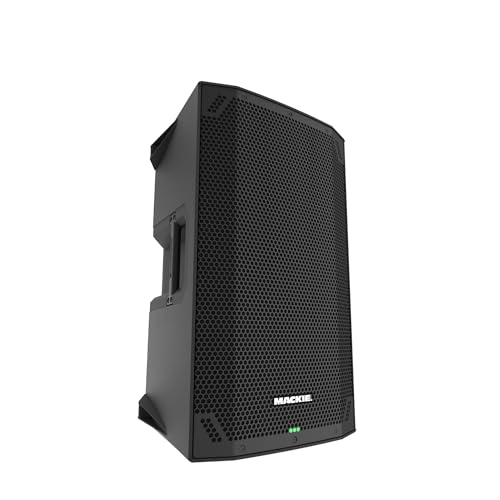

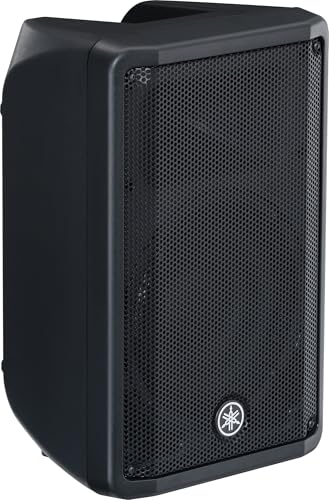

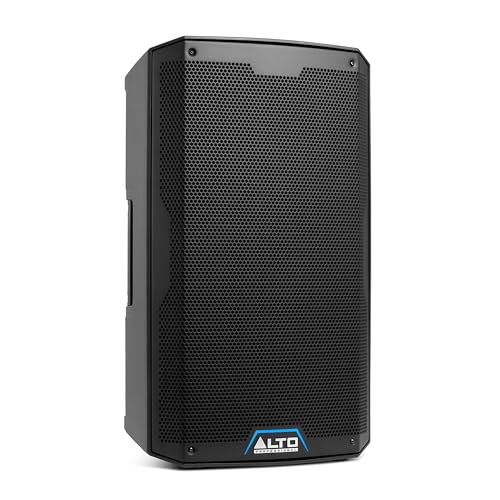
Active Speakers 101: The Basics
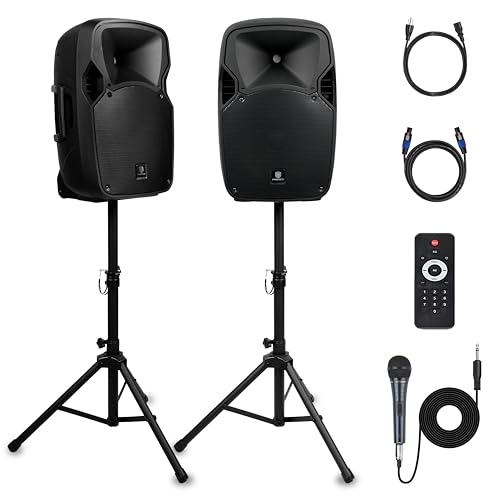
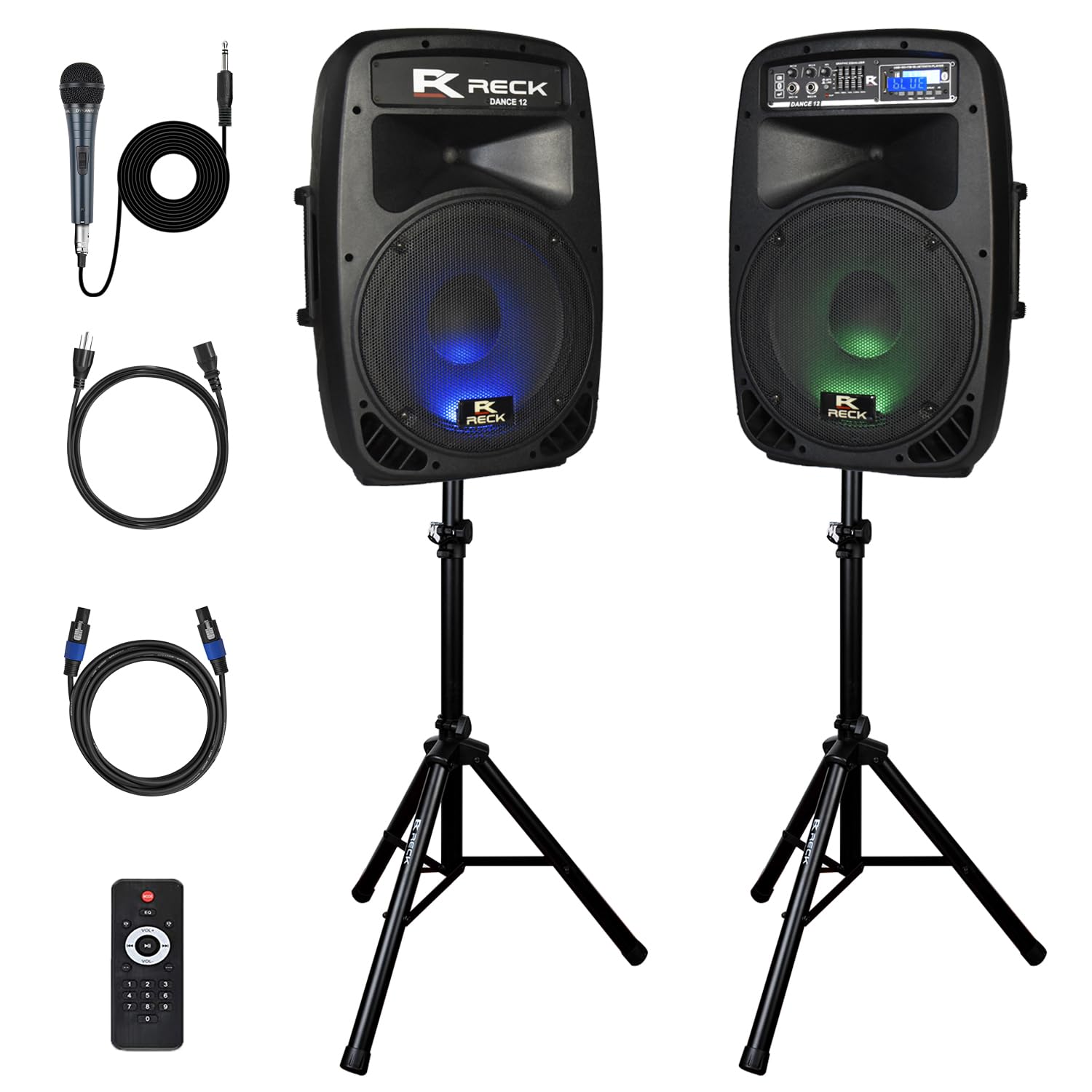
An active speaker has its amplifier built into the cabinet, matched by the maker to the drivers inside. You plug in power, connect your mixer or controller, and play. A passive speaker, by contrast, needs a separate amplifier, speaker cables, and more setup knowledge. Active designs dominate mobile DJ work because they remove that extra gear and guesswork. Most models include simple controls on the back panel, such as input gain, a basic equalizer, and sometimes a music or speech preset. A typical mobile setup uses two speakers on stands at ear height, angled slightly toward the dance floor, with an optional subwoofer later for larger rooms and bass heavy music.
Key Specs Explained in Plain English
Features That Matter for Mobile DJ Work
Mobile work adds demands that home listening never creates. You haul the speakers weekly, set them up in unfamiliar rooms, and play for crowds that stand close and talk loudly. Prioritize light cabinets with real handles, inputs that accept your mixer outputs, and a simple mixer section for a microphone, because speeches and announcements happen at almost every event. A speaker around 25 to 40 lb per cabinet keeps loading in reasonable for one person. Pole mounts, stand cups, and protective covers sound dull, yet they decide how calm your setup feels at a real gig.
Sound Quality and Tuning
Driver size shapes the sound more than watt claims. Speakers with 10 or 12 inch woofers balance clarity, portability, and enough bass for most parties, while 15 inch models move more air and suit larger rooms at the cost of weight. Frequency response figures tell you the range a speaker can reproduce, and a smooth response sounds better than a boomy one boosted for the showroom. Built in presets help beginners, since a music mode and a speech mode save you from equalizer guesswork. Loudness ratings in decibels matter, but compare them carefully, because makers measure them in different ways.
Connectivity
Your main connection should be a wired XLR or quarter inch input from your mixer or controller, because wired links do not drop out mid song. Bluetooth pairing is handy for setup music, background playlists during dinner, and quick tests, but treat it as a bonus rather than your show connection, since wireless links add delay and can disconnect. Useful extras include a second input for a microphone, an output socket to link a second speaker, and an aux input for a backup phone or laptop. Carry spare cables for every connection you rely on. A two dollar cable problem should never silence a paid event.
Feedback and Noise Control
Headphone style noise cancellation does not apply to PA speakers, but managing noise at a gig absolutely does. The real enemies are microphone feedback, ground loop hum, and room echo. Speakers with a microphone input benefit from simple feedback control or at least a high pass filter that trims rumble. Keep microphones behind the speaker line, point speakers away from the microphone, and raise gain slowly during sound checks. Balanced XLR cables reduce hum on long runs. These habits cost nothing and prevent the squeals and buzzes that make a new DJ sound careless.
Battery Life and Charging
Most DJ speakers plug into wall power, and for full volume event work that is the right design. Battery powered models exist for ceremonies, outdoor speeches, and busking style sets where outlets are far away. Expect a few hours at moderate volume, and much less at full volume, whatever the box promises at low listening levels. If you buy a battery model, learn its charge time, buy the right charger, and arrive with a full battery plus a power cable as backup. For main dance floor duty, plan your setup around outlets and safe cable runs instead.
Durability and Water Resistance
Mobile speakers live in car trunks, so cabinet build matters. Molded plastic cabinets resist dents and stay light, while wood cabinets can sound warm but chip and weigh more. Metal grilles protect the drivers from knees, cables, and curious guests. Water resistance ratings such as IPX4 cover light splashes for some portable models, but most full size PA speakers carry no rating at all and must stay dry. Use covers during transport and rain delays. If you compare general portable options for small events, our guide to the best mobile speakers explains where compact models fit.
Rookie Mistakes to Avoid
- Buying on watt numbers alone, when driver size, sensitivity, and room size decide real loudness far more.
- Choosing one huge speaker instead of a matched pair, then struggling with uneven coverage and no stereo image.
- Skipping stands, so speakers fire at knee height into the crowd instead of over it.
- Forgetting a microphone input check, then discovering at the venue that speeches have nowhere to plug in.
- Ignoring transport, and learning in the parking lot that the cabinets do not fit your car.
For a focused comparison of DJ specific models after this primer, see our guide to the best dj active speakers and note which features repeat across the category.
Getting Started: Setup and First Use
At home, unbox and test your best active speakers for mobile dj before your first paid event. Place speakers on stands at ear height, connect the mixer with balanced cables, and set gains in order, starting with your source, then the mixer, then the speakers. Play familiar tracks and walk the room, listening for dead spots and harsh corners. Keep firmware updated if your speakers offer app control, and store them in covers to protect drivers and corners. Label your cables and panel settings with tape notes. That small habit turns a nervous first setup into a calm routine you can repeat anywhere. Readers narrowing the full rig can also compare our guide to the best powered speakers for mobile dj use cases.
Frequently Asked Questions
What features matter most in active speakers for mobile dj?
Weight, inputs, and honest loudness matter most. You need cabinets one person can carry, XLR inputs for your mixer, a microphone input for speeches, and enough output for your typical room. Driver sizes of 10 to 12 inches cover most mobile work. A simple preset for music and speech helps beginners sound consistent while they learn equalizer basics at home rather than during a first dance.
What IP rating do I need for outdoor use?
Most events need no rating at all, because standard PA speakers are used under cover and kept dry. If you play garden ceremonies or poolside sets, a portable model rated IPX4 handles light splashes, and higher ratings on small portable speakers resist heavier rain. Never treat any rating as permission to leave speakers in a storm. Covers, canopies, and moving gear under shelter remain the real protection at outdoor events.
Do I need a special codec?
No. Codec names such as AAC or aptX describe how Bluetooth audio is compressed, and they matter for headphone listening far more than for DJ work. Your performance connection should be a cable from your mixer, which carries full quality audio with no pairing risk. Use Bluetooth only for background music and setup tasks. If a speaker lacks Bluetooth entirely, that is not a flaw for event work, and it should never outweigh inputs, weight, or sound.
How long does the battery last?
On battery powered portable speakers, expect roughly three to eight hours at moderate background volume, and far less near full volume. Runtime claims are usually measured quietly, so plan on half the advertised figure for a real event. Main DJ speakers avoid the question by using wall power, which delivers full output all night. If your event has no reliable outlet, bring a fully charged battery model for the ceremony and a powered setup for the party.
Wired or wireless: which sounds better?
Wired sounds better and behaves better. A balanced cable delivers full quality audio, no delay, and no risk of a phone notification or dropped pairing interrupting the music. Wireless links compress audio and can add latency that matters when you mix. Use wireless for convenience tasks like dinner playlists from across the room. For the set itself, professionals run cables, tape them down safely, and keep a backup cable within reach.
Is noise and feedback control worth the extra cost?
Simple built in help, such as a high pass filter or basic feedback suppression on a microphone channel, is worth having if you run speeches at most events. It will not rescue poor microphone technique, though. Distance from speakers and sensible gain settings prevent most feedback for free. Spend first on stands, cables, and a decent microphone. Add advanced processing later, once your calendar and room sizes justify it. For broader rig planning, our guide to the best mobile dj speakers layouts is a useful next read.
Our Verdict
For a first pair, choose 10 or 12 inch active speakers you can lift alone, with XLR inputs, a microphone channel, and stands in the budget from day one. That combination covers weddings, parties, and school events without drama. Grow later with a subwoofer or a backup speaker as your rooms get bigger. Compared in the product table, the best active speakers for mobile dj are the ones that fit your car, your rooms, and your setup routine, and our wider guide to the best dj speakers can help you plan the next step.