
Best Active Monitors Under 200 for 2026: A Buying Guide for Home Studios
Disclosure: We may earn a commission when you buy through links on this page, at no extra cost to you. As an Amazon Associate I earn from qualifying purchases. Learn more

Compare the best active monitors under 200 for a home studio: driver size, inputs, power, room fit and placement in plain terms.
Choosing powered speakers for a small studio is confusing because listings stress watt numbers and driver size. The best active monitors under 200 are the pair that stays clear at your desk, connects to gear you already own, and sounds honest in the space you have. This guide explains each choice in plain terms so you can use the product table with confidence.
Active monitors have amplifiers built into the cabinets, so you need no separate power amplifier between your interface and the speakers. At this price you can expect accurate voices and midrange detail, but not deep bass or very high volume. The sections below match driver size, connections and placement to your room and budget.
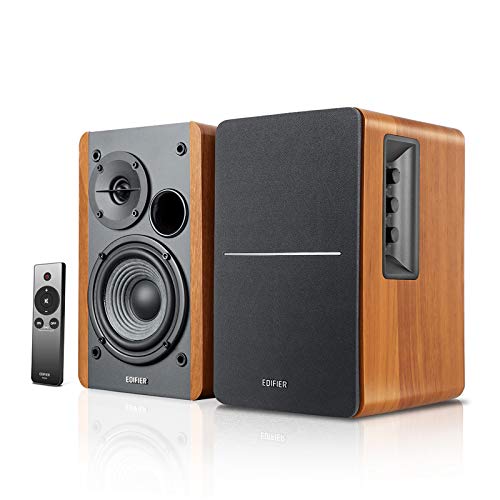

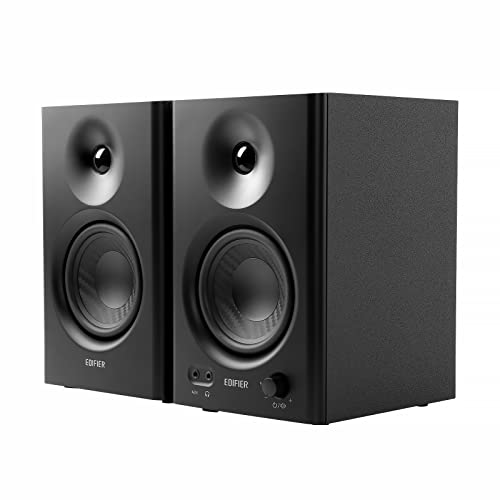


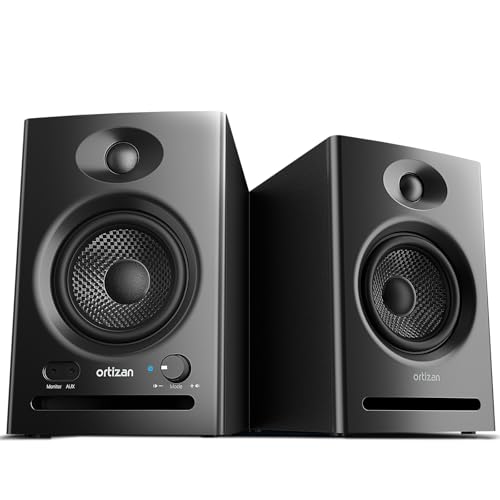
Who Should Buy Active Monitors Under This Budget?
Your main task decides which trade offs matter most at this price. A larger pair can also overwhelm a tiny desk.
Home Producers Learning to Mix
You record and mix in a bedroom or spare room and need to hear balance problems in your songs. Choose a 5 inch pair if your desk allows space on each side of your computer. Look for balanced inputs for your interface and tuning switches that tame extra bass near a wall. See our guide to the best studio monitors under 200 for wider studio context.
Podcasters and Video Editors
You edit speech more than music and need voices to sound clear without fatigue during long sessions. A compact pair with a front volume control and a headphone output helps when you switch between speakers and headphones. Honest midrange matters more than strong bass for your work, because small cuts and mouth noises hide in a boomy presentation.
Desktop Listeners Who Want Honest Sound
You listen at a desk and want music, video and calls to sound clear without buying a separate amplifier. Active models keep the system simple, with a direct link from your computer or phone. Readers comparing speaker style options can see our guide to the best monitor speakers under 200. Choose clarity and low noise at close range over sheer loudness.
Key Features to Compare
As you compare the best active monitors under 200, judge each model by how it will behave on your desk and in your room. The five factors below explain what each spec changes and who should favor which option.
Driver Size and Low End Reach
Driver size sets how much low end a small cabinet can produce. Models in this range most often use woofers of about 3.5 to 5 inches, paired with a small tweeter for high notes. A 5 inch woofer usually gives fuller kick drums and bass lines, while a 3.5 or 4 inch woofer fits tight desks and still keeps voices clear. No model at this price reproduces the lowest bass notes fully, so judge bass by clarity rather than depth alone.
Amplifier Power and Clean Volume
Power ratings tell you how loudly a pair can play before distortion, but makers measure power in different ways, so treat watts as a rough guide only. Many pairs in this range offer about 10 to 25 watts for each speaker, which is plenty for clean volume about 3 to 4 feet away. If you often listen across a larger room, this budget will feel strained and a larger system deserves the extra cost.
Inputs and Connecting Your Gear
Connections decide how cleanly your speakers link to an audio interface, a computer or a phone. Balanced inputs on TRS or XLR cables reject hum over longer runs and suit most interfaces, while RCA inputs are unbalanced and work best with short cables from consumer gear. Some models add a 3.5 mm input for a computer or tablet. Choose the input set that matches the outputs you own today, because adapters add cost and noise risk.
Tuning Controls and Room Fit
Small rooms add bass and blur detail, so simple tuning controls carry real value at this price. A bass trim switch can reduce boom when a speaker sits close to a wall or a corner, and a treble trim can soften a bright room with bare walls and a hard desk. Set controls flat at first and change one switch at a time while you replay a track you know well. Desk users in plain rooms benefit most from these controls.
Port Position and Placement on the Desk
Most active monitors use a port, a small opening that helps a compact cabinet produce more low end. A front port lets you place a speaker closer to a wall, while a rear port needs space behind the cabinet. Raise each tweeter to about ear level on stands or foam pads and point both speakers toward your head. Keep the pair and your chair in a loose triangle for the most stable stereo image.
Types of Active Monitors and What This Budget Really Buys
Compact pairs with woofers of about 3.5 to 4 inches suit small desks, dorm rooms and travel setups where space matters more than bass depth. They keep voices and acoustic instruments clear at close range. Their limit is low end fullness, so bass heavy work will always involve a headphone check as well.
Pairs with 5 inch woofers are the standard choice for a first home studio because they balance desk size with fuller low end. They need a wider desk and more distance from walls. For a closer look at models built for studio work, see our guide to the best active studio monitors under 200. This size suits producers who mix full songs rather than speech alone.
Read every listing with care, because some prices cover a single speaker while others cover a matched pair, and compare only the pair total with your budget. At this level makers save money on cabinet finish, deep bass extension and extra inputs rather than on basic clarity. A front volume control and a headphone output are worth having.
Common Mistakes to Avoid
These errors cost clarity that no later setting can fully restore.
- Buying a large pair for a tiny desk forces the speakers too close together and weakens the stereo image you rely on for mixing.
- Placing rear ported speakers flat against a wall adds boom that masks bass notes and vocal detail.
- Choosing a pair only for high watt numbers can leave you with loud playback that still sounds harsh at your desk.
- Running long unbalanced cables beside power leads invites hum and buzz that sit under quiet passages.
- Listening at high volume in a small untreated room makes reflections seem like flaws in your mix and leads to poor balance choices.
- Ignoring the need for a power outlet at each speaker can leave one cabinet unpowered and your setup unfinished on the first day.
Care and Maintenance for Active Monitors
Dust the cabinets and driver surrounds with a soft, dry cloth and keep liquids away from the cones and ports. Never press on a tweeter dome or push dust into a port while you clean. Keep the rear panels clear of curtains and cables so the built in amplifiers can shed heat.
Use a steady power order to protect the drivers from loud pops: turn the monitors on last and off first, with volume down while you change cables. Check cables and plugs each month for looseness or damage, and lower the volume at once if one side crackles or drops out. Keep the speakers dry and out of direct sun.
Frequently Asked Questions
Can You Buy a Good Pair of Active Monitors for Under 200 Dollars?
Yes, you can buy a good pair of active monitors for under 200 dollars if your room is small and your levels stay modest. Expect honest midrange and clear voices rather than deep bass or room filling volume. One sensible path is to start with a compact pair now and add a subwoofer later only if your work truly needs the lowest notes.
Do Active Monitors Need a Separate Amplifier?
No, active monitors do not need a separate amplifier because each cabinet holds its own built in amplifier matched to its drivers. You still need a power outlet for each speaker and a source with a volume control. One practical point is to set both speaker volume controls to the same mark when each cabinet has its own knob, so the stereo balance stays centered.
What Size of Active Monitor Suits a Small Bedroom Studio?
A 4 inch or compact 5 inch active monitor suits most small bedroom studios, with the smaller size safer when your desk is under 4 feet wide. At very close range a smaller cabinet often sounds more focused because its drivers blend over a shorter distance. Measure the space beside your computer first and leave room for stands or pads, because crowding leads to poor placement.
Can Active Monitors Connect Directly to a Computer Without an Interface?
Yes, active monitors can connect directly to a computer through a headphone output and a suitable cable, with no interface required. Sound quality depends on the computer output. If you hear a faint hum that rises when the computer works hard, plug the speakers and computer into the same power strip and keep the audio cable away from chargers, because shared power often quiets that hum.
How Far Should Active Monitors Sit From a Wall in a Home Studio?
Active monitors should usually start about 6 to 12 inches from the wall behind them, then move in small steps while you listen. Front ported models tolerate the closer end of that range, while rear ported models often need the full space. Use one familiar song for every move and judge the bass at your chair only, because bass changes when you move.
The Bottom Line
Match driver size to your desk, choose inputs that fit your interface, and place the pair at ear level with room to breathe behind the cabinets. Those three choices shape your sound most. Use the product table to confirm size, inputs and pair price before you order.
When you choose the best active monitors under 200 for the work you actually do, a modest pair can serve for years of editing, mixing practice and daily listening. Start simple and let your room guide the final tweaks.


