
Best Acrylic Drinking Glasses: Sizes, Styles and Care Guide
Disclosure: We may earn a commission when you buy through links on this page, at no extra cost to you. As an Amazon Associate I earn from qualifying purchases. Learn more
The best acrylic drinking glasses suit your cupboard, your drinks and your washing routine. Compare tumblers, tall glasses and thicker sets.
A glass slips on a wet patio and the evening pauses for sweeping and worry about bare feet. That risk is why many households switch part of their cupboard to acrylic. Choosing the best acrylic drinking glasses for your home comes down to your space, how many people you serve, and what you pour most often.
This guide matches size, shape, and set count to your rooms and routines before you spend anything. If you are still weighing materials, our guide to the best drinking glasses puts acrylic beside glass options. Use the comparison table below to see the main types, then read on for the details that decide daily comfort.



Quick Answer: Three Types in 30 Seconds
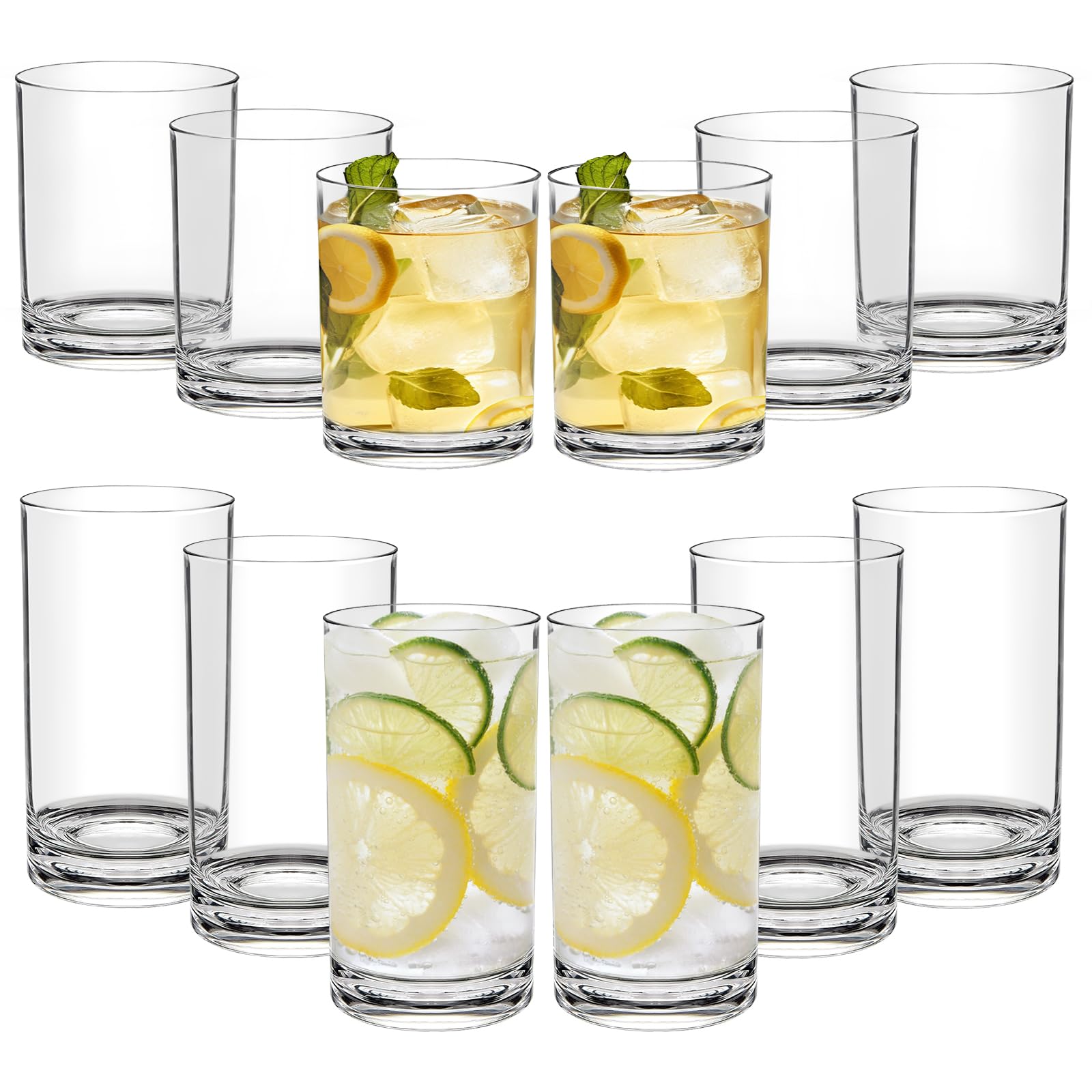
Most homes need only one of three types. Classic tumblers suit water, juice, and daily meals for most families. Tall glasses suit iced tea and drinks that need room for plenty of ice. Thicker premium style sets suit busy homes that use the same glasses all day and want a firmer feel in the hand.
Before You Buy: A Quick Checklist for Choosing Acrylic Drinking Glasses
Small differences in size, wall thickness, and rim finish change how a glass feels and how long it stays clear. Work through this checklist once before you compare any set.
Size: Match It to Your Space
A 12 oz glass suits juice, milk, and smaller servings for children, while a best 16 oz drinking glasses format is the workhorse for water and soda because it holds a full drink plus ice without constant refills. Measure cupboard shelf height and dishwasher clearance before you order, since a tall glass that cannot stand upright at home will end up stored on its side and scratched.
Which Type Fits Your Routine
Low tumblers are stable, easy for children to grip, and simple to line up in a shallow cupboard. Tall highball shapes hold more ice and suit long drinks, but they tip more easily and need taller storage. Ribbed and fluted sides add grip when hands are wet and hide light marks. For daily use, a plain tumbler usually wins, as our guide to the best drinking glasses for everyday use also shows.
Features Worth Paying For and Ones to Skip
Pay for a smooth and even rim, a base thick enough to sit flat without rocking, and walls that do not flex when you grip the glass. A shape that stacks with a small gap is also worth it, since glasses that lock together can crack at the lip. Skip most extras: lids and straws help for travel and young children, but they add parts to wash and lose, and decorative lids stop tumblers nesting in the cupboard.
Lead and Cadmium Safety in Colored Acrylic
Acrylic glasses are not glazed like ceramic ware, so concern about lead or cadmium in a glaze does not apply in the same way. The useful check is the pigment and the plastic itself. Look for a clear statement that the set is food grade and BPA free, read any safety warning in full, and avoid colored sets that give no material information at all.
Dishwasher, Microwave and Oven Safety
Many acrylic sets are sold as dishwasher safe, but that claim usually means the top rack on a gentle cycle. High heat and strong detergent dull acrylic over time, causing a cloudy look and fine surface cracks called crazing, so hand washing in warm soapy water keeps the surface clear for longer. Acrylic does not belong in a microwave or an oven, since heat can warp the shape. Use it for cold and room temperature drinks, and pour hot drinks into ceramic or glass.
Set Size and Replacement Availability
A set of 4 suits a single person or a couple, a set of 6 or 8 suits most families, and a set of 12 suits homes that host often and have the shelf space to store the extras. Count the glasses you truly use on a busy day before you choose. Also check whether the maker sells the same glass on its own, since one cracked glass in a closed set can pressure you to replace the whole set.
Realistic Budget Ranges
Basic thin sets often cost under $20 and suit a spare patio set, though they feel light and mark more easily. Most family sets fall at about $20 to $50, where you can expect thicker walls, better rims, and clearer material. Larger premium style sets can run about $50 to $100 for daily heavy use. Above that range you are often paying for styling, so fix the size and type first.
Types Compared: Three Styles That Cover Most Homes
Compare the three styles below instead of chasing a long list of models. The checklist above helps you judge any set within a style.
Classic Tumblers for Most Homes
Classic medium tumblers are the safest starting point for a mixed household. They sit low and stable on the table, fit most cupboard shelves and dishwasher racks, and work for water at meals, juice at breakfast, and milk for children. Their wide mouth is easy to wash and easy for smaller hands to hold. Look for a tapered shape that stacks without sticking and a size near 16 oz for adults.
Tall Glasses for Iced Drinks and Entertaining
Tall highball style glasses suit homes that serve a lot of iced tea, lemonade, or sparkling water with fruit. The extra height holds more ice, so drinks stay cold with fewer refills, and the narrow shape looks neat on a tray for guests. The trade off is storage and stability: tall glasses need taller shelves and tip sooner if a table is bumped. Choose this style as a main set only if iced drinks are your daily norm.
Thicker Premium Style Sets for Daily Heavy Use
Premium style acrylic sets use thicker walls and bases, a more polished rim, and clearer material that stays bright for longer with careful washing. They feel closer to glass in the hand and suit hosts who eat outdoors often but still care about the table setting. Expect to pay more and to hand wash when you can. Choose it when the set will be your main glassware for years, not as cheap spares for a single party.
Our Selection Process for the Best Acrylic Drinking Glasses
Types and sets are judged on material and clarity, wall thickness and stability, size and storage fit, washing limits, set contents, and total cost over time. Maker specifications supply capacity and care limits, and verified buyer comments show patterns about clouding and cracking. Sets that hid washing limits or material information scored lower.
Acrylic Compared With Other Materials
The strongest case for acrylic is simple: it does not shatter. A dropped acrylic glass may crack or bounce, but it will not scatter sharp shards across a kitchen floor or a pool deck. That is why acrylic is the common choice for pools, boats, patios, and homes with young children, and why it overlaps with the needs covered in our guide to the best unbreakable drinking glasses. It is also light to carry on a full tray and usually cheaper to replace than good glass.
Against that, acrylic scratches more easily, can turn cloudy with heat and harsh washing, and cannot serve hot drinks. Real glass still wins for a crisp rim feel and scratch resistance, and tempered glass adds strength, as our duralex picardie review shows for a classic tempered design. Metal cups avoid breakage too, but they hide the drink, so acrylic remains the clear and light middle ground.
Common Buying Mistakes to Avoid
- Buying tall glasses without measuring shelf height, so the new set cannot stand upright in your cupboard.
- Choosing the largest set on offer, so spare glasses crowd your storage and get scratched while squeezed together.
- Putting acrylic in the microwave or pouring in boiling water, so the walls warp and the surface turns cloudy.
- Judging thickness from photos alone, so you end up with a flexible set that feels cheap in daily use.
- Ignoring how the set washes, so a design with deep cuts and narrow bases becomes a chore you avoid using.
- Buying colored sets with no material details, so you cannot confirm what the glasses are made from.
Cost of Ownership and Care
The purchase price is only part of the cost. Acrylic has no running costs, but careless washing shortens its life and forces early replacement, and a closed set with no refill option can turn one cracked glass into a whole new purchase. Wash acrylic soon after use in warm water with mild soap, using the soft side of a sponge, and dry it with a soft cloth if your water leaves spots.
Store glasses fully dry before you stack them, and keep them away from harsh solvents and strong bleach soaks, since those attack the surface. Our full guide on how to clean drinking glasses covers stain and odor problems in more depth. Retire a glass when deep cracks appear at the base or rim, because those cracks trap residue. With gentle care, a good set should serve for several years.
Your Questions, Answered
What is the most reliable brand of drinking glasses?
No single brand is most reliable for every home, and for acrylic the build details matter more than the name on the box. Look for consistent wall thickness, a rim with no rough spots, and a maker who offers replacement glasses. A brand that has sold the same design for years is often safer, since you can still top up the set later.
How do you clean drinking glasses that have turned cloudy?
Cloudiness on acrylic usually sits on the surface, so start gently before you scrub. Soak the glasses in warm water with a small amount of white vinegar for about 15 to 20 minutes, then wash with mild soap and a soft cloth. If the haze stays, it is often fine heat damage rather than dirt, and hard scouring will only add scratches without restoring the clarity.
Are expensive drinking glasses worth it?
They can be, when the extra money buys thicker walls, better clarity, and a design you can replace piece by piece. Spread across years of daily meals, a durable set can cost less per year than a cheap set you replace each summer.
How long do drinking glasses made of acrylic last?
A well made acrylic set that is washed gently often lasts several years of regular use before scratches and fading make it look tired. Lifespan drops fast with daily high heat dishwasher cycles, scouring pads, and use with very hot drinks. Watch the base and rim for a web of fine cracks, since that crazing means the plastic is weakening and the glass should be replaced.
Are acrylic drinking glasses worth it for homes that rarely eat outdoors?
Yes, for many indoor homes they still earn their place. Kitchens with tile or stone floors, rooms where children carry their own drinks, and shared homes all benefit from glassware that will not scatter shards after a knock. Acrylic also helps anyone with a weaker grip, since the glasses stay light even when full.
What should you check first when an acrylic set arrives?
Check the rim of every glass with a clean fingertip before you wash or use the set, since a rough or uneven rim is the flaw you will notice at every sip. Then test one glass in your cupboard for height and hold it full of water to feel its stability. Spotting a poor fit on day one lets you return an unused set.
Final Thoughts
For most readers, classic medium tumblers in a set of 6 or 8 are the calm and useful place to start, with tall glasses or a thicker premium style set added only when your drinks and hosting habits call for them. Return to the product table above and match each type against your shelf space and washing routine.
Chosen with those checks in mind, the best acrylic drinking glasses stop being a compromise and become the set your household reaches for without thinking. Pick the size you measured and the set you can top up later, and it will fit your home for years.


