Best Acrylic Brush Sets 2026: A Practical Buying Guide
Disclosure: We may earn a commission when you buy through links on this page, at no extra cost to you. As an Amazon Associate I earn from qualifying purchases. Learn more

Choose acrylic brush sets by bristle type, shape, handle, and size range. Care, cleaning, and beginner versus studio guidance for all painters.
Brushes shape every stroke, so the best acrylic brush sets are chosen by bristle, shape, and size, not by how many pieces are in the box. Acrylic paint dries fast and can be hard on brushes, which makes material and care just as important as the initial feel. The comparison table below will help you compare the main options side by side.
This guide walks through bristle types, brush shapes, handle lengths, and cleaning habits for acrylic painters. Whether you paint for fun or sell finished work, the right set is the one that holds its shape, releases paint evenly, and survives regular washing.


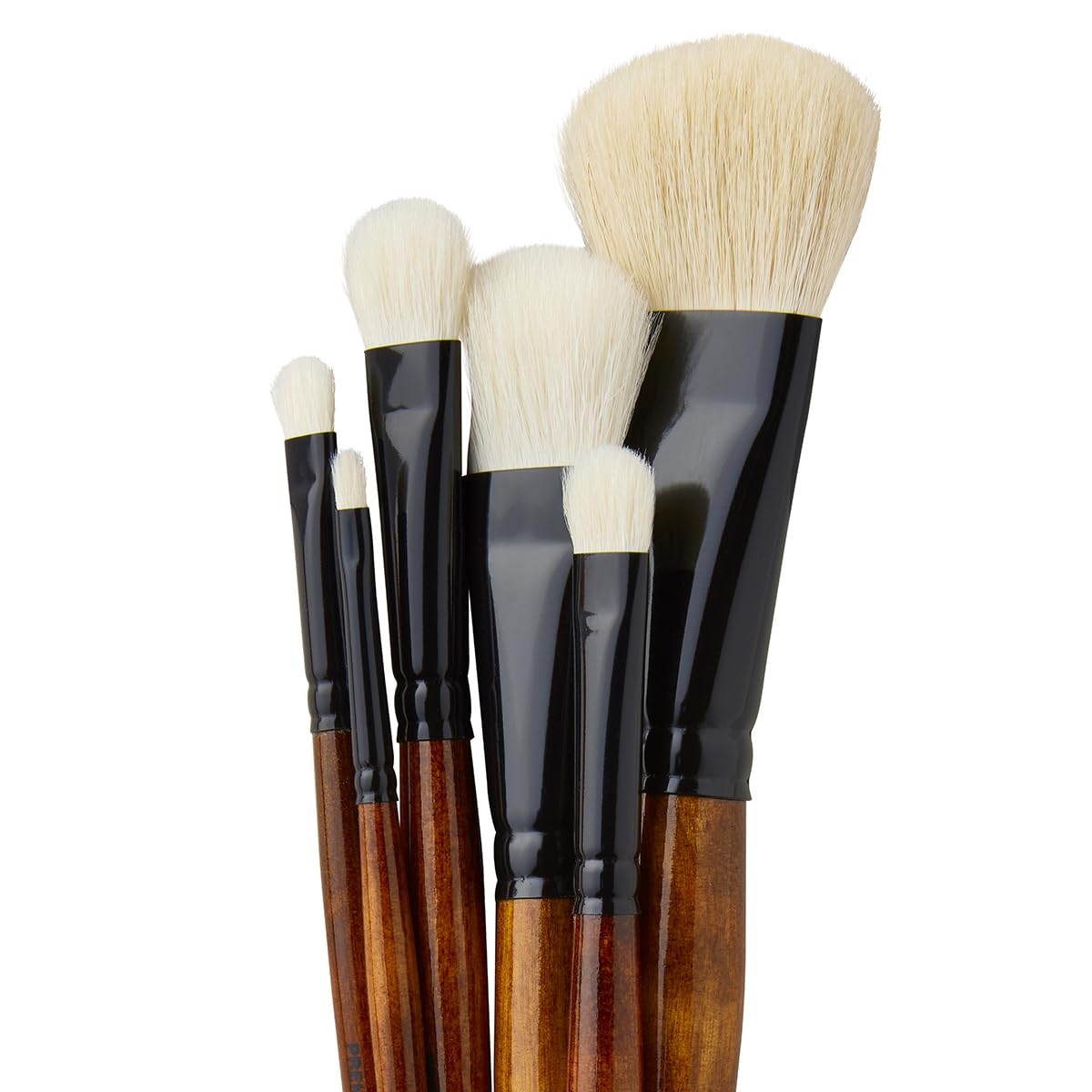
Who Should Buy Which of the Best Acrylic Brush Sets
For Beginners
Beginners need a small, forgiving set that covers washes, broad areas, and basic detail without confusion. A few versatile shapes beat a huge set of near duplicates. Start simple, learn what each shape does, and add specialty brushes later.
For Hobby Painters
Hobby painters who paint weekly benefit from a mid size set with a good range of flats, rounds, and a detail brush. Durability matters, since regular washing wears cheap ferrules and glue. A set that keeps its shape after many washes saves money over time.
For Studio and Selling Artists
Studio artists need consistent performance across long sessions and repeated cleaning. Brush snap, paint holding, and ferrule strength matter more than packaging. Many pros keep a workhorse set for daily painting and a finer set for detail and finishing.
Types Compared
Synthetic Bristle Sets
Synthetic bristles resist acrylic paint and clean up well with water, which makes them the common choice for acrylics. They hold shape, snap back after a stroke, and cost less than natural hair. They suit most acrylic painters, from beginners to pros.
Natural Bristle Sets
Natural bristle sets, often hog hair, hold a lot of paint and give a textured stroke. They can be stiffer and need more care, and some painters prefer them for bold, expressive work. They are less forgiving if left unwashed, since dried acrylic damages them fast.
Mixed Sets
Mixed sets combine synthetic and natural brushes, or several shapes in one box. They suit painters who want to try different feels without buying separate sets. Check that each brush has a clear job, rather than counting pieces that duplicate each other.
Detail and Miniature Sets
Detail sets use small rounds and liners for fine lines, eyes, lettering, and small highlights. They need a fine, stable point and a handle that feels steady in the hand. They suit miniature painters and anyone who finishes work with small marks.
Key Features to Compare
Bristle Material and Snap
Snap is how well a brush springs back to shape after a stroke. Good snap gives control for lines and edges, while softer brushes suit washes and blending. Check snap with clean water if you can, and watch whether the tip stays centered.
Brush Shapes
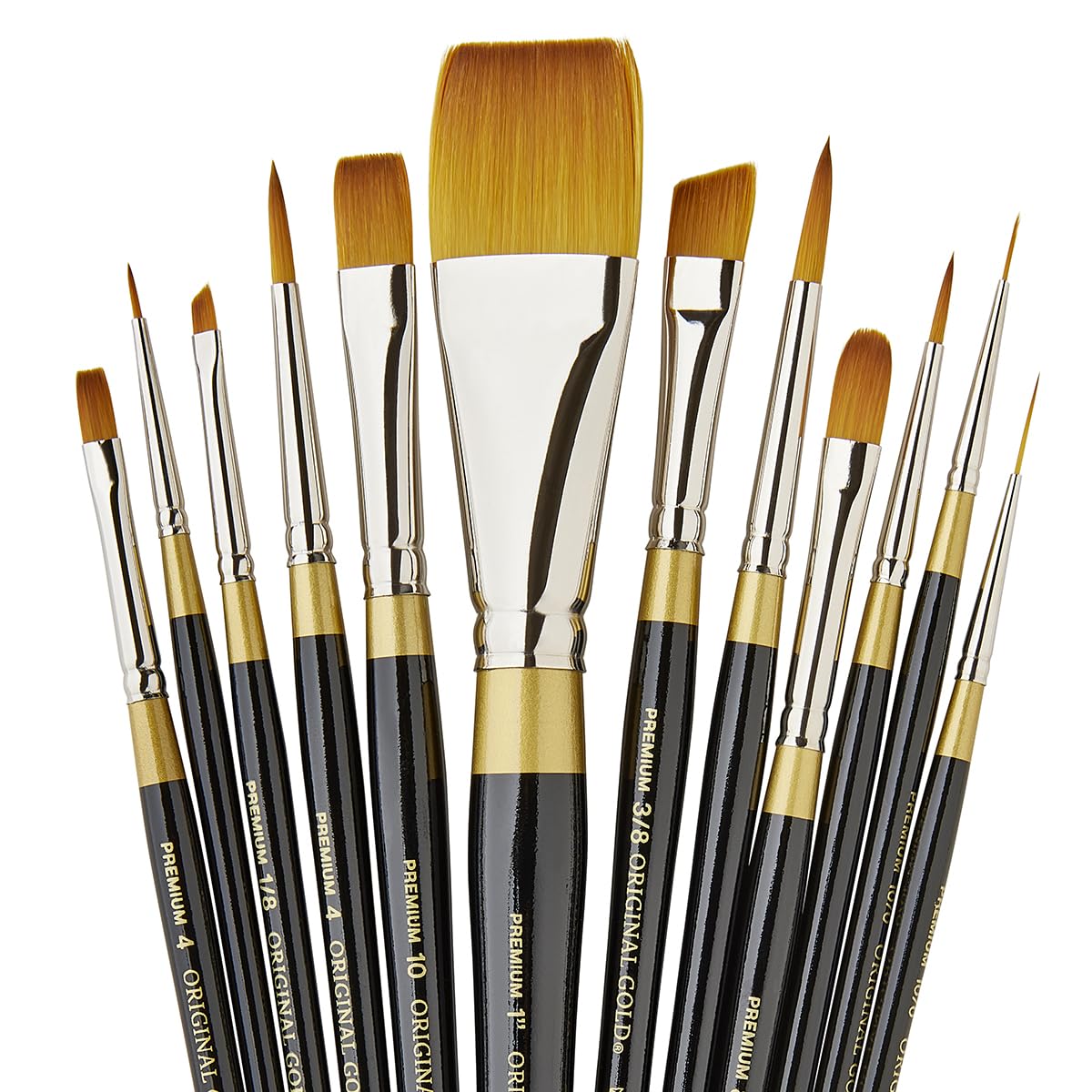
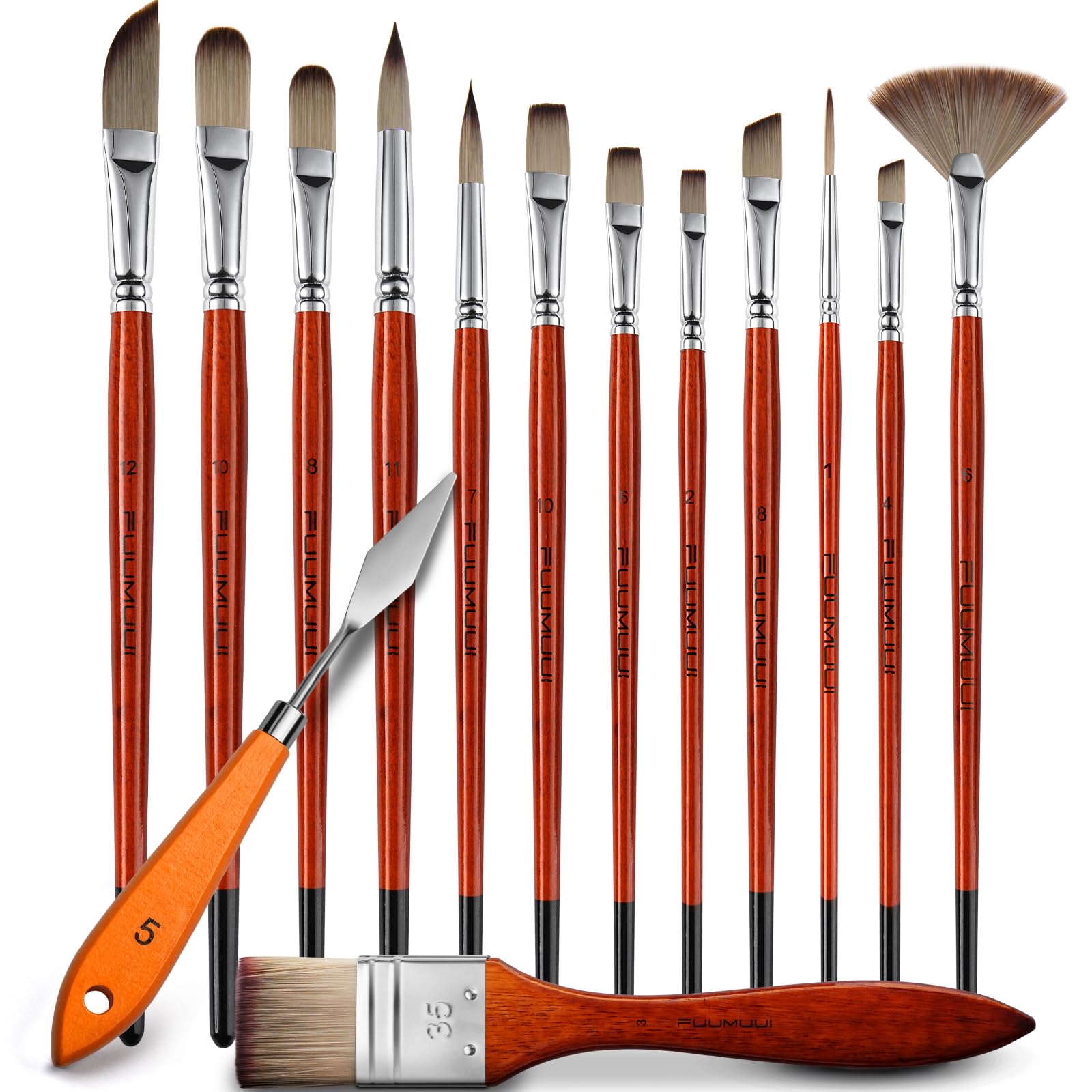
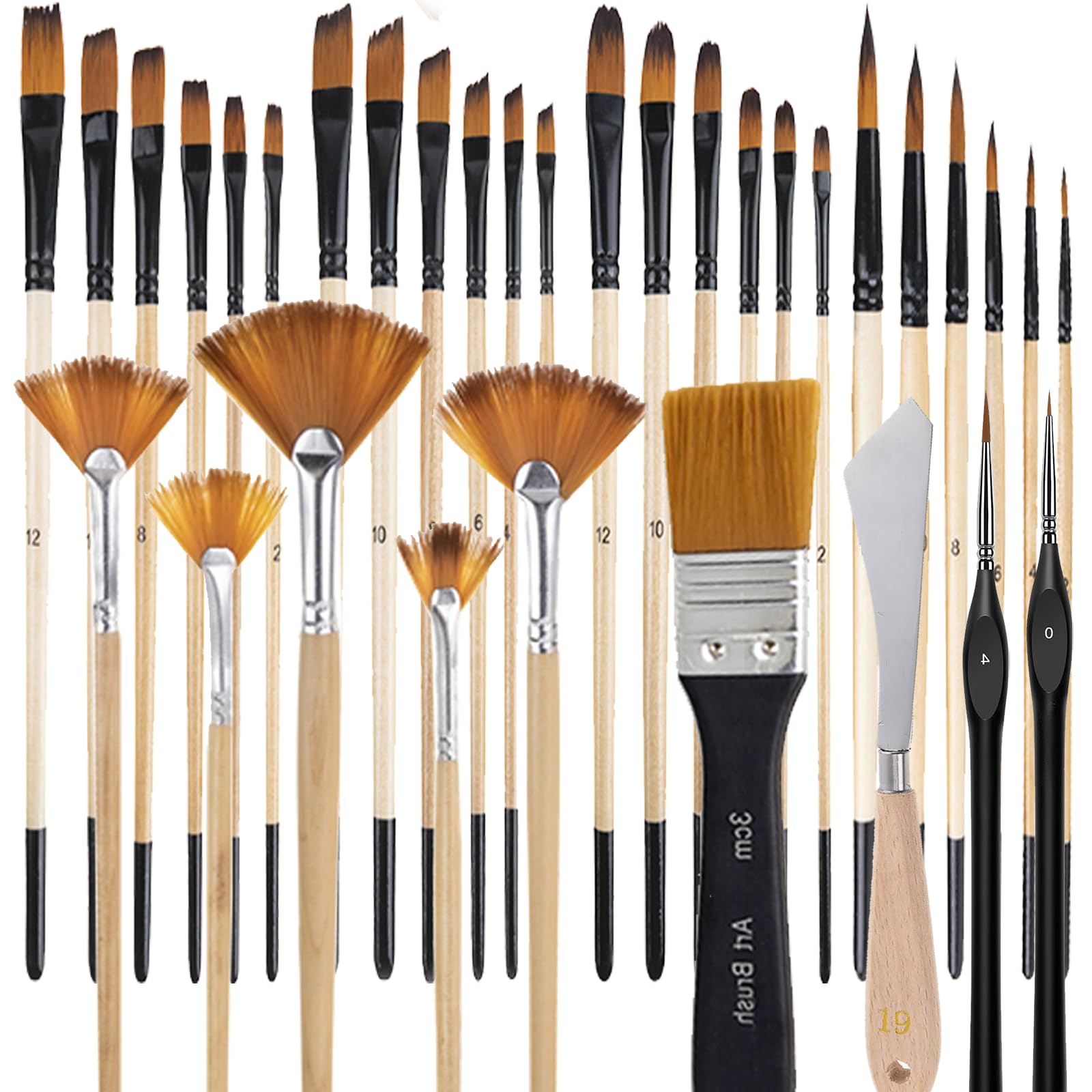
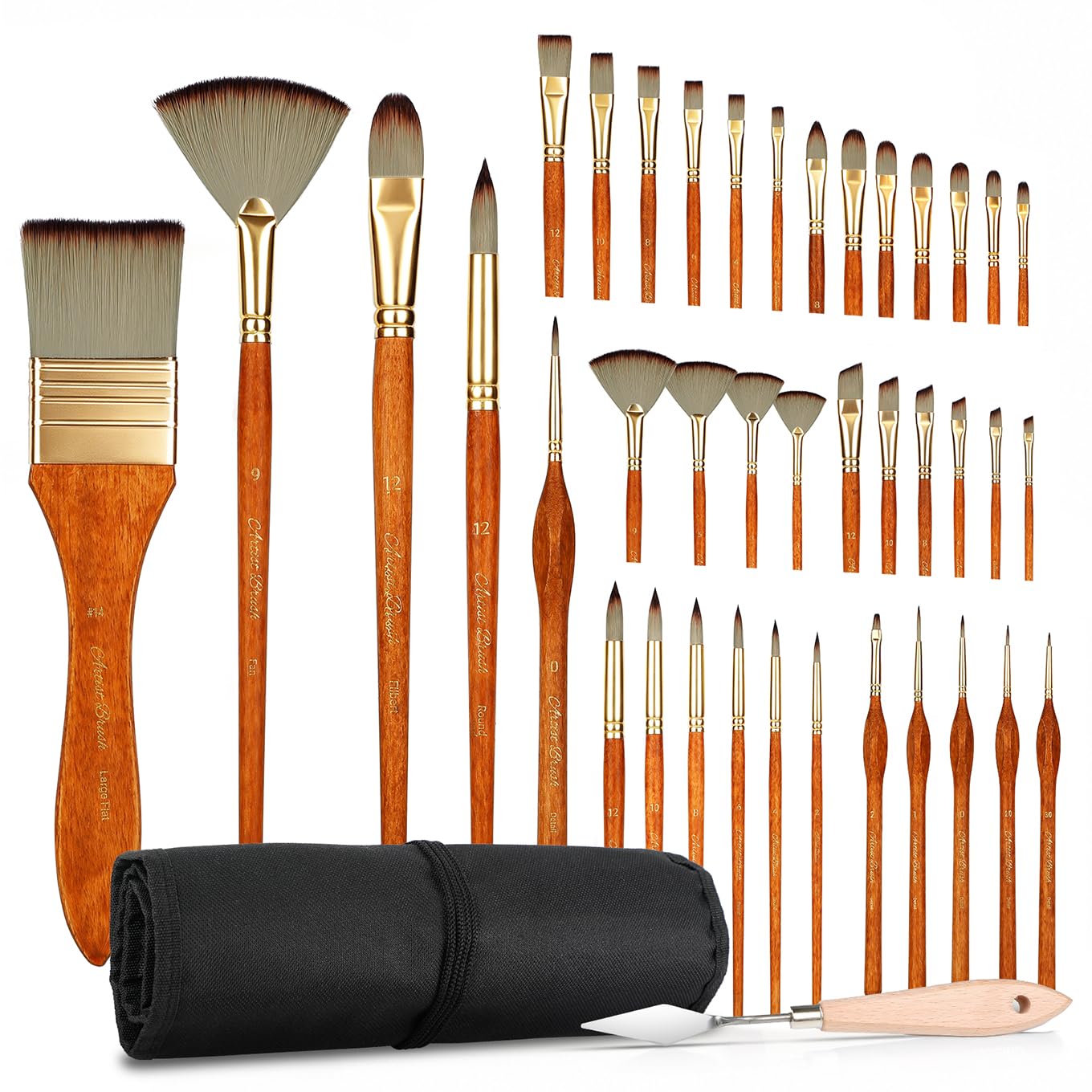
Flats cover large areas and make sharp edges, rounds handle lines and detail, filberts blend softly, and fans create texture. A useful set includes at least one flat, one round, and one detail brush. Extra shapes should solve a real painting problem, not just fill the box.
Sizes and Range
Brush sizes run from tiny detail sizes to broad wash sizes, and numbering varies by maker. A practical range covers a large wash brush, mid size flats and rounds, and one small detail brush. Very large sets often repeat sizes you will rarely reach for.
Ferrule and Handle Quality
The ferrule joins bristles to handle, and a loose or rusting ferrule ruins a brush. Look for a snug, sealed ferrule and a handle that feels balanced, not top heavy. Long handles suit easel work, while short handles suit tabletop and detail work.
Paint Holding and Release
A good brush holds enough paint for a smooth stroke, then releases it evenly without dumping or starving. Synthetic filaments with flagged tips often hold acrylic well. If a brush leaves streaks or skips, the bristle or shape may not suit the paint thickness.
First Use and Break In
Rinse new brushes in clean water before first use to remove loose fibers and sizing. Try each shape on scrap paper or canvas with your usual paint thickness, and note which brush suits washes, edges, and detail. A short practice session teaches more than any packaging claim.
Keep a water jar for rinsing during painting and a second jar of clean water for final rinsing. Never leave brushes standing bristle down in water, since that bends tips and loosens ferrules. Rest them flat or bristle up between strokes.
Care and Maintenance
Wash brushes promptly with lukewarm water and mild soap after every session, working paint out from ferrule to tip. Reshape the tip with your fingers and let brushes dry flat or bristle down in a holder so water drains away from the ferrule. Dried acrylic is very hard to remove, so speed matters.
Deep clean now and then with a brush cleaner made for acrylics, following the product guidance. Store brushes upright with tips protected, and keep them away from heat and direct sun. Good care can double the useful life of a decent set.
Mistakes to Avoid
- Choosing the set with the most pieces, even when many brushes duplicate each other.
- Leaving acrylic paint to dry in brushes, which stiffens bristles and ruins tips.
- Storing brushes bristle down in water, which bends tips and loosens ferrules.
- Judging a set by packaging instead of snap, shape, and ferrule quality.
A Final Check Before You Order
Before you order, confirm bristle type, shapes, sizes, handle length, and ferrule quality against how you paint. Count only the brushes you will actually use, and check cleaning guidance for acrylics. These details matter more than the piece count on the box.
The related guides linked below cover nearby brush and paint sets, so you can compare acrylic paint brush sets and general brush sets side by side. Read them with your painting style in mind, and shortlist the set that fits your work. Related guides: best acrylic paint brush sets, best brushes sets, best brush sets, best acrylic sets.
Frequently Asked Questions
Are synthetic brushes better than natural brushes for acrylics?
For most acrylic painters, yes. Synthetic bristles resist acrylic paint, clean up well, and hold shape after repeated washing. Natural bristles can give a distinct textured stroke, but they need more care and can suffer faster if paint dries in them. Natural bristles also shed more in acrylics, which can leave stray hairs in finished paintings.
How many brushes do I need to start with acrylics?
A small set of four to six brushes covers most needs: a large flat for washes, a mid flat, a mid round, a filbert, and a small detail round. Add specialty shapes only when a painting problem calls for them. Fewer good brushes beat many poor ones. Travel sets with a roll case protect tips better than loose brushes tossed in a bag.
How do I keep acrylic brushes from going stiff?
Wash promptly after every session with lukewarm water and mild soap, working paint out from ferrule to tip. Never let paint dry in the brush, and reshape tips before drying. If a brush does stiffen, soak it in a brush cleaner made for acrylics. Conditioner made for brushes can restore slightly stiff bristles, though badly dried brushes rarely recover fully.
What is the difference between long and short handle brushes?
Long handles suit easel painting, giving reach and a looser arm movement. Short handles suit tabletop work, detail, and watercolor style control. Choose by how you paint, not by what looks professional in photos. Short handles also suit painting at a table, where long handles bump easels, jars, and water containers.
Can I use acrylic brushes for other paints?
You can, but keep sets separate where possible, since oils and solvents need different cleaning. Brushes used for oils should not move to acrylics without thorough cleaning. Dedicated sets last longer and perform more predictably. Label brushes used for metallic or dark paints, since residue can tint lighter colors later.
Building a Brush Collection Slowly
A good brush collection grows slowly, one useful brush at a time, rather than arriving in a giant box. Start with versatile shapes, learn what each one does, and add a new brush only when a painting problem asks for it. Slow growth saves money and teaches you your own style.
Pay attention to which brushes you reach for most, and which ones stay clean in the jar. Your favorites reveal your style more honestly than any tutorial list. Replace favorites with better quality versions when they wear, and retire brushes you never use.
Try different bristle stiffnesses on scrap material before committing to a set, since stiffness changes how paint lays down. A stiffer brush pushes thick paint, while a softer brush blends gently. Knowing your preference prevents disappointing purchases.
Store brushes so tips stay protected and shapes stay true, and keep a simple cleaning routine after every session. A collection cared for well becomes a set of trusted tools, each with a known job. That familiarity speeds painting and improves results over time.
Final Thoughts
Choose by bristle, shape, and care, and the best acrylic brush sets for your painting will be the ones that keep their shape wash after wash. The product table above gives a useful starting point, but your painting style and cleaning habits should make the final call.
Order only after you have confirmed the shapes and sizes you will actually use, and build a prompt washing habit from the first session. Good brushes, well cared for, repay their cost in every painting.