Best 9 Inch Chef Knives (2026): Buying Guide and Top Options
Disclosure: We may earn a commission when you buy through links on this page, at no extra cost to you. As an Amazon Associate I earn from qualifying purchases. Learn more

A practical guide to the best 9 inch chef knife: sizes, features, budget ranges, and mistakes to avoid before you buy.
Dinner for six is underway, the board holds a halved squash, a pile of onions, and herbs still waiting for attention. A short blade forces sawing strokes and crowded passes, while a longer one clears each row in a single sweep. That extra length is why many home cooks look for the best 9 inch chef knife for their kitchen.
This guide helps you choose by counter space, board size, how many people you cook for, and budget. If you are still comparing blade lengths across the wider category, see our guide to the best chef knife range first, then use the comparison table below to weigh the three main styles.
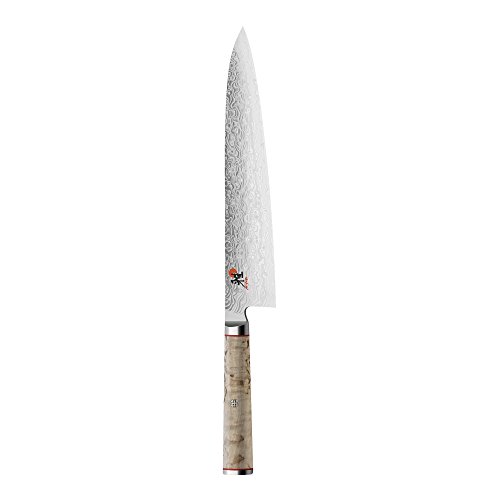
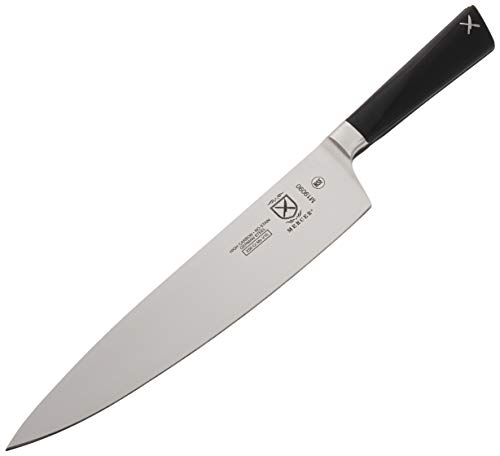


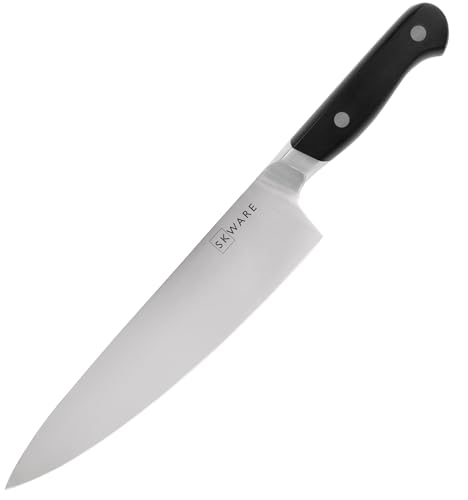

Quick Answer: Three Styles in 30 Seconds
A forged German style knife suits cooks who want weight, toughness, and a curved edge for rocking through herbs. A Japanese style knife suits cooks who value light handling and fine slices. A stamped value style knife suits small budgets and simple daily prep. All three come in 9 inch form, so your routine, not the length alone, should decide the winner.
Before You Buy: A Quick Checklist for Choosing a Chef Knife
Work through the points below in order. Size and routine come first, because steel and price mean little if the knife feels awkward in hand.
Size: Match It to Your Space
Common lengths run 6, 7, 8, 9, and 10 inches, with Japanese models often listed near 210 mm or 240 mm instead. A 9 inch blade is about 14 to 15 inches overall once you add the handle, so check that your block slot, drawer, or wall strip can hold it safely. Your board matters just as much. A board around 18 inches long gives the tip room to travel, and that space pays off when you portion a melon or a double batch of onions for a family meal.
Which Type Fits Your Routine
German or Western knives carry more weight and a thicker spine, which helps with dense produce and hard squash. Japanese knives, including the gyuto shape, run thinner and lighter for precise work, and our roundup of the best japanese chef knife options explains that tradition in depth. Damascus describes layered steel with a visible pattern, mostly a look rather than a performance gain. Forged blades start from a single heated piece of steel and feel dense, while stamped blades are cut from sheet steel and feel lighter.
Features Worth Paying For, and Ones to Skip
A fitted sheath is worth paying for if the knife will live in a drawer or travel to a rental kitchen, since it guards both the edge and your fingers. A wood handle feels warm and grippy, though it asks for prompt drying after washing. Dimples along the blade, often called a granton edge, promise to release sticky slices, yet they help only with some foods and matter far less than a thin blade. Skip ornate handle inlays and oversized sets, because neither improves a single cut.
Steel Type and Hardness
Stainless steel resists rust and suits busy homes that want low fuss care. Carbon steel takes a very fine edge and sharpens easily, but it can stain and needs drying right after use. High carbon stainless blends the two ideas, pairing easy upkeep with good edge life. Hardness is rated in HRC. Blades around 56 to 58 HRC feel forgiving and resist chipping, while blades around 60 to 62 HRC hold an edge longer yet can chip if twisted against bone.
Blade Geometry: German vs Japanese
Geometry decides how the knife moves. A German profile has a pronounced belly, so the edge curves upward and supports a rocking motion for herbs and garlic. A Japanese profile is flatter, which favors straight chops and push cuts that leave scallions in clean pieces. Edge angle plays a part too. Many Japanese blades are ground near 15 degrees per side for keen slicing, while many German blades sit near 20 degrees per side and trade a little finesse for durability.
Handle, Bolster, and Balance
Grip the knife with a pinch grip, thumb and forefinger on the blade just ahead of the handle, and note where it balances. A balance point near that pinch feels calm during long sessions. A full bolster adds weight and protects fingers but can block sharpening at the heel. A half bolster or no bolster keeps the full edge usable. Favor a palm filling handle shape with no sharp corners, and if several adults share the knife, a neutral shape tends to please everyone.
Realistic Budget Ranges
Expect a stamped blade with basic steel at under $30, fine for a first kitchen or a spare. Forged construction, better balance, and more consistent grinds become common at about $50 to $100, and most homes get strong value in that range. Paying about $100 to $150 adds harder steel and finer finishing, while about $150 to $300 buys premium materials and craftsmanship, though the cutting gain over the middle range is modest. Set your ceiling after adding the cost of a honing rod and proper storage.
Three Types Compared: German, Japanese, and Value Styles
Rather than chase a single winner, match one of these three styles to your cooking.
Forged German Style for Heavy Daily Prep
Choose this style if your board regularly holds root vegetables, large roasts, and hard squash. The thicker blade and added weight let momentum do part of the work, and the tougher steel tolerates the odd twist or stray bone. The trade off is heft. A long session of fine slicing can tire a smaller wrist, and the curved belly is less precise for thin garnish work. For households cooking big dinners most nights, that solid planted feel is the point.
Japanese Style for Light and Precise Cutting
Choose this style if you slice fish, portion vegetables thinly, and enjoy a nimble tool that responds to small hand movements. The thin blade passes through onions and ripe tomatoes with little wedging, and the lighter build keeps your hand fresh through a large pile of prep. The trade off is care. Harder steel demands a gentle technique, a suitable board, and no prying or scraping with the edge.
Stamped Value Style for Simple Home Use
Choose this style if you cook a few nights a week, keep meals simple, and would rather spend the savings on groceries. Stamped blades are light and forgiving of casual habits, and many include a textured handle that stays secure with wet hands. The trade off is edge life and balance. The blade needs honing more often, and the thin stock can flex on dense produce. For a starter kitchen or a backup knife, that compromise makes good sense.
How the Options Are Compared
Our criteria rest on published maker specifications and patterns in verified buyer feedback, not on brand reputation. We weigh steel type and edge retention first, then balance and ergonomics, then edge geometry. Maintenance effort counts too, since a knife that is hard to care for gets used less. Value closes the list, judged against the budget ranges above, so a costly knife must justify itself in materials or finishing rather than name alone.
Is a 9 Inch Chef Knife the Right Size for You?
The 9 inch length earns its keep in three common situations. First, larger households benefit, because the longer edge processes double quantities without constant repositioning. Second, taller cooks and cooks with large hands find the added clearance under the handle keeps knuckles off the board. Our guide for the best chef knife for home cooks covers similar fit questions. Third, high volume cooks, including those eyeing the best professional chef knife tier, use the extra inch for portioning roasts and melons in fewer strokes.
Smaller kitchens point the other way. If your board is compact or your counters are shallow, an 8 inch blade will feel calmer and store more easily. Cooks who prepare mostly salads and small pans may also find the shorter length quicker to control. Before you decide, read a direct chef knife vs santoku comparison, since a santoku at about 7 inches handles small board work well and some households prefer its flatter edge.
Common Buying Mistakes to Avoid
- Buying a 9 inch blade for a small board, which leaves the tip unsupported and makes every stroke feel cramped.
- Paying for the hardest steel while planning to cut on glass or stone surfaces, which dulls or chips any fine edge quickly.
- Ignoring total length, so the knife arrives too long for your block or drawer and ends up stored loose and unguarded.
- Choosing a handle by looks alone, then finding it slippery or too narrow during a week of real cooking.
- Spending the whole budget on the knife and nothing on storage or honing, which shortens the life of the edge you paid for.
Cost of Ownership and Care
The purchase price is only the start. Budget for a honing rod, storage such as a wall strip or sheath, and sharpening a few times a year, whether that means a whetstone you learn to use or a local service. Our walkthrough of how to sharpen a chef knife explains the options and what each costs in time. Wash the knife by hand, dry it at once, and store it apart from other utensils so the edge never knocks against metal. Use wood or plastic boards and keep the blade out of the dishwasher.
Your Questions, Answered
How do you clean a chef knife after cutting acidic foods?
Wash it promptly, because tomato, citrus, and onion juices left sitting on the blade can stain carbon steel and dull any edge over time. Use warm water, a soft sponge, and a little dish soap, then rinse and dry the full blade before storing it. Clean the knife separately rather than dropping it into a sink of soapy water, where a hidden edge is a common cause of cuts.
Is a chef knife worth it if you already own a smaller knife?
It can be, if your cooking has outgrown the smaller blade. Keep the short knife for in hand tasks like trimming strawberries or peeling, and let the 9 inch knife handle board work where its length speeds things up. If your meals rarely involve anything larger than an onion, the upgrade adds little. The deciding factor is how often you wish for more edge during a normal week of cooking.
How long does a chef knife last?
A sound blade can last decades, because each sharpening removes only a tiny amount of steel. The usual limits are accidents and neglect rather than age, such as a chipped tip from a fall or a handle loosened by repeated dishwasher heat. Wood handles may need occasional food safe oil to prevent drying. When the edge has been ground back so far that the blade shape changes, replacement finally makes sense.
What size chef knife do I need for weekly meal prep?
Try a simple paper test. Cut a sheet of paper to the blade length you are considering, lay it on your board, and mimic your usual strokes over the largest item you prep each week, such as a cabbage or a whole chicken. If the paper edge reaches past the food with room to spare, that length will feel comfortable. This quick rehearsal reveals more about fit than hand size charts.
What is the best 9 inch chef knife for a shared family kitchen?
The best choice for a shared kitchen is the style everyone can handle safely, which usually means moderate weight, a neutral handle shape, and stainless steel that forgives a busy routine. In most homes that points to the forged German style described above, while careful cooks who love fine slicing may agree on the Japanese style instead. Decide together, and let the person with the smallest hands cast the deciding vote on handle comfort.
Final Thoughts
Length alone does not make a great knife. The right pick pairs a 9 inch blade with a board that fits it, steel that matches your care habits, and a handle every cook in the house can hold with confidence. Look back at the product table above, settle on the style that matches your routine, and the best 9 inch chef knife for your home becomes a clear choice.